Aerospace Alloy Testing in a Cyclic Corrosion Chamber
Aerospace alloys endure some of the most unforgiving conditions imaginable. A cyclic corrosion chamber replicates these brutal environments inside a controlled laboratory setting, allowing engineers to observe how titanium, aluminum, and nickel-based superalloys withstand salt fog, humidity shifts, and temperature swings. Unlike static salt spray tests, cyclic methods alternate between wet and dry phases, revealing hidden vulnerabilities that single-environment exposures miss. Aerospace manufacturers rely on this data to certify airframes, turbine blades, and fasteners before components ever leave the ground. Understanding how these sophisticated systems evaluate alloy resilience helps procurement teams select equipment that delivers precise, repeatable, and internationally recognized results.

Why Are Aerospace Alloys Tested for Corrosion Resistance?
Mitigating Catastrophic Failure Risks
Corrosion initiates micro-cracks that propagate unpredictably under cyclic loading. Aerospace alloys face relentless vibrational stress during takeoff, landing, and turbulent flight. Testing inside a cyclic corrosion chamber exposes these materials to accelerated degradation, revealing pitting or intergranular attack long before catastrophic failure occurs. Engineers scrutinize these outcomes to eliminate latent defects from critical supply chains.
Preserving Structural Integrity Under Stress
Aluminum-lithium skins and titanium bulkheads must retain load-bearing capacity across decades of service. Salt deposits accelerate crevice corrosion at rivet joints and panel seams. Simulated environmental cycling quantifies exactly how these alloys retain tensile strength after prolonged exposure. Manufacturers gain empirical data to adjust metallurgical compositions and heat treatments accordingly.
Validating Protective Coating Efficacy
Anodized layers and plasma-sprayed thermal barriers represent the frontline defense against oxidation. A cyclic corrosion chamber subjects these coatings to repeated expansion and contraction. Delamination or permeation becomes visible within weeks rather than years. Laboratories document coating adhesion thresholds under realistic thermal and saline duress with traceable accuracy.
Harsh Environmental Conditions in Aerospace Applications
Salt-Laden Atmospheres at Coastal Bases
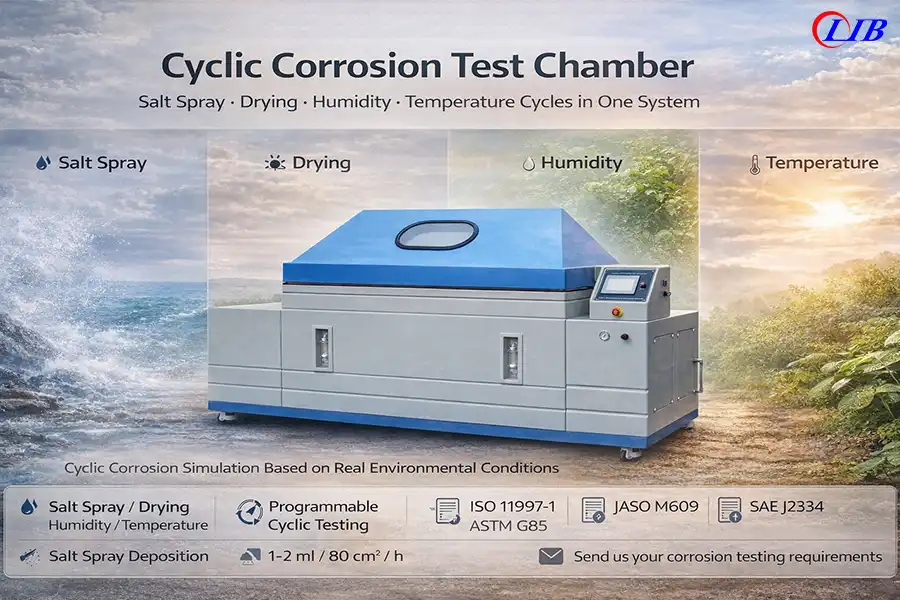
Naval aviation operations expose parked aircraft to chloride-rich maritime aerosols. These microscopic particles embed within surface irregularities, initiating galvanic reactions between dissimilar metals. Replicating these saline conditions indoors requires precise salt fog deposition rates between 1 and 2 mL per 80 cm² hourly. Controlled atomization ensures repeatable contamination across every test specimen.
Rapid Thermal Transitions During Flight
Aircraft climb from tropical tarmacs into subzero stratospheric conditions within minutes. Alloys contract and expand dramatically across these gradients. Thermal fatigue compounds corrosion susceptibility at grain boundaries. Environmental chambers must execute swift temperature shifts from +10°C upward to +90°C while maintaining precise deviation tolerances around ±2.0°C across the workspace.
Exposure to Industrial Pollutants
Urban airfields and manufacturing zones introduce sulfur dioxide and nitrogenous compounds into the operational envelope. These acidic gases accelerate sulfidation on nickel superalloys. Integrating SO2 dosing into test protocols captures this chemical aggressiveness. Exhaust neutralization via sodium hydroxide tanks ensures laboratory safety after corrosive gas phases conclude without external venting hazards.
|
LIB Cyclic Corrosion Chamber Parameter |
Specification |
|
Temperature Range |
+10°C to +90°C |
|
Temperature Fluctuation |
±0.5°C |
|
Humidity Range |
30% to 98% RH |
|
Humidity Deviation |
+2%, -3% |
|
Salt Fog Deposition |
1-2 mL / 80cm²·h |
|
Air Preheating |
31-liter saturated air barrel |
|
Cooling System |
Mechanical compression refrigeration |
|
Controller |
Programmable color LCD touchscreen |
Cyclic Corrosion Methods for Alloy Performance Evaluation
Replicating Multi-Phase Environmental Cycles
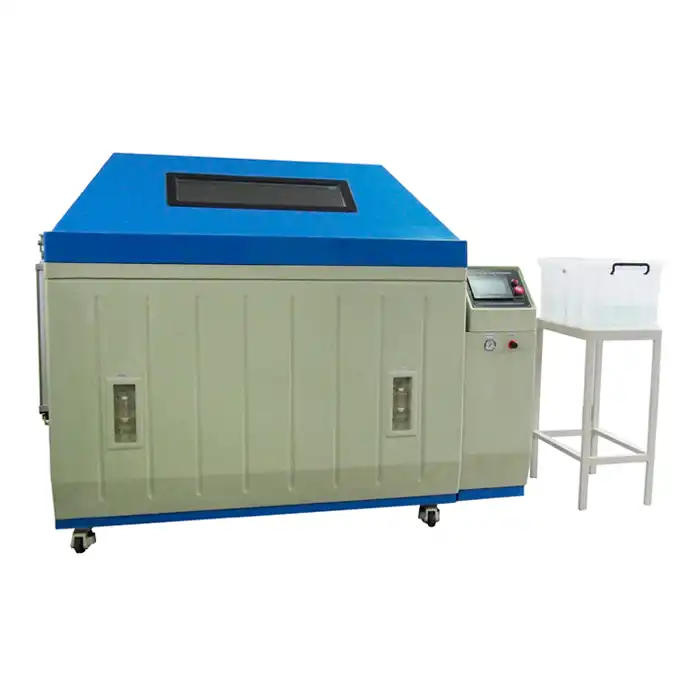
Authentic aerospace degradation never occurs inside static conditions. A cyclic corrosion test chamber alternates salt fog immersion, dry-off periods, and humid conditioning. Each phase triggers distinct failure modes. Salt crystallization during dry intervals generates osmotic pressure. Subsequent wet phases drive electrochemical reactions deeper into substrate matrices. This oscillation mirrors genuine operational rhythms with fidelity.
Accelerating Degradation Mechanisms
Time-compressed testing amplifies corrosion kinetics without introducing alien failure modes. PT100 Class A sensors paired with PID controllers maintain exacting environmental parameters. Humidity precision stays within ±2% RH. These tight tolerances ensure that observed pitting or exfoliation correlates directly with field exposures rather than laboratory artifacts or equipment drift over time.
Quantifying Material Performance Metrics
Engineers measure mass loss, pit depth, and tensile degradation post-exposure. Standardized fog collection via dedicated cylinders verifies spray uniformity across the workspace. Round bars and V-shaped grooves support complex geometries during testing. Documented metrics feed into finite element models that predict airframe longevity across diverse global routes and climates.
How Do Chambers Simulate Altitude and Humidity Variations?
Precision Humidity Modulation Systems
External isolation humidifiers with stainless steel surface evaporation generate regulated moisture across 30% to 98% RH. Centrifugal wind fans circulate conditioned air uniformly. This prevents stagnant zones that might shield alloys from representative exposure. The system modulates vapor injection in tandem with thermal loads to replicate everything from desert aridity to tropical saturation with exactitude.
Thermal Cycling with Mechanical Refrigeration
Mechanical compression refrigeration systems with air-cooled condensers enable rapid thermal transitions. Saturated air passes through a 31-liter preheating barrel before entering the test zone. Pneumatic sealing maintains internal atmospheric isolation during aggressive temperature swings. Alloys experience realistic thermal shock without ambient laboratory interference compromising gradient fidelity or sensor accuracy.
SO2 Integration for Pollutant Simulation
Quartz glass atomizer nozzles resist clogging while dispersing corrosive media. SO2 gas control modules meter precise pollutant volumes into the chamber atmosphere. This capability proves essential for replicating industrial fallout or volcanic ash scenarios. Post-test exhaust cycles divert residual gas into a dedicated NAOH tank, neutralizing acidity for safe workspace ventilation and environmental compliance.
Aerospace Standards and Certification Requirements
ASTM G85 for Cyclic Corrosion Testing
This standard governs modified salt spray procedures incorporating variable environments. Aerospace suppliers adhere to Annex A5 protocols when evaluating coated and uncoated aluminum specimens. The methodology demands rigorous documentation of cycle duration, temperature ramps, and humidity plateaus. Compliance demonstrates that alloys withstand statistically probable in-service degradation trajectories without premature compromise.
OEM Specifications for Alloy Acceptance
Major airframers and propulsion manufacturers impose proprietary test sequences beyond baseline ASTM requirements, often executed in a cyclic corrosion test chamber. Leading aerospace specifications often mandate specific SO₂ concentrations or extended dry periods. Meeting these stipulations requires programmable controllers capable of storing 120 programs with 100 steps each. Preloaded standard libraries reduce programming errors during contract validation phases
Traceable Calibration Protocols
Measurement uncertainty invalidates certification. Sensors undergo periodic validation against nationally recognized standards. CE-marked equipment built under ISO 9001 frameworks provides audit trails that aerospace primes demand. Third-party verification by SGS or TUV reinforces data credibility. Laboratories maintaining such rigor avoid costly retesting or supplier disqualification from approved vendor lists.
|
Standard |
Primary Application |
|
ASTM G85 |
Modified cyclic salt spray testing |
|
SAE J2334 |
Laboratory cyclic corrosion evaluation |
|
GMW 14872 |
Automotive/aerospace materials validation |
|
VW PV 1210 |
Body and component corrosion cycles |
Ensuring Long-Term Reliability of Critical Components
Predicting Maintenance Intervals
Corrosion test data establishes safe inspection frequencies for landing gear, flap tracks, and engine mounts. Quantified degradation curves allow fleet managers to schedule non-destructive evaluations before damage reaches critical thresholds. Proactive interval planning minimizes unplanned downtime while preserving airworthiness directives without excessive conservative margins that waste resources.
Extending Operational Lifespan
Understanding exact corrosion penetration rates enables life-extension programs for aging aircraft. Depot-level overhaul facilities utilize cyclic test results to justify sealant reapplication or component replacement windows. Alloys demonstrating superior resistance in controlled environments receive extended certification. This knowledge translates into decades of additional safe flight hours and reduced fleet procurement costs.
Safeguarding Mission-Critical Systems
Hydraulic lines, fuel fittings, and avionics housings cannot tolerate unexpected failure. Environmental testing isolates alloys prone to stress-corrosion cracking in chloride atmospheres. Eliminating these materials from critical pathways prevents in-flight emergencies. Rigorous chamber validation becomes an ethical imperative when passenger safety hangs upon metallurgical decisions made during initial design stages.
LIB Industry High-Performance Corrosion Chambers for Aerospace Applications
|
|
|
| Corrosion-Resisitant Workroom | Modular grooves are used for holding samples |


Programmable Touchscreen Control Architecture
The color LCD touchscreen controller supports Ethernet connectivity and extensive program storage. Operators select preloaded aerospace cycles including GMW 14872 and SAE J2334 without manual entry. Forced air drying systems execute rapid humidity transitions from saturated salt fog down to 30% RH. Intuitive interfaces reduce training burdens across multinational engineering teams.
Corrosion-Resistant Chamber Construction
LIB cyclic corrosion chambers utilize glass fiber reinforced plastics or heavy-duty SUS316L stainless steel dividers. GRP construction withstands thermal expansion and contraction across innumerable cycles without structural compromise. Pneumatic seals prevent ambient infiltration. Quartz glass spray nozzles incorporate self-cleaning cycles that prevent salt crystallization buildup during extended uninterrupted testing marathons.
Global Service Infrastructure
Since 2009, LIB Industry has delivered environmental simulation equipment across sixty nations. Service centers operate in Malaysia, Canada, the United Kingdom, and the United States. A 24/7 global assistance network backs every cyclic corrosion chamber with a three-year warranty. Replacement commitments during warranty periods eliminate operational anxiety for aerospace testing laboratories worldwide.
Conclusion
Aerospace alloy validation demands more than superficial salt exposure. A cyclic corrosion chamber delivers the multi-environmental rigor necessary to certify materials against genuine atmospheric threats. From coastal chlorides to stratospheric thermal shocks, precise simulation protects both component integrity and human lives. LIB Industry equips laboratories with programmable, standards-compliant systems engineered for exacting aerospace protocols. Selecting robust testing infrastructure today prevents catastrophic field failures tomorrow.
FAQ
What differentiates cyclic corrosion testing from standard salt spray evaluation?
Cyclic corrosion testing alternates between wet salt fog, dry periods, and humid conditioning. This multi-phase approach replicates real aerospace environments more authentically than continuous salt spray, revealing degradation modes like salt crystallization and coating fatigue that static methods overlook entirely.
Which aerospace alloys benefit most from cyclic corrosion chamber evaluation?
Aluminum-lithium airframe skins, titanium engine components, and nickel-based superalloys undergo rigorous evaluation. These materials face chloride exposure, thermal shock, and acidic pollutants. Chamber testing validates their protective coatings and predicts long-term structural behavior before operational deployment.
How does LIB Industry ensure safety during SO2 corrosion gas testing?
Residual SO2 exhausts into a dedicated NAOH tank after test completion. This alkaline neutralization dilutes acidic gas effectively, maintaining clean laboratory air quality. Pneumatic chamber sealing prevents leakage during operation, protecting technicians from hazardous exposure throughout the testing sequence.
Contact LIB Industry today to discuss your aerospace testing requirements. As a dedicated environmental test chamber manufacturer and global supplier, we deliver turnkey solutions from design through commissioning. Reach our team at ellen@lib-industry.com to configure a corrosion testing system tailored to your exact specifications.