Constant Climate Chambers for Long-Term Material Stability Tests
Long-term material stability testing demands precise environmental control to evaluate how products withstand storage and operational conditions over extended periods. A constant climate chamber provides the controlled temperature and humidity environments necessary for pharmaceutical stability studies, material aging research, and product shelf-life validation. These sophisticated testing systems replicate real-world climatic conditions in accelerated timeframes, enabling manufacturers and researchers to predict material behavior, ensure regulatory compliance, and validate product durability. By maintaining stringent environmental parameters with minimal deviation, climate chambers deliver the reproducible data essential for quality assurance programs across pharmaceutical, electronics, automotive, and materials science industries.
Why Is Constant Climate Testing Important for Material Stability?
Regulatory Compliance Requirements Across Industries
Pharmaceutical manufacturers face stringent stability testing protocols mandated by regulatory bodies including FDA, ICH, and EMA. These guidelines specify precise temperature and humidity conditions that must be maintained throughout testing cycles ranging from three months to five years. Non-compliance can result in product recalls, regulatory sanctions, and compromised patient safety. Climate chambers enable pharmaceutical companies to conduct ICH-prescribed stability studies at conditions like 25°C/60% RH for Zone II climates, generating the data necessary for regulatory submissions and product approvals.
Material Degradation Prevention Through Predictive Testing
Materials undergo various degradation mechanisms when exposed to environmental stressors. Polymers experience chain scission and crosslinking, metals suffer oxidation and corrosion, while adhesives lose bonding strength through moisture absorption. Predictive testing in controlled climate environments reveals these failure modes before products reach consumers. Accelerated aging studies conducted at elevated temperatures and humidity levels compress years of real-world exposure into weeks or months, providing manufacturers with actionable intelligence about material performance limitations.
Quality Assurance and Risk Mitigation Strategies
Implementing comprehensive climate testing protocols reduces warranty claims, product failures, and brand reputation damage. Automotive manufacturers test interior components for color fastness and dimensional stability under tropical and desert climate simulations. Electronics producers evaluate circuit board solder joint integrity across temperature cycling regimes. These proactive quality measures identify vulnerabilities during development phases when modifications remain cost-effective, rather than discovering defects after market introduction.
Controlled Environmental Simulation for Long-Term Material Evaluation
Precision Temperature Management Systems
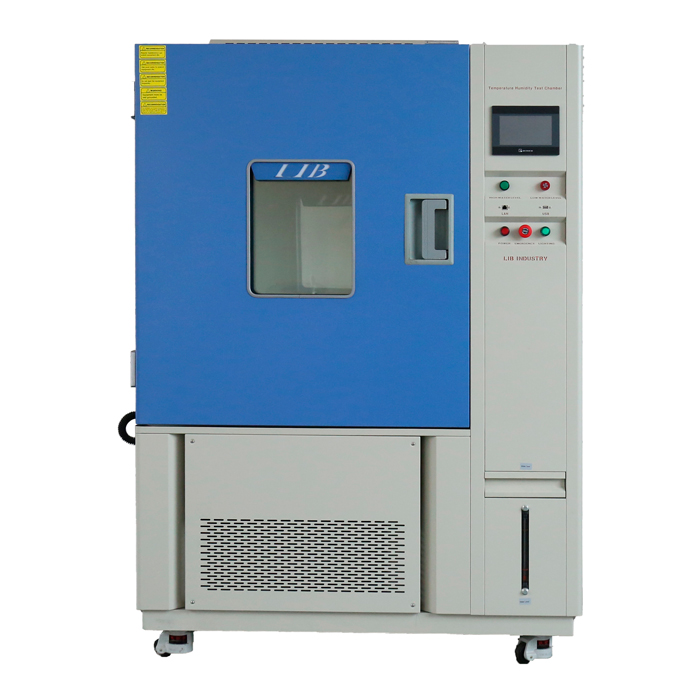
Modern constant climate chambers employ sophisticated refrigeration and heating architectures to maintain temperature uniformity throughout the test volume. The mechanical compression refrigeration system utilizes French TECUMSEH compressors paired with nichrome heating elements, delivering temperature ranges from -70°C to +150°C depending on configuration. Temperature fluctuation remains within ±0.5°C, while spatial deviation across the chamber volume stays below ±2.0°C. This exceptional stability ensures that every sample location experiences identical thermal conditions, eliminating positional bias in test results.
Advanced Humidity Control Technologies
Humidity regulation presents unique engineering challenges due to water's phase behavior and absorption characteristics. High-performance constant climate chambers incorporate external isolation stainless steel surface evaporation humidifiers that generate consistent moisture levels across the 20%-98% RH operational range. Precision maintains ±2.5% RH deviation through continuous monitoring and adjustment cycles. The automatic water supply system connects directly to laboratory pure water infrastructure, supporting continuous operation exceeding 30 days without manual intervention.
Programmable Test Profile Capabilities
Sophisticated programmable controllers enable researchers to design complex environmental sequences mimicking diurnal temperature variations, seasonal transitions, or transportation scenarios. The color LCD touchscreen interface allows users to construct multi-segment profiles incorporating temperature ramps, humidity transitions, and soak periods. Ethernet connectivity facilitates remote monitoring, data logging, and integration with laboratory information management systems. This programmability transforms simple environmental exposure into comprehensive lifecycle simulation.
Temperature and Humidity Effects on Material Properties
|
Material Category |
Temperature Effects |
Humidity Effects |
Typical Test Conditions |
|
Pharmaceuticals |
Degradation kinetics, API stability |
Moisture uptake, dissolution rate |
25°C/60% RH, 40°C/75% RH |
|
Polymers |
Glass transition, thermal expansion |
Dimensional swelling, plasticization |
-40°C to +80°C, 85% RH |
|
Electronics |
Solder joint fatigue, component drift |
Corrosion, conductive anodic filament |
-20°C to +150°C cycling, 93% RH |
|
Coatings |
Adhesion loss, chalking |
Blister formation, delamination |
UV + 50°C/98% RH combined |

Thermal Stress Mechanisms and Material Response
Temperature variations induce thermal expansion mismatches between dissimilar materials, generating interfacial stresses that propagate microcracks and delamination. Polymeric materials experience accelerated chemical degradation following the Arrhenius relationship, where reaction rates approximately double with each 10°C temperature increase. This principle enables accelerated aging calculations - testing at 50°C can simulate years of ambient temperature exposure in compressed timeframes. The heating rate of 3°C/min and cooling rate of 1°C/min provided by professional chambers allow controlled thermal transitions.
Moisture-Induced Property Modifications
Hygroscopic materials absorb atmospheric moisture, altering dimensional stability, mechanical properties, and electrical characteristics. Pharmaceutical tablets gain weight and change dissolution profiles with moisture uptake. Printed circuit boards experience reduced insulation resistance and increased dielectric losses. Composite materials suffer matrix plasticization and fiber-matrix debonding. Relative humidity control between 20%-98% RH enables systematic investigation of these moisture-related phenomena.
Combined Environmental Factor Interactions
Real-world degradation rarely results from single environmental factors. Synergistic effects between temperature, humidity, and other stressors accelerate material breakdown through complex mechanisms. Elevated temperature increases moisture diffusion rates into polymers, while high humidity enhances corrosion electrochemical reactions on metal surfaces. Advanced chambers support combined testing protocols - simultaneous vibration and climate exposure, or integrated altitude simulation with thermal cycling.
How Do Climate Chambers Support Reliability Testing Programs?
Statistical Test Design and Sample Throughput
Reliability engineering requires statistically significant sample populations to characterize failure distributions and calculate confidence intervals. Constant climate chamber configurations ranging from 100L benchtop units to 1000L walk-in systems accommodate varying sample quantities. The 500L model with 700×800×900mm internal dimensions houses multiple product assemblies simultaneously, while the adjustable shelf system optimizes space utilization. Horizontal and vertical laminar airflow ensures environmental uniformity even with fully loaded configurations.
Failure Mode Identification and Root Cause Analysis
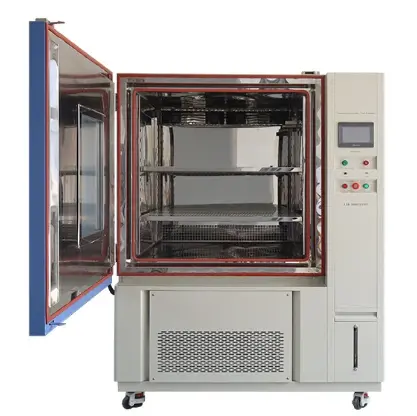
When products fail during climate exposure, understanding failure mechanisms guides corrective actions. The double-layer insulating tempered glass observation window with built-in LED lighting enables non-invasive monitoring throughout test duration. Researchers observe crack propagation, moisture condensation patterns, and material color changes without disrupting environmental conditions. The 8cm thick viewing window maintains thermal isolation while providing clear visibility.
Compliance Testing Documentation and Traceability
Regulatory submissions demand comprehensive documentation demonstrating test equipment calibration, environmental parameter stability, and data integrity. Modern controllers provide automatic data logging with timestamp records and export capabilities. The programmable interface documents set-points, actual values, and deviation events throughout multi-month testing campaigns. Third-party calibration certificates from SGS and TUV verify measurement accuracy against national standards.
Accelerated Aging and Durability Testing for Industrial Materials
Arrhenius Modeling for Shelf-Life Prediction
Accelerated aging applies elevated stress levels to compress time-dependent degradation into practical test durations. The Arrhenius equation relates reaction rate to absolute temperature, enabling shelf-life extrapolation from accelerated conditions to ambient storage temperatures. A pharmaceutical formulation tested at 40°C for six months may demonstrate equivalent degradation to three years at 25°C storage, depending on activation energy. Temperature range options from -20°C to +150°C support various acceleration factors.
Cyclic Stress Testing Protocols
Many applications involve repetitive environmental transitions rather than constant conditions. Electronic assemblies experience daily temperature cycles, outdoor products endure seasonal variations, and transportation subjects materials to vibration-temperature combinations. Programmable chambers execute hundreds of thermal cycles automatically, imposing fatigue stresses that reveal cumulative damage mechanisms. Cycle counting and automated test termination capabilities support high-cycle fatigue studies extending to thousands of repetitions.
Comparative Material Evaluation Studies
Product development often requires selecting between alternative materials, formulations, or suppliers. Parallel testing in identical environmental conditions provides objective performance comparisons. The multi-shelf configuration accommodates competing material candidates simultaneously, eliminating temporal and equipment variability from comparison studies. Researchers evaluate coating formulations, adhesive systems, or polymer grades under identical thermal-humidity profiles.
Stability Validation for Research and Manufacturing Applications
|
Test Application |
Chamber Configuration |
Typical Duration |
Critical Parameters |
|
Pharmaceutical ICH Stability |
-20°C to +40°C, 75% RH |
3-60 months |
Temperature uniformity, humidity accuracy |
|
Electronics Burn-In |
+85°C, powered operation |
168-1000 hours |
Temperature distribution, power capacity |
|
Food Shelf-Life |
+4°C to +37°C, various RH |
1-24 months |
Contamination prevention, sample access |
|
Automotive Components |
-40°C to +105°C cycling |
500-2000 cycles |
Thermal ramp rates, volume capacity |
Pharmaceutical Stability Study Implementation
Drug stability testing follows ICH Q1A guidelines specifying long-term conditions (25°C/60% RH for 12 months) and accelerated conditions (40°C/75% RH for 6 months). The external cable hole with plug accommodates probe insertion for continuous product temperature monitoring without compromising chamber integrity. The SUS304 stainless steel construction resists chemical corrosion from pharmaceutical compounds, while the mirror-finish interior facilitates cleaning validation between studies.
Materials Research and Development Testing
Academic and industrial research laboratories investigate novel material formulations, additive effects, and processing parameter influences. Constant climate chambers provide the controlled variables essential for systematic experimentation. Polymer scientists evaluate plasticizer migration rates, composite researchers characterize moisture absorption kinetics, and coating developers assess weathering resistance. The programmable controller's flexibility supports custom test protocols beyond standardized methods.
Manufacturing Process Validation Programs
Process validation demonstrates that manufacturing procedures consistently produce conforming products. Environmental stress screening during production ramp-up identifies process-induced defects before full-scale manufacturing. Newly manufactured assemblies undergo brief climate exposure revealing latent defects like incomplete solder joints, contaminated surfaces, or assembly errors. The benchtop models (TH-100, TH-225) suit production-line integration for screening applications.
LIB Industry: Reliable Long-Term Stability Testing Solutions
 |
 |
|
|
|
|
|
|
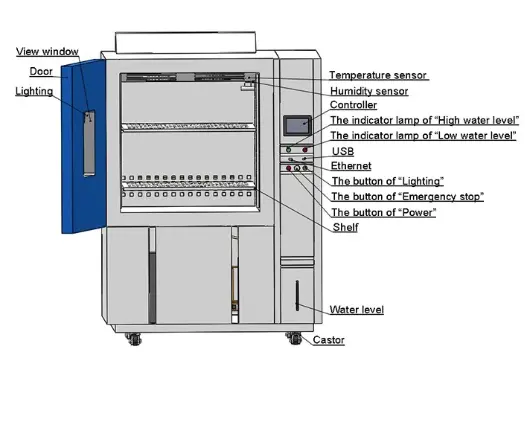
| Robust Workroom | Cable Hole | Temperature and Humidity Sensor | PID controller |


Comprehensive Quality Certification and Standards Compliance
LIB constant climate chambers undergo rigorous quality verification meeting ISO 9001 Quality Management System requirements. Each manufactured unit receives CE certification demonstrating conformity with European safety, health, and environmental protection standards. Independent third-party testing by SGS and TUV validates performance specifications and safety mechanisms. This multi-layered certification approach ensures equipment reliability and international regulatory acceptance.
Robust Construction and Industrial-Grade Durability
Chamber longevity depends on superior material selection and construction quality. The interior fabrication uses high-grade SUS304 stainless steel with mirror surface finishing, providing exceptional corrosion resistance during prolonged high-humidity operations. The 4mm thick A3 steel external framework with powder coating treatment ensures structural integrity and industrial-grade durability. Polyurethane foam combined with insulation cotton creates superior thermal isolation, reducing energy consumption while maintaining temperature stability.
Comprehensive Safety Protection Systems
Operator safety and sample protection require multiple independent safeguards. LIB chambers incorporate humidifier dry-combustion protection preventing fire hazards, over-temperature protection with independent physical cutoff, and refrigerant high-pressure monitoring. Water shortage protection prevents humidification system damage, while earth leakage and over-current protection safeguard electrical systems. These redundant safety mechanisms operate independently - even if primary control systems fail, physical protection automatically interrupts power supply.
|
Chamber Model |
Internal Volume |
Temperature Range Options |
Ideal Applications |
|
TH-100 |
100L (400×500×500mm) |
-20°C to +150°C |
Benchtop research, small sample batches |
|
TH-225 |
225L (500×600×750mm) |
-40°C to +150°C |
Pharmaceutical stability, electronics testing |
|
TH-500 |
500L (700×800×900mm) |
-70°C to +150°C |
Materials research, product development |
|
TH-800 |
800L (800×1000×1000mm) |
Configurable |
Automotive components, larger assemblies |
|
TH-1000 |
1000L (1000×1000×1000mm) |
Configurable |
Walk-in testing, high-throughput validation |
Global Support Infrastructure and Service Commitment
Equipment reliability extends beyond manufacturing quality to encompass comprehensive service support. LIB provides 24/7 global technical assistance addressing operational questions, troubleshooting guidance, and application consultation. Each chamber includes a 3-year warranty with lifetime service support - if repairs cannot restore functionality within the warranty period, complete unit replacement ensures minimal testing program disruption. Preventive maintenance programs, calibration services, and performance verification testing maintain equipment accuracy throughout operational life.
Turn-Key Solution Integration Approach
LIB Industry specializes in providing complete environmental testing solutions encompassing research, design, manufacturing, commissioning, delivery, installation, and operator training. This integrated approach ensures seamless laboratory implementation rather than merely equipment delivery. Application engineers collaborate with customers defining precise testing requirements, recommending optimal configurations, and designing custom solutions when standard products require modification. Installation teams ensure proper placement, utility connections, and performance verification.
Conclusion
Constant climate chambers represent essential infrastructure for material stability evaluation, product development, and regulatory compliance across pharmaceutical, electronics, automotive, and materials science industries. Precise temperature and humidity control enables accelerated aging studies, shelf-life validation, and reliability testing programs that predict long-term material behavior. Advanced features including programmable controllers, automatic water systems, and comprehensive safety mechanisms deliver the reproducible environmental conditions necessary for statistically valid testing.
FAQ
What temperature and humidity accuracy can constant climate chambers achieve for pharmaceutical stability studies?
Professional climate chambers maintain temperature fluctuation within ±0.5°C and spatial deviation below ±2.0°C throughout the test volume. Humidity control achieves ±2.5% RH deviation across the 20%-98% RH range, meeting ICH stability testing guideline requirements for pharmaceutical applications.
How long can climate chambers operate continuously without manual intervention?
Chambers equipped with automatic water supply systems support continuous operation exceeding 30 days without manual intervention. Direct connection to laboratory pure water systems eliminates manual refilling requirements, enabling extended stability studies and accelerated aging programs with minimal operator involvement.
Can climate chambers accommodate combined environmental testing like temperature plus vibration?
Advanced chambers support combined testing configurations merging climate control with vibration, altitude simulation, corrosion exposure, or pressure variation. Custom integration solutions address application-specific requirements, replicating complex real-world environmental conditions within controlled laboratory settings for comprehensive material characterization.
Partner with LIB Industry - Your Trusted Environmental Testing Chamber Manufacturer
LIB Industry delivers turn-key environmental testing solutions including constant climate chamber design, manufacturing, installation, and training services globally. Contact our application specialists at ellen@lib-industry.com to discuss your specific stability testing requirements and receive customized chamber recommendations.