How Sand Dust Test Chambers Validate Electronics for Desert Use?
Electronics deployed in desert environments face relentless exposure to fine airborne particles, abrasive sand, extreme heat, and low humidity - conditions that can degrade seals, clog ventilation, corrode contacts, and ultimately cause catastrophic failure. A sand and dust test chamber replicates these harsh conditions in a controlled laboratory setting, allowing engineers to assess whether a device's enclosure, connectors, and internal components can withstand real-world desert deployment. By subjecting products to standardized particle concentrations, wind velocities, and temperature profiles, these chambers generate reliable pass/fail data that informs both product design and international compliance. The result is electronics that perform predictably where conventional testing methods would leave critical vulnerabilities undetected.
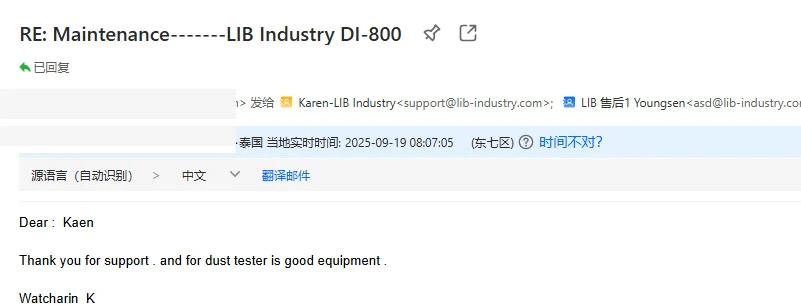
A testing center in Thailand reported that after using the sand and dust test chamber, their ruggedized communication devices passed rigorous desert simulation tests without any failure. The chamber allowed engineers to replicate extreme sandstorms and heat conditions in a controlled environment, providing clear insights into enclosure durability and connector reliability. This testing has significantly improved confidence in their products’ performance in arid regions.
What Environmental Conditions Do Electronics Face in Desert Deployments?
 Desert terrain presents a convergence of environmental stressors that few other climates match. Understanding these conditions precisely is the starting point for any meaningful durability validation program.
Extreme Thermal Variation
Daytime surface temperatures in desert zones regularly exceed 60°C, while nights can drop well below 10°C within hours. This thermal cycling subjects electronic enclosures to repeated expansion and contraction, progressively weakening gasket integrity and solder joints. Electronics destined for desert use must be validated across the full thermal envelope - not just peak heat - to expose latent fatigue.
Low Humidity and Electrostatic Accumulation
Relative humidity in arid regions typically falls below 20% RH, accelerating electrostatic discharge (ESD) events. Dust particles suspended in dry air carry triboelectric charges that intensify when they contact plastic or metal surfaces. Unshielded circuit boards in such environments accumulate charge differentials that can trigger component failures invisible to standard electrical testing.
Continuous Airborne Particulate Load
Desert air carries a heterogeneous mixture of fine silica, calcium carbonate, and clay minerals. Particle diameters range from sub-micron aerosols to coarse grains above 200 µm. Prolonged exposure creates progressive ingress pathways through even well-designed seals, making periodic particle concentration testing indispensable for products rated for extended field deployments.
Key Failure Risks Caused by Sand and Dust Intrusion
Understanding specific failure mechanisms helps engineers prioritize which components to monitor most closely during chamber testing and guides enclosure redesign when results reveal vulnerabilities.
Mechanical Abrasion of Moving Parts
Sand grains traveling at elevated wind speeds act as micro-abrasives against fan blades, actuator shafts, and rotating connectors. Even brief exposure to sand at velocities above 18 m/s can score aluminum surfaces and accelerate bearing wear. Components that survive abrasion testing at MIL-STD-810 Method 510 wind speeds demonstrate measurably longer service life in field deployments.
Electrical Contact Degradation
Fine dust particles deposit resistive layers on connector pins, switch contacts, and PCB edge connectors. As layer thickness accumulates, contact resistance rises, producing voltage drop errors and intermittent faults that are difficult to diagnose remotely. Conductive dust variants - such as carbon-loaded particles found near industrial desert sites - introduce short-circuit risks that require additional protective coating validation.
Thermal Management Disruption
Ventilation grilles and heatsink fin arrays clog progressively as dust accumulates, reducing convective cooling efficiency. Thermal runaway becomes a realistic outcome when ambient temperatures are already near maximum ratings. Post-test thermal imaging of specimens reveals hotspot development that would otherwise remain undetected until field failures occur.
|
Failure Mode |
Root Cause |
Relevant Test Standard |
|
Bearing seizure |
Abrasive sand ingress |
MIL-STD-810 Method 510 |
|
Connector intermittency |
Resistive dust film |
IEC 60529 IP5X / IP6X |
|
Thermal shutdown |
Clogged ventilation |
IEC 60068-2-68 |
|
Seal breach |
Gasket fatigue from thermal cycling |
ISO 20653 (automotive) |
|
ESD component failure |
Low humidity + charged particles |
IEC 61340-5-1 |
IP Protection Standards and Sand Dust Testing Requirements
 Several internationally recognized standards govern how dust protection is tested and rated, often using a sand and dust chamber to simulate real-world particulate exposure. Compliance with these standards is often a contractual requirement for procurement in defense, automotive, and industrial sectors.
IEC 60529 IP5X and IP6X Ratings
The IEC 60529 standard defines two dust protection levels: IP5X (dust-protected - limited ingress permitted, no harmful deposit) and IP6X (dust-tight - no ingress under a 20 mbar vacuum for 8 hours). Test chambers must maintain talcum powder concentrations of 2 kg/m³ with a nominal wire diameter of 50 µm and gap width of 75 µm - parameters directly reflected in LIB's DI-series chamber specifications.
MIL-STD-810 Method 510 for Sand Testing
The U.S. military standard extends beyond fine dust to coarse sand, requiring wind speeds up to 29 m/s and particle sizes up to 1,000 µm. This standard is mandatory for equipment procured under U.S. Department of Defense contracts and is increasingly referenced by civilian industrial buyers seeking ruggedized electronics for pipeline and mining applications.
ISO 20653 for Automotive Electronics
Vehicles operating in desert markets require electronics rated to ISO 20653, which aligns closely with IEC 60529 but adds automotive-specific provisions for vibration-induced seal relaxation and temperature cycling prior to dust exposure. Validation under this standard is a prerequisite for electronics supplied to manufacturers such as Mercedes-Benz and BYD - companies that rely on LIB Industry chamber solutions.
Simulation of Desert Particle Size, Wind Speed, and Temperature
Accurate simulation demands more than placing a device in a dusty enclosure. Each physical variable - particle morphology, airspeed profile, and thermal gradient - must be independently controlled and verified.
Particle Concentration and Morphology Control
LIB Industry chambers use pre-heating systems that prevent talcum powder clumping before particle injection, ensuring uniform 2 kg/m³ concentration throughout the test volume. Real-time concentration monitoring sensors provide feedback that automatically adjusts particle feed rates, eliminating the concentration gradients that can produce misleading pass results on undersized specimens.
Calibrated Wind Speed for Sand vs. Dust Testing
Dust testing and sand testing require fundamentally different airflow regimes. Dust ingress testing operates at low velocities to evaluate seal integrity under ambient turbulence, while sand testing demands velocities up to 29 m/s to validate abrasion resistance. LIB chambers support both modes with independently programmable fan speed, allowing a single platform to address both IEC 60529 and MIL-STD-810 requirements.
Temperature and Humidity Conditioning
Desert conditions combine heat with critically low humidity. LIB DI-series chambers operate across an ambient to +50°C temperature range while maintaining humidity below 30% RH - conditions that replicate daytime desert environments without the condensation artifacts that would contaminate dust concentration measurements. Temperature pre-conditioning prior to dust exposure ensures specimens enter the test in a thermally stabilized state.
|
Parameter |
Dust Test (IEC 60529) |
Sand Test (MIL-STD-810) |
LIB DI-Series Capability |
|
Particle size |
< 75 µm |
Up to 1,000 µm |
50 µm wire / 75 µm gap |
|
Wind speed |
Low (ambient) |
Up to 29 m/s |
Programmable |
|
Concentration |
2 kg/m³ |
1.1 g/m³ (sand) |
Real-time feedback control |
|
Temperature range |
Ambient |
Ambient ~+60°C |
Ambient ~ +50°C |
|
Humidity |
< 30% RH |
< 30% RH |
< 30% RH |
|
Test duration |
Up to 8 hours |
Per test profile |
0 ~ 99H59M programmable |
Electronics Enclosure Design Validation Through Sand Dust Testing
Sand and dust test chamber testing is most valuable when integrated into the design iteration cycle, not treated as a final compliance checkpoint. Early-stage validation reveals design weaknesses while engineering changes remain cost-effective.
Gasket Material and Compression Set Evaluation
Double-layer thermostability silicone rubber seals - as used in LIB observation windows - provide a design benchmark for enclosure gasket selection. Chamber testing applies sustained dust pressure against candidate gasket materials, measuring compression set and particle ingress after extended exposure. Materials that maintain sealing force across the thermal range consistently outperform single-durometer alternatives in post-test particle count analysis.
Connector and Cable Entry Point Assessment
The dust-proof 16A power socket integrated into LIB chambers demonstrates the sealing approach required of specimen connectors as well. Sealed cable entry ports on the chamber itself prevent test environment contamination - a dual function that both protects the test and validates the connector design philosophy. Engineers can operate powered specimens throughout the test cycle via internal power supply interfaces without breaching chamber integrity.
Observation and Documentation During Testing
LIB's interior dustproof LED lighting and double-layer observation window with built-in wiper system allow real-time visual monitoring without interrupting the test cycle. This capability is operationally significant: engineers can identify the moment a seal fails or dust penetration becomes visible on transparent cover specimens, logging precise time-to-failure data that informs enclosure redesign iterations.
Performance Evaluation and Reliability Assessment After Testing
Post-test evaluation closes the validation loop, confirming whether observed dust ingress translates into functional degradation and quantifying the reliability margin available for field deployment.
Electrical Continuity and Insulation Resistance Measurement
After test cycle completion, specimens undergo electrical continuity verification across all connector pins and grounding paths. Insulation resistance measurements identify dust-induced leakage paths between conductors that would pass visual inspection. Specimens that exhibit resistance degradation below 10 MΩ under 500V DC are flagged for enclosure redesign regardless of visual cleanliness.
Functional Operation Verification Under Load
LIB's internal 16A single-phase power interface enables specimens to remain energized throughout testing. Post-test functional verification under rated load conditions confirms that thermal management degradation, contact contamination, or mechanical wear introduced during the test has not produced latent faults. Products that pass functional verification under load demonstrate a reliability margin that cannot be inferred from physical inspection alone.
Photographic and Gravimetric Ingress Quantification
Dust ingress is quantified gravimetrically by weighing filter elements placed at defined internal locations, supplemented by photographic documentation of particle deposition patterns. This data supports comparative analysis across design iterations and provides objective evidence for compliance certification submissions to bodies such as SGS and TUV - both of which validate LIB Industry's test results.
Customized Solutions for IEC 60529 Compliance - LIB Industry
LIB Industry designs and manufactures sand and dust test chambers across a range of standard and custom configurations, supporting compliance programs from prototype validation through production-line quality assurance.
Standard DI-Series Chamber Specifications
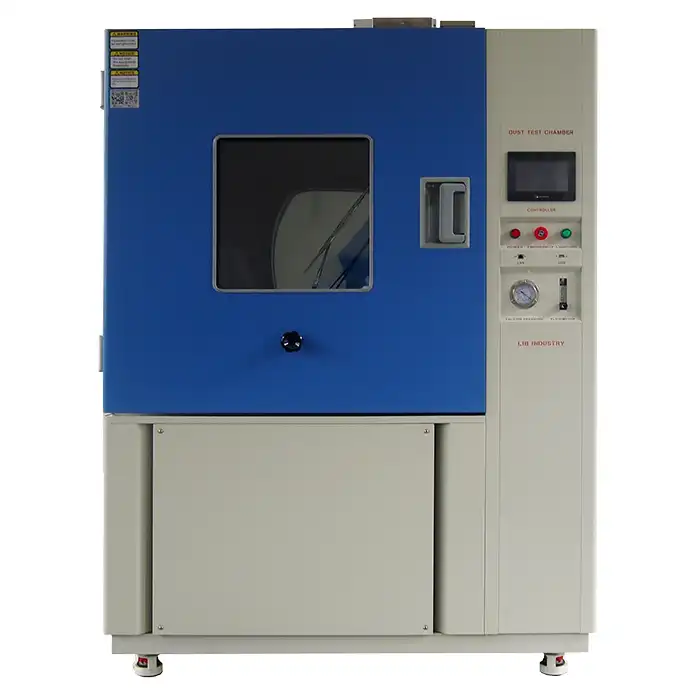
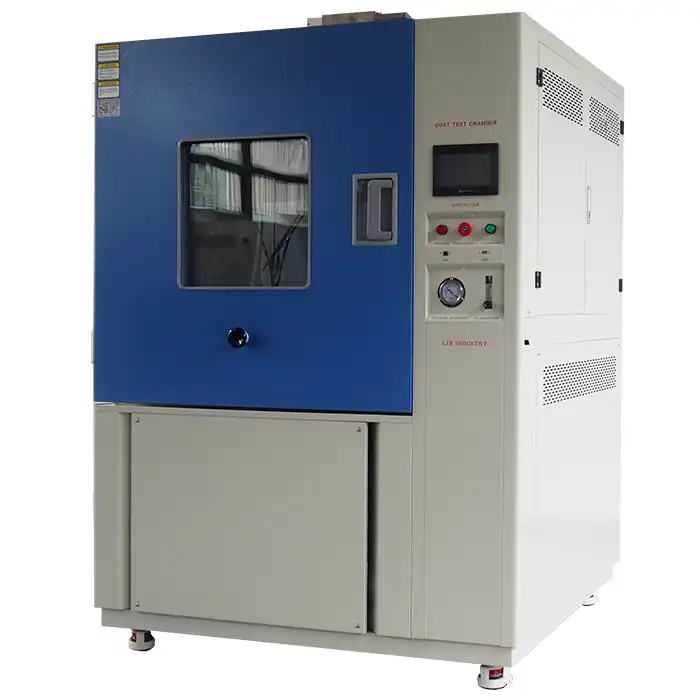
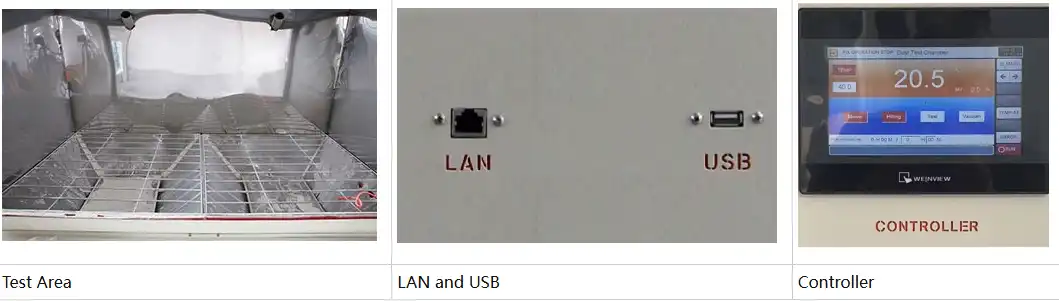
The DI-series spans internal volumes from 800 L to 2,000 L, accommodating everything from handheld devices to large automotive assemblies. All models feature programmable color LCD touch-screen controllers with Ethernet connectivity, electromagnetic door locks, and comprehensive safety protection including over-temperature, over-current, earth leakage, and phase-sequence protection circuits. SUS304 stainless steel interiors resist corrosion from prolonged talcum powder exposure.
|
|
|
||
|
Model |
Internal Dimension (mm) |
Volume (L) |
Overall Dimension (mm) |
|
DI-800 |
800 × 1000 × 1000 |
800 |
1040 × 1450 × 1960 |
|
DI-1000 |
1000 × 1000 × 1000 |
1000 |
1330 × 1450 × 1960 |
|
DI-1500 |
1000 × 1500 × 1000 |
1500 |
1330 × 1950 × 1990 |
|
DI-2000 |
1000 × 2000 × 1000 |
2000 |
1330 × 2450 × 1990 |
Custom Engineering and Non-Standard Configurations
LIB's engineering team develops non-standard chamber configurations for customers with atypical specimen geometries or testing protocol requirements that fall outside IEC or MIL specifications. Custom development encompasses chamber sizing, particle delivery system redesign, multi-axis specimen rotation, and integrated data acquisition interfaces - delivering tailored solutions that map precisely to the customer's validation requirements.
Global Service Network and Quality Assurance
All LIB chambers carry CE certification and undergo third-party verification from SGS and TUV authorities. A 3-year warranty backed by a lifetime service commitment, combined with a 24/7 global support network spanning 29 countries, ensures minimal test program interruption. Trusted by leading organizations including Apple, Intel, Mercedes-Benz, and BYD, LIB Industry operates under ISO 9001 Quality Management System protocols at every stage from design through commissioning.
Conclusion
Sand and dust test chambers are the definitive tool for validating electronics destined for desert environments. By replicating precise particle concentrations, wind velocities, thermal conditions, and humidity levels, they expose enclosure weaknesses before products reach the field. Adherence to IEC 60529, MIL-STD-810, and ISO 20653 standards, combined with rigorous post-test electrical and functional verification, gives manufacturers the evidence base needed to certify desert-rated electronics with confidence. Investing in structured chamber-based validation reduces field failure rates, shortens redesign cycles, and ultimately protects the brand equity of manufacturers operating in demanding global markets.
FAQ
What is the difference between an IP5X and IP6X dust rating when using a sand and dust test chamber?
IP5X permits limited dust ingress that does not impair function, tested at ambient pressure. IP6X requires complete dust exclusion, verified under a 20 mbar negative pressure for 8 hours. The correct rating depends on the application: IP6X is mandatory for sealed industrial and defense electronics where any particulate ingress is unacceptable.
Can the same chamber be used for both sand testing and fine dust testing?
Yes. LIB DI-series chambers support both test modes through independently programmable fan speed control, enabling low-velocity dust ingress testing per IEC 60529 and high-velocity sand abrasion testing per MIL-STD-810 Method 510 on a single platform. Particle feed and concentration control systems are optimized for both particle size ranges.
How long does a standard IEC 60529 IP6X dust test take, and what specimen preparation is required?
The IEC 60529 IP6X test runs for 8 hours at 2 kg/m³ talcum powder concentration. Specimens must be pre-conditioned to operating temperature with all access covers, connectors, and ports in their normal deployed configuration. Powered testing via the chamber's internal power interface is recommended to validate functional integrity throughout the full exposure period.
Ready to Validate Your Electronics for Desert Deployment?
LIB Industry is a professional sand and dust test chamber manufacturer and supplier with over two decades of experience delivering turnkey environmental testing solutions worldwide. From standard IEC 60529 configurations to fully customized chambers, our team handles research, design, production, commissioning, installation, and training. Contact us today at ellen@lib-industry.com to discuss your project requirements.