PCB Baking and Moisture Removal Using an Industry Oven
Moisture absorption poses a significant threat to printed circuit boards (PCBs) during storage and handling. PCB baking using an industry oven effectively eliminates trapped moisture before assembly operations, preventing delamination, popcorning, and soldering defects. This controlled thermal process restores boards to their optimal dry condition, ensuring reliable performance in final applications. Modern industrial ovens provide precise temperature management and uniform heat distribution, making them indispensable equipment for electronics manufacturers committed to quality. Understanding proper baking protocols maximizes component longevity while minimizing thermal stress damage to delicate circuitry.
Why Moisture Control Is Vital for PCB Manufacturing?
 |
 |
The Science Behind Moisture Absorption in PCBs
Printed circuit boards naturally absorb atmospheric moisture through their laminate materials, particularly FR-4 epoxy resin substrates. This hygroscopic behavior becomes problematic when boards undergo high-temperature processes like reflow soldering. Water molecules trapped within the board structure rapidly vaporize, creating internal pressure that can cause catastrophic failures. Understanding these moisture dynamics helps manufacturers implement preventive measures before costly defects emerge during production.
Common Defects Caused by Excess Humidity
Delamination represents the most visible consequence of moisture-related failures, where laminate layers separate due to steam pressure during heating. Popcorning - the explosive separation of components from board surfaces - occurs when moisture beneath surface-mount devices vaporizes rapidly. These defects compromise electrical performance and mechanical integrity, leading to field failures and warranty claims that damage brand reputation and profitability.
Industry Standards for Moisture-Sensitive Components
IPC/JEDEC J-STD-033 establishes classifications for moisture sensitivity levels (MSL), ranging from MSL 1 (unlimited floor life) to MSL 6 (mandatory baking before use). Components rated MSL 3 and above require strict humidity control and baking procedures before assembly. Compliance with these standards protects manufacturers from quality issues while ensuring consistent production outcomes across different environmental conditions.
Oven Technologies for Efficient PCB Drying
Convection Heating Mechanisms
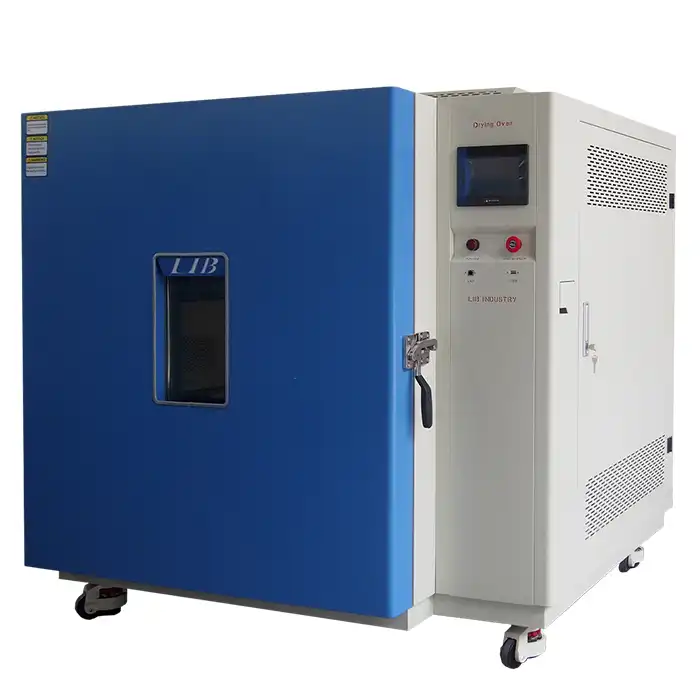
Advanced air circulation systems form the foundation of effective PCB drying processes. The LIB industry oven employs centrifugal fan technology that creates horizontal and vertical airflow channels throughout the chamber. This multi-directional circulation eliminates stagnant zones where temperature variations might occur, ensuring every board receives consistent thermal energy regardless of rack position within the workspace.
Temperature Range Capabilities Across Applications
Different PCB materials and component configurations demand varied thermal processing windows. Standard baking operations typically occur between 100°C and 125°C, suitable for most FR-4 substrates without causing thermal degradation. Specialized applications may require extended ranges - the LIB system offers ambient to +250°C for conventional boards, +400°C for high-temperature ceramics, and +900°C for specialized metallurgical processes in hybrid circuit manufacturing.
Programmable Control Systems for Precision
Modern PID controllers with programmable color LCD touch screen interfaces enable operators to create multi-segment temperature profiles. These sophisticated systems maintain temperature accuracy within ±0.5°C while tracking actual versus setpoint values throughout the baking cycle. Ethernet and USB connections facilitate remote monitoring and data logging, essential for quality management systems requiring complete process documentation and traceability.
Thermal Profiles for Moisture Removal Without Damage
Gradual Ramp-Up Procedures
Rapid temperature increases can create differential thermal expansion between board layers, potentially causing warpage or microcracking. Controlled heating rates - typically 6℃/min in industrial systems - allow moisture to diffuse outward through the laminate structure without building excessive internal pressure. This gradual approach proves particularly important for thick multilayer boards where moisture migration pathways extend longer distances from interior regions to surface escape points.
Optimal Soak Time Calculations
Dwell duration at target temperature depends on board thickness, material composition, and initial moisture content. Standard 1.6mm FR-4 boards typically require 4-8 hours at 125°C for complete moisture removal. Thicker assemblies or high-layer-count boards may need extended periods up to 24 hours. Temperature uniformity within ±2.0°C throughout the industrial drying oven ensures consistent results regardless of board placement within the workspace.
Controlled Cooling to Prevent Reabsorption
Post-baking handling procedures significantly impact moisture control effectiveness. Boards removed from the oven while still hot immediately begin reabsorbing atmospheric moisture upon exposure to ambient conditions. Implementing controlled cooling within a low-humidity environment, followed by immediate packaging in moisture-barrier bags with desiccants, preserves the dry condition achieved during baking until assembly operations commence.
|
Baking Parameter |
Standard PCBs |
Thick Multilayer |
Ceramic Substrates |
|
Temperature Range |
100-125°C |
110-130°C |
150-200°C |
|
Ramp Rate |
6°C/min |
4°C/min |
5°C/min |
|
Soak Duration |
4-8 hours |
12-24 hours |
6-10 hours |
|
Cooling Method |
Ambient in chamber |
Controlled ramp down |
Gradual reduction |
Managing PCB Warping and Stress During Baking
Understanding Thermal Expansion Coefficients
Composite PCB structures contain materials with differing coefficients of thermal expansion (CTE). Copper traces, epoxy resin, and glass fiber reinforcement each respond differently to temperature changes, creating internal stresses during heating and cooling cycles. Mismatched CTE values become particularly problematic in assemblies containing rigid and flexible sections, where material interfaces experience shear forces that may compromise structural integrity.
Strategic Fixture and Support Methods
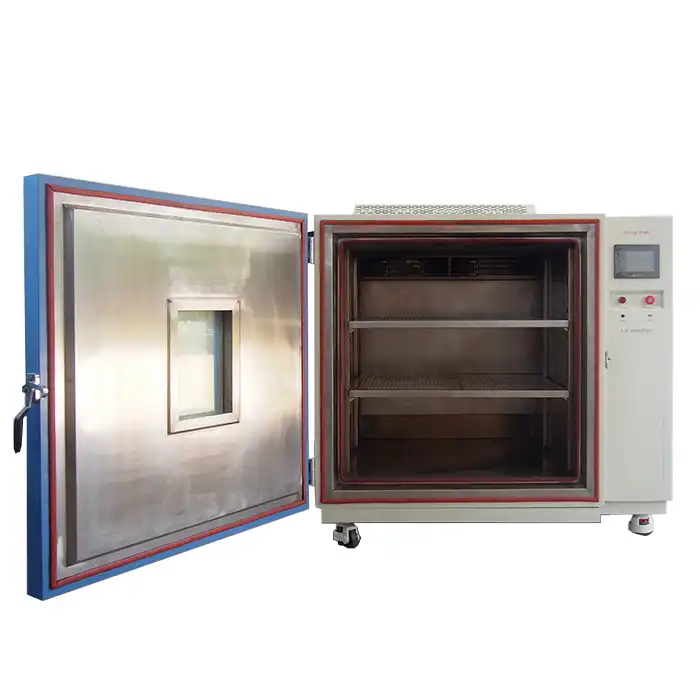
Punch type sample holders within the LIB industry oven ensure adequate air circulation while providing mechanical support that minimizes warping tendencies. Positioning boards horizontally with multiple contact points distributes gravitational forces evenly, preventing sagging in large-format panels. Adjustable shelf spacing at 25mm increments accommodates various board sizes and allows optimization of airflow patterns around each loaded assembly.
Post-Baking Flatness Verification
Quality control procedures should include dimensional inspection after thermal processing. Optical measurement systems or precision dial indicators detect warpage exceeding acceptable tolerances, typically 0.75% of diagonal length per IPC-A-600 specifications. Boards showing excessive deformation may require alternative support configurations during subsequent baking cycles or indicate material incompatibilities requiring engineering review before production continuation.
Quality Checks for Moisture-Free Circuit Boards
Moisture Indicator Cards and Testing
Visual moisture indicator cards provide immediate feedback on relative humidity exposure during storage and handling. These cards contain chemically treated spots that change color at specific humidity thresholds, offering quick assessment without specialized equipment. More precise measurements employ moisture analyzer instruments that calculate absolute moisture content through weight loss analysis during controlled heating, providing quantitative data for process validation.
Weight Measurement Before and After Baking
Gravimetric analysis offers a straightforward method for verifying moisture removal effectiveness. Precision balances capable of 0.001g resolution detect weight changes corresponding to water evaporation from board materials. Documentation of pre-bake and post-bake weights establishes baseline data for process optimization while providing objective evidence of proper moisture elimination for quality management system requirements.
Electrical Performance Validation
Insulation resistance testing reveals moisture-related degradation in electrical properties before assembly operations proceed, particularly after drying in an industrial oven. Megohm meters apply high voltage between circuit traces, detecting current leakage paths created by conductive moisture contamination. This non-destructive testing method identifies boards requiring additional baking time while confirming that properly processed assemblies meet electrical specifications for subsequent manufacturing stages.
|
Quality Check Method |
Measurement Range |
Accuracy Level |
Typical Duration |
|
Moisture Indicator Cards |
10-60% RH |
Visual estimation |
Immediate |
|
Weight Analysis |
0.01-5% moisture |
±0.001g |
5-10 minutes |
|
Insulation Resistance |
100MΩ-10GΩ |
±2% of reading |
2-3 minutes per test |
Enhancing Reliability of Electronics Through Proper Baking
Preventing Field Failures from Hidden Moisture
Statistical analysis of electronic product failures identifies moisture-related defects as contributing factors in 15-30% of premature failures occurring within warranty periods. These hidden weaknesses often manifest months after production as corrosion, electromigration, or intermittent electrical connections develop under operating conditions. Rigorous pre-assembly baking protocols eliminate moisture as a root cause, substantially improving long-term reliability metrics and customer satisfaction.
Extended Component Shelf Life Management
Components exceeding manufacturer-specified floor life require reconditioning through baking before use in assembly operations. This restoration process resets the moisture exposure clock, effectively extending component inventory utility and reducing waste from expired parts. Documentation systems tracking component receipt dates, environmental exposure duration, and baking history maintain compliance with quality standards while optimizing inventory management practices.
Correlation with Soldering Process Windows
Moisture-free boards exhibit wider process windows during reflow soldering, accommodating normal variations in temperature profiles without defect formation. Dry substrates reduce solder balling, tombstoning, and voiding phenomena that plague assemblies with elevated moisture content. This process stability translates to higher first-pass yields, reduced rework costs, and improved throughput in high-volume manufacturing environments where consistent quality drives profitability.
Gentle Yet Effective Drying Protecting Sensitive Electronic Components - LIB Industry
Advanced Air Circulation System Benefits
The LIB industry oven incorporates multi-layer heating elements coordinated with precision airflow management systems to maintain temperature uniformity throughout the workspace. Adjustable fan speed control protects lightweight components from displacement while ensuring adequate convective heat transfer for efficient moisture removal. This balanced approach prevents localized overheating that might damage sensitive devices while delivering consistent results across diverse PCB configurations.
Safety Features for Hazardous Material Processing
Comprehensive safety systems address risks inherent in thermal processing operations. Independent over-temperature protection employs dual-controller architecture that automatically terminates heating if primary temperature regulation fails. Automatic exhaust ports with variable flow control safely remove solvent vapors and moisture-laden air from the chamber, preventing accumulation of potentially hazardous atmospheres. Emergency stop functions provide instant shutdown capability, protecting operators during unexpected situations.
Customizable Loading Configurations
Flexible workspace arrangements accommodate various production requirements through adjustable shelving systems. Standard configurations support 50kg per shelf, suitable for most PCB processing applications. Heavy-duty options extend capacity to 200kg per shelf with total loading up to 2000kg, enabling batch processing that maximizes throughput efficiency. Floor-level loading access and optional cart systems facilitate material handling for large-format boards or high-volume production scenarios.
|
LIB Oven Model |
Internal Dimension (mm) |
Volume |
Max Temperature |
Shelf Capacity |
|
O-100 |
400×500×500 |
100L |
+250/+400/+900°C |
50kg standard |
|
O-225 |
500×600×750 |
225L |
+250/+400/+900°C |
50kg standard |
|
O-500 |
700×800×900 |
500L |
+250/+400/+900°C |
200kg heavy-duty |
|
O-800 |
800×1000×1000 |
800L |
+250/+400/+900°C |
200kg heavy-duty |
|
O-1000 |
1000×1000×1000 |
1000L |
+250/+400/+900°C |
200kg heavy-duty |
Remote Monitoring and Process Documentation
Modern manufacturing environments demand data connectivity for process control and quality assurance. Computer interface capabilities enable remote operation and real-time monitoring from centralized control stations. Automated data logging captures complete thermal profiles, creating permanent records that satisfy ISO 9001 and automotive IATF 16949 quality management requirements. This digital integration supports continuous improvement initiatives through statistical process control analysis of baking operations.
Energy Efficiency and Operating Economics
Polyurethane foam thermal insulation combined with precision temperature control minimizes energy consumption during extended baking cycles. SUS304 stainless steel interior construction reflects radiant heat while resisting corrosion from moisture and chemical vapors released during processing. These design elements reduce operating costs while extending equipment service life, delivering favorable return on investment calculations for manufacturing operations prioritizing both quality and economic efficiency.
Compliance with Environmental and Safety Regulations
Explosion-proof designs meeting ATEX compliance standards enable safe processing of boards contaminated with flammable residues or outgassing volatile compounds. Reinforced A3 steel exterior construction with protective coating withstands demanding industrial environments while high-temperature silicone seals prevent heat loss and maintain chamber integrity. These robust construction standards ensure regulatory compliance across global manufacturing jurisdictions while protecting worker safety in production facilities.
Conclusion
Effective moisture management through proper PCB baking protocols stands as a critical quality control measure in electronics manufacturing. Industrial ovens delivering precise temperature uniformity, controlled heating rates, and comprehensive safety features enable manufacturers to eliminate moisture-related defects while protecting component integrity. Investment in advanced thermal processing equipment yields measurable returns through reduced warranty claims, improved production yields, and enhanced product reliability in demanding field applications.
FAQ
How long should PCBs be baked to remove moisture completely?
Baking duration depends on board thickness and material composition. Standard 1.6mm FR-4 boards typically require 4-8 hours at 125°C, while thicker multilayer assemblies may need 12-24 hours. Post-baking weight measurements confirm complete moisture removal before proceeding with assembly operations.
Can PCB baking damage sensitive components already mounted on boards?
Temperature selection must consider component thermal ratings. Most surface-mount devices tolerate 125°C exposure, but certain plastic-packaged components require lower temperatures around 100°C. Review component datasheets and use graduated temperature profiles to prevent thermal damage during moisture removal processes.
What is the maximum storage time after baking before assembly must occur?
Properly baked boards sealed in moisture-barrier bags with desiccants maintain dry condition for 6-12 months when stored below 30°C and 60% RH. Opened packages require assembly within manufacturer-specified floor life periods, typically 24-168 hours depending on MSL classification and ambient conditions.
Ready to enhance your PCB manufacturing quality with precision baking solutions? LIB Industry, a leading environmental test chamber manufacturer, provides comprehensive turn-key systems tailored to your production requirements. Contact our technical team at ellen@lib-industry.com to discuss customized industrial oven configurations that optimize your moisture control processes.