Advanced Cyclic Corrosion Testing for Protective Coatings
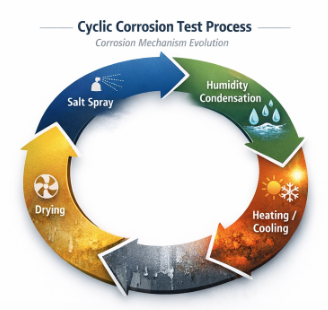
Advanced cyclic corrosion testing conducted in a cyclic corrosion chamber represents a paradigm shift from traditional single-environment exposure methods, offering realistic simulation of protective coating performance under variable atmospheric conditions. Unlike conventional salt spray testing that maintains static conditions, cyclic methodologies alternate between salt fog exposure, dry periods, humid conditioning, and ambient recovery phases. This multi-phase approach accurately replicates real-world weathering patterns where coatings experience temperature fluctuations, moisture cycling, and intermittent corrosive exposure. The sophisticated testing protocols reveal coating vulnerabilities that static testing cannot detect, enabling manufacturers to develop superior protective systems for automotive, aerospace, marine, and industrial applications.
What Defines Advanced Cyclic Corrosion Testing Methods?
Multi-Environment Sequential Exposure Philosophy
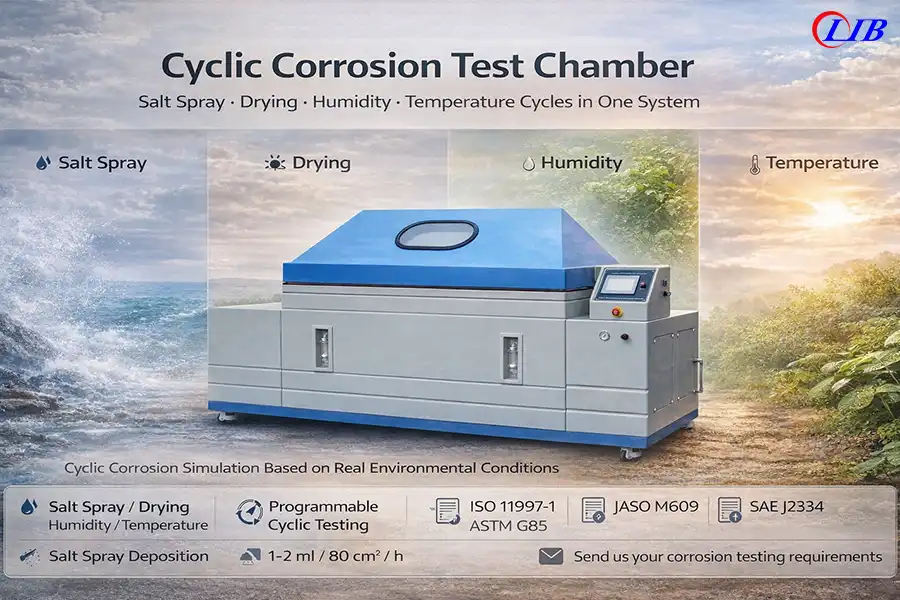
Advanced cyclic testing transcends simple salt fog immersion by orchestrating carefully sequenced environmental transitions. A cyclic corrosion chamber alternates between corrosive salt spray phases at controlled deposition rates of 1-2 mL/80 cm²·h, followed by drying intervals where salt crystallization concentrates corrosive species on coating surfaces. Subsequent humid phases at 85-98% RH accelerate electrochemical reactions, while ambient recovery periods simulate nighttime or seasonal cooling. This cyclical pattern mimics coastal industrial environments where protective coatings endure the most aggressive degradation mechanisms.
International Standards Compliance Framework
Standardized test protocols ensure reproducibility and industry acceptance of coating performance data. ASTM G85 establishes cyclic corrosion test procedures including Annex A3 (SWAAT - Seawater Acidity Test), Annex A4 (SO2 test), and Annex A5 (Prohesion test). Automotive manufacturers reference VW PV 1210, GMW 14872, and SAE J2334 for OEM-specific qualification requirements. Aerospace applications follow Boeing and Airbus proprietary specifications. Modern chambers feature pre-programmed standard libraries, eliminating manual programming errors and ensuring compliance.
Temperature and Humidity Precision Requirements
Achieving meaningful cyclic test results demands exceptional environmental control accuracy. Advanced chambers maintain temperature stability within ±0.5°C across the operational range of +10°C to +90°C, utilizing PT100 Class A sensors with sophisticated PID algorithms. Humidity control reaches ±2% RH precision through external isolation stainless steel surface evaporation humidifiers and saturated air barrel preheating systems. Mechanical compression refrigeration with air-cooled condensers enables rapid transitions from high-humidity fog conditions to low-humidity drying phases, critical for accelerated testing protocols.
Coating Degradation Mechanisms Under Cyclic Conditions
Osmotic Blistering Through Moisture Ingress
Protective coatings exhibit semi-permeable membrane characteristics, allowing water molecules to penetrate while blocking larger corrosive ions initially. During humid phases, moisture accumulates at the coating-substrate interface, creating osmotic pressure gradients. Soluble salts deposited during fog phases concentrate at defect sites, generating additional osmotic potential. Repeated wet-dry cycling intensifies blister formation as trapped moisture expands during temperature increases. Cyclic testing accelerates this mechanism through controlled humidity transitions, revealing coating permeability issues within weeks rather than years of field exposure.
Differential Electrochemical Cell Formation
Salt deposits create localized concentration cells across coated surfaces during cyclic exposure in a cyclic corrosion chamber. Dry periods concentrate sodium chloride crystals at coating micro-defects, establishing anodic sites. Adjacent areas with lower salt concentration become cathodic regions. Subsequent humid phases activate these differential cells, driving accelerated localized corrosion. Temperature cycling between 10°C and 90°C modulates electrochemical reaction rates, while SO2 gas introduction (when specified) acidifies the electrolyte, intensifying attack. This synergistic degradation surpasses damage from constant-condition exposure.
Thermal Expansion Mismatch Stresses
Cyclic temperature fluctuations induce repetitive expansion and contraction of coating films and metallic substrates. Mismatched thermal expansion coefficients generate interfacial shear stresses, particularly at coating edges and pre-existing defects. Glass fiber reinforced plastic chamber construction maintains structural integrity through countless thermal cycles while subjecting test specimens to programmed temperature profiles. Automotive clearcoats, powder coatings, and multi-layer protective systems reveal adhesion weaknesses under this mechanical fatigue component combined with chemical attack.
|
Degradation Mechanism |
Primary Cyclic Phase |
Coating Vulnerability |
Detection Method |
|
Osmotic Blistering |
Humid conditioning (85-98% RH) |
High permeability systems |
Blister density measurement |
|
Electrochemical Corrosion |
Salt fog + Dry periods |
Porous or defective films |
Scribe creepage evaluation |
|
Adhesion Loss |
Temperature cycling (10-90°C) |
Poor surface preparation |
Cross-hatch adhesion testing |
|
Chalking/Erosion |
Combined exposure |
UV-sensitive polymers |
Gloss retention measurement |
Custom Test Cycles for Different Protective Coating Systems
Automotive OEM Validation Protocols
Automotive manufacturers demand rigorous cyclic testing to validate coatings exposed to de-icing salts, acid rain, and temperature extremes. VW PV 1210 specifies alternating 8-hour salt spray periods at 35°C, 16-hour drying phases at 60°C and 30% RH, creating 24-hour cycles repeated for 10-30 weeks. GMW 14872 incorporates SO2 injection during humid phases, simulating industrial pollution effects on clearcoats and e-coat primers. Programmable controllers supporting 120 programs with 100 steps each accommodate these complex sequences, automatically transitioning between phases without operator intervention.
Aerospace Corrosion Resistance Qualification
Aircraft structural coatings endure altitude-induced temperature variations, marine salt exposure during coastal operations, and aggressive deicing fluids. Aerospace test cycles incorporate extended dry periods at elevated temperatures (70-80°C) to simulate solar heating on tarmac surfaces, followed by rapid cooling to 20°C with high humidity exposure. Chromate-free primer systems and topcoat compatibility receive evaluation through 2,000-4,000 hour cyclic exposures. Centrifugal wind fan circulation ensures uniform environmental distribution across large test panels representing fuselage and wing components.
Marine and Offshore Protective Systems
Coatings for marine vessels, offshore platforms, and coastal infrastructure require validation against continuous salt-laden atmosphere exposure. Modified ASTM B117 protocols extend basic salt spray with daily transitions to 50°C dry conditions, accelerating underfilm corrosion at coating holidays and welds. Thick-film epoxy systems, polyurethane topcoats, and zinc-rich primers undergo cyclic testing to predict service life in splash zones and atmospheric environments. Salt fog collection through fog collectors and fog measure cylinders verifies consistent deposition rates throughout extended test durations.
How to Improve Corrosion Resistance Through Testing?
Iterative Formulation Optimization Processes
Cyclic corrosion testing provides rapid feedback for coating chemists developing improved formulations. Comparing blister ratings, scribe creepage distances, and color retention between formulation variants after 500-1000 hour exposures guides resin selection, pigment loading, and additive incorporation decisions. Testing prototype formulations in chambers featuring glass fiber reinforced plastic construction eliminates contamination concerns that might skew results. Statistical experimental designs optimize multiple variables simultaneously, accelerating development timelines from years to months.
Surface Preparation Protocol Validation
Coating performance depends critically on substrate preparation quality. Cyclic testing in a cyclic corrosion chamber quantifies adhesion differences between solvent cleaning, mechanical abrasion, conversion coating, and grit blasting treatments. Comparing identical coating systems applied over varied surface preparations reveals inadequate cleaning or contamination issues. Automotive manufacturers validate phosphate conversion coating processes through cyclic exposure, ensuring adequate crystal structure formation before e-coat application. Specification development references cyclic test data to establish minimum surface preparation requirements.
Accelerated Service Life Prediction Modeling
Correlation studies between cyclic test results and field exposure data enable predictive service life modeling. Statistical analysis comparing coating failures from 1000-hour cyclic testing with 2-5 year field exposures establishes acceleration factors for specific environments. Automotive coastal exposure correlates with specific VW PV 1210 or GMW cycles, while industrial atmospheres relate to SO2-enhanced protocols. These relationships allow coating manufacturers to confidently predict 10-20 year service life based on controlled laboratory testing, supporting warranty decisions and material selection.
Performance Metrics: Adhesion, Blistering, and Rusting
Quantitative Adhesion Measurement Techniques
Cross-hatch adhesion testing per ASTM D3359 provides standardized assessment of coating-substrate bonding after cyclic exposure. A calibrated cutting tool creates a grid pattern through the coating, followed by pressure-sensitive tape application and rapid removal. Remaining coating percentage determines adhesion classification from 5B (no removal) to 0B (complete delamination). Pull-off adhesion testing using calibrated dollies bonded to coating surfaces quantifies interfacial strength in MPa, revealing degradation from initial post-application values. Tracking adhesion loss versus exposure duration characterizes coating durability.
Blister Density and Size Classification
ASTM D714 establishes standardized visual references for blister assessment, classifying both size (from barely visible to 5mm diameter) and density (few to dense). Cyclic testing typically reveals blistering at coating defects, edges, and areas of inadequate surface preparation. Photographic documentation at regular intervals (every 168 hours) tracks blister evolution, distinguishing between osmotic blisters containing clear fluid and corrosion-driven blisters with rust-stained contents. Advanced evaluation employs digital image analysis for objective, reproducible blister quantification, eliminating subjective inspector variation.
Scribe Creepage and Rust Grade Evaluation
Scribing coated panels with carbide tools to expose bare substrate simulates mechanical damage, stone chips, or handling damage. Measuring coating disbondment distance from the scribe after cyclic exposure quantifies underfilm corrosion resistance - superior coatings maintain <2mm creepage after 1000 hours, while inadequate systems show >5mm. ASTM D610 rust grade evaluation assesses corrosion percentage on exposed substrate areas using photographic standards. Combined scribe and rust metrics provide comprehensive coating performance characterization for specification development and quality control verification.
|
Performance Metric |
Test Standard |
Acceptance Criteria (Automotive) |
Measurement Frequency |
|
Cross-hatch Adhesion |
ASTM D3359 |
≥4B after 1000 hours |
Every 500 hours |
|
Blister Rating |
ASTM D714 |
No blisters >Size 8 |
Every 168 hours |
|
Scribe Creepage |
GMW 14872 |
<2mm average |
Test completion |
|
Rust Grade |
ASTM D610 |
≥Grade 9 |
Test completion |
|
Gloss Retention |
ASTM D523 |
>80% initial value |
Every 500 hours |
R&D Applications in Coating Development and Optimization
Novel Corrosion Inhibitor Screening
Developing environmentally compliant alternatives to chromate and lead-based inhibitors requires efficient screening methodologies. Cyclic corrosion chambers enable parallel testing of multiple inhibitor candidates in identical coating matrices, isolating inhibitor effectiveness from formulation variables. Zinc phosphate, molybdate, rare earth, and organic inhibitor systems undergo comparative evaluation through standardized cyclic protocols. Chambers equipped with atomizer towers and spray nozzles manufactured from quartz glass ensure contamination-free testing, preventing false results from equipment-induced chemistry changes. Rapid screening identifies promising candidates for extensive field exposure validation.
Multi-Layer System Compatibility Studies
Modern protective coating systems employ primer, intermediate, and topcoat layers with distinct functions - adhesion promotion, barrier properties, and weathering resistance respectively. Cyclic testing reveals interlayer adhesion issues, solvent attack between incompatible chemistries, and differential thermal expansion problems. Aerospace applications test primer-topcoat compatibility across temperature extremes from -40°C (simulated through pre-cooling) to +90°C. Pneumatic sealing systems prevent environmental leakage during these demanding cycles, maintaining test integrity. Compatibility matrices guide system selection for specific substrates and service environments.
Coating Thickness Optimization Analysis
Increasing coating thickness generally improves corrosion protection but raises material costs and creates application challenges. Cyclic testing different film builds of identical formulations identifies optimal thickness balancing performance and economy. Automotive clearcoats tested at 30μm, 50μm, and 70μm reveal diminishing returns beyond critical thresholds. Industrial maintenance coatings require thickness optimization for brush versus spray application. Data from cyclic chambers with programmable color LCD touchscreen controllers and Ethernet connectivity integrates with laboratory information management systems, facilitating statistical analysis of thickness-performance relationships.
LIB Industry Innovative Systems for Advanced Protective Coating Testing
|
|
|
| Corrosion-Resisitant Workroom | Modular grooves are used for holding samples |


|
salt spray tower |
cylinder |
spray collector |


Comprehensive Environmental Control Architecture
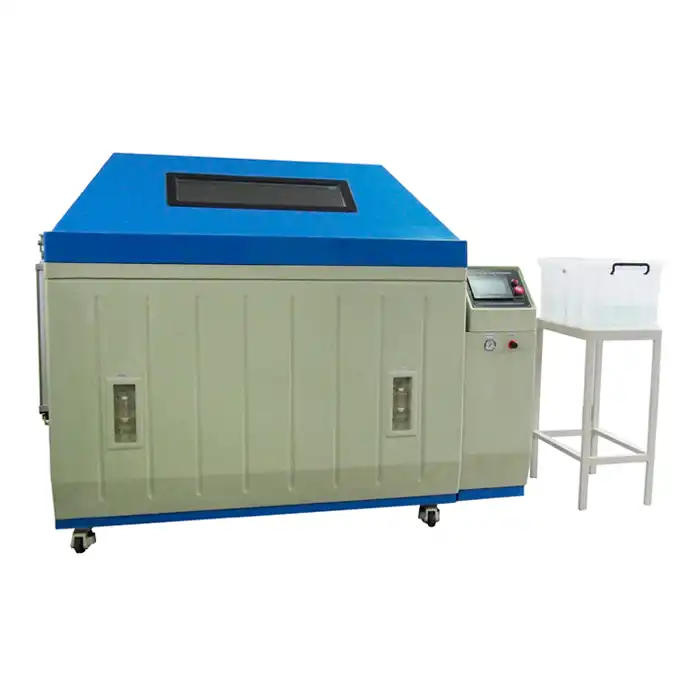
LIB Industry cyclic corrosion chambers integrate mechanical compression refrigeration, external isolation humidification, saturated air barrel preheating, and atomizer tower spray systems into cohesive platforms. The SC-010, SC-016, and SC-020 models offer internal volumes from 780L to 1800L, accommodating component testing through full vehicle body panels. Temperature control from +10°C to +90°C with ±0.5°C fluctuation enables precise protocol execution. Humidity range spanning 30% to 98% RH supports aggressive wet phases and rapid dry-down sequences. SO2 gas control with dedicated NAOH exhaust treatment ensures safe acidic gas testing for industrial atmosphere simulation.
Rapid Transition Capability Engineering
The technical challenge in cyclic testing involves transitioning from 100% RH salt fog conditions to 30% RH drying environments within prescribed timeframes. LIB chambers employ forced air circulation through centrifugal wind fans combined with precision dehumidification via mechanical refrigeration. This dual-approach rapidly removes moisture, achieving target humidity levels in 30-45 minutes versus 2-3 hours for passive systems. Faster transitions enable more cycles per calendar day, reducing total test duration. Automotive OEM protocols requiring 10-week durations complete on schedule without overtime chamber operation.
Global Support and Certification Standards
Serving over 60 countries since 2009, LIB Industry maintains ISO 9001 quality management certification and CE compliance across product lines. Customers including Apple, IBM, Amazon, Intel, SGS, TUV, CERN, BYD, Great Wall Motors, and Mercedes-Benz rely on LIB cyclic corrosion chambers for critical coating qualification. Three-year warranty coverage with lifetime technical support provides operational confidence. Twenty-nine international distributors offer localized service, while direct support centers in Malaysia, Canada, the United Kingdom, and the United States ensure rapid response. Custom engineering capabilities address non-standard requirements, delivering tailored solutions for specialized coating research applications.
|
Chamber Model |
Internal Dimensions (mm) |
Volume (L) |
Application |
|
SC-010 |
800 × 1450 × 680 |
780 |
Component and small panel testing |
|
SC-016 |
1000 × 1600 × 800 |
1280 |
Automotive panels and assemblies |
|
SC-020 |
1000 × 2000 × 900 |
1800 |
Large panels and multi-specimen testing |
Conclusion
Advanced cyclic corrosion testing fundamentally transforms protective coating development, qualification, and quality assurance processes. The sophisticated environmental cycling protocols employed in modern cyclic corrosion chambers reveal coating vulnerabilities invisible to traditional single-environment testing, enabling accurate service life prediction and formulation optimization. Performance metrics including adhesion retention, blister resistance, and scribe creepage provide quantifiable data supporting specification development and supplier qualification decisions. As industries demand increasingly durable coatings for challenging service environments, cyclic corrosion chambers represent indispensable tools for R&D laboratories, quality control departments, and coating manufacturers pursuing competitive advantage through superior corrosion protection.
FAQ
How does cyclic corrosion testing differ from traditional salt spray testing?
Cyclic testing alternates between salt fog exposure, dry periods, humid conditioning, and ambient recovery, replicating real-world weathering patterns. Traditional salt spray maintains constant conditions, missing degradation mechanisms requiring environmental transitions like osmotic blistering and salt crystallization effects that accelerate coating failure.
What test duration provides meaningful coating performance data?
Automotive applications typically require 1,000-3,000 hours (6-18 weeks) depending on OEM specifications like VW PV 1210 or GMW 14872. Aerospace coatings undergo 2,000-4,000 hour exposures. Marine systems need extended protocols. Duration correlates with intended service life and environment severity.
Can cyclic chambers test coatings with SO2 exposure?
Advanced chambers feature SO2 gas control systems with volume monitoring and NAOH exhaust treatment tanks. SO2 injection simulates industrial pollution effects, acidifying the corrosive environment. This capability addresses ASTM G85 Annex A4 requirements and automotive specifications for regions with significant atmospheric contamination.
Advance your protective coating development with proven cyclic corrosion testing technology. LIB Industry, a leading environmental test chamber manufacturer and supplier with global reach, delivers customized solutions backed by comprehensive engineering expertise. Contact our technical specialists at ellen@lib-industry.com to discuss your specific coating evaluation requirements.