Aerospace Valve Testing With a Water Immersion Tank
Aerospace valve testing demands rigorous quality assurance protocols to guarantee component reliability under extreme operational conditions. A water immersion tank serves as essential testing equipment that simulates underwater pressure environments, enabling engineers to evaluate valve sealing integrity, leak detection, and structural durability. These specialized tanks replicate conditions ranging from shallow submersion to deep-sea pressures, ensuring aerospace valves meet stringent industry standards before deployment in critical applications such as fuel systems, hydraulic circuits, and environmental control mechanisms aboard aircraft and spacecraft.
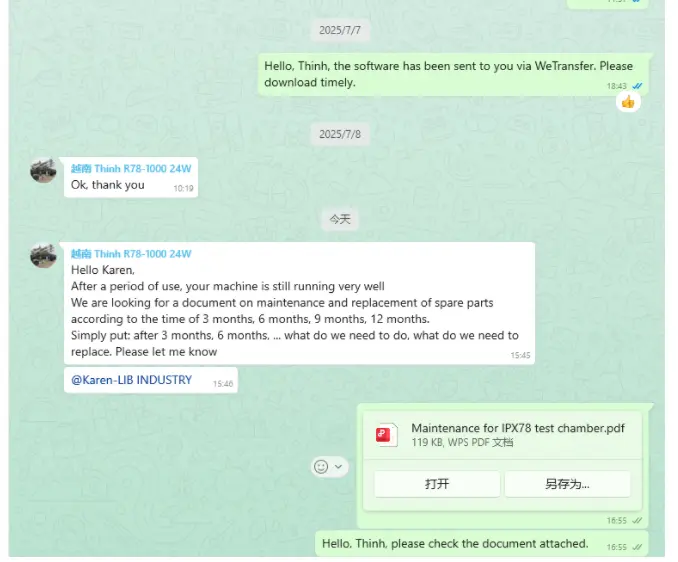
A customer in Vietnam operating the LIB industry R78-1000 water immersion test system recently provided feedback after an extended period of use. They noted that the equipment has been performing consistently, maintaining stable and precise immersion conditions for ongoing sealing integrity verification during production testing.After several months of operation, the customer also contacted our team to discuss preventive maintenance and spare parts planning, reflecting their confidence in the system’s long-term stability and operational reliability.
This case once again highlights LIB industry’s commitment to delivering robust IPX7 and IPX8 immersion testing solutions, designed to ensure dependable waterproof performance validation while offering straightforward maintenance support for manufacturers across global markets.
Why Are Aerospace Valves Subjected to Immersion Testing?
Mission-Critical Safety Requirements
Aerospace valves function as gatekeepers within complex fluid management systems where failure consequences extend beyond equipment damage to potential loss of life. Immersion testing validates that these components maintain operational integrity when exposed to moisture ingress, pressure differentials, and thermal cycling. Aircraft operating at various altitudes encounter condensation, while spacecraft face extreme vacuum-to-pressure transitions during atmospheric reentry.
Environmental Exposure Simulation
Valves installed in aerospace applications experience diverse environmental challenges including fuel vapor exposure, hydraulic fluid contact, and moisture accumulation. Immersion testing replicates these scenarios by subjecting components to controlled liquid environments under specified pressure conditions. This methodology reveals microscopic flaws in sealing surfaces, gasket compatibility issues, and material degradation patterns that laboratory dry testing cannot detect.
Regulatory Compliance Mandates
Aviation authorities worldwide enforce comprehensive testing protocols before certifying components for airworthiness. Immersion testing forms part of qualification procedures outlined in aerospace standards, verifying that manufacturers have validated component performance under realistic service conditions. Documentation from these tests becomes essential evidence during certification audits and product liability assessments.
Sealing Performance Requirements in Aerospace Systems
Pressure Differential Challenges
Aerospace valves must maintain hermetic seals across significant pressure gradients. Cabin pressurization systems operate with differentials exceeding 8 psi, while fuel system valves encounter variations from near-vacuum at high altitudes to positive pressure during ground operations. A water immersion tank configured to 50m water depth pressure (approximately 73 psi) provides adequate simulation capabilities for most aerospace valve applications, allowing technicians to observe seal behavior under controlled escalating pressures.
Material Compatibility Verification
Elastomeric seals, metallic gaskets, and composite packing materials respond differently when submerged under pressure. Swelling coefficients, chemical resistance, and compression set characteristics require empirical validation through immersion testing. The test reveals whether seal materials maintain dimensional stability or exhibit degradation when saturated with test fluids representing actual service media.
Leak Detection Sensitivity
Aerospace specifications often demand leak rates below 1x10⁻⁶ cc/sec of helium equivalent - a threshold requiring sophisticated detection methods. Immersion testing provides visual confirmation of gross leaks through bubble observation while supporting quantitative measurements when combined with pressure decay monitoring. The transparent observation windows in quality immersion tanks enable real-time assessment during test sequences.
|
Valve Type |
Typical Operating Pressure |
Immersion Test Duration |
Acceptance Criteria |
|
Fuel Shutoff Valves |
50-150 psi |
2-4 hours |
Zero visible leakage |
|
Hydraulic Control Valves |
3000-5000 psi |
1-2 hours |
<0.1 cc/min leakage |
|
Environmental Control Valves |
8-15 psi differentia |
4-8 hours |
Pressure decay <2% |
Water Immersion Testing Procedures for Valve Integrity
Pre-Test Preparation Protocols
Valve specimens undergo thorough cleaning to remove manufacturing residues, protective coatings, and particulate contamination that might obscure test results. Technicians document initial dimensional measurements, surface finish readings, and photographic evidence of pre-test conditions. Pressure transducers, temperature sensors, and data acquisition systems receive calibration verification against traceable standards before installation.
Test Sequence Execution
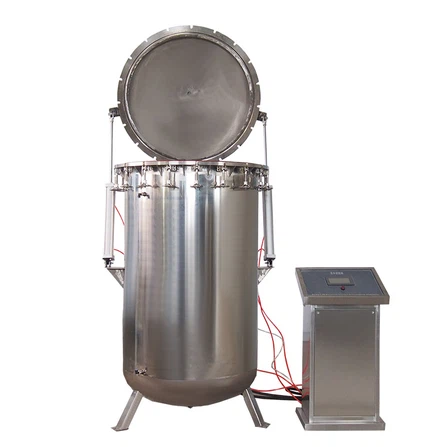
The valve specimen mounts to test fixtures within the immersion tank interior, with pressure and electrical feedthroughs maintaining external connections. The programmable color LCD touch screen controller enables operators to program multi-stage test profiles with automated water filling, pressure ramping, soak durations, and controlled depressurization. A typical aerospace valve test might include:
- Initial ambient pressure immersion for thermal stabilization (30 minutes)
- Gradual pressure increase to test specification level (15 minutes ramp)
- Sustained pressure hold at maximum test pressure (60-240 minutes)
- Cyclic pressure variation between operational extremes (10-100 cycles)
- Final ambient pressure observation period (30 minutes)
Data Collection and Analysis
Modern water immersion tank controllers featuring Ethernet connectivity enable real-time data streaming to laboratory information management systems. Pressure decay rates, temperature stability, and cycle counts generate comprehensive test records satisfying traceability requirements. High-resolution cameras document bubble formation locations, while precision pressure transducers detect minute seal degradation through trend analysis.
How Does Pressure Simulation Affect Valve Performance?
Mechanical Stress Distribution
Hydrostatic pressure applies uniform force across all submerged valve surfaces, creating stress patterns distinct from pneumatic testing. This loading condition reveals structural weaknesses in valve bodies, bonnet assemblies, and stem seals that might withstand directional forces but fail under omnidirectional compression. The 15mm wall thickness A3 steel construction of professional immersion tanks ensures the test chamber itself maintains structural integrity while containing pressures equivalent to 50m water depth.
Seal Deformation Characteristics
O-rings and gaskets experience extrusion forces proportional to applied pressure. Immersion testing quantifies the pressure threshold where seal materials begin extruding into clearance gaps, potentially causing permanent set or surface damage. Engineers analyze post-test seal cross-sections under microscopy to identify compression patterns, surface impressions, and material flow indicators guiding design optimization.
Functional Operation Under Load
Aerospace valves must remain operable throughout their pressure range, not merely maintain static seals. Immersion testing incorporates actuation cycles where technicians operate valve mechanisms while submerged under pressure. Torque measurements, stroke timing, and position feedback verify that pressure-induced friction changes remain within acceptable parameters. Pneumatic lids on advanced water immersion tanks allow mid-test access for manual actuation or sensor adjustment without full depressurization.
|
Pressure Level |
Seal Compression (%) |
Actuation Torque Increase |
Observed Effects |
|
Ambient |
Baseline |
Baseline |
Normal operation |
|
25m depth (36 psi) |
8-12% |
15-25% increase |
Slight friction increase |
|
50m depth (73 psi) |
18-25% |
35-50% increase |
Seal extrusion begins |
Standards and Certifications for Aerospace Component Testing
International Qualification Frameworks
Aerospace valve manufacturers navigate multiple regulatory jurisdictions, each imposing specific testing requirements. MIL-STD-810 environmental engineering considerations address immersion testing under Method 512 (Immersion), while RTCA DO-160 environmental conditions and test procedures for airborne equipment specify water tightness validation. European Aviation Safety Agency certification specifications parallel these requirements with additional documentation mandates.
Industry Consensus Standards
Professional organizations including SAE International publish aerospace material specifications (AMS) and aerospace recommended practices (ARP) detailing immersion test methodologies. AS9100 quality management systems require test equipment calibration, operator qualification, and process validation documentation. Compliance with these consensus standards demonstrates manufacturer commitment to quality beyond minimum regulatory thresholds.
Traceability and Documentation
Successful certification audits depend on comprehensive test records linking individual valve serial numbers to specific immersion test events. The programmable touchscreen controller with 120-program capacity and 100-segment resolution enables storage of complete test profiles associated with production lots. Automated data logging eliminates transcription errors while providing time-stamped evidence of procedure compliance.
Precision Tank Design for High-Reliability Applications

Structural Engineering Considerations
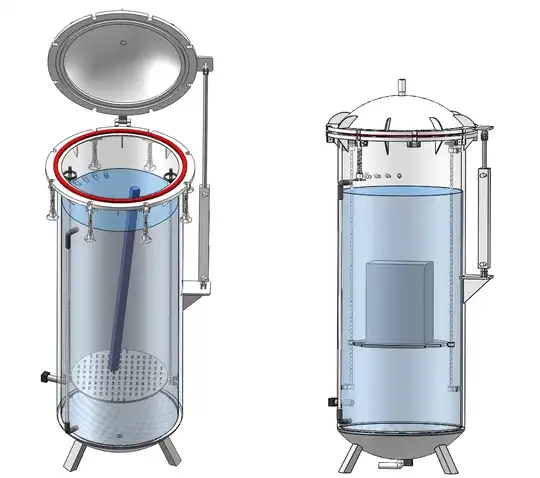
The cylindrical design of professional immersion tanks optimizes structural efficiency, distributing hoop stresses uniformly around the pressure vessel circumference. The diameter 600mm × height 1500mm internal dimensions provide adequate specimen capacity while maintaining manageable overall dimensions (diameter 800mm × height 1800mm). The tripod bottom support configuration ensures stable installation on laboratory floors without requiring specialized foundations.
Material Selection Rationale
A3 steel plate construction with 15mm wall thickness balances strength requirements against fabrication practicality and cost considerations. The galvanized coating on fastening valves provides corrosion resistance in humid laboratory environments where water vapor and chemical cleaning agents might otherwise promote rust formation. Electrostatic treatment creates uniform surface finishes that facilitate visual inspection and contamination control.
Internal Environment Control
The 304 stainless steel hydraulic rod with mirror surface finish prevents contamination of test water while resisting corrosion from continuous immersion. Storage water tanks with automatic water supply systems maintain consistent fill levels compensating for evaporation and specimen displacement. The pneumatic lid system enables rapid access while maintaining seal integrity during pressurized operations - a critical feature when testing schedules demand efficient specimen changeover.
Controller Integration Capabilities
PID programmable color touch screen controllers provide precise temperature and pressure regulation through closed-loop feedback algorithms. Ethernet connectivity facilitates integration with laboratory data management systems, enabling remote monitoring and automated report generation. The 120-program, 100-segment capacity accommodates complex test protocols involving multiple pressure plateaus, temperature ramps, and soak periods without manual intervention.
|
Tank Component |
Material Specification |
Design Feature |
Performance Benefit |
|
Pressure Vessel |
A3 steel, 15mm wall |
Cylindrical geometry |
Uniform stress distribution |
|
Internal Rod |
304 stainless steel |
Mirror finish |
Corrosion resistance |
|
Fastening Valve |
Galvanized A3 steel |
15mm thickness |
Long-term durability |
|
Controller |
PLC with touchscreen |
120-program capacity |
Complex test automation |
LIB Industry High-Reliability Immersion Tanks for Aerospace Valve Testing
 |
 |
 |
Turn-Key Solution Approach
LIB Industry delivers comprehensive environmental testing solutions encompassing research, design, manufacturing, commissioning, delivery, installation, and operator training. This integrated approach ensures that aerospace manufacturers receive fully validated systems ready for immediate production use rather than requiring in-house integration of disparate components. Factory acceptance testing verifies performance specifications before shipment, reducing on-site commissioning time.
Application-Specific Customization
While the R78-600 water immersion tank serves as a versatile platform for general aerospace valve testing, LIB Industry engineers collaborate with customers to optimize configurations for specific applications. Custom fixture designs accommodate non-standard valve geometries, while specialized instrumentation packages support unique measurement requirements. The water supply system adapts to facility constraints, whether utilizing municipal water, deionized water, or specialized test fluids.
Global Support Infrastructure
International aerospace manufacturers require responsive technical support regardless of geographic location. LIB Industry maintains service networks across major manufacturing regions, providing on-site calibration services, spare parts inventory, and applications engineering consultation. Remote diagnostic capabilities through Ethernet-connected controllers enable troubleshooting support without dispatch delays, maximizing equipment uptime during critical production qualification phases.
Quality Assurance Pedigree
Aerospace component suppliers face rigorous audit requirements from prime contractors and regulatory authorities. LIB Industry maintains ISO 9001 quality management certification and provides full material traceability documentation for pressure vessels and critical components. Calibration certificates for instrumentation reference national measurement standards, satisfying aerospace industry requirements for measurement uncertainty analysis and calibration intervals.
Conclusion
Aerospace valve testing with water immersion tanks represents an indispensable quality assurance methodology ensuring component reliability under demanding service conditions. The combination of pressure simulation, seal performance validation, and regulatory compliance documentation positions immersion testing as a cornerstone of aerospace manufacturing quality systems. Advanced tank designs featuring programmable controls, durable construction, and comprehensive data acquisition capabilities enable manufacturers to meet increasingly stringent certification requirements while maintaining production efficiency.
FAQ
What pressure range can aerospace valve immersion tanks achieve?
Professional immersion tanks typically simulate pressures from ambient to 50m water depth (73 psi), covering most aerospace valve operating ranges. Custom configurations can achieve higher pressures for specialized hydraulic components. The R78-600 model provides adequate pressure simulation for fuel systems, environmental controls, and pneumatic valves in commercial aviation applications.
How long does typical aerospace valve immersion testing require?
Test duration varies by valve complexity and specification requirements, typically ranging from two to eight hours including pressurization, soak periods, and depressurization phases. Complex qualification protocols may extend to 24-48 hours incorporating thermal cycling and repeated pressure variations. Programmable controllers automate extended test sequences, reducing operator supervision requirements.
Can immersion tanks accommodate testing with fluids other than water?
While water serves as the standard test medium due to availability and safety, immersion tanks constructed from corrosion-resistant materials can utilize hydraulic fluids, fuel simulants, or chemical solutions when specifications demand testing with actual service media. Material compatibility and safety considerations require engineering review before implementing alternative test fluids in pressure vessels.
Partner With LIB Industry for Your Aerospace Testing Needs
As a leading water immersion tank manufacturer and supplier, LIB Industry provides turn-key environmental testing solutions for aerospace applications worldwide. Our engineering team stands ready to configure systems meeting your specific valve testing requirements. Contact us at ellen@lib-industry.com to discuss your aerospace component validation needs.