Temperature Humidity Chamber vs Climate Chamber: Key Differences
When selecting environmental testing equipment, understanding the distinction between a temperature humidity chamber and a climate chamber becomes essential for accurate product validation. While these terms are often used interchangeably, they represent different capabilities and applications. A temperature humidity chamber primarily focuses on precise control of thermal and moisture conditions within defined parameters, typically ranging from -20℃ to +150℃ with humidity levels between 20% and 98% RH. Climate chambers, conversely, offer broader environmental simulation capabilities, incorporating additional factors such as altitude, solar radiation, vibration, and corrosion testing. The choice between these systems depends on your specific testing requirements, product characteristics, and industry compliance standards, making it crucial to evaluate their functional differences before investment.
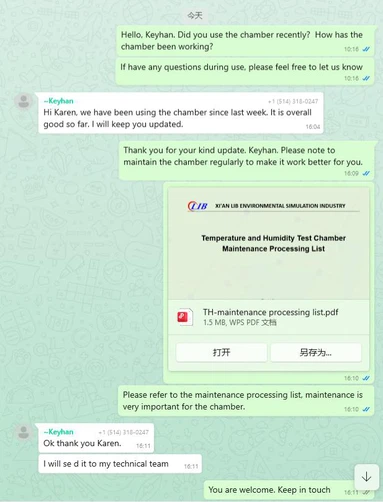
After commissioning, customer Keyhan shared early feedback:“We started using the chamber last week. Everything is running well so far, and I will continue to monitor performance.”In initial operation, the system showed stable temperature and humidity control. Tests such as 85 °C / 85% RH damp heat and −40 °C to +85 °C thermal cycling ran smoothly, with good uniformity, stable transitions, and fast recovery after door opening.Overall, the early results confirm reliable performance and consistent control for laboratory testing.

What Is the Difference Between a Temperature Humidity Chamber and a Climate Chamber?
Core Functional Distinctions
Temperature humidity chambers specialize in replicating thermal and moisture conditions with exceptional precision. These units employ sophisticated refrigeration systems and humidification mechanisms to maintain stable environments for materials testing, component validation, and quality assurance protocols. The LIB TH Series exemplifies this focused approach, utilizing PT100 Class A sensors with ±0.001°C resolution to deliver consistent results across multiple test cycles.
Environmental Simulation Scope
Climate chambers extend beyond basic temperature and humidity parameters to recreate comprehensive atmospheric conditions. These advanced systems integrate multiple environmental stressors simultaneously, allowing researchers to conduct combined testing scenarios. While a temperature humidity chamber excels at moisture resistance and thermal cycling, climate chambers accommodate complex simulations including pressure variations, UV exposure, and corrosive atmosphere generation.
Equipment Complexity and Configuration
The structural design reflects each system's intended purpose. Temperature humidity chambers feature streamlined construction with dedicated refrigeration circuits, heating elements, and humidification systems. Climate chambers incorporate modular components that support additional testing modules, requiring more sophisticated control architectures. This fundamental difference impacts installation requirements, operational protocols, and maintenance schedules.
Functional Design and Performance Capabilities Comparison

Temperature Control Mechanisms
Temperature humidity chambers utilize mechanical compression refrigeration systems, often employing cascade configurations for extreme low-temperature applications. The French TECUMSEH compressor integrated into LIB models ensures reliable performance across demanding temperature ranges. Cooling rates typically reach 1℃/min, while heating rates accelerate to 3℃/min, enabling efficient test cycle completion.
|
Performance Parameter |
Temperature Humidity Chamber |
Climate Chamber |
|
Temperature Range |
-70℃ to +150℃ |
-75℃ to +180℃ |
|
Humidity Range |
20% to 98% RH |
10% to 98% RH |
|
Cooling Rate |
1℃/min |
0.5-2℃/min |
|
Additional Functions |
Limited |
Vibration, Altitude, UV |
Humidity Generation Systems
Precision humidification distinguishes quality equipment from basic environmental chambers. External isolation stainless steel surface evaporation humidifiers provide controlled moisture introduction without contaminating test samples. The water purification system ensures consistent humidity generation, preventing mineral deposits that compromise accuracy. Advanced units maintain humidity deviation within ±2.5% RH across the operational spectrum.
Chamber Construction and Insulation
Interior chambers constructed from SUS304 stainless steel resist corrosion while maintaining structural integrity during high-humidity exposures. The exterior framework employs 4mm A3 steel with powder coating treatment, delivering industrial-grade durability. Polyurethane foam combined with insulation cotton creates thermal barriers that minimize energy consumption while preserving environmental stability. Double-layer silicone sealing with heated anti-fog glass prevents temperature leakage and condensation issues.
Control Systems and Environmental Accuracy Analysis

Programmable Controller Capabilities
Modern temperature humidity chambers feature PID touchscreen controllers managing up to 120 programs with 100 steps each. This computational power enables complex test profiles mimicking real-world conditions through gradual transitions and sustained exposure periods. Ethernet and WiFi connectivity facilitate remote monitoring, allowing technicians to track real-time data and adjust parameters without physical presence.
Electronic Expansion Valve Innovation
The Electronic Extension Valve technology represents a significant advancement in refrigeration control. This intelligent system automatically adjusts refrigerant flow based on chamber demand, eliminating the wasteful "high-power heating versus cooling" approach used by conventional units. Operators experience 30% lower energy consumption while maintaining exceptional stability, even at challenging low humidity levels of 10% RH.
Sensor Accuracy and Calibration
High-accuracy PT100 Class A sensors provide the foundation for reliable environmental control. These precision instruments measure temperature fluctuations within ±0.5℃ and maintain temperature deviation of ±2.0℃ throughout the chamber volume. Regular calibration procedures ensure measurement integrity, supporting compliance with international testing standards and quality management systems.
|
Control Feature |
Standard Configuration |
Advanced Configuration |
|
Controller Type |
Basic LCD Display |
Color Touchscreen PID |
|
Program Capacity |
10 programs, 10 steps |
120 programs, 100 steps |
|
Data Export |
Manual recording |
CSV/Excel one-click |
|
Remote Access |
Not available |
Ethernet/WiFi enabled |
|
Valve Control |
Manual expansion |
Electronic auto-adjust |
Which Chamber Is Better for Stability and Aging Tests?
Accelerated Aging Test Requirements
Accelerated aging protocols demand sustained environmental exposure at elevated temperatures and controlled humidity levels. Temperature humidity chambers excel in these applications, maintaining consistent conditions for extended periods without significant drift. The continuous operation capability, supported by robust refrigeration systems, ensures test validity across days or weeks of uninterrupted running.
Thermal Cycling Performance
Rapid temperature transitions characterize thermal cycling tests, evaluating component resilience under repeated thermal stress. Equipment with heating rates of 3℃/min and cooling rates of 1℃/min completes cycles efficiently, reducing overall test duration. The cascade refrigeration framework enables continuous operation at extreme low temperatures down to -70℃, supporting specialized material characterization.
Moisture Resistance Validation
Products destined for humid environments require thorough moisture resistance testing. The humidity range of 20% to 98% RH covers most terrestrial conditions, while precision control ensures reproducible results. External isolation humidifiers prevent water contamination of test specimens, maintaining environmental purity essential for pharmaceutical, electronic, and aerospace applications.
Application Scenarios Across Different Industries
Electronics and Semiconductor Manufacturing
Electronic components undergo rigorous environmental testing to verify performance across operational temperature ranges. Temperature humidity chambers simulate storage conditions, shipping environments, and end-use scenarios. Manufacturers conduct moisture sensitivity level (MSL) testing, determining safe handling procedures for moisture-sensitive devices. The 1000W heat load capacity accommodates powered equipment during operational testing.
Automotive Component Validation
Automotive parts face extreme environmental variations throughout their service life. Dashboard materials, electronic control units, and sensor assemblies require validation under combined temperature and humidity stress. The dual-layer silicone sealing prevents external contamination while heated anti-fog glass windows enable visual inspection during testing. Standard configurations include cable holes for connecting test specimens to external monitoring equipment.
Pharmaceutical Stability Studies
Pharmaceutical products demand stringent stability testing under controlled conditions specified by regulatory authorities. Temperature humidity chambers provide the environmental control necessary for ICH stability studies, supporting drug registration and shelf-life determination. The SUS304 stainless steel interior prevents contamination while facilitating cleaning and validation procedures required in pharmaceutical manufacturing.
|
Industry |
Primary Tests |
Typical Requirements |
Chamber Type |
|
Electronics |
Thermal shock, MSL |
-40℃ to +85℃, 85% RH |
Temperature Humidity |
|
Automotive |
Climate cycling |
-40℃ to +120℃, varied RH |
Temperature Humidity |
|
Pharmaceutical |
ICH stability |
25℃/60% RH, 40℃/75% RH |
Temperature Humidity |
|
Aerospace |
Combined environmental |
-70℃ to +180℃, altitude, vibration |
Climate Chamber |
Cost, Maintenance, and Selection Considerations
Initial Investment Analysis
Equipment procurement costs vary significantly based on temperature humidity chamber volume, temperature range, and feature complexity. The TH-100 model with 100L capacity represents an economical entry point for small-scale testing, while the TH-1000 with 1000L volume serves high-throughput laboratories. Temperature range selection impacts pricing, with cascade refrigeration systems for -70℃ capability commanding premium investment compared to -20℃ configurations.
Operating Expense Factors
Energy consumption constitutes the primary ongoing expense for environmental testing equipment. The Electronic Extension Valve innovation reduces power requirements by 30% compared to conventional systems, generating substantial savings over equipment lifespan. Water consumption for humidification remains minimal with efficient evaporation systems, while routine consumable replacement includes water filters and occasionally refrigerant replenishment.
Maintenance Requirements and Longevity
Preventive maintenance preserves chamber performance and extends operational life. Quarterly inspections should verify refrigeration system pressures, controller calibration accuracy, and seal integrity. Annual comprehensive servicing includes compressor performance evaluation, sensor recalibration, and safety device verification. LIB Industry provides a 3-year guarantee with lifetime service support, including 24/7 global assistance and replacement assurance if repairs aren't achievable during the warranty period.
Selection Criteria Framework
Identifying the appropriate equipment begins with defining test requirements comprehensively. Chamber volume should accommodate sample quantity with adequate air circulation space. Temperature range must exceed test specifications by safe margins, accounting for potential standard evolution. Humidity capabilities should match both ambient conditions and specific protocol demands. Organizations conducting diverse testing benefit from modular climate chambers, while specialized applications favor dedicated temperature humidity chambers.
Why Choose LIB Industry for Advanced Environmental Testing Solutions?
|
|
|
|
|
|
| Robust Workroom | Cable Hole | Temperature and Humidity Sensor | PID controller |


Quality Assurance and Certifications
LIB Industry maintains ISO 9001 certification with CE compliance, demonstrating commitment to quality management systems and product safety standards. Third-party testing by SGS and TUV authorities validates performance specifications and safety implementations. This rigorous quality framework ensures equipment reliability and regulatory compliance across international markets.
Technical Innovation and Customization
Strong non-standard design capabilities enable tailored solutions addressing unique testing challenges. Engineering teams collaborate with customers to understand specific requirements, developing custom temperature humidity chamber configurations that integrate seamlessly into existing workflows. Whether modifying chamber dimensions, enhancing temperature ranges, or incorporating specialized monitoring systems, LIB delivers solutions matching precise application needs.
Comprehensive Service Support
The turn-key solution approach encompasses research, design, production, commissioning, delivery, installation, and training. Customers receive complete products configured for immediate operation, supported by comprehensive documentation and operator training. Lifetime service support ensures ongoing performance optimization, with technical specialists available to address questions and troubleshoot challenges throughout equipment lifespan.
Conclusion
Understanding the distinction between temperature humidity chambers and climate chambers empowers informed equipment selection aligned with testing objectives. Temperature humidity chambers deliver precise thermal and moisture control ideal for stability testing, aging protocols, and component validation. Climate chambers extend capabilities to comprehensive environmental simulation incorporating multiple stressors simultaneously. Evaluating application requirements, budget constraints, and future testing needs guides optimal chamber selection, ensuring reliable results and regulatory compliance.
FAQ
Can a temperature humidity chamber perform the same tests as a climate chamber?
Temperature humidity chambers excel at thermal and moisture testing but lack additional capabilities like vibration, altitude simulation, or UV exposure found in climate chambers. The choice depends on whether your testing protocols require single-variable or multi-variable environmental stressing for comprehensive product validation.
What maintenance schedule ensures optimal temperature humidity chamber performance?
Quarterly inspections covering refrigeration pressures, sensor calibration, and seal integrity maintain peak performance. Annual comprehensive servicing including compressor evaluation and safety device verification prevents unexpected failures. Following manufacturer-recommended maintenance protocols extends equipment lifespan and preserves measurement accuracy throughout operational life.
How do I determine the appropriate chamber size for my testing needs?
Calculate chamber volume by considering maximum sample dimensions plus required clearance for air circulation, typically 30% additional space. Account for future testing expansion and simultaneous multi-sample protocols. Consulting with equipment specialists ensures proper sizing that balances current requirements with anticipated growth.
Ready to enhance your environmental testing capabilities? Contact LIB Industry, a leading temperature humidity chamber manufacturer and supplier, for expert consultation on selecting the ideal solution for your application. Our engineering team provides customized recommendations backed by decades of environmental testing expertise. Reach out to ellen@lib-industry.com to discuss your requirements and receive detailed technical specifications.