Aging Chambers for Coating and Paint Performance Tests
Accelerated aging chambers for coating and paint performance tests provide critical insights into how surface treatments withstand environmental degradation over extended periods. These specialized testing environments simulate years of weathering in compressed timeframes, enabling manufacturers to evaluate color stability, adhesion strength, gloss retention, and physical integrity before market release. By exposing coated samples to controlled ultraviolet radiation, temperature fluctuations, humidity cycles, and moisture condensation, an accelerated aging chamber reveals potential failures that might otherwise remain undetected until products reach end-users, ultimately protecting brand reputation and reducing warranty claims.
What Determines Coating and Paint Durability?
Understanding the fundamental mechanisms behind coating degradation helps manufacturers develop more resilient formulations and establish realistic performance expectations.
Chemical Composition and Binder Selection
The polymer matrix forms the foundation of coating durability. Acrylic, polyurethane, epoxy, and alkyd resins each respond differently to environmental stressors. Acrylic-based formulations typically demonstrate superior UV resistance and color retention, while epoxies excel in chemical resistance but may chalk when exposed to prolonged sunlight. The crosslink density within the binder network directly influences mechanical properties and resistance to moisture penetration.
Pigment Quality and Dispersion
Pigment selection significantly impacts both aesthetic longevity and protective capabilities. Organic pigments often provide vibrant colors but may fade rapidly under UV exposure, while inorganic alternatives like titanium dioxide offer exceptional lightfastness. Proper pigment dispersion prevents aggregation that creates weak points vulnerable to moisture infiltration. Particle size distribution affects both hiding power and surface smoothness, influencing overall weathering performance.
Substrate Preparation and Application Thickness
Surface preparation determines adhesion strength, the primary defense against delamination and blistering. Contaminants, oxidation layers, and inadequate surface profile compromise bonding at the molecular level. Film thickness creates a balance between protective capability and internal stress development. Insufficient thickness exposes substrates to corrosive elements, while excessive application generates residual stresses that accelerate cracking under thermal cycling.
Environmental Factors Affecting Surface Coatings
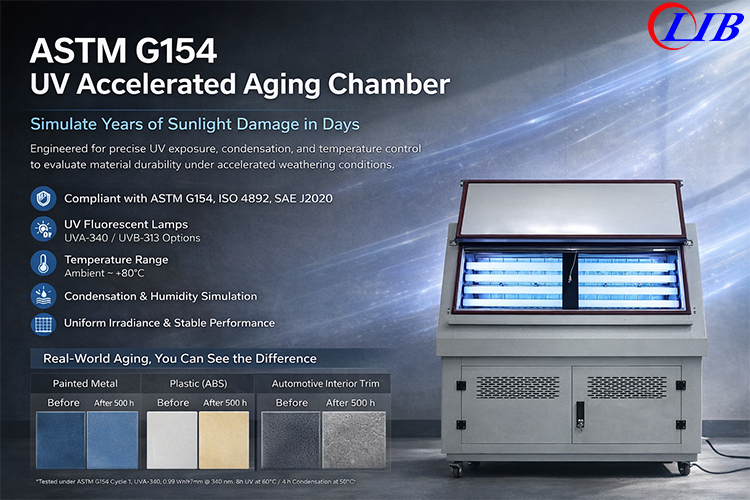
Coatings encounter multiple simultaneous stressors in real-world applications, creating synergistic degradation patterns that single-factor testing cannot reveal.
Ultraviolet Radiation and Photodegradation
UV wavelengths between 300-400nm possess sufficient energy to break chemical bonds within polymer chains, initiating a cascade of degradation reactions. Photooxidation generates free radicals that propagate chain scission, reducing molecular weight and mechanical strength. This process manifests as chalking, where degraded polymer migrates to the surface as a powdery residue. Xenon arc lamps in testing chambers replicate the full solar spectrum, including critical UV-B wavelengths responsible for the most severe polymer damage.
Temperature Fluctuations and Thermal Stress
Diurnal temperature variations cause expansion and contraction cycles that accumulate fatigue damage within coating systems during exposure in an accelerated aging test chamber. Different thermal expansion coefficients between coatings and substrates generate interfacial stresses during temperature transitions. Black panel temperature monitoring during accelerated testing ensures surface heating matches real-world conditions where dark-colored coatings may reach temperatures 30-40°C above ambient. The BPT range of 35-85°C available in modern chambers captures these critical thermal conditions.
Moisture Exposure and Hydrolytic Breakdown
Water molecules penetrate coating films through diffusion, reaching substrate interfaces where they disrupt adhesion bonds and initiate corrosion. Condensation cycles simulate overnight dew formation, creating sustained wetness periods particularly damaging to water-sensitive binders. Humidity control between 50-98% RH enables testing across diverse climate zones, from arid desert conditions to tropical environments. Spray cycles introduce mechanical water impact, testing coating resistance to driving rain conditions.
Accelerated Weathering Tests for Coating Systems
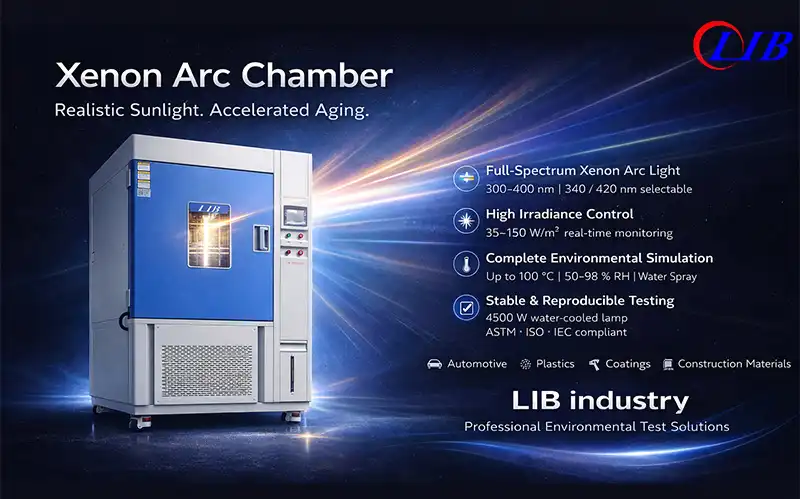
Standardized testing protocols ensure reproducible results that correlate with outdoor exposure, providing actionable data for formulation development and quality control.
ISO and ASTM Standard Protocols
International standards establish validated testing parameters backed by decades of correlation studies. ISO 4892 outlines xenon-arc exposure methods with specific irradiance levels, temperature controls, and spray cycle configurations. ASTM G154 focuses on UV fluorescent lamp exposure, particularly effective for assessing polymer degradation mechanisms. ASTM G155 provides xenon-arc testing guidelines with multiple cycle variations matching different geographic climates and application conditions.
Light Source Technologies and Spectral Matching
Xenon arc lamps generate spectral distributions closely approximating natural sunlight across UV, visible, and infrared wavelengths. A 4500W water-cooled xenon lamp provides sufficient intensity for accelerated exposure while maintaining spectral consistency throughout its 1600-hour service life. Irradiance control systems automatically adjust lamp power to compensate for bulb aging, maintaining constant exposure conditions at settings between 35-150 W/m². Bandwidth measurement at 340nm or 420nm enables precise monitoring of UV intensity in wavelength regions most relevant to coating degradation.
Cycle Programming for Real-World Simulation
Advanced programmable controllers enable complex exposure sequences mimicking diurnal patterns and seasonal variations. Typical cycles alternate between UV exposure at elevated temperatures, dark condensation periods simulating nighttime dew formation, and water spray intervals representing rainfall events. A coating intended for automotive exterior use might undergo cycles of 102 minutes dry UV exposure at 0.35 W/m² and 340nm, followed by 18 minutes of water spray, repeating continuously for thousands of hours.
|
Test Standard |
Light Source |
Primary Application |
Key Parameters |
|
ISO 4892-2 |
Xenon Arc |
Full-spectrum weathering |
Irradiance: 60 W/m² at 340nm, BPT: 65°C |
|
ASTM G154 |
UV Fluorescent |
Polymer degradation |
UV-A 340nm, 60°C panel temp |
|
ASTM G155 |
Xenon Arc |
Coating durability |
0.35-0.55 W/m² at 340nm |
|
SAE J2527 |
Xenon Arc |
Automotive coatings |
Controlled irradiance mode, moisture cycles |
Measuring Adhesion, Gloss Retention, and Cracking
Quantitative assessment methods transform visual observations into objective performance metrics, enabling formulation comparisons and failure prediction.
Cross-Hatch and Pull-Off Adhesion Testing
Cross-hatch adhesion testing (ASTM D3359) evaluates coating-substrate bonding by creating a lattice pattern through the film and applying adhesive tape to assess delamination resistance. Results range from 5B (no peeling) to 0B (extensive removal), providing a semi-quantitative adhesion metric. Pull-off testing (ASTM D4541) measures actual adhesion strength in MPa by bonding dollies to the coating surface and applying perpendicular tensile force until failure occurs. Testing at intervals throughout accelerated aging quantifies adhesion loss rates.
Gloss Measurement and Retention Calculations
Specular gloss measurement at 60° or 85° angles (ASTM D523) provides objective surface appearance data for samples exposed in an accelerated ageing chamber. High-gloss coatings measured at 60° show readings above 70 gloss units, while low-gloss finishes require 85° measurement for adequate sensitivity. Gloss retention percentage compares aged samples to unexposed controls, with automotive coatings typically requiring retention above 80% after specified exposure periods. Progressive gloss loss curves reveal degradation kinetics and predict service life endpoints.
Crack Detection and Characterization
Microscopic examination identifies crack initiation and propagation patterns that signal coating failure. Mud-cracking indicates excessive film thickness or poor substrate adhesion, while random cracking suggests embrittlement from UV degradation or plasticizer loss. Crack density measurements (cracks per unit area) provide quantitative severity assessment. Advanced imaging techniques detect subsurface delamination before visible surface damage appears, enabling early intervention and formulation refinement.
Comparative Analysis of Coating Formulations
Side-by-side testing reveals performance differences between competing formulations, guiding product development and supplier selection decisions.
Binder System Performance Comparison
Testing multiple binder chemistries under identical conditions isolates material performance from environmental variables. Acrylic latex formulations demonstrate superior color retention and UV resistance compared to alkyd alternatives, particularly in high-UV environments. Two-component polyurethanes deliver exceptional gloss retention and chemical resistance but require more complex application processes. Water-based systems reduce volatile organic compound emissions but may sacrifice initial water resistance compared to solvent-borne counterparts.
Additive Package Optimization
UV stabilizers, antioxidants, and light-screening pigments significantly extend coating service life when properly balanced. Hindered amine light stabilizers (HALS) scavenge free radicals generated during photooxidation, while UV absorbers convert harmful radiation into harmless heat. Testing formulations with varying additive concentrations establishes optimal cost-performance ratios. Synergistic combinations often outperform individual components, requiring systematic testing to identify effective packages.
Performance Benchmarking Against Competitors
Acquiring competitor products for parallel testing provides market positioning intelligence and identifies performance gaps. Testing should include premium, mid-range, and economy segments to understand the full competitive landscape. Documenting specific failure modes reveals whether competitors achieve longevity through superior resin systems, additive packages, or simply greater film thickness. This intelligence drives strategic formulation decisions and marketing claims substantiation.
|
Coating Type |
Gloss Retention (1000h) |
Color Change (ΔE) |
Adhesion Rating |
Primary Weakness |
|
Acrylic Latex |
85-92% |
1.2-2.5 |
4B-5B |
Initial water sensitivity |
|
Alkyd Enamel |
65-78% |
3.5-5.2 |
3B-4B |
UV chalking |
|
2K Polyurethane |
90-96% |
0.8-1.8 |
5B |
Application complexity |
|
Epoxy |
55-70% |
4.0-6.5 |
5B |
Chalking, yellowing |
Optimizing Coating Performance with Aging Data
Translating test results into formulation improvements and application recommendations requires systematic analysis and correlation with field performance.
Identifying Critical Failure Mechanisms
Failure mode analysis determines which degradation pathway limits service life, focusing improvement efforts where they generate maximum impact. Coatings failing through adhesion loss require substrate preparation modifications or primer system changes rather than UV stabilizer additions. Chalking failures indicate inadequate UV protection or binder selection issues. Color shift problems demand pigment substitution or increased light stabilizer concentrations.
Accelerated-to-Natural Exposure Correlation
Establishing correlation factors between chamber testing and outdoor exposure validates accelerated test predictive power. Florida exposure sites provide the most severe natural weathering conditions in North America, serving as primary correlation references. Correlation factors typically range from 3:1 to 8:1, meaning 1000 hours of properly conducted accelerated testing may represent 3000-8000 hours of Florida exposure. These factors depend heavily on test cycle parameters and coating chemistry.
Service Life Prediction Modeling
Mathematical models extrapolate limited test data into service life predictions across diverse climates and exposure conditions. Arrhenius relationships describe temperature-dependent degradation rates, while reciprocity principles relate exposure intensity to degradation magnitude. Statistical models incorporate multiple degradation parameters to predict time-to-failure with confidence intervals. Conservative predictions account for batch-to-batch variability and application inconsistencies encountered in production environments.
Uniform Temperature & Humidity Ensuring Repeatable Coating Evaluation - LIB Industry
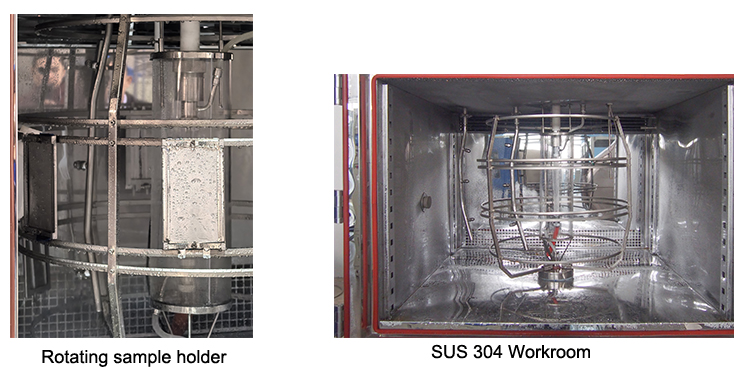
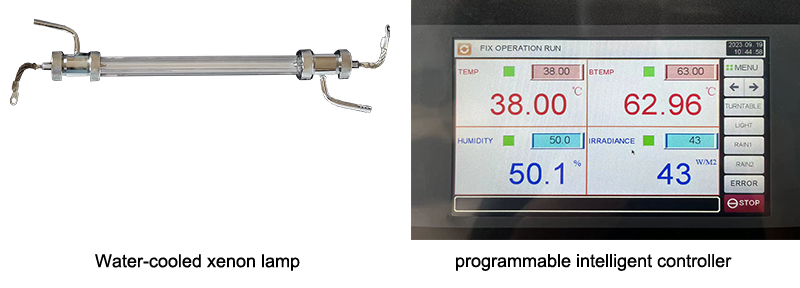
Consistent environmental conditions throughout accelerated aging test chambers eliminate variability that obscures true formulation performance differences, making equipment quality paramount.
Advanced Air Circulation and Temperature Control
Rotating specimen holders ensure all samples experience identical exposure conditions by continuously repositioning them relative to the light source. The XL-S-750 model accommodates 42 specimens (95×200mm) on a rotating drum within a 950×950×850mm chamber, maintaining temperature uniformity within ±2°C throughout the workspace. Mechanical compression refrigeration systems provide precise temperature control from ambient to 100°C, enabling both elevated temperature degradation studies and realistic diurnal cycling. Polyurethane foam insulation combined with specialized insulation cotton minimizes heat loss and reduces energy consumption.
Precision Humidity Management Systems
External isolation stainless steel surface evaporation humidifiers generate controlled moisture levels between 50-98% RH with ±5% deviation. This isolation design prevents contamination of humidity generation components by degraded coating particles and ensures long-term reliability. Automatic water supply systems maintain consistent operation during extended tests, while integrated purification removes minerals that could deposit on specimens and alter degradation patterns. The combination of temperature and humidity control creates condensation conditions that accurately simulate overnight dew formation.
Comprehensive Safety and Monitoring Features
Multi-layered safety systems protect both operators and samples from equipment malfunctions. Over-temperature protection prevents runaway heating that could destroy valuable specimens, while water shortage detection halts operation before dry-running damages pumps or heaters. Earth leakage protection and phase sequence monitoring ensure electrical safety during installation and operation. The programmable color LCD touchscreen controller provides real-time parameter monitoring and data logging, with network connectivity enabling remote supervision and automated reporting. Double-layer thermally stable silicone rubber sealing on observation windows allows visual inspection without compromising environmental control.
|
Chamber Feature |
Specification |
Testing Benefit |
|
Internal Dimensions |
950×950×850mm |
Accommodates standard coating panels |
|
Temperature Range |
Ambient to 100°C (±2°C) |
Matches extreme surface heating conditions |
|
Humidity Control |
50-98% RH (±5%) |
Simulates diverse climate zones |
|
Specimen Capacity |
42 pieces (95×200mm) |
Enables comprehensive formulation comparisons |
|
Light Source |
4500W xenon arc (water-cooled) |
Full-spectrum solar simulation |
|
Irradiance Range |
35-150 W/m² |
Adjustable acceleration factors |
|
Safety Systems |
5+ protection mechanisms |
Protects samples and personnel |
Conclusion
Accelerated aging chambers transform coating development from empirical trial-and-error into data-driven optimization, compressing years of outdoor exposure into weeks of controlled testing. By systematically evaluating adhesion, appearance retention, and physical integrity under standardized environmental stressors, manufacturers identify vulnerabilities before market release and substantiate performance claims with objective evidence. The integration of precise environmental control, full-spectrum light sources, and comprehensive monitoring systems creates testing conditions that reliably predict real-world performance across diverse applications and climate zones.
FAQ
How do accelerated aging test results correlate with actual outdoor exposure?
Correlation factors typically range from 3:1 to 8:1 depending on test parameters and coating chemistry. Properly designed cycles using xenon arc sources at controlled irradiance levels demonstrate strong correlation with Florida outdoor exposure, validated through parallel testing programs over multiple years.
What test duration is needed to predict 5-year coating service life?
Test duration depends on acceleration factors and failure criteria. Automotive coatings typically require 1000-2000 hours of xenon arc exposure to simulate 3-5 years of Florida exposure. Conservative predictions incorporate safety factors accounting for application variability and batch-to-batch differences in production environments.
Can the same chamber test both architectural and automotive coatings?
Modern chambers with programmable controllers easily switch between test protocols by adjusting irradiance levels, temperature setpoints, and spray cycles. Architectural coatings often use lower irradiance (0.35 W/m² at 340nm) with extended moisture exposure, while automotive tests employ higher intensity with shorter, more frequent water spray intervals.
Ready to optimize your coating formulations with reliable aging data? LIB Industry, a leading accelerated aging chamber manufacturer and supplier, delivers turnkey testing solutions backed by ISO 9001 certification and comprehensive global support. Our engineering team specializes in customized chamber configurations that match your specific testing requirements. Contact us at ellen@lib-industry.com to discuss your coating evaluation needs.