Aging Studies of Processed Food Using Hot and Cold Chambers
Aging studies of processed food using hot and cold chambers enable manufacturers to simulate extended storage conditions in compressed timeframes, evaluating how temperature fluctuations and humidity levels affect product stability, packaging integrity, and sensory characteristics. These controlled environmental chambers replicate real-world storage scenarios - from warehouse conditions to transportation stress - allowing food scientists to predict shelf life accurately, optimize formulations, and ensure regulatory compliance before products reach consumers. By accelerating natural aging processes through precise climate control, manufacturers gain critical insights into degradation patterns, microbial growth potential, and quality retention that inform packaging decisions and expiration dating.
Why Aging Studies Matter for Processed Food?Consumer Safety and Regulatory Compliance
Food manufacturers face stringent regulatory requirements regarding shelf-life claims and expiration dating. Aging studies provide the empirical evidence needed to substantiate these claims, demonstrating that products maintain safety and quality throughout their intended lifespan. Regulatory bodies worldwide require comprehensive stability data before approving shelf-life designations, making these studies essential for market entry and continued compliance.
Economic Impact of Shelf Life Optimization
Extending product shelf life by even a few days can significantly reduce waste and improve distribution efficiency. Aging studies help identify the optimal balance between formulation costs and product longevity, enabling manufacturers to make data-driven decisions about preservatives, packaging materials, and storage recommendations that maximize profitability while maintaining quality standards.
Brand Reputation and Quality Assurance
Premature product deterioration damages brand credibility and consumer trust. Through systematic aging studies, manufacturers can identify potential failure points before widespread distribution, ensuring that products consistently meet quality expectations throughout their shelf life, thereby protecting brand reputation and reducing costly recalls.
Effects of Temperature and Humidity on Food QualityChemical Degradation Pathways
Temperature fluctuations accelerate oxidative reactions, enzymatic browning, and lipid rancidity in processed foods. Hot and cold chambers allow researchers to quantify reaction rates at various temperatures, applying Arrhenius kinetics to predict degradation under ambient conditions. Humidity similarly affects moisture-sensitive reactions, including non-enzymatic browning and texture changes in low-moisture products.
Physical Changes and Structural Integrity
Thermal cycling induces physical transformations such as fat bloom in chocolate, moisture migration in layered products, and crystallization in confections. Controlled humidity exposure affects crispness in crackers, caking in powdered products, and syneresis in gel-based foods. These chambers enable systematic documentation of physical deterioration patterns.
Microbial Growth Correlation
Temperature and humidity directly influence microbial proliferation rates. Chambers maintaining specific conditions allow researchers to establish growth curves for spoilage organisms and pathogens, identifying critical control points for preservation strategies and validating antimicrobial interventions under realistic storage scenarios.
|
Environmental Factor |
Primary Impact |
Affected Product Categories |
|
High Temperature (>30°C) |
Accelerated oxidation, vitamin degradation |
Oils, fortified products, snacks |
|
Low Temperature (<5°C) |
Retrogradation, texture hardening |
Bakery products, sauces |
|
High Humidity (>70% RH) |
Moisture absorption, microbial growth |
Dried fruits, cereals, powders |
|
Low Humidity (<30% RH) |
Moisture loss, texture changes |
Fresh-cut products, refrigerated items |
Accelerated Shelf Life Testing Techniques
Temperature Cycling Protocols
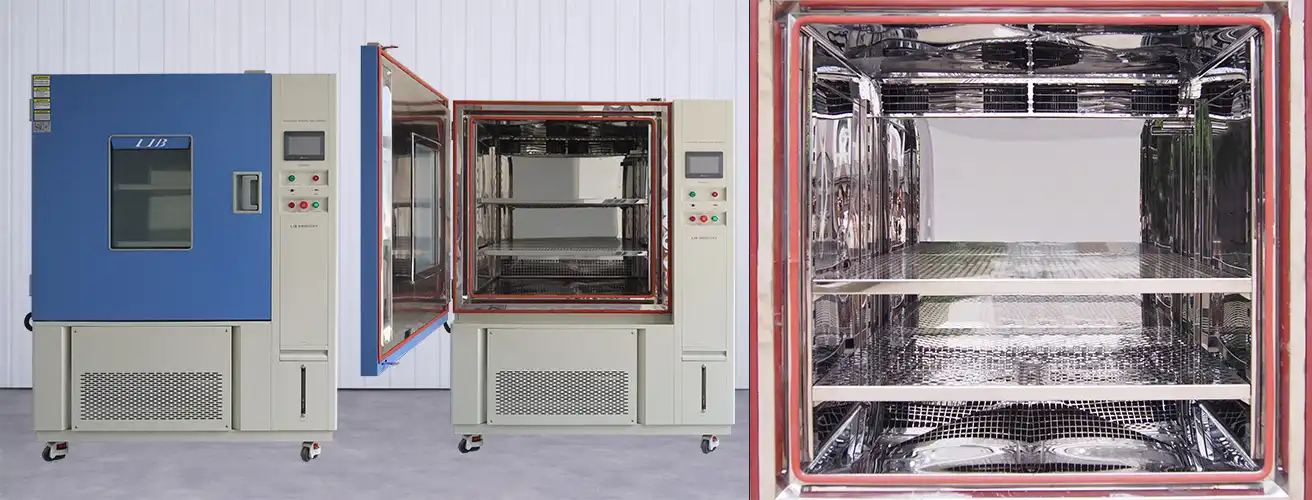
Accelerated aging employs elevated temperatures to compress months of shelf life into weeks of testing. The Q10 approach - where reaction rates double with every 10°C increase - provides mathematical frameworks for extrapolating accelerated data to ambient conditions. Hot and cold chambers enable precise temperature cycling that mimics seasonal variations and distribution chain realities.
Humidity Stress Testing
Controlled humidity challenges reveal moisture barrier effectiveness in packaging and product hygiene sensitivity. By exposing samples to extreme humidity levels (20-98% RH range), researchers identify moisture-related failure modes and validate packaging specifications, ensuring products withstand humid climates and refrigerated storage condensation.
Combined Environmental Stressors
Real-world conditions involve simultaneous temperature and humidity variations. Advanced testing protocols incorporate cyclic conditions - alternating between hot/humid and cool/dry phases - to simulate distribution through varied climate zones, revealing synergistic effects that single-factor testing might miss.
Monitoring Packaging and Product IntegrityBarrier Property Evaluation
Packaging materials exhibit temperature-dependent permeability to oxygen, moisture, and volatile compounds. Hot and cold chambers allow systematic evaluation of barrier degradation over time, ensuring packaging maintains protective functions throughout the product's shelf life. Seal integrity testing under thermal stress identifies potential failure points before distribution.
Headspace Gas Analysis
Modified atmosphere packaging relies on maintaining specific gas compositions. Chamber studies track headspace oxygen depletion and carbon dioxide evolution, validating respiration models and ensuring gas barrier properties remain effective under various temperature conditions, preventing premature spoilage.
Visual and Structural Defects
Thermal expansion and contraction stress packaging materials, potentially causing delamination, seal failures, or label adhesion problems. Systematic chamber exposure reveals these defects, enabling packaging optimization before commercial production begins.
|
Testing Parameter |
Measurement Frequency |
Acceptance Criteria |
|
Oxygen transmission rate |
Weekly |
<1% increase from baseline |
|
Seal strength |
Bi-weekly |
>80% initial strength retained |
|
Moisture content |
Weekly |
Within ±5% of target |
|
Package appearance |
Daily |
No visible defects |
Sensory and Microbial Assessment of Aged FoodOrganoleptic Property Tracking
Trained sensory panels evaluate color, aroma, flavor, and texture attributes at predetermined intervals throughout chamber studies. Quantitative descriptive analysis identifies specific attribute changes, establishing sensory shelf-life endpoints that often precede safety concerns but determine consumer acceptance.
Microbial Enumeration Protocols
Regular microbiological testing throughout aging studies tracks total plate counts, yeast and mold levels, and specific pathogen indicators. Hot and cold chambers maintaining specific conditions enable validation of microbial growth models, ensuring products remain below regulatory limits throughout their shelf life.
Correlating Sensory and Microbial Data
Integrating sensory and microbiological data reveals whether sensory degradation or microbial growth limits shelf life. This correlation guides formulation adjustments - whether improving preservative systems or enhancing flavor stability - to extend the limiting factor.
Predictive Analysis for Product Shelf Life
|
|
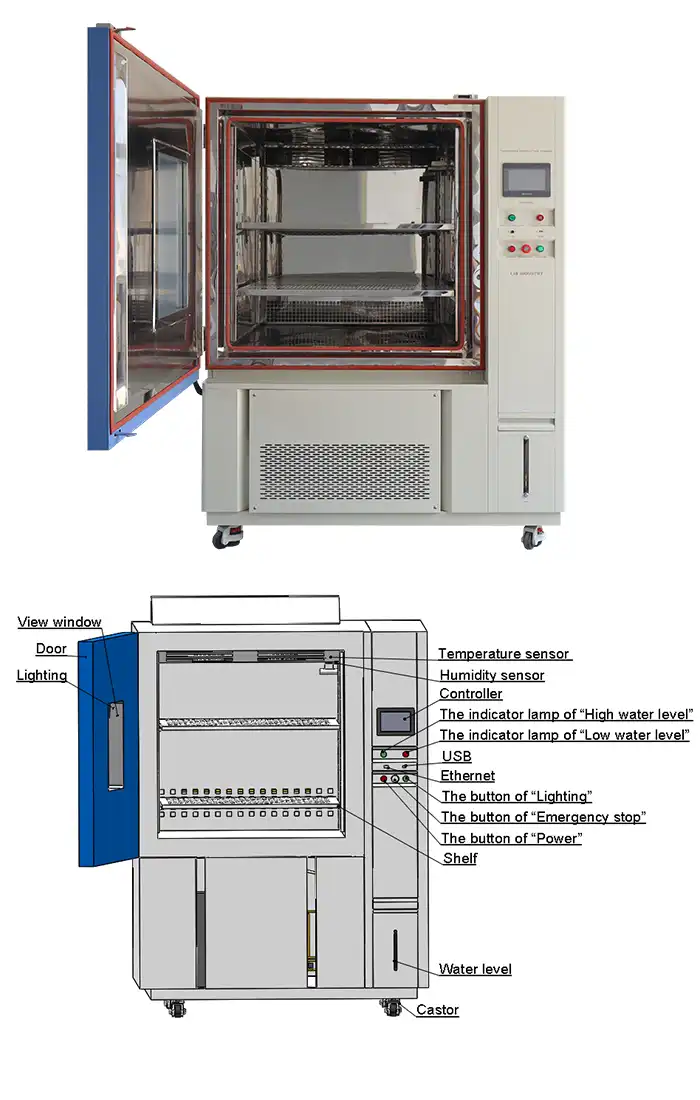
Name | shelf life test chamber | ||||
|
Model |
TH-100 |
|||||
|
Temperature range |
-20℃ ~+150 ℃ |
|||||
|
Low type |
A: -40℃ B:-70℃ C -86℃ |
|||||
|
Humidity Range |
20%-98%RH |
|||||
|
Temperature deviation |
± 2.0 ℃ |
|||||
|
Heating rate |
3 ℃ / min |
|||||
|
Cooling rate |
1 ℃ / min |
|||||
|
Controller |
Programmable color LCD touch screen controller, Multi-language interface, Ethernet , USB |
|||||
|
Exterior material |
Steel Plate with protective coating |
|||||
|
Interior material |
SUS304 stainless steel |
|||||
|
Standard configuration |
1 Cable hole (Φ 50) with plug; 2 shelves |
|||||
|
Timing Function |
0.1~999.9 (S,M,H) settable |
|||||
Mathematical Modeling Approaches
Kinetic models transform accelerated aging data into shelf-life predictions at distribution temperatures. Zero-order, first-order, and Arrhenius equations describe degradation rates, with statistical validation ensuring prediction accuracy. Hot and cold chambers-generated data provides the quantitative foundation for these models.
Statistical Confidence Intervals
Shelf-life determinations incorporate statistical rigor, establishing confidence intervals that account for batch variability and measurement uncertainty. Replicated chamber studies across multiple production lots ensure predictions reflect real-world variability, not isolated batch performance.
Real-Time Validation Studies
Accelerated predictions require validation through real-time storage studies at ambient conditions. Parallel chamber testing and warehouse storage confirm model accuracy, building regulatory confidence and refining prediction algorithms for future products.
|
Model Type |
Application |
Data Requirements |
Prediction Accuracy |
|
Arrhenius |
Temperature-dependent reactions |
3+ temperature points |
±15-20% typical |
|
Weibull |
Microbial shelf life |
Time-series counts |
±10-15% typical |
|
Linear regression |
Sensory degradation |
Multiple timepoints |
±20-25% typical |
Accelerate Food Shelf-Life Studies with LIB Industry's Reliable Hot and Cold ChamberAdvanced Temperature and Humidity Control
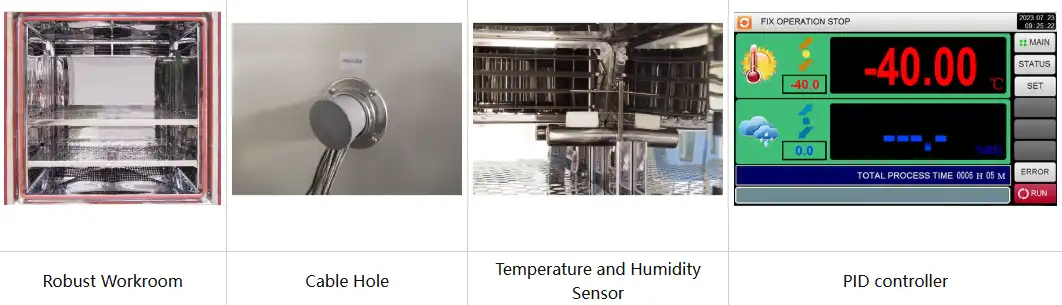
LIB Industry hot and cold chambers deliver precise environmental control across -70°C to +150°C temperature ranges and 20-98% RH humidity ranges. Programmable LCD touch screen controllers enable complex cycling protocols, while automatic water supply systems maintain consistent humidity without manual intervention, ensuring uninterrupted long-term studies.
Scalable Chamber Configurations
From benchtop 100L models to walk-in 1000L chambers, LIB Industry offers solutions matching diverse testing requirements. Multiple sample shelves and cable ports accommodate simultaneous testing of numerous products and integrated monitoring equipment, maximizing research efficiency and data generation.
Comprehensive Safety and Monitoring Features
Built-in protection systems - including over-temperature, refrigerant high-pressure, and earth leakage safeguards - ensure sample integrity and operator safety. Ethernet connectivity enables remote monitoring and data logging, creating comprehensive documentation for regulatory submissions and quality management systems.
Conclusion
Hot and cold chambers transform food shelf-life determination from prolonged guesswork into systematic science. Through controlled environmental challenges, manufacturers gain predictive insights into product behavior, optimize formulations and packaging, and confidently establish expiration dates backed by empirical evidence. These capabilities reduce development timelines, minimize waste, and ensure consistent quality delivery.
FAQs
How long does accelerated aging testing typically take compared to real-time studies?
Accelerated testing at elevated temperatures can compress 12-24 months of ambient shelf life into 3-6 months of chamber testing, depending on the temperature differential and product characteristics. Validation with real-time studies confirms accuracy.
Can hot and cold chambers simulate transportation stress on packaged foods?
Absolutely. Programmable cycling between temperature extremes replicates truck and container transport conditions, revealing packaging vulnerabilities and product responses to distribution chain thermal stress that static storage testing cannot identify.
What sample size is needed for statistically valid shelf-life studies?
Minimum three production batches with triplicate samples per timepoint ensures statistical validity. Larger sample sizes improve confidence intervals, particularly when establishing shelf-life endpoints for regulatory submissions requiring high certainty levels.
Partner with LIB Industry, a leading hot and cold chamber manufacturer and supplier, for comprehensive environmental testing solutions. Our turn-key services include chamber design, installation, training, and ongoing support. Contact ellen@lib-industry.com to discuss your food aging study requirements and accelerate your product development.