Best Practices for Water Ingress Test Chamber Spray Pattern Calibration
Achieving accurate IP rating verification demands precise spray pattern calibration in your water ingress test chamber. Proper calibration ensures consistent water distribution, uniform pressure delivery, and reliable test results that comply with international standards like IEC 60529 and ISO 20653. This comprehensive guide explores proven calibration techniques, essential parameters to monitor, verification procedures, and maintenance protocols that guarantee your testing equipment performs at peak accuracy. Whether you're validating automotive components, electronics, or outdoor equipment, mastering these calibration practices protects product quality and strengthens certification confidence.
Why Is Spray Pattern Calibration Critical in Water Ingress Testing?
Ensuring Compliance with International Standards
Regulatory bodies mandate specific water delivery characteristics for each IPX level. The IEC 60529 standard defines precise flow rates, spray angles, and duration requirements that your chamber must replicate. Miscalibrated spray patterns produce invalid test results, potentially leading to product failures in real-world conditions or rejected certifications. Your calibration procedures directly impact whether tested products genuinely meet their designated protection ratings.
Preventing False Pass/Fail Results
Inconsistent water distribution creates testing blind spots where insufficient coverage might allow defective products to pass. Conversely, excessive water concentration in specific areas can cause quality products to fail unnecessarily. These discrepancies waste resources through retesting cycles and damage your laboratory's credibility. Proper calibration eliminates these variables, delivering reproducible results across multiple test runs.
Protecting Investment in Testing Infrastructure
Environmental testing equipment represents substantial capital investment. Poorly calibrated systems experience accelerated component wear, nozzle blockages, and pump degradation. Regular calibration identifies performance drift before it causes equipment damage, extending operational lifespan. The RD-800C model's precision water control system benefits significantly from systematic calibration protocols that preserve its advanced features.
Key Parameters: Flow Rate, Pressure, and Nozzle Positioning
Understanding Flow Rate Requirements Across IPX Levels
Different protection levels demand distinct water volumes. IPX1 testing requires 1mm rainfall per minute, while IPX5 specifications call for 12.5 liters per minute at specific nozzle distances. Your digital flow measurement system must accurately deliver these volumes consistently throughout testing cycles. Calibration involves measuring actual output against specified requirements using certified flow meters positioned at various chamber locations.
|
IPX Level |
Flow Rate Specification |
Calibration Tolerance |
Verification Frequency |
|
|
IPX1/IPX2 |
1-3 mm/min rainfall |
±5% |
Monthly |
|
|
IPX3/IPX4 |
10 L/min oscillating spray |
±7.5% |
Bi-weekly |
|
|
IPX5/IPX6 |
12.5-100 L/min jet spray |
±10% |
Weekly |
Maintaining Optimal Pressure Distribution
Water pressure directly influences spray pattern geometry and droplet characteristics. The variable frequency pump control in advanced water ingress test chambers adjusts delivery pressure automatically, but calibration confirms actual output matches programmed values. Pressure gauges installed at multiple points - pump outlet, distribution manifold, and individual nozzles - reveal pressure losses that affect uniformity. Acceptable variation between measurement points should not exceed 8% of the nominal value.
Achieving Precise Nozzle Positioning and Alignment
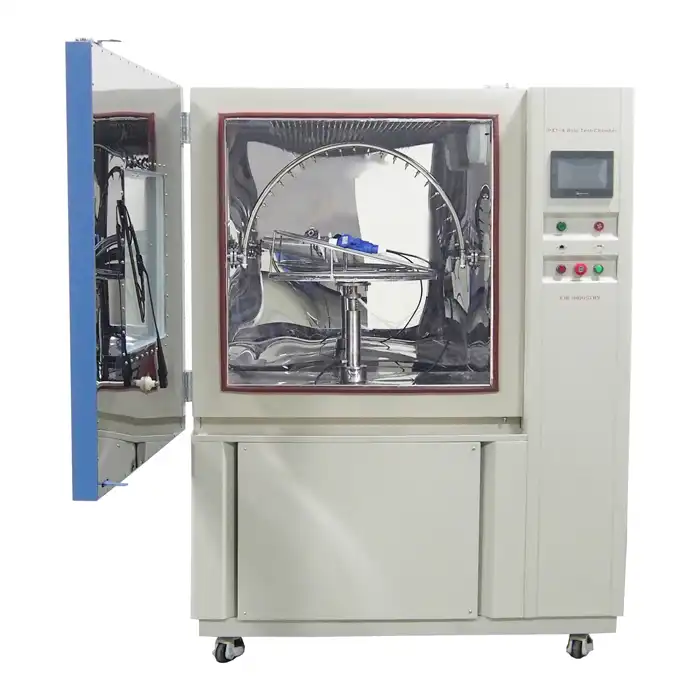
Nozzle placement determines coverage uniformity across the test specimen. The oscillating tube's radius, swing angle, and rotation speed work together to create overlapping spray patterns. Calibration verifies that the φ0.4mm spraying holes maintain 50mm spacing without blockages. Laser alignment tools confirm the oscillating tube's centerline matches the turntable's rotation axis within 2mm tolerance, preventing asymmetric water distribution.
Calibration Methods for Uniform Water Distribution
Grid-Based Collection Testing
This foundational technique maps water distribution across the test area. Position collection containers in a grid pattern - typically 100mm spacing - across the drip tray. Run a standard test cycle and measure volume collected in each container. Uniform distribution shows less than 15% deviation between containers. Significant variations indicate nozzle blockages, misalignment, or pressure imbalances requiring correction.
Dynamic Pattern Visualization
Modern calibration employs thermal imaging or moisture-sensitive paper to visualize spray patterns during operation. The motorized sample turntable accommodates these diagnostic tools while maintaining normal rotation speeds. This real-time assessment reveals gaps in coverage, spray overlap zones, and the effectiveness of the 15-degree positioning for IPX2 drainage testing. Documentation through video recording provides baseline comparisons for future calibration sessions.
Computational Fluid Dynamics Validation
Advanced laboratories supplement physical testing with CFD simulations modeling water trajectory, droplet size distribution, and turbulence effects. These simulations predict how chamber geometry, airflow, and temperature influence spray behavior. Comparing simulation results against actual measurements identifies systematic errors in calibration procedures and guides optimization of nozzle configurations for the 600600 or 10001000 drip tray sizes.
How to Verify Spray Coverage and Test Consistency?
Establishing Baseline Performance Metrics
Document your chamber's performance characteristics under controlled conditions. Record flow rates, pressures, temperature, and resulting spray patterns when the system operates optimally. These baselines become reference standards for detecting calibration drift. The programmable color LCD touch screen controller stores these profiles, enabling automated comparison during routine verification procedures.
|
Parameter |
Baseline Value |
Acceptable Range |
Action Threshold |
|
Total Flow Rate (IPX4) |
10.0 L/min |
9.25-10.75 L/min |
<9.0 or >11.0 L/min |
|
Spray Angle (Oscillating Tube) |
±90° |
±87° to ±93° |
<±85° or >±95° |
|
Turntable Speed |
1.0 r/min |
0.95-1.05 r/min |
<0.90 or >1.10 r/min |
Implementing Reference Sample Testing
Designate calibration standards - samples with known water ingress characteristics - for periodic validation. Test these references quarterly using standardized procedures. Consistent results confirm your water ingress test chamber maintains calibration integrity. Unexpected variations signal calibration drift requiring investigation. Automotive manufacturers frequently use sealed control modules with pressure sensors as traceable reference standards.
Conducting Interlaboratory Comparison Studies
Participate in round-robin testing programs where multiple laboratories test identical samples. Comparing your results against peer facilities identifies systematic calibration biases invisible in isolated testing. These comparisons strengthen quality management systems and satisfy accreditation requirements. The closed-loop water management system's multi-stage filtration ensures water quality consistency that supports valid interlaboratory comparisons.
Standards and Guidelines for Calibration Procedures
IEC 60529 Calibration Requirements
This foundational standard specifies test apparatus characteristics, including nozzle dimensions, water quality parameters, and pressure tolerances. Section 14 details verification procedures ensuring compliance. Your calibration documentation must demonstrate traceability to national measurement standards through certified reference equipment. The standard mandates annual comprehensive calibration with quarterly verification checks between full calibrations.
ISO/IEC 17025 Laboratory Accreditation Criteria
Accredited testing laboratories follow rigorous calibration protocols documented in quality management systems. Calibration intervals depend on equipment stability, usage frequency, and manufacturer recommendations. The 500-liter stainless steel reservoir and automatic water level monitoring system require periodic capacity verification. Measurement uncertainty budgets account for instrument accuracy, environmental conditions, and operator technique.
Manufacturer-Specific Calibration Protocols
LIB Industry provides detailed calibration procedures tailored to each chamber model's unique features. The RD-800C's precision water control system includes factory-established calibration points verified during commissioning. Following these protocols maintains warranty coverage and ensures optimal performance. Manufacturer-certified calibration services guarantee compatibility with ongoing product development and standard updates.
Maintenance and Periodic Verification for Long-Term Accuracy
Daily Operational Checks
Before each testing session, operators should verify water level adequacy, inspect nozzles for visible blockages, and confirm spray pattern appearance through the double layer insulating glass observation window. The built-in dustproof LED lighting facilitates visual inspection of the SUS304 stainless steel chamber interior. These quick checks prevent testing invalid results from obvious equipment problems.
Weekly Maintenance Procedures
The multi-stage filtration system requires weekly inspection and cleaning to prevent nozzle blockages. Measure and record flow rates at standard pressure settings to detect gradual performance degradation. Check the oscillating tube's swing mechanism for smooth operation across the full ±180° range. Verify turntable rotation remains synchronized with programmed speeds. These routine tasks maintain the chamber between formal calibration events.
Quarterly Comprehensive Verification
Detailed verification every three months includes complete flow rate mapping across all IPX levels, pressure uniformity assessment at multiple measurement points, and nozzle alignment confirmation. Test the waterproof electrical feedthroughs for power-on testing capability integrity. Inspect the drip tray's evenly distributed holes for corrosion or damage. Document all measurements in calibration logs that demonstrate ongoing compliance with performance specifications.
|
Maintenance Task |
Frequency |
Responsible Party |
Documentation Required |
|
Visual Nozzle Inspection |
Daily |
Test Operator |
Logbook Entry |
|
Filter Cleaning |
Weekly |
Maintenance Tech |
Service Record |
|
Flow Rate Verification |
Monthly |
Calibration Tech |
Calibration Certificate |
|
Full System Calibration |
Annually |
Certified Technician |
Traceable Calibration Report |
|
|
|||

LIB Industry Engineered Systems for Precise Spray Pattern Calibration and Control
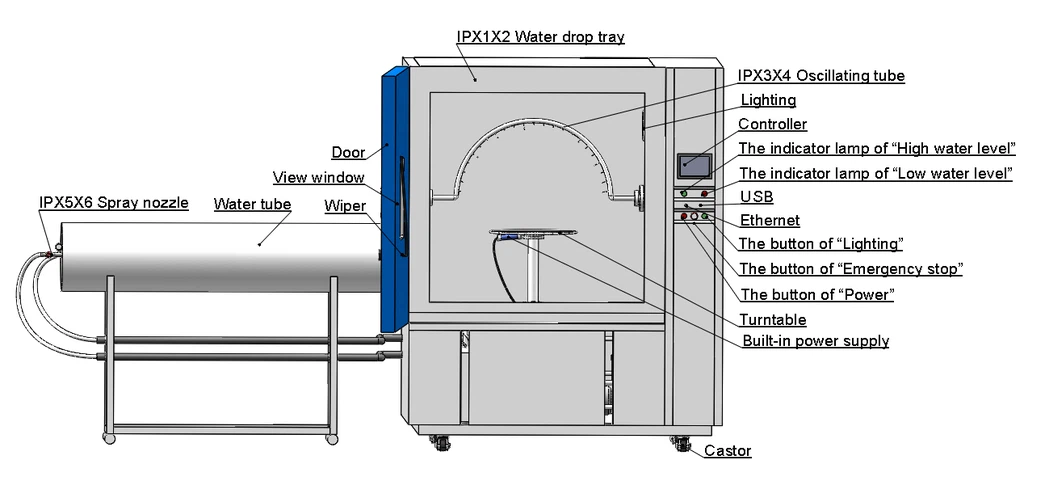 |
|||
|
|
|
||
|
Name |
Combined Waterproof Test Chamber | ||
|
Dimension |
Internal dimensions |
900*950*950mm -D*W*H |
|
|
Overall dimensions |
1180*1420*1920mm -D*W*H |
||
|
IPX5 IPX6 tube dimensions |
Length is 2000mm, diameter is 325mm |
||
|
IPX1 IPX2 |
Drip box |
600*600mm |
|
|
Hole spacing |
20mm |
||
|
Hole diameter |
φ0.4mm |
||
|
IPX3 IPX4 |
Oscillating tube radius |
400mm |
|
|
Spraying hole diameter |
φ0.4mm |
||
|
Hole spacing |
50 mm |
||
|
Number of holes |
25 |
||
|
Oscillating tube range |
0~ ±180° |
||
|
Swivel velocity speed of tubes |
60°/seconds |
||
|
IPX5 IPX6 |
Nozzle diameter |
Dia6.3mm for IPX5 nozzle diameter, Dia12.5mm for IPX6 nozzle diameter |
|
|
Water flow rate |
12.5L/min ±5% for IPX5 test, 100L/min ±5% for IPX6 test |
||
|
Core of the substantial stream |
circle of approximately 40 mm diameter at 2,5 m distance from nozzle |
||
|
Turntable |
Diameter |
600mm |
|
|
Height |
350~600mm, adjustable |
||
|
rotation speed |
1~5r/min |
||


|
Controller |
Programmable color display touch screen controller, PC Link with software, Ethernet interface |
||
|
Water supply system |
Storage water tank, booster pump, Automatic water supply, Water cycling system, Water purification system, Water saving |
||
|
Safety protection device |
Electric leakage, short circuit, motor overheating, over-current protection |
||
|
Exterior material |
Steel Plate with protective coating |
||
|
Interior material |
SUS304 stainless steel |
||
|
Power Supply |
220V 60Hz, 1Phase |
||
Advanced Digital Control Architecture
LIB water ingress test chambers incorporate intelligent automation that simplifies calibration procedures while enhancing accuracy. The Ethernet-connected controller enables remote monitoring and data logging for comprehensive performance tracking. Real-time displays show current flow rates, pressure readings, and test progress, allowing immediate detection of calibration deviations. Programmable test sequences ensure identical conditions across repeated calibration runs.
Precision-Engineered Water Delivery Components
The variable frequency pump control system maintains stable water delivery despite supply pressure fluctuations or temperature changes. Adjustable parameters accommodate testing requirements from gentle drip simulation to high-pressure jet spray. The oscillating tube's adjustable swing angle - from ±45° to ±180° - provides flexibility for different specimen configurations while maintaining calibration integrity. These premium components deliver consistent performance exceeding 10,000 test cycles.
Integrated Quality Assurance Features
Multiple safety devices protect calibration integrity through over-temperature protection, water shortage detection, and automatic system shutdown when parameters exceed acceptable ranges. The phase sequence protection and earth leakage protection prevent electrical faults during power-on testing that might affect calibration accuracy. These built-in safeguards reduce calibration drift from equipment malfunctions.
Global Service and Support Network
Since 2009, LIB Industry has delivered environmental testing solutions to industry leaders including Apple, Intel, Mercedes-Benz, and BYD across 60+ countries. This worldwide experience informs calibration best practices adapted to diverse regulatory environments and application requirements. The comprehensive 3-year warranty with lifetime service support includes calibration assistance, ensuring your investment maintains peak performance throughout its operational lifespan.
Customization Capabilities for Unique Requirements
The experienced R&D team develops tailored solutions for specialized testing needs that standard calibration procedures might not address. Whether you require modified chamber dimensions for oversized specimens, specialized test fixtures maintaining calibration during unusual orientations, or integrated data logging systems tracking calibration history, LIB engineers deliver precisely what your applications demand. This customization expertise extends to calibration methodologies for non-standard test protocols.
Conclusion
Mastering spray pattern calibration transforms your water ingress test chamber from simple equipment into a precision measurement instrument. The practices outlined - systematic parameter verification, standards-based procedures, proactive maintenance, and advanced control systems - ensure consistent, accurate results that withstand regulatory scrutiny. Calibration investment pays dividends through reduced retesting, extended equipment lifespan, and enhanced laboratory reputation. As testing requirements evolve and standards tighten, robust calibration protocols position your organization for continued success in demanding quality verification environments.
FAQ
How often should I perform complete spray pattern calibration on my water ingress test chamber?
Annual comprehensive calibration meets most regulatory requirements, with quarterly verification checks between full calibrations. High-volume laboratories testing critical components may benefit from semi-annual full calibrations. Usage intensity, test variability, and accreditation standards determine optimal calibration frequency for your specific operational context.
What causes spray pattern drift between calibration intervals?
Nozzle wear from particulate contamination, mineral deposits from water quality variations, and mechanical misalignment from vibration represent common drift sources. The multi-stage filtration system minimizes contamination, while quality construction reduces mechanical issues. Regular maintenance between calibration events prevents accelerated drift, maintaining accuracy throughout the calibration cycle.
Can I perform basic calibration verification internally without external certification?
Internal verification using calibrated reference instruments maintains awareness of chamber performance between certified calibrations. However, traceable certification from accredited calibration laboratories remains essential for regulatory compliance and quality management system requirements. Internal checks complement but cannot replace formal external calibration for critical applications requiring documented measurement traceability.
Partner with a Trusted Water Ingress Test Chamber Manufacturer
LIB Industry stands ready to support your calibration excellence as a leading water ingress test chamber manufacturer and supplier. Our factory-certified technicians provide comprehensive calibration services, training, and ongoing technical support. Contact us at ellen@lib-industry.com to discuss how our precision-engineered solutions meet your specific testing requirements.