Constant Climate Chambers for Cosmetic Product Shelf-Life Studies
Cosmetic product shelf-life studies demand rigorous environmental testing to ensure formulations maintain their efficacy, aesthetic appeal, and safety throughout their intended lifespan. Constant climate chambers provide precisely controlled temperature and humidity conditions that simulate real-world storage scenarios, enabling cosmetic manufacturers to predict product behavior across diverse climatic zones and seasons. These sophisticated environmental simulation systems accelerate aging processes, reveal potential stability issues, and validate packaging effectiveness before market launch. By exposing creams, lotions, makeup, fragrances, and other cosmetic formulations to standardized environmental stress conditions, manufacturers gather critical data supporting expiration date determinations, regulatory compliance documentation, and quality assurance protocols that protect brand reputation and consumer satisfaction.
Why Are Constant Climate Chambers Used in Cosmetic Shelf-Life Testing?

Predicting Product Performance Across Global Markets
Cosmetic brands distribute products worldwide, exposing formulations to drastically different environmental conditions. A moisturizer performing beautifully in temperate European climates may separate in tropical Southeast Asian humidity or solidify during Scandinavian winters. Constant climate chambers replicate these diverse conditions within controlled laboratory environments, enabling manufacturers to identify geographic limitations and develop formulations suited for specific regional markets without expensive field trials.
Accelerating Time-Dependent Degradation Processes
Traditional real-time stability testing requires monitoring products for 24-36 months under normal storage conditions, creating unacceptable delays in product launches. Environmental testing chambers operating at elevated temperatures and humidity levels accelerate chemical and physical degradation mechanisms, compressing years of natural aging into months. This accelerated approach follows established scientific principles correlating temperature increases with reaction rate multipliers, providing reliable predictions while dramatically reducing development timelines.
Meeting International Cosmetic Regulations
Regulatory bodies across different regions mandate stability testing data before cosmetic product approval. The European Union's Cosmetics Regulation (EC) No 1223/2009 requires stability testing under reasonably foreseeable conditions. Similarly, FDA guidelines and ISO 29621 standards specify environmental testing protocols. Constant climate chambers deliver the documented, reproducible conditions necessary to satisfy these regulatory requirements, providing the evidence-based shelf-life claims regulators demand.
Stability Evaluation for Cosmetic Formulations Under Controlled Conditions
Emulsion Stability and Phase Separation Analysis
Emulsion-based cosmetics - including creams, lotions, and foundations - represent particularly vulnerable formulations prone to phase separation under environmental stress. Temperature fluctuations disrupt the delicate balance between oil and water phases, causing creaming, coalescence, or complete separation. Constant climate chambers maintain precise conditions enabling researchers to observe these phenomena systematically. Temperature variance within ±0.5°C ensures consistent stress application, while programmable cycling between temperatures simulates seasonal variations affecting product stability.
Color Stability and Pigment Degradation
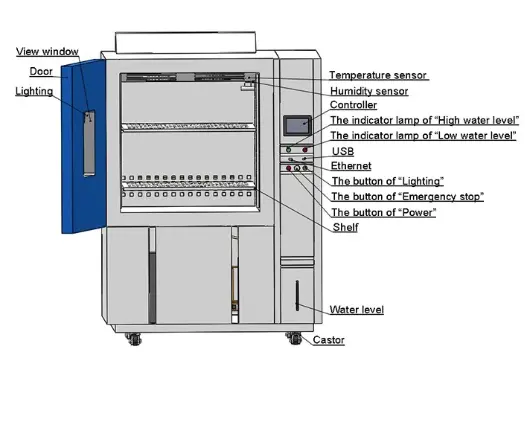
Cosmetic products containing colorants face significant challenges maintaining visual appeal throughout shelf life. Pigments oxidize, dyes fade, and chromophores degrade when exposed to elevated temperatures and humidity. Environmental chambers equipped with interior lighting and observation windows facilitate non-invasive color monitoring throughout extended testing periods. The double-layer insulating glass observation window, constructed from 8cm thick tempered glass, enables visual assessment without compromising environmental integrity or introducing thermal fluctuations.
Fragrance Retention and Volatile Component Loss
Perfumes, scented lotions, and fragranced cosmetics lose their aromatic profiles through volatile component evaporation, particularly under elevated temperature conditions. Constant climate chambers operating at controlled humidity levels help researchers quantify fragrance retention rates and identify packaging vulnerabilities. The SUS304 stainless steel interior construction prevents material interactions that might contaminate samples or introduce artificial variables affecting fragrance stability assessments.
Temperature and Humidity Effects on Cosmetic Product Performance

Viscosity Changes in Creams and Lotions
Temperature profoundly influences cosmetic product viscosity, affecting both manufacturing processes and consumer experience. Creams become overly fluid at elevated temperatures, potentially leaking from packaging, while excessive thickening at low temperatures impairs dispensing and application. Constant climate chambers with temperature ranges from -20℃ to +150℃ enable comprehensive rheological characterization across the complete temperature spectrum products might encounter during storage, transportation, and consumer use.
Microbiological Stability Under Humid Conditions
Humidity creates favorable conditions for microbial contamination in cosmetic formulations, particularly in preservative-free or naturally-preserved products. Water activity increases under high humidity, potentially supporting bacterial or fungal growth despite initially adequate preservation systems. Environmental testing chambers maintaining humidity ranges from 20% to 98% RH with ±2.5% RH precision enable microbiologists to establish preservative efficacy and identify minimum inhibitory concentrations preventing microbial proliferation throughout anticipated shelf life.
Packaging Material Integrity and Barrier Properties
Cosmetic packaging serves as the critical barrier protecting formulations from environmental degradation. Plastic containers may become brittle at low temperatures or deform under heat. Moisture vapor transmission through packaging materials allows humidity infiltration, compromising water-sensitive ingredients. Constant climate chambers facilitate comprehensive packaging qualification, testing barrier properties, seal integrity, and material compatibility under various environmental conditions before committing to large-scale production.
|
Environmental Condition |
Temperature |
Humidity |
Primary Testing Purpose |
Typical Duration |
|
Tropical Storage |
40°C |
75% RH |
High heat/humidity stability |
6 months |
|
Temperate Storage |
25°C |
60% RH |
Standard shelf-life determination |
12-36 months |
|
Cold Storage |
5°C |
Ambient |
Refrigeration stability |
3-6 months |
|
Freeze-Thaw Cycling |
-10°C to +25°C |
60% RH |
Transportation simulation |
5-10 cycles |
How Do Environmental Factors Influence Cosmetic Product Stability?
Oxidative Degradation and Antioxidant Effectiveness
Oxygen exposure initiates lipid peroxidation in cosmetic oils, producing rancid odors and degrading beneficial ingredients like vitamins and essential fatty acids. Temperature elevation accelerates oxidation rates exponentially, making elevated temperature testing particularly valuable for predicting oxidative stability. Constant climate chambers create the controlled conditions necessary to evaluate antioxidant systems, comparing natural preservatives like vitamin E against synthetic alternatives across various temperature-humidity combinations.
pH Drift and Chemical Equilibrium Shifts
Cosmetic formulations maintain specific pH ranges ensuring product safety, efficacy, and stability. Temperature changes shift chemical equilibria, potentially altering pH values outside acceptable ranges. Acidic products may become more aggressive toward packaging materials, while alkaline formulations risk precipitation or ingredient degradation. Environmental chambers enable systematic pH monitoring throughout temperature-humidity stress conditions, identifying formulations requiring pH buffer optimization.
Crystallization and Ingredient Precipitation
Temperature fluctuations cause previously dissolved ingredients to crystallize or precipitate, creating grainy textures and compromising product elegance. Waxes, butters, and high-melting-point ingredients particularly susceptible to this phenomenon require careful evaluation across temperature ranges. The precise temperature control offered by advanced climate chambers - with heating rates of 3℃/min and cooling rates of 1℃/min - enables controlled crystallization studies identifying critical temperatures and formulation modifications preventing precipitation.
Accelerated Aging Tests for Cosmetic Packaging and Ingredients
 |
 |
Arrhenius-Based Shelf-Life Prediction Models
The Arrhenius equation mathematically relates temperature to reaction rates, providing the theoretical foundation for accelerated stability testing. By testing cosmetic products at elevated temperatures (typically 40°C, 45°C, and 50°C), researchers generate degradation rate data enabling shelf-life predictions at normal storage temperatures. Constant climate chambers maintaining exceptional temperature stability - with fluctuation within ±0.5°C and maximum deviation below ±2.0°C - ensure the data quality necessary for accurate Arrhenius modeling.
Challenge Testing Under Extreme Conditions
Beyond regulatory minimum requirements, cosmetic manufacturers conduct challenge testing under extreme conditions exceeding reasonably foreseeable storage scenarios. Testing at 50°C, 60°C, or even higher temperatures reveals worst-case degradation pathways and identifies potential safety issues. The LIB constant climate chamber's extended temperature range reaching +150°C accommodates these aggressive testing protocols, providing the stress conditions necessary to expose formulation vulnerabilities before market introduction.
Cyclic Temperature-Humidity Testing Protocols
Real-world storage rarely involves constant conditions; instead, products experience daily and seasonal temperature-humidity cycles. Cyclic testing protocols alternating between different environmental conditions better simulate actual storage experiences. Programmable color LCD touch screen controllers with Ethernet connectivity enable sophisticated test programming, creating custom temperature-humidity profiles mimicking specific geographic locations or distribution scenarios.
|
Test Protocol |
Conditions |
Cycle Duration |
Purpose |
Acceptance Criteria |
|
Heat-Cool Cycling |
5°C to 40°C |
24 hours/cycle |
Transportation simulation |
No phase separation |
|
Humidity Cycling |
30% to 80% RH at 25°C |
12 hours/cycle |
Packaging permeability |
Moisture gain <5% |
|
Freeze-Thaw |
-10°C to +25°C |
24 hours/cycle |
Cold climate stability |
Texture recovery >90% |
|
Tropical Exposure |
40°C/75% RH constant |
90 days |
Accelerated aging |
Color change ΔE <2.0 |
Quality Assurance Testing for Long-Term Cosmetic Storage
Real-Time Stability Monitoring Programs
Accelerated testing provides predictive data, but real-time stability studies under recommended storage conditions remain essential for definitive shelf-life determination. Environmental chambers operating continuously at 25°C/60% RH for 24-36 months generate the gold-standard data supporting expiration date claims. The robust water management system with large-capacity storage or automatic water supply capabilities supports continuous operation exceeding 30 days without manual intervention, ensuring uninterrupted long-term studies.
Photostability Testing for Light-Sensitive Formulations
Many cosmetic ingredients degrade under light exposure, including vitamins, natural extracts, and certain preservatives. Photostability testing combines controlled temperature-humidity conditions with standardized light exposure, typically using specific wavelength ranges and intensities. Climate chambers with built-in LED lighting for workroom illumination can accommodate photostability protocols, though specialized photostability chambers may be required for rigorous ICH Q1B guideline compliance.
Preservative Efficacy Testing Over Time
Preservative systems protecting cosmetic formulations from microbial contamination may degrade during storage, potentially allowing microbial growth despite initially adequate preservation. Long-term stability programs include periodic preservative efficacy testing (PET) or challenge testing throughout shelf life. Environmental chambers maintaining consistent conditions enable correlation between storage time-temperature combinations and preservative degradation rates, supporting preservative system optimization.
LIB Industry: Precise Environmental Control for Cosmetic Shelf-Life Testing


Comprehensive Chamber Solutions for Cosmetic Applications
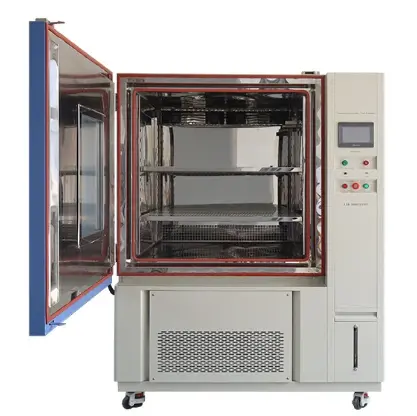
LIB Industry delivers constant climate chambers specifically engineered for cosmetic stability testing applications. The TH-series chambers offer five standard configurations ranging from 100L to 1000L internal volume, accommodating everything from small-scale formulation development through full-scale commercial product testing. Multiple temperature range options - including standard -20℃ to +150℃, extended -40℃, and specialized -70℃ configurations - provide the flexibility cosmetic manufacturers require.
Superior Temperature and Humidity Precision
Cosmetic stability testing demands exceptional environmental control precision. LIB constant climate chambers deliver temperature fluctuation within ±0.5°C, ensuring consistent stress application throughout extended testing periods. Maximum temperature deviation remains below ±2.0°C across the entire chamber volume, even with shelves fully loaded with product samples. Humidity control spans 20% to 98% RH with ±2.5% RH deviation, replicating conditions from arid desert climates through tropical rainforest environments.
Advanced Control and Monitoring Capabilities
Modern cosmetic development requires sophisticated data collection supporting regulatory submissions and quality decisions. Programmable color LCD touch screen controllers provide intuitive operation while enabling complex test programming. Ethernet connectivity facilitates remote monitoring, real-time alerts, and seamless integration with laboratory information management systems. High-precision PT100 Class A temperature sensors delivering ±0.001°C resolution ensure data quality meeting the most stringent regulatory and scientific standards.
|
Model |
Internal Volume |
Internal Dimensions (mm) |
Overall Dimensions (mm) |
Shelf Capacity |
|
TH-100 |
100L |
400×500×500 |
900×1050×1620 |
2 shelves (50kg each) |
|
TH-225 |
225L |
500×600×750 |
1000×1140×1870 |
2 shelves (50kg each) |
|
TH-500 |
500L |
700×800×900 |
1200×1340×2020 |
2 shelves (50kg each) |
|
TH-800 |
800L |
800×1000×1000 |
1300×1540×2120 |
2 shelves (50kg each) |
|
TH-1000 |
1000L |
1000×1000×1000 |
1500×1540×2140 |
2 shelves (50kg each) |
Premium Construction and Corrosion Resistance
Cosmetic testing environments present unique challenges, particularly when testing products containing aggressive ingredients or operating under high humidity conditions. LIB chambers feature high-grade SUS304 stainless steel interior construction with mirror-finish surfaces, providing exceptional corrosion resistance maintaining structural integrity throughout extended high-humidity operations. The exterior utilizes 4mm thick A3 steel framework with powder coating treatment, delivering industrial-grade durability while maintaining professional laboratory aesthetics.
Comprehensive Safety Systems
Product safety extends beyond formulation quality to encompass laboratory safety and sample protection. Multiple safety mechanisms protect both operators and valuable cosmetic samples. Leakage protection, earthing protection, and phase loss monitoring prevent electrical hazards. Automatic over-temperature shutdown systems activate independently from software controls - even if control systems fail, physical protection automatically cuts power supply, safeguarding samples from thermal damage. Humidifier dry-combustion protection, water shortage protection, and refrigerant high-pressure protection ensure continuous reliable operation.
Customization and Turn-Key Solutions
Every cosmetic testing laboratory presents unique requirements based on product portfolios, testing volumes, and specific environmental conditions. LIB Industry's extensive expertise in non-standard design enables tailored solutions addressing specific application needs. Beyond equipment supply, LIB concentrates on providing turn-key solutions encompassing research, design, production, commissioning, delivery, installation, and comprehensive operator training. This holistic approach ensures cosmetic laboratories receive fully operational systems ready for immediate deployment in critical stability programs.
Global Support and Warranty Coverage
Investment protection matters significantly when acquiring sophisticated laboratory equipment. Every LIB constant climate chamber includes comprehensive 3-year warranty coverage plus lifetime service support. Global 24/7 assistance ensures technical support availability regardless of geographic location or time zone. Should repairs prove impossible within the warranty period, LIB provides complete equipment replacement, ensuring uninterrupted stability testing programs supporting continuous product development and quality assurance activities.
Conclusion
Constant climate chambers represent indispensable tools for cosmetic manufacturers committed to delivering stable, high-quality products meeting consumer expectations and regulatory requirements. These sophisticated environmental simulation systems provide the precise temperature-humidity control necessary for accelerated aging studies, real-time stability monitoring, and comprehensive formulation characterization. LIB Industry's advanced constant climate chambers deliver exceptional performance, robust construction, and comprehensive support enabling cosmetic scientists to conduct rigorous shelf-life studies generating reliable data supporting successful product launches across global markets.
FAQ
What temperature and humidity conditions are recommended for cosmetic stability testing?
Standard cosmetic stability testing typically employs 25°C/60% RH for real-time studies and 40°C/75% RH for accelerated testing. Additional conditions like 5°C refrigeration stability and freeze-thaw cycling may be necessary depending on product formulation and intended storage recommendations.
How long should accelerated stability testing run for cosmetic products?
Accelerated stability testing at 40°C/75% RH typically runs for 3-6 months, providing data equivalent to 12-24 months at normal storage conditions. Real-time stability studies continue for the intended shelf life, usually 24-36 months for most cosmetic products.
Can constant climate chambers test multiple cosmetic products simultaneously?
Chambers can accommodate multiple products simultaneously, provided samples don't interact or create cross-contamination risks. Standard shelves support 50kg capacity each, allowing diverse product placement. However, strongly fragranced products should be tested separately to prevent scent transfer affecting evaluation accuracy.
Partner with LIB Industry, Your Trusted Constant Climate Chamber Manufacturer
LIB Industry specializes in environmental testing solutions tailored to cosmetic industry requirements. As an experienced constant climate chamber manufacturer, supplier, and factory, we deliver complete turn-key systems supporting your stability testing programs. Contact our technical specialists at ellen@lib-industry.com to discuss your cosmetic shelf-life testing needs.