Temperature and Humidity Cabinets in Pharmaceutical Stability Tests
Pharmaceutical stability testing represents a critical cornerstone in drug development and quality assurance, ensuring medications maintain their efficacy, safety, and quality throughout their intended shelf life. Temperature and humidity cabinets serve as indispensable tools in this process, providing precisely controlled environmental conditions that simulate various storage scenarios and climatic zones. These sophisticated chambers enable pharmaceutical manufacturers to evaluate how active pharmaceutical ingredients (APIs) and finished dosage forms respond to specific temperature and humidity conditions over extended periods, generating essential data for regulatory submissions and supporting evidence-based shelf-life determinations that protect patient safety worldwide.
Why Are Temperature and Humidity Cabinets Essential for Stability Testing?
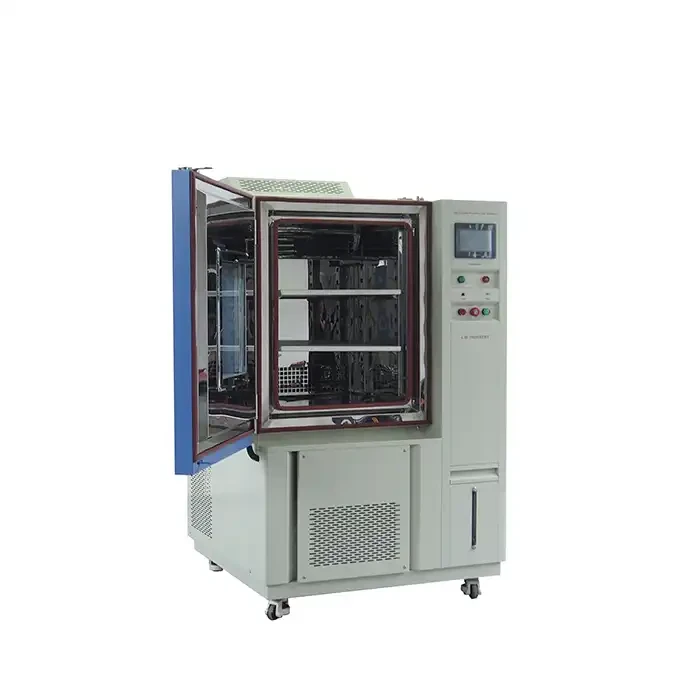
Meeting ICH Guideline Requirements
International Council for Harmonisation (ICH) guidelines establish stringent protocols for pharmaceutical stability testing across different climatic zones. Environmental test chambers must replicate these specific conditions with exceptional accuracy to generate acceptable regulatory data. The ICH Q1A(R2) guideline specifies long-term testing at 25°C ± 2°C with 60% RH ± 5% RH, alongside accelerated conditions at 40°C ± 2°C with 75% RH ± 5% RH.
Ensuring Drug Product Quality Assurance
Pharmaceutical products undergo complex chemical and physical transformations when exposed to varying environmental conditions. Advanced climate chambers allow researchers to monitor degradation pathways, polymorphic transitions, moisture uptake, and packaging interactions. This comprehensive evaluation ensures that medications delivered to patients maintain their therapeutic properties, preventing treatment failures and adverse reactions caused by degraded formulations.
Protecting Patient Safety Through Validated Testing
Patient safety depends fundamentally on medication reliability. Environmental simulation equipment provides the controlled conditions necessary to identify potential stability issues before products reach the market. By exposing drug candidates to stressed conditions, pharmaceutical scientists can predict real-world performance, establish appropriate storage recommendations, and determine expiration dates that guarantee product integrity throughout the distribution chain.
Controlled Climate Simulation for Pharmaceutical Product Validation
Precision Temperature Control Systems
Modern environmental chambers incorporate sophisticated refrigeration and heating systems that maintain extraordinarily stable temperature profiles. The electronic expansion valve (EEV) technology precisely controls refrigerant flow, delivering superior temperature uniformity while reducing energy consumption by 20-30% compared to conventional heating-based systems. Premium compressor components from renowned manufacturers ensure reliable, continuous operation throughout multi-year stability studies.
Advanced Humidity Management Technology
Humidity control presents unique challenges in pharmaceutical testing environments. External humidification systems eliminate common issues like scaling and water spillage inside test chambers. The humidifier operates outside the workspace, preventing contamination and allowing maintenance without interrupting ongoing studies. Automatic water supply systems with built-in filtration ensure continuous operation, maintaining humidity levels between 20%-98% RH with ±2.5% RH accuracy.
Multi-Zone Climate Capability
Pharmaceutical development requires testing under diverse environmental conditions representing different global markets. Advanced temperature and humidity cabinets offer multiple temperature range options: standard chambers operate from -20℃ to +150℃, while specialized units extend to -40℃ or -70℃ for freeze-thaw studies and ultra-low temperature stability assessments. This versatility enables comprehensive evaluation across all intended storage and transportation scenarios.
Long-Term and Accelerated Stability Testing Applications
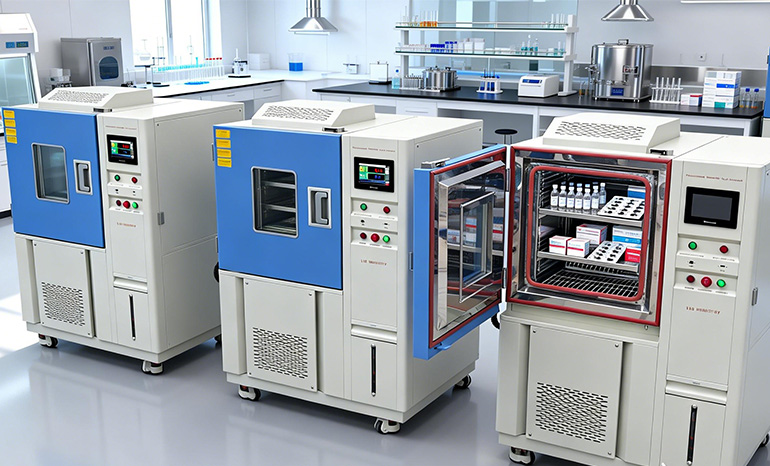
Real-Time Stability Study Protocols
Long-term stability studies conducted at recommended storage conditions provide the most reliable shelf-life data. Environmental chambers maintain constant 25°C/60% RH conditions for 12-60 months, allowing researchers to monitor gradual changes in pharmaceutical formulations. High-precision PT100 Class A sensors provide ±0.001°C resolution, ensuring temperature fluctuations remain within ±0.5°C limits and maximum deviation stays below ±2.0°C throughout extended study periods.
Accelerated Testing for Rapid Data Generation
Accelerated stability testing at elevated temperatures and humidity levels enables faster prediction of product behavior. Testing at 40°C/75% RH for six months typically provides data equivalent to 24 months at normal storage conditions. This approach significantly reduces development timelines while generating statistically valid information about degradation kinetics, enabling Arrhenius-based shelf-life projections.
Intermediate and Stress Testing Conditions
Intermediate stability testing at 30°C/65% RH bridges the gap between long-term and accelerated conditions, providing additional data points for shelf-life modeling. Stress testing under extreme conditions (50°C, 75% RH or higher) helps identify degradation pathways, establish stability-indicating analytical methods, and evaluate packaging effectiveness under worst-case scenarios.
|
Study Type |
Temperature |
Humidity |
Duration |
Primary Purpose |
|
Long-term |
25°C ± 2°C |
60% RH ± 5% |
12-60 months |
Shelf-life determination |
|
Accelerated |
40°C ± 2°C |
75% RH ± 5% |
6 months |
Predictive modeling |
|
Intermediate |
30°C ± 2°C |
65% RH ± 5% |
12 months |
Additional data support |
|
Stress |
50°C+ |
75%+ RH |
1-3 months |
Degradation pathway identification |
How Do Humidity Conditions Affect Drug Shelf Life?
Moisture-Induced Chemical Degradation
Relative humidity directly influences chemical stability through multiple mechanisms. Hygroscopic excipients absorb atmospheric moisture, creating microenvironments with elevated water activity that accelerate hydrolysis reactions. APIs susceptible to moisture-mediated degradation experience significantly reduced shelf life when exposed to high humidity conditions. Environmental chambers enable researchers to quantify these relationships and establish protective packaging requirements.
Physical Stability Changes from Humidity Exposure
Beyond chemical degradation, humidity profoundly impacts physical product characteristics. Tablets may soften, harden, or disintegrate depending on formulation composition and moisture levels. Capsules become brittle or sticky, compromising both appearance and functionality. Powder formulations experience caking, reducing flowability and dose uniformity. Controlled humidity testing identifies these vulnerabilities early in development.
Packaging Permeability and Moisture Protection
Pharmaceutical packaging serves as the primary moisture barrier protecting formulations from environmental humidity. Stability temperature and humidity cabinets equipped with observation windows and interior lighting facilitate real-time monitoring of packaging integrity throughout testing. Researchers evaluate moisture vapor transmission rates (MVTR) under various humidity conditions, ensuring packaging systems provide adequate protection throughout the product's intended shelf life.
Regulatory Compliance Testing for Pharmaceutical Storage

WHO Stability Testing Guidelines
The World Health Organization establishes stability testing requirements for pharmaceutical products distributed in diverse climatic conditions. WHO guidelines classify global regions into four climatic zones, each requiring specific testing protocols. Zone IVb, representing hot and humid tropical climates, mandates testing at 30°C/75% RH, demonstrating the critical importance of humidity control capabilities in pharmaceutical environmental chambers.
FDA Stability Study Requirements
The United States Food and Drug Administration requires comprehensive stability data supporting all marketing applications. Temperature and humidity cabinets must demonstrate qualification and validation according to FDA expectations, with documented evidence of performance characteristics, calibration procedures, and ongoing monitoring protocols. Programmable color LCD touch screen controllers with Ethernet connectivity facilitate data integrity compliance and 21 CFR Part 11 requirements.
EU GMP Annex 15 Qualification Standards
European Union Good Manufacturing Practice guidelines specify rigorous qualification protocols for equipment used in stability testing. Installation Qualification (IQ), Operational Qualification (OQ), and Performance Qualification (PQ) documentation must demonstrate that environmental chambers consistently operate within specified parameters. Safety devices including humidifier dry-combustion protection, over-temperature protection, refrigerant high-pressure protection, and water shortage protection ensure continuous compliance.
|
Regulatory Body |
Key Guideline |
Primary Focus |
Critical Parameters |
|
ICH |
Q1A(R2) |
Harmonized stability testing |
25°C/60% RH; 40°C/75% RH |
|
WHO |
Technical Report Series |
Climatic zone requirements |
Zone-specific conditions |
|
FDA |
21 CFR 211.166 |
Stability testing programs |
Data integrity and documentation |
|
EMA |
ICH Q1A-F |
European stability standards |
Storage condition validation |
Environmental Monitoring Solutions for Pharmaceutical Laboratories
Automated Data Collection and Documentation
Modern pharmaceutical laboratories require comprehensive environmental monitoring systems that automatically collect, store, and analyze temperature and humidity data. Advanced chambers feature programmable controllers that record multiple data points per minute, creating detailed environmental profiles throughout stability studies. Ethernet connectivity enables remote monitoring, real-time alerts, and seamless integration with laboratory information management systems (LIMS).
Alarm Systems and Deviation Management
Robust safety features protect valuable pharmaceutical samples from environmental excursions. Multi-level alarm systems provide immediate notification when parameters deviate from specified ranges. Temperature fluctuation alarms activate when readings exceed ±0.5°C variance, while humidity alarms trigger at ±2.5% RH deviation. Water level alarms prevent humidifier dry-combustion, and over-temperature protection safeguards samples from thermal damage.
Calibration and Maintenance Protocols
Regulatory compliance demands rigorous calibration schedules and preventive maintenance programs. High-precision PT100 Class A sensors require periodic calibration against certified reference standards, with documentation retained throughout equipment lifecycle. External humidification systems allow maintenance activities without interrupting ongoing studies, minimizing disruption to critical stability programs while ensuring continuous performance verification.
LIB Industry: Stable & Compliant Solutions for Pharmaceutical Stability Testing
|
|
 |
||||

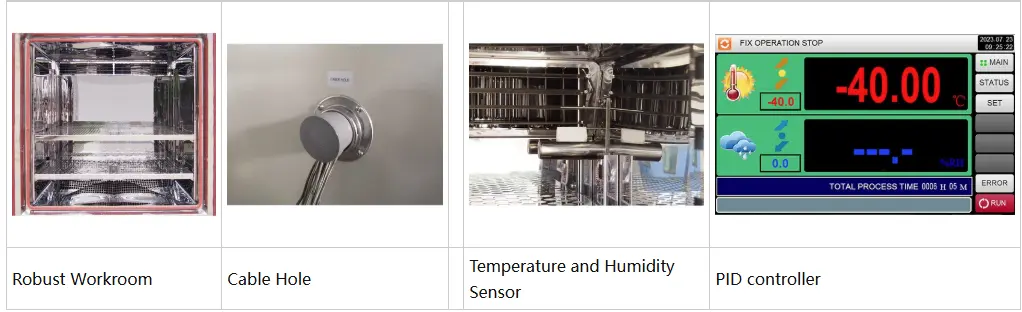
Comprehensive Temperature and Humidity Cabinet Range
Xi'an LIB Environmental Simulation Industry offers comprehensive temperature and humidity cabinet solutions specifically designed for pharmaceutical stability testing. The TH-series chambers provide five standard sizes ranging from 100L to 1000L internal volume, accommodating diverse sample quantities and testing requirements. Each model features identical performance specifications, ensuring consistent results regardless of chamber size selected.
Advanced Technical Specifications for Pharmaceutical Applications
LIB temperature and humidity cabinets deliver exceptional performance tailored to pharmaceutical stability requirements. Temperature ranges span -20℃ to +150℃ (standard configuration), with optional -40℃ and -70℃ capabilities for specialized applications. Humidity control maintains 20% to 98% RH with ±2.5% RH accuracy. Cooling rates of 1℃/min and heating rates of 3℃/min enable efficient transition between testing conditions.
Safety Features for Lithium-Ion Battery and Pharmaceutical Testing
Pharmaceutical stability chambers incorporate multiple safety systems protecting both samples and personnel. Built-in lighting enables observation without opening chambers, minimizing environmental disturbances. Water purification and recirculation systems ensure consistent humidification performance while preventing contamination. Comprehensive safety devices include earth leakage protection, over-current protection, and emergency shutdown capabilities.
|
Model |
Internal Volume |
Internal Dimensions (mm) |
Overall Dimensions (mm) |
Standard Shelves |
|
TH-100 |
100L |
400×500×500 |
900×1050×1620 |
2 shelves (50kg each) |
|
TH-225 |
225L |
500×600×750 |
1000×1140×1870 |
2 shelves (50kg each) |
|
TH-500 |
500L |
700×800×900 |
1200×1340×2020 |
2 shelves (50kg each) |
|
TH-800 |
800L |
800×1000×1000 |
1300×1540×2120 |
2 shelves (50kg each) |
|
TH-1000 |
1000L |
1000×1000×1000 |
1500×1540×2140 |
2 shelves (50kg each) |
Turn-Key Solutions and Technical Support
LIB Industry concentrates on providing turn-key solutions for environmental testing, encompassing research, design, production, commissioning, delivery, installation, and training. This comprehensive approach ensures pharmaceutical laboratories receive fully qualified systems ready for immediate deployment in stability programs. Technical support teams provide ongoing assistance throughout equipment lifecycle, supporting regulatory inspections and continuous improvement initiatives.
Quality Construction and Durable Materials
Premium construction materials ensure long-term reliability in demanding pharmaceutical environments. Interior chambers feature SUS304 stainless steel construction offering superior corrosion resistance and ease of cleaning. Exterior steel plates with protective coating provide durability and professional appearance. Polyurethane foam and insulation cotton deliver exceptional thermal efficiency, while double-layer thermo-stability silicone rubber sealing on observation windows maintains environmental integrity.
Energy Efficiency and Sustainable Operation
Environmental responsibility increasingly influences pharmaceutical laboratory operations. LIB chambers incorporate energy-efficient technologies that reduce operational costs while minimizing environmental impact. Electronic expansion valve systems decrease energy consumption by 20-30% compared to conventional designs. French TECUMSEH compressors provide reliable performance with optimized power consumption, supporting sustainable laboratory practices without compromising precision.
Conclusion
Temperature and humidity cabinets represent indispensable infrastructure for pharmaceutical stability testing, enabling regulatory compliance, supporting drug development, and ultimately protecting patient safety. Advanced environmental chambers from LIB Industry deliver the precision, reliability, and comprehensive features pharmaceutical laboratories require for long-term and accelerated stability studies. By maintaining exceptional temperature and humidity control, incorporating robust safety systems, and providing comprehensive technical support, these chambers ensure pharmaceutical manufacturers generate high-quality stability data supporting successful product registration and market distribution worldwide.
FAQ
What temperature and humidity conditions are required for ICH stability testing?
ICH Q1A(R2) guidelines specify long-term testing at 25°C ± 2°C with 60% RH ± 5% RH, and accelerated testing at 40°C ± 2°C with 75% RH ± 5% RH. Environmental chambers must maintain these conditions with documented precision throughout study durations.
How often should temperature and humidity cabinets be calibrated for pharmaceutical use?
Calibration frequency depends on regulatory requirements and internal quality protocols, typically ranging from quarterly to annually. High-precision PT100 sensors require verification against certified reference standards, with complete documentation retained supporting regulatory inspections and data integrity.
Can one chamber accommodate multiple stability study conditions simultaneously?
Individual chambers maintain single environmental conditions to ensure data integrity. Pharmaceutical laboratories conducting multiple study protocols simultaneously require dedicated chambers for each condition. LIB Industry offers various chamber sizes enabling efficient laboratory configuration supporting diverse stability programs.
Partner with LIB Industry, Your Trusted Temperature and Humidity Cabinet Manufacturer
LIB Industry delivers comprehensive environmental testing solutions tailored to pharmaceutical stability requirements. As an experienced temperature and humidity cabinet manufacturer and supplier, we provide complete turn-key services from design through installation and training. Contact our technical team at ellen@lib-industry.com to discuss your specific stability testing needs.