Testing Material Brittleness in Cold Temperature Chambers
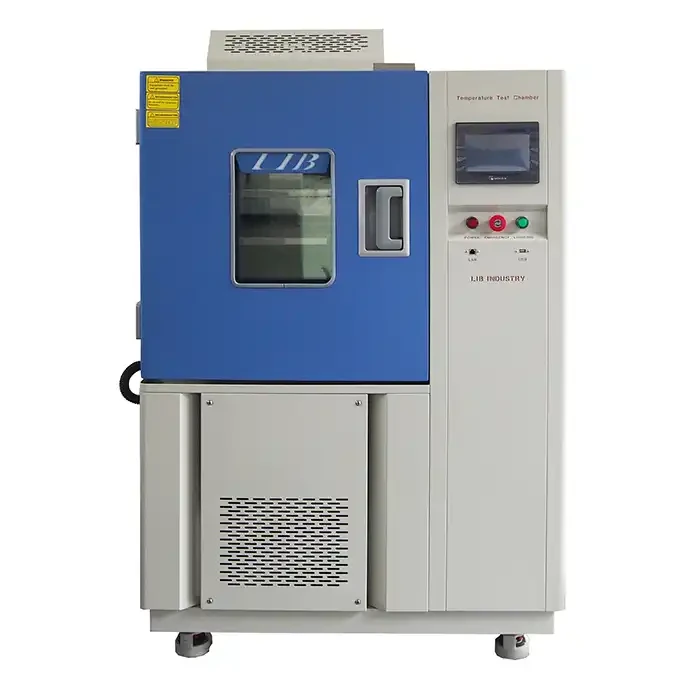
Material brittleness testing in controlled low-temperature environments reveals critical performance characteristics that determine product safety and reliability across extreme operating conditions. A cold temperature chamber replicates arctic climates, high-altitude conditions, and cryogenic scenarios where materials experience ductile-to-brittle transitions - sudden losses of toughness leading to catastrophic fractures. These controlled testing environments subject metals, polymers, composites, and elastomers to temperatures ranging from -20°C to -120°C, enabling engineers to quantify impact resistance degradation, fracture toughness reductions, and failure threshold shifts. Understanding material behavior under thermal stress prevents field failures in industries spanning aerospace, automotive, oil exploration, and infrastructure development where subzero exposure represents operational reality rather than exceptional circumstance.
Why Does Material Brittleness Increase at Low Temperatures?
Atomic Structure Changes Affecting Molecular Mobility
Temperature fundamentally influences atomic vibration energy within crystalline structures and polymer chains. As thermal energy decreases, atoms lose kinetic energy and settle into more rigid configurations. Metal lattices exhibit reduced dislocation movement - the primary mechanism enabling plastic deformation and energy absorption during impact events. Polymer chains lose segmental mobility, transitioning from flexible, rubbery states to glassy, brittle conditions.
Ductile-to-Brittle Transition Temperature Phenomena
Many engineering materials exhibit sharp transitions between ductile and brittle behavior within specific temperature ranges. Body-centered cubic metals like ferritic steels demonstrate pronounced transition temperatures where fracture mode shifts from fibrous, energy-absorbing failures to cleavage-dominated, low-energy fractures. This transition temperature varies dramatically between alloy compositions - carbon content, grain size, and alloying elements significantly influence the critical threshold.
Thermal Contraction Generating Internal Stresses
Materials undergo dimensional changes responding to temperature variations, with thermal contraction creating internal stress concentrations in multi-material assemblies. Dissimilar materials with differing thermal expansion coefficients generate interfacial stresses during cooling cycles. Brittle materials lacking plastic deformation capacity cannot relieve these accumulated stresses through yielding, instead developing microcracks that propagate catastrophically under applied loads.
Cold Temperature Impact Testing for Industrial Materials
Charpy and Izod Impact Test Methodologies
Standardized impact testing quantifies material toughness through controlled fracture experiments. Charpy impact tests subject notched specimens to pendulum strikes, measuring energy absorbed during fracture. Conducting these tests within cold temperature chambers at various subzero temperatures generates transition curves mapping toughness versus temperature relationships. Testing protocols following ASTM E23 or ISO 148 standards ensure reproducible results supporting material qualification and quality assurance programs.
Drop Weight and Instrumented Impact Evaluations
Drop weight testing simulates real-world impact scenarios with falling mass configurations. Instrumented impact testers incorporate force sensors and high-speed data acquisition, capturing force-displacement curves revealing crack initiation energy, propagation energy, and total fracture energy. Cold temperature chamber integration conditions specimens to target temperatures before impact, maintaining thermal equilibrium throughout the brief test duration.
Dynamic Mechanical Analysis at Cryogenic Temperatures
Dynamic mechanical analysis (DMA) characterizes viscoelastic properties across temperature ranges, identifying glass transition temperatures and modulus changes. Applying oscillating forces while controlling specimen temperature reveals storage modulus, loss modulus, and damping characteristics. Combining DMA with traditional impact testing provides comprehensive brittleness characterization - DMA identifies transition temperatures while impact tests quantify fracture resistance.
|
Material Category |
Typical Transition Range |
Critical Applications |
Testing Standards |
|
Carbon Steels |
-20°C to +20°C |
Pressure vessels, pipelines, structural components |
ASTM A370, ISO 148-1 |
|
Austenitic Stainless Steels |
No sharp transition to -196°C |
Cryogenic storage, aerospace, medical devices |
ASTM A370, ASME BPVC |
|
Aluminum Alloys |
Gradual toughness reduction |
Aircraft structures, cold climate equipment |
ASTM B871, AMS specifications |
|
Engineering Polymers |
-40°C to +10°C |
Automotive components, consumer electronics |
ASTM D256, ISO 180 |
Mechanical Property Evaluation Under Subzero Conditions
Tensile Testing Revealing Strength and Ductility Changes
Tensile tests performed at controlled low temperatures quantify fundamental mechanical properties including yield strength, ultimate tensile strength, and elongation at fracture. Many materials exhibit increased strength but decreased ductility as temperatures decline. Yield strength typically rises due to reduced dislocation mobility, while elongation decreases reflecting reduced plastic deformation capacity.
Fracture Toughness Quantification Through KIC Testing
Fracture mechanics approaches characterize material resistance to crack propagation through stress intensity factor measurements. Mode I fracture toughness (KIC) testing using compact tension specimens quantifies critical stress intensity values at crack extension initiation. Temperature significantly influences fracture toughness - values declining substantially as temperatures decrease below transition ranges.
Fatigue Crack Growth Rate Temperature Dependence
Cyclic loading generates progressive damage accumulation through fatigue mechanisms. While high-cycle fatigue life often improves at reduced temperatures due to increased yield strength, crack propagation rates exhibit complex temperature dependencies. Environmental chambers supporting fatigue testing machines enable long-duration cyclic loading experiments at controlled low temperatures.
How Do Cold Chambers Help Identify Fracture Risks?
Accelerated Aging Through Thermal Cycling Exposure
Repeated temperature transitions between ambient and subzero conditions generate cumulative damage through thermal fatigue mechanisms. Coefficient of thermal expansion mismatches between bonded materials create interfacial shear stresses during each thermal cycle. Cold temperature chambers programmed with thermal cycling profiles accelerate damage accumulation, revealing vulnerabilities within condensed testing timeframes.
Quality Control Screening for Manufacturing Defects
Production variations occasionally introduce defects compromising low-temperature performance despite nominal material specifications. Acceptance testing protocols incorporating cold impact testing or proof loading at reduced temperatures screen defective components before field deployment. The controlled environment provided by test chambers ensures consistent screening conditions across production batches.
Failure Mode Analysis Supporting Root Cause Investigations
Field failures occurring during cold weather operation require detailed investigation determining contributing factors. Recreating failure conditions within environmental test chambers enables controlled experimentation isolating causal variables. Systematically varying temperature, loading rates, and stress magnitudes while maintaining other parameters constant identifies critical combinations triggering brittle fracture.
Polymer and Metal Brittleness Testing in Controlled Environments
Engineering Thermoplastics Glass Transition Characterization
Thermoplastic polymers transition from rubbery to glassy states at characteristic glass transition temperatures (Tg). Below Tg, polymer chains lack mobility for stress relaxation through molecular rearrangement, forcing materials to respond elastically until fracture occurs. Testing common engineering plastics like ABS, polycarbonate, nylon, and acetal across temperature ranges establishes safe operating limits.
Elastomer Low-Temperature Flexibility and Resilience
Elastomeric seals, gaskets, and vibration isolators must maintain flexibility and resilience throughout service temperature ranges. Cold stiffening occurs as elastomer chains lose mobility, increasing compression set and reducing sealing effectiveness. Brittle point testing identifies temperatures where elastomers lose resilience entirely, shattering rather than deforming under impact.
High-Strength Steel Temper Embrittlement Evaluation
Advanced high-strength steels occasionally experience temper embrittlement - toughness degradation following exposure to elevated temperatures within specific ranges. Cold temperature impact testing provides sensitive indicators detecting temper embrittlement onset before catastrophic failures occur. Baseline impact energy values established on as-received materials compare against post-service impact testing revealing toughness degradation.
|
Testing Chamber Model |
Interior Volume |
Temperature Range |
Cooling Performance |
Ideal Applications |
|
T-100 |
100 liters |
-20°C to +150°C |
3°C/min cooling rate |
Small specimens, quality control sampling |
|
T-225 |
225 liters |
-40°C to +150°C |
3°C/min cooling rate |
Standard impact specimens, component testing |
|
T-500 |
500 liters |
-70°C to +150°C |
3°C/min cooling rate |
Full assemblies, multiple specimen testing |
|
T-1000 |
1000 liters |
-120°C to +150°C |
3°C/min cooling rate |
Cryogenic research, large component validation |
Low-Temperature Durability Validation for Engineering Materials
Aerospace Component Qualification Testing Protocols
Aircraft and spacecraft components endure extreme temperature variations - from ground-level heat to stratospheric cold and space vacuum conditions. Qualification testing protocols mandate comprehensive environmental exposure demonstrating continued functionality across operational temperature envelopes. The -70°C capability of advanced cold temperature chambers accommodates commercial aviation requirements, while -120°C systems address space application needs.
Arctic Infrastructure Material Selection Criteria
Infrastructure development in polar regions demands materials maintaining adequate toughness at temperatures routinely reaching -40°C to -60°C. Construction steels must demonstrate sufficient Charpy impact energy at design temperatures, typically specified as minimum values at temperatures below anticipated service minimums. Cold chamber testing validates material selections and welding procedures before committing to construction projects.
Automotive Cold-Start Performance Evaluation
Vehicle systems must function reliably during cold starts in winter climates where temperatures may reach -30°C or below. Plastic components including bumper fascias, interior trim, and under-hood elements risk brittle fracture during minor impacts when extremely cold. Comprehensive cold chamber testing simulates overnight temperature soaking followed by impact testing or functional cycling.
LIB Industry: Uniform Temperature for Accurate Brittleness Tests
Precision Temperature Control Eliminating Gradient Effects
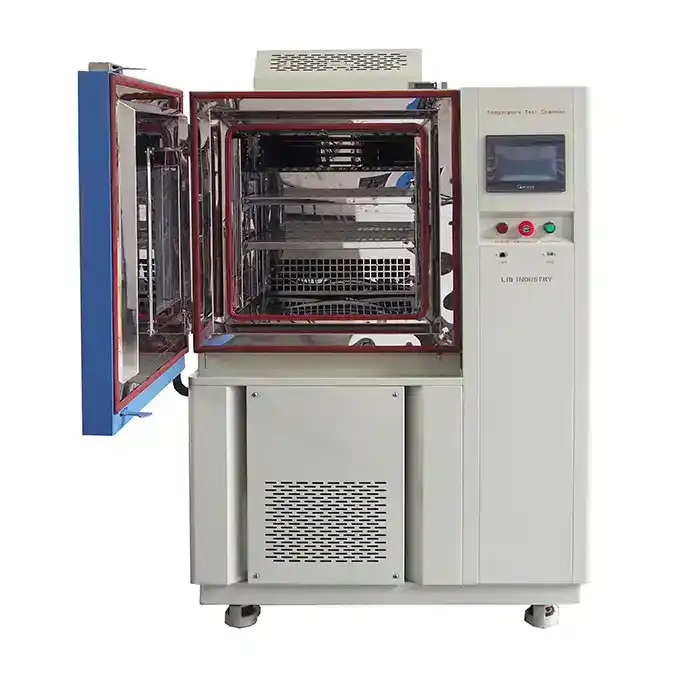
Accurate brittleness testing demands uniform specimen temperatures throughout the test article. LIB Industry cold temperature chambers achieve ±0.5°C temperature fluctuation and ±2.0°C spatial deviation through advanced PID control systems and optimized airflow patterns. High-precision PT100 platinum resistance sensors continuously monitor conditions, providing feedback to refrigeration and heating systems.
Rapid Thermal Equilibration Through Centrifugal Air Circulation
Test specimens require sufficient soak time reaching thermal equilibrium before mechanical testing begins. The centrifugal fan circulation system in LIB cold temperature chambers forces conditioned air around specimens, accelerating heat transfer and reducing required soak durations. The 3°C/min cooling rate allows efficient test sequencing without excessive waiting between temperature set points.
Flexible Chamber Configurations Supporting Diverse Test Setups
Brittleness testing encompasses numerous test methods requiring different specimen geometries and loading fixtures. LIB Industry chambers feature adjustable shelving, multiple cable port sizes (50mm, 100mm, 200mm), and custom access configurations supporting diverse test equipment integration. The SUS304 stainless steel interior resists corrosion from condensation during repeated thermal cycling.
Conclusion
Material brittleness testing within controlled low-temperature environments provides essential data preventing catastrophic field failures across industries operating in cold climates or altitude conditions. Cold temperature chambers enable systematic characterization of ductile-to-brittle transitions, impact resistance degradation, and fracture toughness reductions informing material selection and design limit establishment. LIB Industry chambers deliver precise temperature control, uniform conditioning, and flexible configurations supporting diverse brittleness evaluation methodologies.
FAQ
What temperature should I test steel components intended for cold climate service?
Testing should occur at temperatures 10-20°C below the minimum anticipated service temperature. Many standards specify testing at -40°C for general cold climate applications, though arctic service may require -60°C evaluation to ensure adequate safety margins.
How long should specimens soak before conducting impact tests in a cold chamber?
Specimen soak duration depends on thickness and thermal conductivity. Typical recommendations suggest 30 minutes minimum for thin metal specimens, extending to several hours for thick sections or polymer materials. Thermocouple monitoring confirms complete thermal equilibration.
Can one chamber accommodate both brittleness testing and thermal cycling evaluations?
Absolutely. Programmable controllers enable complex thermal profiles alternating between impact test conditioning and cycling exposure. The 3°C/min cooling capability supports both static temperature holds for mechanical testing and dynamic cycling for accelerated aging studies.
Contact LIB Industry - Your Cold Temperature Chamber Manufacturer
LIB Industry serves as your comprehensive cold temperature chamber supplier and factory, delivering turn-key environmental testing solutions globally. Reach our technical specialists at ellen@lib-industry.com to explore how our chambers advance your material validation objectives.