Small Environmental Test Chambers for University Research Labs
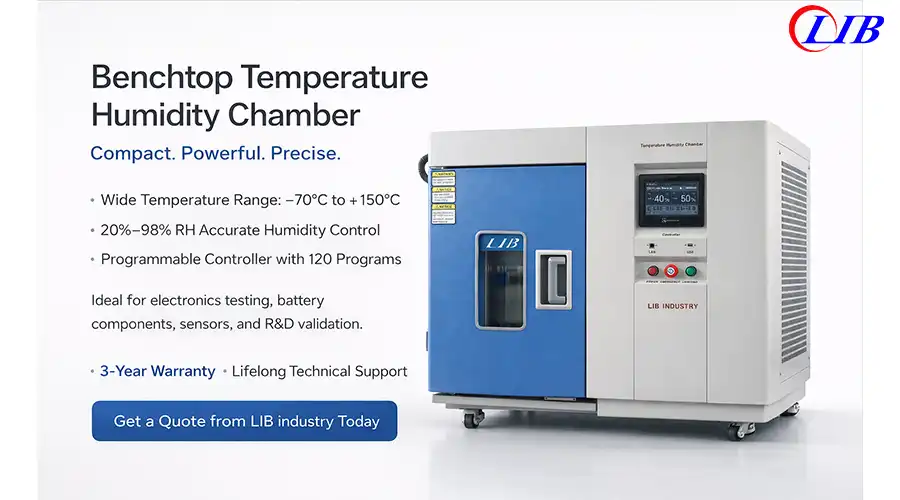
University research laboratories demand precision testing equipment that balances performance with practical space constraints. A small environmental test chamber delivers professional-grade temperature and humidity control within a compact footprint, making it ideal for academic settings. These desktop-sized units enable researchers to conduct rigorous climate simulation studies without monopolizing valuable laboratory real estate. With capabilities ranging from -70°C to +150°C and humidity control between 20% to 98% RH, these chambers support diverse research disciplines - from materials science to pharmaceutical development - while fitting seamlessly into crowded research environments where budget allocation and spatial efficiency remain paramount considerations.
Why Do University Research Labs Need Small Environmental Chambers?
Meeting Diverse Research Requirements Across Multiple Disciplines
Academic institutions host researchers exploring vastly different scientific questions simultaneously. A materials engineering professor might investigate polymer behavior under extreme cold, while a biology department colleague examines bacterial growth patterns in tropical humidity conditions. Compact temperature humidity test chambers accommodate this diversity by providing programmable climate profiles that transition seamlessly between testing protocols. The 120-program capacity with 100 segments per program allows graduate students to establish complex thermal cycling routines that mirror real-world environmental stresses, from diurnal temperature fluctuations to seasonal humidity variations.
Budget-Conscious Solutions for Grant-Funded Projects
Research grants typically impose strict budgetary constraints, requiring laboratories to maximize scientific output per dollar invested. Smaller environmental testing equipment delivers substantial cost advantages compared to walk-in chambers. The lower initial purchase price preserves funding for other critical research needs, while reduced energy consumption - thanks to smaller interior volumes requiring less power to maintain stable conditions - decreases operational expenses over the equipment's lifespan. The plug-and-play design eliminates costly electrical infrastructure modifications, allowing institutions to redirect those savings toward research materials or additional instrumentation.
Facilitating Collaborative Research and Multi-User Access
University laboratories frequently support multiple research teams sharing common facilities. Desktop environmental chambers promote collaborative environments by occupying minimal bench space, allowing several units to operate simultaneously within the same laboratory. The whisper-quiet operation below 65 dB ensures researchers can concentrate on data analysis while tests run nearby. Network connectivity through Ethernet enables remote monitoring, permitting graduate students to track experimental progress from computer workstations or even home offices, optimizing time management during extended thermal soak tests or humidity equilibration cycles.
Compact Environmental Testing for Academic Research Projects
Materials Characterization and Accelerated Aging Studies
Materials scientists rely on controlled environmental exposure to predict long-term performance characteristics. Small environmental test chambers accelerate degradation processes that would naturally occur over years, condensing timeline requirements into manageable experimental windows. Researchers investigating novel composite materials, biodegradable plastics, or advanced coatings subject specimens to thermal cycling between extreme temperatures while precisely controlling humidity levels. The SUS304 stainless steel interior resists corrosion from moisture exposure, maintaining chamber integrity throughout demanding test sequences that might involve thousands of temperature transitions.
|
Research Application |
Typical Temperature Range |
Humidity Requirements |
Common Test Duration |
|
Polymer Degradation Studies |
-40°C to +120°C |
30% to 80% RH |
168-720 hours |
|
Electronic Component Reliability |
-20°C to +85°C |
10% to 95% RH |
500-2000 thermal cycles |
|
Pharmaceutical Stability Testing |
+2°C to +40°C |
25% to 75% RH |
30-180 days |
|
Biomaterial Conditioning |
+20°C to +60°C |
40% to 90% RH |
24-168 hours |
Electronics and Sensor Development Testing
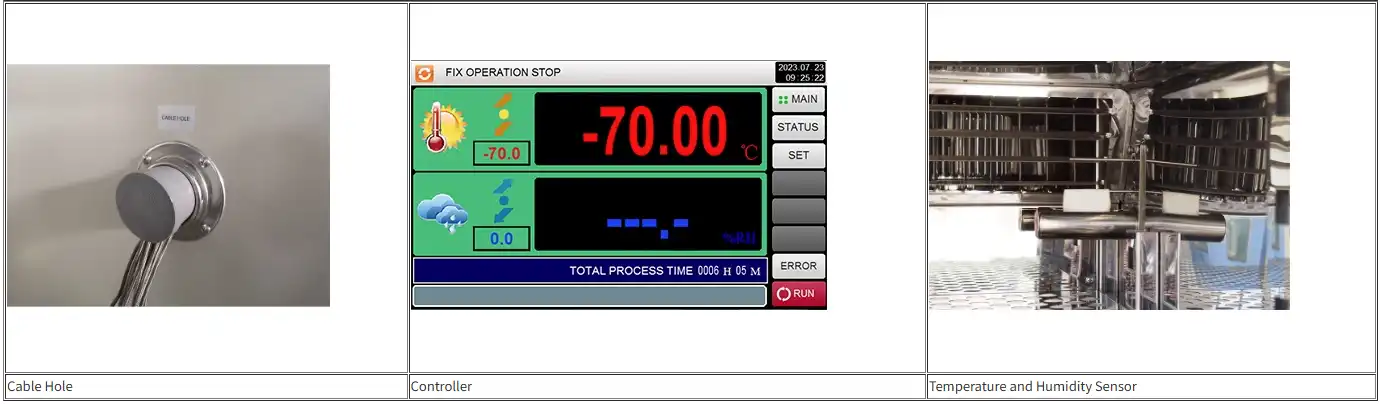
Engineering departments developing next-generation electronics require environmental validation before prototype deployment. Temperature cycling reveals solder joint weaknesses, while humidity exposure identifies inadequate conformal coating coverage. The 50mm cable port maintains chamber integrity while allowing power connections and data acquisition lines to reach test specimens. Built-in LED lighting through the observation window lets researchers visually inspect circuit boards for condensation formation or component discoloration without interrupting test sequences. The anti-condensation airflow system protects sensitive electronics from moisture damage during humidity ramping cycles.
Biological Sample Preservation and Incubation Research
Life sciences departments investigating organism responses to climate variables benefit from precise environmental control. Researchers studying insect behavior under varying humidity conditions, plant seed germination rates across temperature gradients, or microbial growth patterns in simulated tropical environments depend on stable climate chambers. The micro-circulation airflow ensures temperature uniformity throughout the workspace, eliminating hot spots that could skew experimental results. Adjustable SUS304 stainless steel shelves accommodate various specimen containers, from petri dishes to specialized growth chambers, while the antimicrobial interior surface maintains hygienic conditions between experiments.
Controlled Climate Simulation for Scientific Experiments
Precision Temperature Regulation for Reproducible Results
Scientific credibility depends on experimental reproducibility, requiring environmental chambers to maintain extraordinarily stable conditions. High-precision PT100 Class A sensors with 0.001°C resolution continuously monitor chamber temperatures, feeding data to advanced PID control systems that orchestrate refrigeration, heating, and air circulation. Temperature fluctuation remains within ±0.5°C, while deviation across the workspace stays under ±2.0°C. This exceptional stability proves critical when investigating phenomena with narrow temperature sensitivity windows, such as protein crystallization or phase transition temperatures in novel alloys.
Humidity Control Systems Engineered for Academic Precision
Relative humidity significantly influences material properties, chemical reaction rates, and biological processes. The humidity control system maintains conditions between 20% and 98% RH with ±2.5% deviation, accommodating research from arid desert simulations to rainforest environment recreation. Humidifier dry-combustion protection and water shortage safeguards prevent equipment damage during unattended operation - essential for overnight experiments or weekend test runs. The water purification and recirculation system ensures consistent humidity generation without introducing contaminants that might interfere with sensitive research protocols.
Programmable Test Profiles Matching Real-World Conditions
Environmental phenomena rarely involve static conditions. Researchers modeling diurnal temperature swings, seasonal transitions, or altitude-related climate variations program multi-step profiles that replicate these dynamic patterns. The color LCD touchscreen controller simplifies complex profile creation, allowing users to define temperature ramps, humidity steps, and soak periods intuitively. Heating rates reaching 3°C/min and cooling rates of 1°C/min enable reasonably rapid transitions between climate zones, though researchers should consider thermal mass effects when testing large specimens that may lag behind small environmental test chamber air temperature changes.
How Can Small Chambers Improve Laboratory Testing Efficiency?

Accelerated Test Cycles Through Rapid Temperature Transitions
Research timelines constantly pressure academic laboratories to deliver publishable results. Efficient thermal performance directly impacts experimental throughput. The mechanical compression refrigeration system achieves cooling rates that transition chambers from ambient to -40°C within manageable timeframes, while robust heating elements rapidly elevate temperatures to upper testing limits. Graduate students conducting qualification testing across multiple temperature points complete screening experiments faster, accelerating hypothesis validation and freeing chamber capacity for subsequent research initiatives.
Multi-Chamber Strategies for Parallel Testing Protocols
Space-efficient designs enable laboratories to deploy multiple units simultaneously, creating parallel testing capabilities impossible with larger chambers. Researchers can expose replicate specimens to identical conditions across separate chambers, validating result consistency while maintaining proper experimental controls. Alternatively, comparative studies examining different environmental stresses run concurrently, with one chamber simulating arctic conditions while another recreates desert heat. This parallel processing approach dramatically shortens project timelines, particularly beneficial when thesis deadlines approach or grant reporting periods loom.
Simplified Specimen Preparation and Loading Procedures
Large environmental chambers often require awkward specimen positioning and time-consuming loading procedures. Desktop units place the entire workspace at comfortable working heights, allowing researchers to arrange test articles efficiently. The observation window enables visual confirmation of proper specimen placement before sealing the chamber, preventing wasted test cycles from improper setup. Quick-access designs reduce the thermal disturbance period when briefly opening chambers to add sensors or adjust specimen positions, maintaining stable baseline conditions that preserve data integrity.
Environmental Stability Testing for Research Materials and Devices
Thermal Shock Resistance Evaluation
Many applications expose materials to sudden temperature changes - from spacecraft components transitioning between sunlit and shadowed regions to consumer electronics moved from heated buildings into winter cold. Thermal shock testing subjects specimens to rapid temperature transitions, revealing vulnerabilities in material interfaces, adhesive bonds, or layered structures. While dedicated thermal shock chambers excel at extremely rapid transitions, small environmental chambers provide controlled ramp rates suitable for evaluating moderate thermal shock scenarios. Researchers program stepped temperature profiles that approximate real-world thermal exposure patterns relevant to intended application environments.
|
Testing Parameter |
TH-50 Model |
TH-80 Model |
|
Internal Dimensions |
320×350×450 mm |
400×400×500 mm |
|
Overall Dimensions |
820×1160×950 mm |
900×1210×1000 mm |
|
Interior Volume |
50 liters |
80 liters |
|
Maximum Heat Load |
1000W |
1000W |
|
Temperature Options |
-20°C, -40°C, or -70°C to +150°C |
-20°C, -40°C, or -70°C to +150°C |
|
Power Requirements |
220V/110V standard outlet |
220V/110V standard outlet |
Long-Term Storage Condition Simulation
Predicting shelf-life stability requires understanding degradation mechanisms under various storage scenarios. Pharmaceutical researchers validating drug formulation stability expose samples to elevated temperature and humidity conditions following ICH guideline protocols. Archival scientists investigating preservation strategies for historical documents recreate environmental conditions found in different geographical regions or building types. The programmable controller automates extended duration tests spanning weeks or months, with data logging capabilities tracking environmental parameters throughout the exposure period. This documented environmental history provides essential supporting evidence for published research findings.
Quality Assurance Validation for Prototype Development
Engineering researchers developing novel devices or systems must validate performance across specified environmental operating ranges before moving toward commercialization. Prototype circuit boards, mechanical assemblies, or sensor packages undergo qualification testing that demonstrates reliable functionality from minimum to maximum rated temperatures. The 1000W heat load capacity accommodates actively powered test specimens, while the cable port permits continuous data acquisition monitoring device performance parameters throughout environmental cycling. Successful qualification testing provides confidence for scaling research prototypes toward production-ready designs.
Space-Efficient Test Chambers for Educational and Research Facilities
Maximizing Limited Laboratory Real Estate
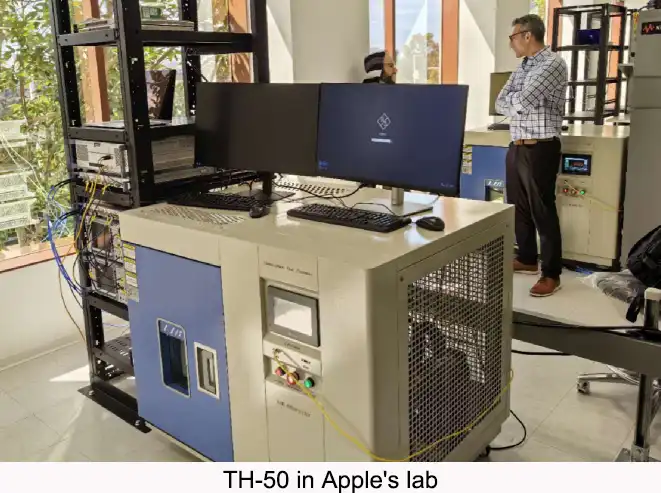
University laboratory space represents premium real estate, with departments competing for limited square footage. Renovating buildings to create additional laboratory capacity costs significantly more than optimizing existing spaces through efficient equipment selection. A small environmental test chamber occupies approximately the footprint of a large office printer - the TH-50 model's 820×1160 mm footprint consumes less than one square meter of floor space. This compact design preserves bench areas for microscopes, analytical instruments, and specimen preparation activities, preventing environmental testing capabilities from dominating laboratory layouts.
Portable Configurations Supporting Flexible Research Needs
Research priorities shift as faculty members pursue new grant opportunities or graduate students advance dissertation projects. Unlike permanently installed walk-in chambers, desktop units relocate easily when laboratory reorganization becomes necessary. Standard doorways accommodate these chambers, permitting movement between laboratories, floors, or even buildings without specialized rigging equipment. The plug-and-play electrical design eliminates dependencies on dedicated power circuits, simplifying relocation logistics. This flexibility proves particularly valuable in shared research facilities serving rotating user populations with evolving equipment requirements.
Supporting Teaching Laboratory Applications
Beyond pure research functions, environmental chambers serve pedagogical purposes in undergraduate and graduate laboratory courses. Engineering students learn accelerated testing methodologies by subjecting specimens to environmental stress and analyzing failure modes. Materials science courses demonstrate phase transitions, thermal expansion coefficients, or moisture absorption characteristics through hands-on chamber experiments. The intuitive touchscreen interface requires minimal training, allowing students to focus on experimental design and data interpretation rather than struggling with complex equipment operation. Safety features including over-temperature protection and earth leakage protection provide peace of mind when students operate equipment under faculty supervision.
LIB Industry Delivers User-Friendly, Energy-Efficient Chambers to Empower Academic Discovery
 |
 |
|||
Sixteen Years of Manufacturing Excellence
LIB Industry brings extensive experience in environmental testing solutions specifically tailored for academic and research applications. Manufacturing expertise accumulated across sixteen years ensures chambers incorporate design refinements addressing real-world laboratory challenges. Quality management systems following ISO 9001 protocols maintain consistent manufacturing standards, while CE certification plus third-party validation by SGS and TUV experts confirms compliance with international safety and performance benchmarks. This proven quality foundation gives research administrators confidence when allocating limited equipment budgets toward essential testing capabilities.
Comprehensive Support Throughout Equipment Lifecycle
Academic researchers require reliable equipment that operates consistently throughout demanding experimental campaigns. The industry-leading three-year warranty demonstrates manufacturer confidence in product durability and performance longevity. Lifetime service support ensures chambers remain operational well beyond initial warranty periods, protecting institutional investments. A 24/7 global support team assists with technical questions, troubleshooting guidance, or programming assistance regardless of time zones - particularly valuable when international collaborations involve researchers working across different continents.
Custom Engineering for Specialized Research Requirements
Unique research applications sometimes demand non-standard chamber configurations or specialized capabilities beyond catalog specifications. The experienced engineering team collaborates with research faculty to develop custom solutions addressing specific experimental needs. Modifications might include enhanced cable port configurations for multi-sensor installations, specialized atmosphere control for inert gas testing, or explosion-proof designs for lithium-ion battery safety research. Custom small environmental test chamber development leverages core manufacturing capabilities while incorporating application-specific features that enable groundbreaking research impossible with standard commercial equipment.
|
Feature Category |
Standard Benefits |
Academic Advantages |
|
Control Interface |
Color touchscreen with 120 programs |
Students learn industry-standard controls; research flexibility |
|
Observation |
Double-layer insulated window with LED lighting |
Non-invasive monitoring; teaching demonstrations |
|
Safety Systems |
Over-temperature, over-current, high-pressure protection |
Unattended operation; student safety |
|
Connectivity |
Ethernet network integration |
Remote monitoring; multi-user access; data integration |
|
Construction |
SUS304 stainless steel interior |
Chemical resistance; easy decontamination between projects |
Conclusion
Small environmental test chambers transform university research capabilities by delivering professional-grade climate simulation within space-efficient, budget-conscious packages. These compact systems empower academic researchers across diverse disciplines - from materials science to pharmaceutical development - enabling rigorous environmental testing previously accessible only through expensive, space-consuming installations. Advanced temperature and humidity control, intuitive programming interfaces, and robust safety features combine to create reliable platforms supporting groundbreaking discoveries. As research demands evolve and laboratory spaces face increasing pressure, these chambers provide the flexibility, precision, and efficiency that define modern academic excellence.
FAQ
What temperature range works best for electronics reliability testing in university labs?
Most electronics research protocols specify -40°C to +85°C cycling to match automotive and industrial qualification standards. Our chambers easily accommodate these ranges with precise control, though specific requirements depend on your component specifications and target application environments.
Can multiple research groups share a single chamber effectively?
Absolutely. Network connectivity enables scheduling coordination, while the programmable controller stores unique test profiles for different research teams. The compact size and affordable pricing often make multi-chamber installations practical, eliminating scheduling conflicts entirely.
How difficult is chamber operation for undergraduate students?
The touchscreen interface mirrors smartphone interactions, requiring minimal training. Students typically master basic operations within 30 minutes. Safety interlocks prevent operational errors, while faculty can restrict access to advanced programming features until students demonstrate competency.
Partner with LIB Industry for Your Research Testing Needs
LIB Industry stands ready as your trusted environmental test chamber manufacturer and supplier, delivering turn-key solutions from design through installation and training. Contact our technical team at ellen@lib-industry.com to discuss how our chambers can advance your research objectives.