Thermal Fatigue Testing for Aerospace Components
Aerospace components endure some of the harshest environmental conditions imaginable, experiencing dramatic temperature swings that challenge material integrity and structural resilience. Thermal fatigue testing validates whether critical aircraft systems can withstand repeated thermal expansion and contraction cycles encountered during flight operations. A temperature cycling test chamber replicates these extreme conditions in controlled laboratory environments, subjecting components to accelerated thermal stress protocols. This rigorous evaluation identifies potential failure modes before components enter service, preventing catastrophic in-flight malfunctions. Understanding thermal fatigue mechanisms and implementing comprehensive testing strategies ensures aerospace systems meet stringent safety standards while maintaining operational reliability throughout their service life.
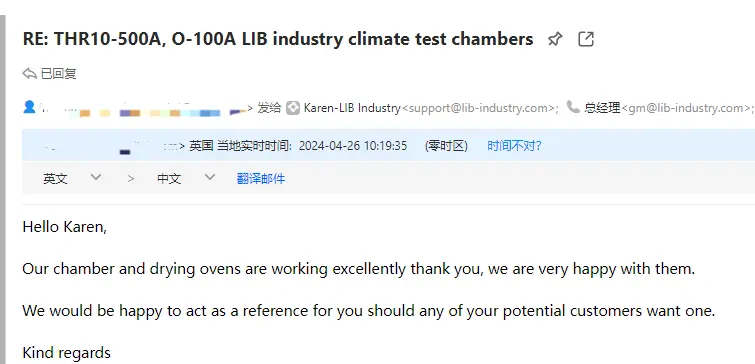
A leading electronics testing lab shared positive feedback on the LIB industry THR10-500A thermal cycling chamber, noting stable operation and reliable performance during use.
The system ran smoothly through continuous thermal cycling and fast temperature changes, supporting long-term burn-in tests without interruption. It helped the lab evaluate the thermal durability of automotive electronics such as sensors and control modules.The thermal test chamber is also used for material aging, plastic parts testing, and battery performance evaluation, effectively simulating real temperature variation conditions to improve product reliability.
Why Do Aerospace Components Require Thermal Fatigue Testing?
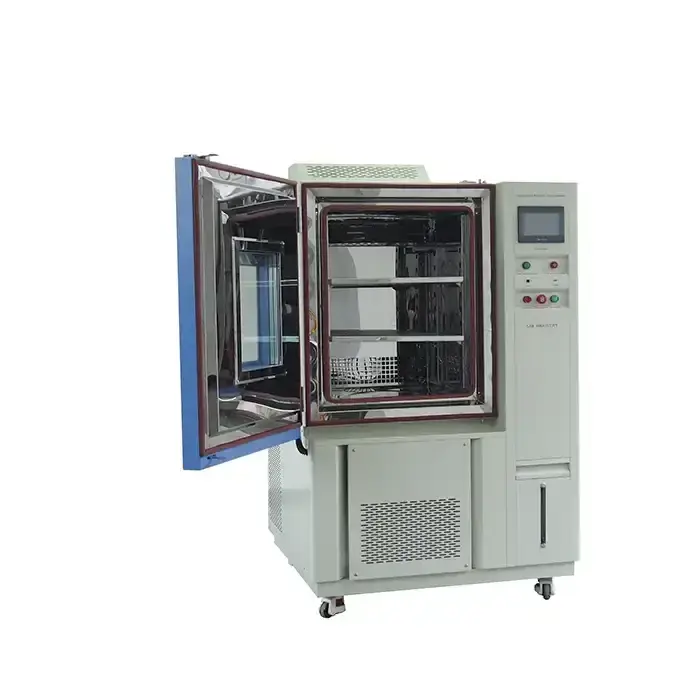
Extreme Operational Environment Simulation
Aircraft components transition from ground-level temperatures exceeding 50°C on desert tarmacs to stratospheric conditions below -55°C at cruising altitude. These transitions occur within minutes during ascent and descent phases, creating severe thermal stress on materials and assemblies. Temperature cycling test chambers recreate these rapid environmental shifts, enabling engineers to evaluate component behavior under realistic operational scenarios. The testing reveals weaknesses in material selection, joint designs, and coating systems that might remain hidden during ambient testing. Validated performance under simulated flight conditions provides confidence that components will perform reliably across operational envelopes.
Material Property Degradation Assessment
Repeated thermal cycling induces microstructural changes in aerospace materials, potentially compromising mechanical properties over time. Aluminum alloys may experience grain boundary weakening, composite laminates can develop delamination, and protective coatings might crack or spall. Thermal fatigue chambers equipped with rapid temperature change capabilities - achieving 10°C/min ramp rates - accelerate these degradation processes. Engineers monitor property evolution through periodic mechanical testing, tracking strength retention, ductility changes, and surface condition throughout extended cycling protocols. This data informs maintenance intervals and lifecycle predictions.
Mission-Critical System Validation
Avionics, hydraulic systems, engine components, and structural elements must function flawlessly despite thermal cycling exposure. A single electronic component failure could jeopardize flight safety, while structural crack propagation might lead to catastrophic outcomes. Environmental test chambers provide controlled platforms for validating system-level performance under thermal stress. The chambers' programmable controllers support complex test profiles mimicking specific mission profiles - commercial flights, military sorties, or space launch sequences. This mission-specific testing ensures components exceed reliability thresholds required for certification.
High-Altitude Thermal Cycling Challenges in Aerospace Systems
Rapid Temperature Transition Dynamics
Commercial aircraft ascend to cruising altitudes around 11,000 meters within 20-30 minutes, experiencing temperature drops exceeding 80°C. Military jets performing high-altitude reconnaissance or supersonic flight encounter even more aggressive thermal profiles. Thermal cycling equipment must replicate these rapid transitions accurately to generate meaningful test data. LIB Industry chambers achieve controllable ramp rates of 5°C, 10°C, or 15°C per minute, matching actual flight thermal dynamics. The precise temperature control - maintaining fluctuation within ±0.5°C - ensures test reproducibility critical for aerospace qualification programs.
Cryogenic Exposure at Operating Altitudes
Stratospheric temperatures routinely reach -56.5°C at the tropopause, subjecting aircraft surfaces and uninsulated components to cryogenic conditions. Materials exhibiting acceptable properties at room temperature may become brittle, lose ductility, or experience phase transformations at these extremes. Temperature cycling test chambers with low-temperature capabilities down to -70°C enable comprehensive evaluation across operational envelopes. The mechanical compression refrigeration systems utilizing French TECUMSEH compressors deliver stable cryogenic performance throughout multi-week test campaigns. This capability proves essential for validating polar route operations and high-altitude platforms.
Thermal Shock Resistance Requirements
Certain aerospace applications involve particularly abrupt temperature changes - rocket nozzles during ignition, re-entry vehicle thermal protection systems, or emergency descent scenarios. These thermal shock events impose instantaneous stress concentrations that can initiate crack propagation or cause adhesive bond failures. Advanced thermal cycling chambers with enhanced heating and cooling capabilities simulate these extreme scenarios. The nichrome heater elements provide rapid thermal input, while optimized refrigeration systems extract heat efficiently. Testing at maximum ramp rates identifies thermal shock vulnerabilities before components face actual service conditions.
|
Aerospace Application |
Temperature Range |
Cycling Rate |
Typical Test Duration |
|
Commercial Avionics |
-55°C to +85°C |
5-10°C/min |
500-1000 cycles |
|
Jet Engine Components |
-40°C to +150°C |
10-15°C/min |
200-500 cycles |
|
Satellite Electronics |
-120°C to +100°C |
Variable |
1000+ cycles |
|
Structural Fasteners |
-55°C to +70°C |
5°C/min |
2000+ cycles |
Thermal Expansion and Contraction Effects on Aircraft Materials
Coefficient of Thermal Expansion Mismatches
Aerospace assemblies integrate dissimilar materials - aluminum structures bonded to carbon composites, titanium fasteners joining nickel alloys, or ceramic coatings on superalloy substrates. Each material exhibits unique thermal expansion characteristics, creating differential movement during temperature changes. Repeated cycling amplifies these expansion mismatches, generating interfacial stresses that can cause delamination, fastener loosening, or coating spallation. Environmental test chambers allow engineers to quantify these dimensional changes and validate design solutions. Strategic material selection, compliant interface layers, and optimized joint geometries mitigate expansion-related failures identified through systematic testing.
Residual Stress Accumulation
Manufacturing processes such as welding, heat treatment, and machining introduce residual stresses into aerospace components. Thermal cycling modifies these stress distributions, potentially relaxing beneficial compressive stresses or intensifying detrimental tensile regions. Components experiencing stress redistribution may exhibit unexpected deformation, reduced fatigue life, or stress corrosion susceptibility. Temperature cycling protocols spanning operational temperature ranges reveal these behavioral changes. X-ray diffraction measurements before and after cycling quantify residual stress evolution, informing stress-relief procedures and manufacturing process improvements.
Dimensional Stability for Precision Applications
Optical systems, sensor arrays, and aerodynamic surfaces require micron-level dimensional stability despite thermal cycling exposure. Even minor distortions compromise performance - misaligned optics degrade imaging quality, while warped aerodynamic surfaces increase drag. High-precision thermal cycling chambers with ±0.5°C temperature fluctuation enable accurate dimensional stability assessment. Laser interferometry or coordinate measuring machines track dimensional changes throughout test sequences. Materials exhibiting exceptional thermal stability - low-expansion alloys, stabilized composites, or engineered ceramics - emerge from this rigorous screening process.
How Does Thermal Fatigue Influence Structural Integrity?
Crack Initiation and Propagation Mechanisms
Thermal cycling generates alternating stress fields that initiate microcracks at stress concentrations - fastener holes, geometric discontinuities, or material interfaces. Subsequent cycles propagate these cracks through mechanisms analogous to mechanical fatigue, eventually compromising structural integrity. Temperature cycling test chambers enable controlled crack growth studies under realistic thermal loading. Engineers monitor crack progression using non-destructive evaluation techniques - ultrasonic inspection, thermography, or acoustic emission monitoring. The data establishes damage tolerance characteristics and safe-life or fail-safe design criteria.
Low-Cycle Fatigue Damage Accumulation
Unlike high-cycle mechanical fatigue involving millions of loading cycles, thermal fatigue typically operates in low-cycle regimes with hundreds to thousands of temperature excursions. Each cycle imposes significant plastic strain, accelerating damage accumulation compared to purely elastic loading. Aerospace components must withstand design-life cycle counts with adequate safety margins. Accelerated thermal cycling testing compresses years of operational exposure into weeks of laboratory evaluation. Chambers programmed for continuous operation - supported by automatic systems requiring minimal intervention - enable these extended test campaigns. Post-test metallographic examination reveals fatigue damage extent and validates lifecycle predictions.
Structural Health Monitoring Validation
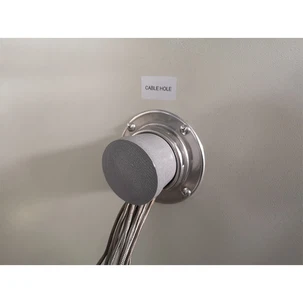
Modern aircraft increasingly incorporate embedded sensors monitoring structural condition during operation. Strain gauges, fiber optic sensors, and piezoelectric transducers detect damage progression, enabling predictive maintenance strategies. Validating these monitoring systems requires exposing instrumented structures to controlled thermal fatigue while comparing sensor outputs to actual damage states. Temperature cycling chambers accommodate fully instrumented test articles, with cable penetrations allowing data acquisition throughout testing. The validation confirms that monitoring algorithms accurately detect thermal fatigue damage before critical failure occurs.
Accelerated Thermal Stress Testing for Aerospace Qualification

MIL-STD-810 Temperature Cycling Protocols
Military aerospace qualification follows MIL-STD-810 Method 503 thermal shock and Method 507 humidity procedures. These standards define specific temperature profiles, transition rates, and dwell times simulating operational and storage conditions. Temperature cycling test chambers must demonstrate compliance with these standardized protocols through formal validation. Test chambers featuring programmable controllers supporting 120 test programs with 100 individual steps enable complex MIL-STD profile implementation. The chambers' data logging capabilities document temperature histories proving standard compliance for certification authorities.
RTCA DO-160 Environmental Conditions
Airborne equipment undergoes qualification per RTCA DO-160, Section 4 (Temperature and Altitude) and Section 5 (Temperature Variation). These aerospace industry standards specify temperature ranges, rate-of-change requirements, and test durations based on equipment installation zones. Equipment installed in unpressurized compartments experiences more severe thermal environments than cabin-mounted systems. Thermal cycling chambers with temperature ranges from -70°C to +150°C accommodate all DO-160 categories. The precision temperature control ensures test accuracy, while remote monitoring via Ethernet connectivity allows engineers to oversee multi-day qualification campaigns.
Accelerated Life Testing Methodologies
Aerospace programs increasingly employ accelerated testing to compress decades of operational exposure into manageable test durations. Elevated temperature cycling amplitudes and increased cycle frequencies accelerate damage accumulation according to established acceleration models. Engineers must carefully balance acceleration factors against maintaining realistic failure modes - excessive acceleration may introduce non-representative damage mechanisms. Environmental test chambers with flexible programming enable optimization of acceleration parameters. The controllable ramp rates (5°C to 20°C/min available upon request) allow precise tuning of thermal stress magnitudes.
|
Test Standard |
Temperature Range |
Cycle Duration |
Qualification Criteria |
|
MIL-STD-810G Method 503 |
-55°C to +85°C |
30 min cycles |
No functional degradation |
|
RTCA DO-160G Section 4 |
Varies by category |
3-hour cycles |
Performance within specification |
|
ASTM E1171 |
Custom profile |
Application-specific |
Statistical confidence level |
Aerospace Component Reliability Under Extreme Temperature Changes
Electronic System Thermal Management
Avionics packages generate significant heat during operation while simultaneously facing extreme ambient temperatures. Thermal cycling testing evaluates whether cooling systems maintain component temperatures within specification despite external temperature swings. Heat loads up to 1000W can be accommodated within test chambers, representing realistic electronic power dissipation. Engineers monitor junction temperatures, case temperatures, and coolant performance throughout cycling protocols. The testing validates thermal interface materials, heat sink designs, and fan reliability under combined thermal and operational stresses.
Solder Joint Reliability Assessment
Electronic assemblies rely on thousands of solder joints providing mechanical support and electrical connectivity. Thermal expansion coefficient mismatches between components, printed circuit boards, and solder materials create cyclic strain on these joints. Repeated thermal cycling eventually causes solder fatigue, manifesting as increased electrical resistance or complete joint failure. Temperature cycling chambers enable systematic solder reliability evaluation across various assembly technologies - through-hole, surface mount, or ball grid array configurations. The chambers' uniform temperature distribution ensures consistent thermal exposure across test boards, enabling statistical failure analysis.
Seal and Gasket Performance Degradation
Pressurized aircraft systems depend on elastomeric seals maintaining integrity despite thermal cycling exposure. Polymeric materials exhibit temperature-dependent properties, becoming stiff and brittle at low temperatures while potentially degrading at elevated temperatures. Thermal cycling accelerates aging processes - compression set, hardness changes, and chemical degradation. Environmental test chambers enable leak testing at temperature extremes, validating seal performance across operational envelopes. The chambers' humidity control options (available as additional features) allow combined temperature-humidity exposure simulating realistic environmental conditions.
LIB Industry Thermal Cycling Solutions for Aerospace Component Fatigue Testing
|
|
 |
||||

 |
 |
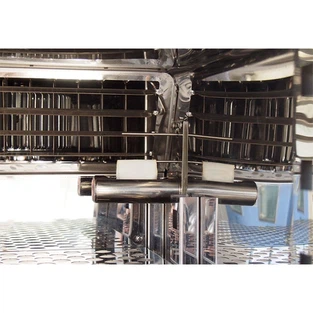 |
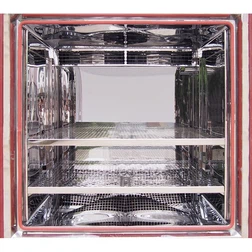
| Robust Workroom | Cable Hole | Temperature and Humidity Sensor |
Precision Thermal Control Architecture
LIB Industry temperature cycling test chambers deliver industry-leading control accuracy essential for aerospace qualification testing. The advanced PID control algorithms maintain temperature fluctuations within ±0.5°C while limiting spatial deviation to ±2.0°C across the chamber volume. PTR Platinum Resistance PT100Ω Class A temperature sensors provide exceptional measurement accuracy and long-term stability. The centrifugal air circulation system ensures uniform temperature distribution even when test chambers hold maximum sample loads. This precision eliminates environmental variability as a confounding factor in test results.
Rapid Thermal Transition Capabilities
Aerospace thermal cycling protocols demand aggressive temperature change rates matching flight profiles. LIB chambers achieve heating and cooling rates of 10°C/min average, with customizable ramp rates reaching 15-20°C/min for specialized applications. The mechanical compression refrigeration system utilizing premium French TECUMSEH compressors delivers consistent cooling performance throughout extended test campaigns. Nichrome heating elements provide responsive thermal input with minimal overshoot. The combination enables accurate reproduction of rapid ascent/descent thermal profiles critical for realistic aerospace component evaluation.
Comprehensive Chamber Configuration Range
Aerospace testing requirements span compact electronic assemblies to large structural components. LIB's modular temperature cycling chamber portfolio accommodates this diversity through five standard models (TR5-100, TR5-225, TR5-500, TR5-800, TR5-1000) ranging from 100L to 1000L internal volume. Custom configurations extend to 3000L walk-in chambers for full-scale component testing. Temperature range options include standard (-20°C to +150°C), extended (-40°C to +150°C), and cryogenic (-70°C to +150°C) capabilities. This flexibility ensures optimal chamber specification matching specific aerospace application requirements.
Advanced Safety and Monitoring Systems
Aerospace test campaigns involving valuable prototypes and flight-qualified hardware demand comprehensive protection systems. LIB chambers incorporate multiple safety layers - over-temperature protection, over-current protection, refrigerant high-pressure protection, and earth leakage protection. Independent physical over-temperature systems operate separately from software controls, safeguarding samples even during control system malfunctions. The programmable LCD touchscreen controller with Ethernet connectivity enables remote monitoring and data download via USB interface. Real-time curve displays show measured values tracking setpoints without overshoot, confirming proper chamber operation.
Explosion-Proof Options for Hazardous Testing
Aerospace fuel system components, battery assemblies, and propellant-exposed hardware require testing in explosion-proof environments. LIB offers specialized chambers featuring explosion-proof doors, reinforced viewing windows, smoke detectors with audible alarms, and water spray fire suppression systems. These safety-enhanced chambers meet stringent aerospace testing facility requirements while maintaining thermal performance specifications. The robust SUS304 stainless steel interior construction provides chemical resistance for testing components exposed to hydraulic fluids, fuels, or corrosive substances.
Turnkey Integration and Validation Support
Aerospace testing laboratories require chambers that integrate seamlessly with existing quality systems and validation frameworks. LIB provides comprehensive turnkey solutions encompassing equipment design, manufacturing, commissioning, delivery, installation, and operator training. The company's expertise in non-standard designs addresses unique aerospace testing challenges. Chamber validation packages include Installation Qualification (IQ), Operational Qualification (OQ), and Performance Qualification (PQ) documentation supporting aerospace quality systems. This full-service approach accelerates laboratory setup while ensuring regulatory compliance.
Conclusion
Thermal fatigue testing represents a critical validation step ensuring aerospace component reliability under operational thermal cycling exposure. Temperature cycling test chambers provide controlled environments replicating flight thermal profiles, enabling engineers to identify material degradation, structural weaknesses, and system vulnerabilities before components enter service. LIB Industry's precision thermal cycling solutions - combining rapid temperature transition capabilities, exceptional control accuracy, and comprehensive safety systems - support rigorous aerospace qualification programs. Investing in validated thermal cycling equipment protects flight safety while optimizing component design and material selection.
FAQ
What temperature change rates are typical for aerospace thermal cycling tests?
Aerospace thermal cycling typically employs 5-15°C/min ramp rates matching actual flight thermal dynamics. Commercial aircraft qualification uses moderate rates around 5-10°C/min, while military applications may require 15-20°C/min simulating aggressive flight profiles. Chamber selection should match specific mission thermal environments for representative testing.
How many thermal cycles do aerospace components undergo during qualification?
Qualification cycle counts vary by component type and application. Electronic systems typically undergo 500-1000 cycles, structural elements may require 2000+ cycles, while critical safety components exceed 5000 cycles. Test durations often compress anticipated service life through accelerated protocols, requiring chambers supporting continuous multi-week operation.
Can temperature cycling chambers accommodate functional testing during thermal exposure?
Advanced chambers feature cable penetrations allowing electrical connections to components under test. This enables functional verification at temperature extremes and throughout cycling protocols. Ethernet connectivity and data logging capabilities integrate chamber environmental data with component performance measurements, providing comprehensive validation of operational reliability across temperature ranges.
Partner with LIB Industry – As a specialized environmental test chamber manufacturer and supplier, we deliver aerospace-grade temperature cycling chambers with complete validation support and customization capabilities. Contact our aerospace solutions team at ellen@lib-industry.com to discuss your thermal fatigue testing requirements and receive expert recommendations.