Constant Climate Chambers for Food Spoilage Studies
Food spoilage research demands exacting environmental control to replicate storage conditions, accelerate deterioration mechanisms, and validate preservation strategies across diverse product categories. Constant climate chambers provide precisely regulated temperature and humidity environments where researchers systematically evaluate microbial proliferation rates, enzymatic degradation pathways, and packaging effectiveness under controlled conditions. These specialized testing systems eliminate environmental variability that confounds field studies, enabling reproducible quantification of shelf-life parameters, sensory quality changes, and safety margin validation. From fresh produce respiration studies to packaged goods stability assessments, climate-controlled testing chambers serve as foundational infrastructure supporting evidence-based expiration dating, formulation optimization, and regulatory compliance documentation throughout the global food industry's quality assurance and research development operations.
Why Are Constant Climate Chambers Important for Food Spoilage Research?
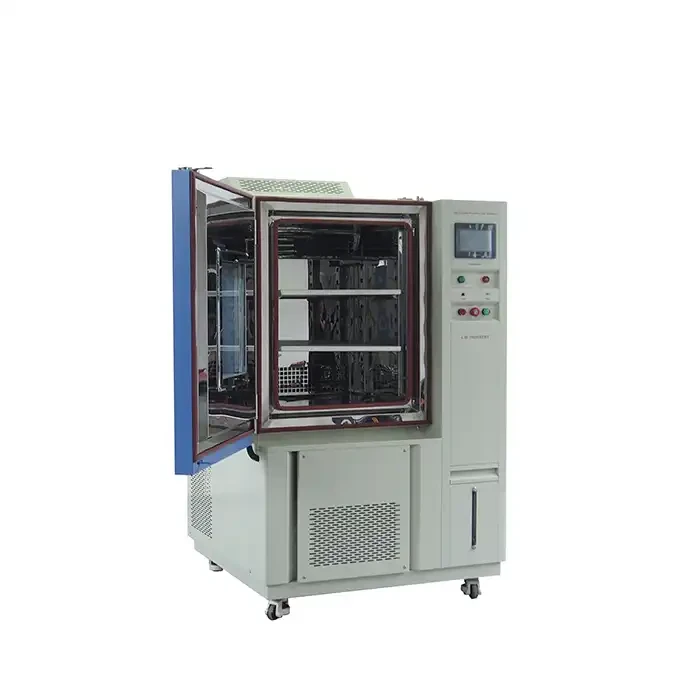
Reproducibility in Microbiological Studies
Food spoilage investigations require consistent environmental parameters to isolate specific variables affecting microbial growth kinetics, enzymatic activity, and chemical deterioration. Ambient laboratory conditions fluctuate diurnally and seasonally, introducing uncontrolled variance that obscures treatment effects and compromises statistical validity. A constant climate chamber maintains temperature stability within ±0.5°C and humidity precision to ±2.5%RH, eliminating environmental noise from experimental datasets. This reproducibility proves essential when comparing antimicrobial treatments, evaluating preservative efficacy, or establishing shelf-life equivalence between formulation variants across multiple trial replicates.
Accelerated Shelf-Life Testing Capabilities
Real-time shelf-life studies conducted under typical storage conditions require months or years to generate sufficient degradation data, creating prohibitive timeline constraints for product development cycles. Accelerated testing protocols leverage elevated temperature and humidity conditions within environmental chambers to compress deterioration timelines through controlled stress amplification. The Arrhenius relationship governing reaction kinetics enables mathematical translation of accelerated chamber results into ambient storage predictions, providing scientifically defensible shelf-life estimates in weeks rather than months while maintaining correlation with actual market conditions.
Regulatory Documentation Requirements
Food safety authorities including FDA, EFSA, and national regulatory bodies mandate stability data demonstrating product safety and quality maintenance throughout declared shelf-life periods. Documentation must include temperature-controlled storage studies with periodic microbiological, chemical, and sensory evaluations following prescribed protocols. Constant climate chambers configured to regulatory temperature standards (typically 25°C/60%RH or 30°C/65%RH) provide the controlled environment infrastructure supporting compliant stability programs, generating audit-ready documentation necessary for product registration, label claim validation, and HACCP plan development.
Controlled Environmental Testing for Food Shelf-Life Evaluation
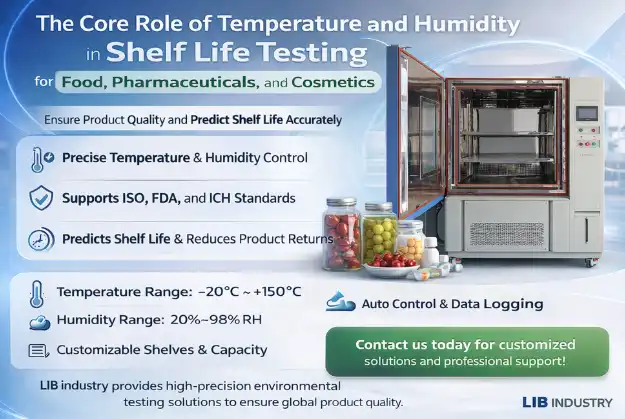
Multi-Temperature Storage Comparison
Different food categories exhibit optimal storage temperatures ranging from frozen conditions below -18°C to ambient temperatures approaching 25°C, with corresponding shelf-life variations across this spectrum. Parallel testing within multiple chambers set to different temperature points characterizes temperature-dependent degradation profiles, identifying critical control points and establishing temperature abuse tolerance limits. Fresh-cut produce might undergo comparison at 4°C, 10°C, and 15°C to quantify respiration rate acceleration, while chocolate confections require testing at 18°C, 25°C, and 30°C to evaluate bloom formation and texture changes across distribution temperature scenarios.
Humidity Impact on Package Integrity
Moisture transmission through packaging materials directly influences product quality for hygroscopic foods including crackers, powdered ingredients, and dried fruits. High humidity environments accelerate moisture uptake leading to texture softening, caking, and mold proliferation, while excessively dry conditions may cause brittleness or moisture loss from fresh products. Chamber testing across humidity gradients from 30%RH to 90%RH quantifies moisture barrier requirements, validates desiccant effectiveness, and establishes critical humidity thresholds beyond which quality attributes become unacceptable.
Cyclic Versus Constant Condition Protocols
Distribution channels subject products to fluctuating temperatures during transportation and retail display rather than constant storage conditions. Cycling protocols programmed within constant climate chambers replicate these realistic temperature excursions, revealing failure modes invisible in constant-temperature testing. A frozen dessert might undergo daily cycles between -15°C and -10°C simulating distribution chain temperature fluctuations, exposing ice crystal growth and texture degradation mechanisms. These cyclic studies provide more conservative shelf-life estimates accounting for real-world temperature variability.
|
Food Category |
Typical Test Temperature |
Critical Humidity Range |
Primary Spoilage Mechanism |
|
Fresh Produce |
4°C - 15°C |
85% - 95% RH |
Respiration, microbial growth |
|
Bakery Products |
20°C - 30°C |
40% - 70% RH |
Staling, mold development |
|
Dried Foods |
25°C - 40°C |
30% - 60% RH |
Moisture uptake, oxidation |
|
Refrigerated Dairy |
4°C - 8°C |
70% - 85% RH |
Bacterial proliferation |
Temperature and Humidity Effects on Food Quality and Freshness
Enzymatic Browning Acceleration
Polyphenol oxidase and other oxidative enzymes catalyze browning reactions in cut fruits, vegetables, and seafood products, with reaction rates doubling approximately every 10°C temperature increase following Arrhenius kinetics. Controlled chamber studies quantify browning progression through colorimetric measurement at defined temperature intervals, establishing the temperature-time combinations that maintain acceptable appearance. Anti-browning treatments including acidulants, reducing agents, and modified atmosphere packaging undergo validation through comparative chamber testing, demonstrating efficacy across relevant temperature ranges.
Lipid Oxidation Kinetics
Fat-containing foods develop rancidity through oxidative degradation of unsaturated fatty acids, with reaction rates influenced by temperature, oxygen availability, and water activity. Chamber testing at elevated temperatures (35°C-45°C) accelerates peroxide value accumulation and volatile aldehyde formation, compressing the months-long ambient oxidation process into weeks. Antioxidant systems including natural tocopherols, synthetic preservatives, and oxygen scavenger packaging undergo comparative evaluation, with peroxide value and sensory panel assessment tracking oxidative stability differences between formulations.
Texture Degradation Mechanisms
Temperature and moisture conditions profoundly influence textural attributes through mechanisms including starch retrogradation in baked goods, protein denaturation in meat products, and cell wall softening in produce. Instrumental texture analysis using penetrometers, texture analyzers, or rheometers provides objective quantification of firmness, springiness, and structural integrity changes during controlled storage. Humidity particularly affects crispy products where moisture absorption causes detrimental softening, necessitating chamber testing across moisture gradients to establish packaging barrier requirements maintaining crunchiness throughout shelf-life.
How Do Climate Conditions Influence Microbial Growth in Food Products?
Water Activity and Relative Humidity Equilibrium
Microbial proliferation requires sufficient available water, characterized by water activity (aw) values typically exceeding 0.85 for bacterial growth and 0.70 for mold development. Product water activity equilibrates with ambient relative humidity according to moisture sorption isotherms specific to each food matrix. Chamber humidity control enables precise water activity manipulation; storage at 75%RH maintains equilibrium aw near 0.75, while 90%RH elevates aw above 0.90. This relationship allows researchers to study microbial growth boundaries by controlling chamber humidity rather than directly reformulating products, accelerating screening of preservation strategies.
Psychrotrophic Bacteria in Refrigerated Products
Refrigerated foods remain vulnerable to psychrotrophic spoilage organisms including Pseudomonas, Listeria, and certain Lactobacillus species capable of growth below 7°C. Challenge studies conducted in constant climate chambers maintained at abuse temperatures (8°C-12°C) accelerate growth of these cold-tolerant organisms, revealing inadequate preservation or temperature control scenarios. Inoculated product samples undergo periodic microbial enumeration throughout chamber storage, generating growth curves that establish the temperature-time combinations supporting microbial outgrowth and inform critical limit establishment for refrigeration equipment specifications.
Mold and Yeast Proliferation Patterns
Fungal spoilage predominates in high-acid foods, low-water-activity products, and items with antimycotic preservatives suppressing bacterial competitors. Constant climate chambers enable systematic evaluation of fungal growth rates across temperature-humidity matrices, identifying conditions supporting or inhibiting specific spoilage species. A bakery product might undergo testing at 25°C/60%RH, 25°C/75%RH, and 30°C/75%RH, with periodic visual inspection and fungal enumeration revealing the humidity threshold requiring enhanced preservative levels or improved packaging moisture barriers.
|
Microorganism Type |
Minimum aw for Growth |
Optimal Temperature |
Chamber Test Conditions |
|
Bacteria (most) |
0.9 |
30°C - 37°C |
30°C / 90% RH |
|
Psychrotrophs |
0.95 |
4°C - 10°C |
8°C / 85% RH |
|
Molds |
0.70 - 0.85 |
25°C - 30°C |
25°C / 75% RH |
|
Yeasts |
0.85 - 0.90 |
20°C - 30°C |
25°C / 80% RH |
Accelerated Spoilage Testing for Food Packaging Validation
Oxygen Transmission Rate Temperature Dependence
Packaging film oxygen permeability increases with temperature following predictable mathematical relationships, with typical doubling for every 10°C-15°C increase. Modified atmosphere and vacuum-packaged products requiring strict oxygen exclusion undergo accelerated permeability testing at elevated chamber temperatures (35°C-40°C) to compress the months-long oxygen ingress process. Headspace oxygen measurement at defined intervals generates permeation curves validating barrier adequacy for targeted shelf-life under worst-case distribution temperatures, informing material selection between conventional polyethylene versus high-barrier EVOH or metallized films.
Seal Integrity Under Environmental Stress
Package seal failures from incomplete heat sealing, contamination, or material defects may not manifest immediately but develop progressively during storage as environmental stresses challenge marginal seals. Constant climate chamber testing combining elevated temperature with vibration simulation or package stacking loads accelerates seal failure detection. Flexible pouches, thermoformed trays, and rigid containers undergo chamber exposure followed by dye penetration testing, pressure decay measurement, or microbial challenge to verify seal integrity maintenance throughout accelerated aging equivalent to extended distribution timelines.
Active Packaging System Performance Validation
Oxygen scavengers, moisture regulators, and antimicrobial emitters incorporated within packaging systems require validation across relevant temperature-humidity conditions. Oxygen scavenger capacity and reaction kinetics exhibit temperature dependence, necessitating chamber testing confirming adequate oxygen removal throughout product shelf-life at maximum anticipated storage temperatures. Antimicrobial sachets releasing volatile compounds undergo efficacy testing where inoculated food products stored with active packaging in controlled chambers demonstrate microbial suppression compared to control samples without active systems.
Environmental Simulation for Food Safety and Quality Control
Pathogen Challenge Study Protocols
Food safety validation requires challenge studies demonstrating that processing parameters and preservative systems prevent pathogenic organism growth throughout shelf-life. Inoculated samples containing defined levels of Listeria monocytogenes, Salmonella, or E. coli undergo storage in chambers maintained at abuse temperatures representing worst-case scenarios. Periodic microbiological analysis tracking pathogen populations confirms whether formulation pH, water activity, and preservative concentrations provide adequate safety margins, generating data supporting process validation and regulatory submissions.
Sensory Quality Degradation Timelines
Consumer acceptance ultimately determines commercial shelf-life rather than purely microbiological or chemical endpoints. Trained sensory panels evaluate chamber-stored products at regular intervals, scoring attributes including appearance, aroma, flavor, and texture against established quality standards. Chamber environmental control ensures sensory changes result from intrinsic product deterioration rather than extraneous storage condition variability, improving discrimination between subtle formulation differences. Accelerated testing at elevated temperatures compresses sensory evaluation timelines, though correlation with ambient storage requires validation for specific product categories.
Nutritional Stability Assessment
Temperature and humidity exposure influences nutrient retention, particularly for vitamins sensitive to oxidation, heat, and moisture. Fortified foods and nutritional supplements undergo chamber storage with periodic chemical analysis quantifying ascorbic acid degradation, thiamine loss, or omega-3 fatty acid oxidation. Accelerated chamber testing at 40°C/75%RH following ICH pharmaceutical stability guidelines provides rapid screening of protective technologies including encapsulation, oxygen barrier packaging, and antioxidant systems, establishing the shelf-life duration maintaining label-claimed nutrient content.
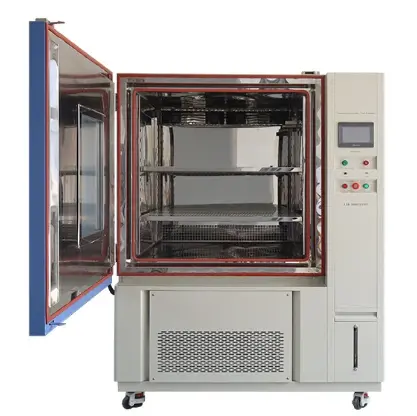
LIB Industry: Precision Environmental Control for Food Science Applications
 |
 |
|
|
|
|
|
|
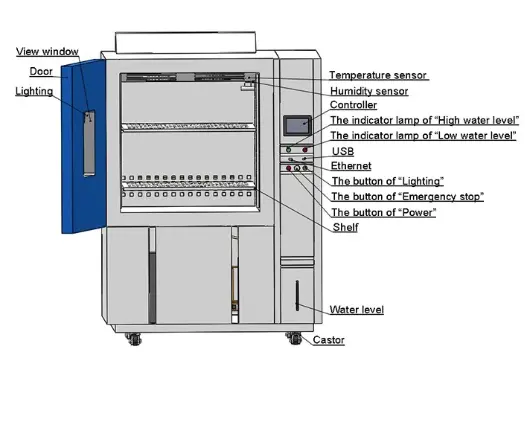
| Robust Workroom | Cable Hole | Temperature and Humidity Sensor | PID controller | |


Superior Temperature and Humidity Uniformity
LIB Industry's constant climate chambers achieve exceptional spatial uniformity critical for multi-sample food studies where all specimens must experience identical environmental exposure. Temperature deviation throughout the 100L to 1000L chamber volumes remains below ±2.0°C, while humidity deviation stays within ±2.5%RH, eliminating position-dependent variability that confounds statistical analysis. This uniformity proves particularly valuable when comparing multiple formulations, packaging configurations, or storage conditions simultaneously, ensuring observed differences reflect treatment effects rather than environmental gradients within the chamber.
Extended Unattended Operation Capability
Food shelf-life studies frequently extend for weeks or months, requiring reliable continuous chamber operation without frequent operator intervention. LIB's automatic water supply system with integrated purification maintains consistent humidity generation throughout 30+ day study durations without manual refilling. The external humidification design prevents mineral scaling within the chamber interior that contaminates food samples and degrades long-term humidity accuracy. Multi-stage filtration eliminates mold spores from humidification water, preventing fungal contamination particularly problematic during extended high-humidity studies.
Programmable Multi-Segment Control
Complex accelerated testing protocols require sequential exposure to different environmental conditions replicating distribution chain scenarios. LIB's programmable LCD touchscreen controller stores multiple test profiles with up to 100 program segments, enabling automated execution of elaborate temperature-humidity sequences. A frozen food distribution simulation might program sequential segments representing -18°C frozen storage, gradual warming to -10°C during distribution, brief 4°C refrigeration during retail display, and return to -18°C, repeating this cycle throughout multi-week testing without manual intervention.
Comprehensive Safety and Monitoring Systems
Food research materials represent significant investment in raw materials, formulation development, and analytical labor, making sample protection paramount. LIB chambers incorporate multiple independent safety systems including physical over-temperature protection operating separately from software controls, refrigerant high-pressure monitoring, and water shortage detection preventing humidifier dry-combustion. Ethernet connectivity enables remote chamber monitoring, automated data logging supporting GLP compliance, and integration with laboratory information systems documenting environmental conditions for regulatory audit trails.
Flexible Configuration Options
Diverse food product geometries and testing requirements necessitate customizable chamber configurations. LIB Industry provides standard models spanning 100L to 1000L capacity, with custom walk-in chambers accommodating pallet-scale testing for commercial production validation. Adjustable stainless steel shelving systems configure for tall bottles, shallow trays, or hanging samples, while cable access ports enable in-situ measurement of product temperature, headspace gas composition, or continuous weight monitoring during respiration studies. Optional vibration platforms simulate transportation stress combined with environmental exposure for comprehensive package testing.
Conclusion
Environmental simulation through precision constant climate chambers has transformed food spoilage research from variable ambient studies to rigorously controlled investigations yielding reproducible, quantitative shelf-life data. These specialized testing systems enable accelerated deterioration studies compressing months into weeks, multi-variable environmental comparisons, and regulatory-compliant stability documentation supporting global food safety and quality assurance programs. As consumer expectations for extended freshness, clean labels, and sustainability intensify, climate chamber infrastructure becomes indispensable for evidence-based formulation optimization, packaging innovation, and preservation technology validation throughout competitive food industry research and development initiatives.
FAQ
What temperature and humidity conditions best accelerate food spoilage for shelf-life studies?
Accelerated testing typically employs 30°C-40°C at 70%-80% relative humidity, representing tropical storage conditions. These parameters accelerate most deterioration mechanisms 2-4× compared to ambient conditions while maintaining correlation with real-world degradation pathways, though specific food categories may require customized acceleration conditions validated against ambient storage.
How do constant climate chambers prevent cross-contamination between different food samples?
High-quality chambers utilize SUS304 stainless steel interiors with smooth mirror finishes preventing microbial colonization, while optimized air circulation prevents direct airflow between samples. External humidification systems with multi-stage filtration eliminate mold spores from humidity sources. Proper experimental design includes physical separation of different product types and rigorous chamber sanitation between studies.
Can climate chambers simulate specific geographic storage conditions for regional product distribution?
Programmable controllers store location-specific temperature-humidity profiles replicating seasonal patterns in target markets. Chambers can execute annual cycles compressed into accelerated timelines or maintain constant conditions representing worst-case scenarios. Custom programming replicates tropical, temperate, or arid regional climates, validating product performance for specific distribution regions.
What chamber volume is necessary for statistically valid food shelf-life studies?
Study design determines required capacity - regulatory stability studies typically require minimum 3 time points × 3 replicates = 9 samples per condition. A 225L-500L chamber accommodates most laboratory-scale studies with 20-40 packaged units, while commercial validation requiring multiple production batches may necessitate 800L-1000L chambers or custom walk-in configurations for pallet-scale testing.
Advance your food spoilage research capabilities with precision environmental testing solutions from LIB Industry, a trusted constant climate chamber manufacturer and supplier serving global food science laboratories and quality control facilities. Our engineering team delivers customized chamber configurations, application-specific protocol development, and comprehensive validation support ensuring your shelf-life studies meet the highest scientific and regulatory standards. Contact our food testing specialists at ellen@lib-industry.com to discuss your research requirements and discover how our chambers accelerate reliable shelf-life determination for your food products.