Textile Durability Testing with Temperature Humidity Cabinets
Textile durability testing evaluates how fabrics withstand environmental stressors that mirror real-world conditions across diverse climates and applications. Temperature humidity cabinets create controlled environments where textile manufacturers assess material performance under precise combinations of heat, cold, and moisture exposure. These specialized chambers replicate tropical humidity, arctic dryness, and everything between, revealing how fibers degrade, colors fade, and structural integrity diminishes over time. By subjecting samples to accelerated aging protocols within calibrated test environments, textile engineers predict product lifespan, validate quality standards, and ensure compliance with international specifications - preventing costly field failures while optimizing material formulations for specific end-use requirements.
Why Are Temperature and Humidity Cabinets Used in Textile Testing?
Predicting Long-Term Performance Through Accelerated Testing
Textile products must maintain functionality and appearance throughout years of exposure to varying weather patterns, washing cycles, and usage conditions. Waiting months or years to observe natural degradation proves impractical during product development cycles. Temperature humidity cabinets compress timeframes by intensifying environmental stress factors - elevated temperatures accelerate chemical reactions, while controlled humidity levels simulate moisture-related deterioration mechanisms. A properly designed accelerated aging protocol conducted over weeks can replicate degradation patterns that would naturally occur across multiple seasons.
Validating Compliance with International Textile Standards
Global textile commerce demands adherence to rigorous quality benchmarks established by organizations like ISO, ASTM, and AATCC. Standards such as ISO 139 specify conditioning atmospheres of 20°C ±2°C and 65% ±4% relative humidity for accurate textile testing. ISO 105 series colorfast protocols require controlled humidity during perspiration resistance evaluations. Without precision environmental chambers maintaining these exact conditions, test results lack reproducibility and regulatory acceptance. Manufacturers targeting international markets require chamber capabilities matching multiple standard requirements simultaneously.
Identifying Material Weaknesses Before Market Introduction
Early detection of performance deficiencies saves substantial costs compared to post-launch failures. Chambers reveal issues like inadequate dye fixation causing color bleeding in humid conditions, fiber embrittlement under low-humidity exposure, or dimensional instability when fabrics cycle through temperature extremes. Technical textiles for automotive interiors, outdoor apparel, and medical applications face particularly stringent durability expectations. Controlled environmental testing identifies formulation adjustments, finishing treatments, or construction modifications necessary to meet performance targets.
Environmental Simulation for Textile Performance Evaluation
Replicating Geographic Climate Variations
Textile products destined for tropical markets face perpetual high humidity and elevated temperatures, while arctic applications encounter extreme dryness and subzero conditions. A temperature and humidity cabinet enables manufacturers to simulate these diverse climates within a single testing facility. Engineers program chamber profiles matching specific geographic regions - Miami's humid subtropical climate (average 76% RH, 25°C), Dubai's hot arid conditions (40% RH, 35°C), or Yakutsk's extreme continental climate (-40°C winter temperatures). This geographic simulation ensures product suitability across target markets.
Cycling Between Extreme Conditions
Real-world textiles rarely experience constant environmental conditions. Apparel transitions between climate-controlled interiors and outdoor extremes multiple times daily. Automotive textiles endure scorching dashboard temperatures followed by overnight cooling. Chamber programming capabilities enable complex cycling protocols - alternating between 85°C/85% RH tropical conditions and -20°C/30% RH cold-dry environments. These thermal shock sequences reveal mechanical stress failures at material interfaces, adhesive degradation, and dimensional instability invisible under static testing conditions.
Seasonal Variation Simulation
Annual climate cycles impose gradual environmental stress progressions that influence textile degradation pathways. Spring humidity increases challenge moisture-sensitive materials, summer UV intensity coupled with heat accelerates photochemical degradation, autumn temperature fluctuations stress dimensional stability, and winter dryness affects electrostatic properties. Multi-week chamber programs incorporating these seasonal transitions provide comprehensive durability assessments. Testing protocols might include 12-week cycles representing compressed annual exposure, revealing cumulative damage mechanisms missed during shorter evaluations.
|
Climate Zone |
Temperature Range |
Humidity Range |
Typical Textile Challenges |
|
Tropical |
25°C - 35°C |
70% - 95% RH |
Mold growth, Color bleeding, Strength loss |
|
Arid |
30°C - 45°C |
10% - 30% RH |
Fiber brittleness, Static accumulation, Dust retention |
|
Temperate |
-5°C - 30°C |
40% - 80% RH |
Seasonal cycling stress, Moisture absorption variability |
|
Arctic |
-40°C - 15°C |
20% - 60% RH |
Cold embrittlement, Condensation freezing, Flexibility loss |
Moisture and Heat Resistance Testing for Fabric Materials
Hydrolytic Stability Assessment
Many synthetic fibers undergo hydrolysis when exposed to moisture at elevated temperatures - chemical bonds break down, causing catastrophic strength losses. Polyester, nylon, and polyurethane materials demonstrate varying susceptibility to hydrolytic degradation depending on polymer chemistry and processing conditions. Chambers programmed to 70°C and 95% RH create aggressive hydrolytic environments, accelerating degradation that occurs slowly under ambient conditions. Tensile strength measurements at regular intervals throughout multi-week exposures quantify degradation rates, informing polymer selection and stabilizer package optimization.
Perspiration Resistance Evaluation
Apparel textiles contact human skin, absorbing acidic perspiration that can damage dyes and fibers. ISO 105-E04 perspiration testing requires specimens saturated with synthetic perspiration solutions, then subjected to controlled temperature and humidity conditions. Chambers maintaining 37°C ±2°C and appropriate humidity levels simulate body-contact conditions during extended wear. Color change assessments after prescribed exposure periods determine whether dyes remain stable or migrate, bleed, or fade. Performance apparel, medical textiles, and intimate apparel particularly demand excellent perspiration resistance.
Dimensional Stability Under Hygroscopic Conditions
Natural fibers like cotton, wool, and linen absorb atmospheric moisture, swelling as humidity increases and contracting during dry conditions. This dimensional instability causes garment shrinkage, distortion, and fit problems. Controlled humidity cycling between 30% and 90% RH at constant temperature reveals dimensional change magnitudes. Precision chambers with ±2.5% RH control enable accurate measurements correlating humidity levels with fabric dimension changes. Manufacturers use this data to establish preshrinking treatments, establish care labeling guidelines, and set cutting allowances compensating for expected dimensional variation.
How Do Climate Conditions Affect Textile Durability?
Temperature-Induced Polymer Degradation
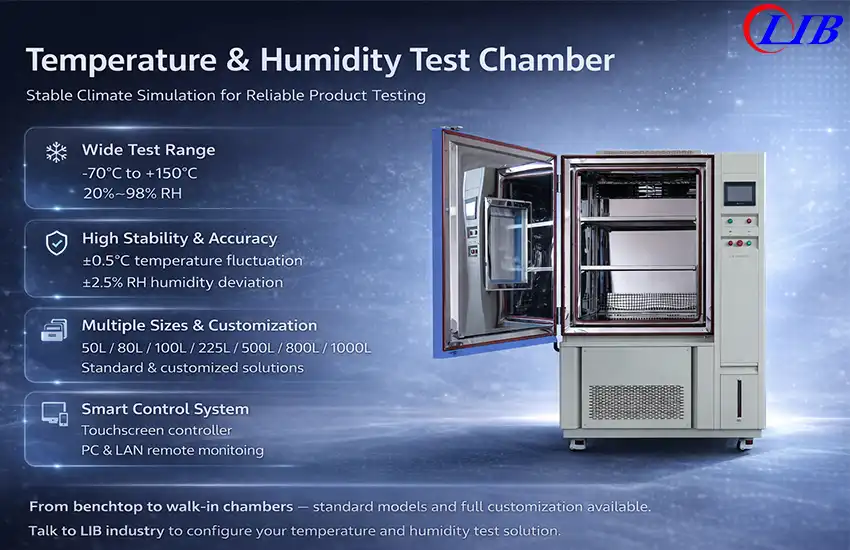
Elevated temperatures accelerate thermal oxidation reactions in textile polymers, breaking molecular chains and reducing fiber strength. Natural fibers like cotton undergo cellulose depolymerization, while synthetics experience specific degradation pathways - polypropylene oxidizes readily above 80°C, acrylic fibers yellow and weaken, and elastomeric fibers lose stretch recovery. Temperature humidity cabinets enable precise thermal aging studies across temperature ranges from -70°C to +150°C. Arrhenius modeling of degradation kinetics at multiple temperatures predicts room-temperature lifespan from accelerated high-temperature data.
Humidity-Facilitated Chemical Reactions
Moisture acts as both reactant and catalyst in numerous textile degradation mechanisms. Hydrolysis attacks susceptible polymers, mildew and bacteria proliferate on natural fibers under humid conditions, and metal-catalyzed oxidation accelerates when trace moisture enables ion mobility. Conversely, extremely low humidity causes static electricity accumulation, fiber embrittlement, and processing difficulties. The relationship between relative humidity and degradation rate follows complex patterns requiring systematic investigation across humidity ranges. Chambers maintaining stable humidity setpoints between 20% and 98% RH enable comprehensive humidity-response characterization.
Synergistic Effects of Combined Environmental Stressors
Temperature and humidity rarely act independently - their interaction produces synergistic degradation exceeding simple additive effects. High temperature combined with high humidity creates particularly aggressive conditions accelerating multiple degradation pathways simultaneously. The 85°C/85% RH stress test has become an industry standard for evaluating moisture-sensitive products precisely because this combination maximizes degradation rates. Factorial experimental designs utilizing chamber programmability explore interaction effects across temperature-humidity combinations, revealing optimal storage conditions and vulnerability thresholds.
|
Environmental Condition |
Primary Degradation Mechanism |
Affected Textile Types |
Observable Effects |
|
High Temp + High Humidity |
Hydrolysis, Microbial growth |
Polyester, Nylon, Cotton |
Strength loss, Discoloration, Odor |
|
High Temp + Low Humidity |
Thermal oxidation, Embrittlement |
Polypropylene, Elastomers |
Yellowing, Crack formation, Flexibility loss |
|
Low Temp + High Humidity |
Condensation, Freeze damage |
Coated fabrics, Laminates |
Delamination, Surface damage, Stiffness |
|
Cycling Extremes |
Fatigue, Dimensional stress |
Composites, Multi-layer structures |
Interface failure, Warping, Cracking |
Quality Control Testing for Industrial and Technical Textiles
Automotive Interior Material Qualification
Automotive textiles endure brutal environmental conditions - dashboard temperatures exceeding 90°C during summer sun exposure, followed by subzero winter nights, coupled with humidity variations from dry desert air to tropical moisture. OEM specifications like GMW3212 and PV3930 mandate rigorous environmental cycling protocols. Temperature humidity cabinets programmed with automotive-specific profiles subject seat fabrics, headliners, and carpet materials to representative aging sequences. Testing evaluates color stability, dimensional change, odor generation, and mechanical property retention throughout qualification periods spanning hundreds of hours.
Geotextile and Construction Fabric Durability
Geotextiles reinforcing roadbeds, controlling erosion, and stabilizing slopes face decades of environmental exposure while maintaining structural function. These technical textiles undergo punishing test protocols simulating soil burial conditions, freeze-thaw cycling, and chemical exposure from groundwater contaminants. Chambers enable controlled evaluation of UV-stabilizer effectiveness, polymer degradation rates, and dimensional stability under temperature and moisture cycling. Accelerated aging data supports predictive modeling estimating service lifetimes exceeding 50 years based on weeks of intensive chamber testing.
Medical and Healthcare Textile Sterilization Compatibility
Medical textiles must withstand repeated sterilization cycles involving steam autoclaving (121°C, saturated steam), ethylene oxide treatment, or gamma irradiation while maintaining barrier properties and dimensional stability. Chambers replicating autoclave conditions - elevated temperature with 100% relative humidity - assess fabric performance through multiple sterilization-equivalent cycles. Surgical gowns, sterile drapes, and implantable textile devices require verification that barrier effectiveness, tensile strength, and biocompatibility remain intact after specified sterilization exposures. This testing prevents catastrophic failures during clinical use.
Accelerated Environmental Aging for Textile Reliability Validation
Establishing Acceleration Factors Through Arrhenius Modeling
Accelerated aging protocols rely on established relationships between environmental stress intensity and degradation rate. Arrhenius kinetics describe how reaction rates approximately double with each 10°C temperature increase. By testing identical textile samples at multiple elevated temperatures (60°C, 70°C, 80°C), engineers calculate activation energies governing degradation mechanisms. This mathematical modeling translates high-temperature chamber test results into equivalent ambient-temperature aging periods. A properly validated acceleration factor might demonstrate that 1000 hours at 85°C/85% RH equals 10 years of typical indoor storage.
Multi-Stress Acceleration Strategies
Temperature and humidity represent only two environmental stressors affecting textile durability. Comprehensive acceleration strategies incorporate UV exposure, mechanical flexing, chemical contact, and biological challenge alongside thermal-humidity stress. Advanced test programs utilize chambers with integrated UV lamp arrays, programmable mechanical cycling, and controlled atmosphere capabilities. These multi-stress protocols more accurately replicate real-world degradation patterns than single-factor testing. Outdoor furniture fabrics might undergo simultaneous UV exposure, elevated temperature, moisture cycling, and tensile stress during chamber testing.
Validation Through Field Correlation Studies
Accelerated test protocols require validation confirming chamber-generated degradation patterns match actual field failures. Textile manufacturers conduct parallel studies - samples undergo chamber aging while identical materials experience real-world deployment in target environments. Periodic retrieval and analysis of field-exposed specimens provides comparison data. Statistical correlation between chamber test results and field performance validates acceleration factors and testing protocols. This empirical validation proves essential when introducing novel materials lacking established aging databases or when targeting extreme deployment environments.
LIB Industry: Uniform Climate for Textile Durability
 |
 |
|
|
|
|
|
|
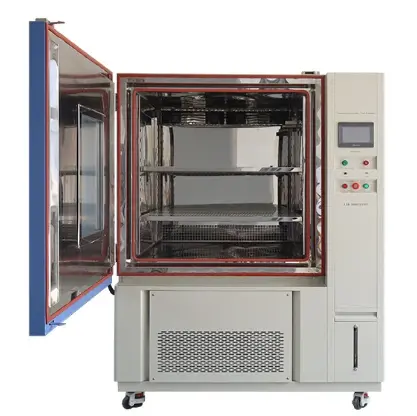
| Robust Workroom | Cable Hole | Temperature and Humidity Sensor | PID controller | |


Precision Environmental Control for Reproducible Results
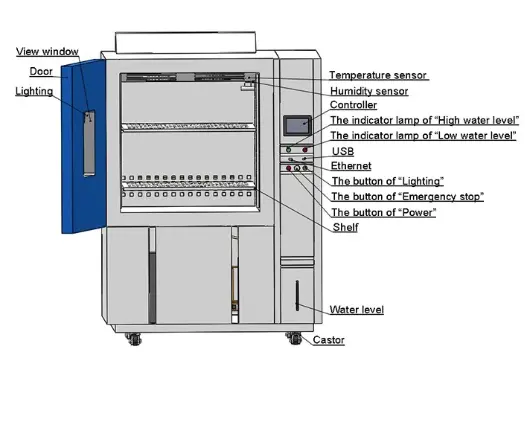
LIB Industry's temperature and humidity cabinets deliver exceptional spatial uniformity (±2.0°C, ±2.5% RH) throughout test volumes ranging from 100L to 1000L. This uniformity proves critical when evaluating multiple textile samples simultaneously - variation between chamber locations could introduce uncontrolled variables masking actual material differences. High-precision PT100 Class A sensors with ±0.001°C resolution enable accurate temperature monitoring, while the advanced humidification system maintains stable moisture levels across the 20%–98% RH operational range. Centrifugal air circulation ensures consistent conditions regardless of sample loading configuration.
External Humidification System Advantages
Traditional chamber designs locate humidifiers within the test workspace, creating scaling problems, maintenance difficulties, and potential specimen contamination. LIB's external humidification architecture positions the stainless steel surface evaporation humidifier outside the chamber, feeding controlled moisture through dedicated ports. This configuration eliminates mineral deposits on test specimens, simplifies cleaning and maintenance, and enables humidifier servicing without interrupting ongoing tests. The automatic water supply system with integrated filtration delivers consistent humidification performance throughout extended test protocols without manual intervention.
Programmable Controllers for Complex Test Sequences
Textile testing protocols frequently require intricate temperature-humidity profiles cycling through multiple setpoints with controlled transition rates. LIB's programmable color LCD touchscreen controller enables complex sequence programming - users define multiple segments specifying target temperature, humidity, duration, and transition rates. Ethernet connectivity facilitates remote monitoring and data export into laboratory information systems. Programs replicate diurnal temperature cycles, seasonal variations, or custom manufacturer-specific protocols. Calendar scheduling initiates tests during off-hours, maximizing chamber utilization and accelerating product development timelines.
|
LIB Chamber Model |
Internal Volume |
Temperature Range |
Humidity Range |
Ideal Textile Applications |
|
TH-100 |
100L |
-20°C to +150°C |
20%-98% RH |
Fabric swatches, Yarn samples, Component testing |
|
TH-225 |
225L |
-40°C to +150°C |
20%-98% RH |
Garment sections, Multiple simultaneous samples |
|
TH-500 |
500L |
-70°C to +150°C |
20%-98% RH |
Complete garments, Assembled products, Technical textiles |
|
TH-1000 |
1000L |
-70°C to +150°C |
20%-98% RH |
Furniture textiles, Automotive components, Bulk testing |
Energy-Efficient Operation Reducing Testing Costs
Extended textile aging protocols spanning weeks or months generate substantial energy consumption. LIB chambers incorporate electronic expansion valve (EEV) technology precisely controlling refrigerant flow, reducing energy consumption by 20-30% compared to conventional systems. Premium TECUMSEH compressor technology provides reliable operation while minimizing power draw. Superior polyurethane foam insulation combined with specialized insulation cotton reduces heat transfer, decreasing compressor runtime. These efficiency features significantly reduce operational costs for facilities conducting continuous textile testing programs.
Comprehensive Safety Features Protecting Valuable Specimens
Textile test specimens often represent significant investment - prototype garments, limited-production technical fabrics, or samples requiring extensive preparation. Chamber failures could destroy irreplaceable materials and invalidate weeks of testing. LIB cabinets incorporate multiple protection systems: over-temperature cutoffs prevent thermal runaway, water shortage sensors halt humidification before dry-combustion damage occurs, refrigerant high-pressure protection guards against cooling system failures, and earth leakage protection ensures electrical safety. Alarm notifications via visible indicators and audible signals alert operators to abnormal conditions requiring intervention.
Conclusion
Temperature humidity cabinets provide indispensable capabilities for comprehensive textile durability evaluation, enabling manufacturers to predict long-term performance, validate quality standards, and ensure products withstand diverse environmental challenges. LIB Industry's precision chambers deliver the environmental control accuracy, programmability, and reliability essential for rigorous textile testing protocols. By investing in proper environmental simulation equipment, textile manufacturers prevent costly field failures, accelerate product development cycles, and deliver materials meeting stringent performance expectations across global markets and demanding applications.
FAQ
What humidity range is required for standard textile conditioning before testing?
Most international textile standards including ISO 139 and ASTM D1776 specify conditioning at 20°C ±2°C and 65% ±2% relative humidity. Samples require equilibration periods ranging from 4 to 24 hours depending on fabric weight and fiber composition before conducting standardized tests.
Can temperature humidity cabinets simulate tropical weathering conditions for outdoor textiles?
Advanced chambers replicate tropical environments by maintaining 85% RH at 60-85°C, significantly accelerating moisture-related degradation mechanisms. Combined with UV lamp integration and thermal cycling programs, chambers effectively simulate years of tropical exposure within weeks, validating outdoor textile formulations.
How do I determine appropriate accelerated aging conditions for novel textile materials?
Establish acceleration factors through multi-temperature testing at three or more elevated temperatures, measuring degradation rates at each level. Arrhenius plotting reveals activation energy, enabling lifespan predictions. Validate predictions through field correlation studies comparing chamber-aged samples with naturally weathered specimens from target environments.
Partner with LIB Industry for Your Textile Testing Solutions
As a trusted temperature and humidity cabinet manufacturer and supplier, LIB Industry delivers turn-key environmental testing solutions customized to textile industry requirements. Our engineering expertise supports chamber selection, installation, validation, and ongoing technical support throughout your equipment lifecycle. Contact our specialists at ellen@lib-industry.com to discuss how our precision chambers enhance your textile durability testing capabilities.