Constant Climate Testing for Industrial Coating Performance
Industrial coating performance demands rigorous validation under controlled environmental conditions to ensure long-term durability and protective capabilities. Constant climate testing exposes coatings to precise temperature and humidity combinations, simulating years of real-world exposure in accelerated timeframes. This systematic evaluation identifies potential failures before products reach the market, protecting both manufacturers' reputations and end-users' investments. A constant climate chamber provides the exact environmental control necessary to verify coating adhesion, flexibility, corrosion resistance, and overall longevity across diverse application scenarios, from automotive finishes to marine protective systems.
Why Do Industrial Coatings Require Constant Climate Testing?
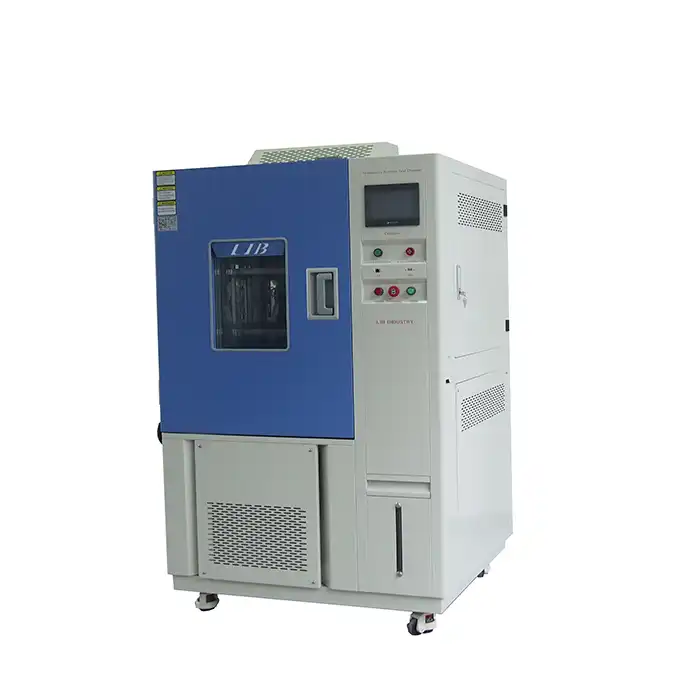
Protecting Critical Infrastructure Investments
Industrial coatings serve as the primary defense mechanism against environmental degradation for infrastructure valued in billions of dollars. Bridges, pipelines, manufacturing equipment, and transportation systems rely on protective coatings that must perform flawlessly for decades. Climate testing validates these protective layers withstand temperature extremes, moisture penetration, and chemical exposure without compromising substrate integrity. Without thorough environmental validation, coating failures lead to catastrophic corrosion, structural weakness, and expensive emergency repairs.
Meeting Regulatory Compliance Standards
Global industries face increasingly stringent coating performance requirements established by international standards organizations. Automotive manufacturers must demonstrate paint systems survive specified thermal cycling protocols. Aerospace components require coatings proven stable across altitude-induced temperature variations. Marine applications demand corrosion resistance verification under high-humidity conditions. Climate chamber testing provides the documented evidence regulatory bodies require, ensuring products meet ISO, ASTM, and industry-specific performance benchmarks before commercial release.
Reducing Warranty Claims and Field Failures
Premature coating failures generate substantial financial liabilities through warranty claims, product recalls, and damaged brand reputation. Environmental testing identifies formulation weaknesses, application defects, and compatibility issues during development phases when corrections cost significantly less than field failures. Manufacturers who invest in comprehensive climate testing reduce warranty expenses by 60-80% compared to those relying solely on outdoor exposure trials, which lack the controlled repeatability necessary for consistent quality assurance.
Temperature and Humidity Effects on Coating Adhesion and Durability
Thermal Expansion Differential Stress
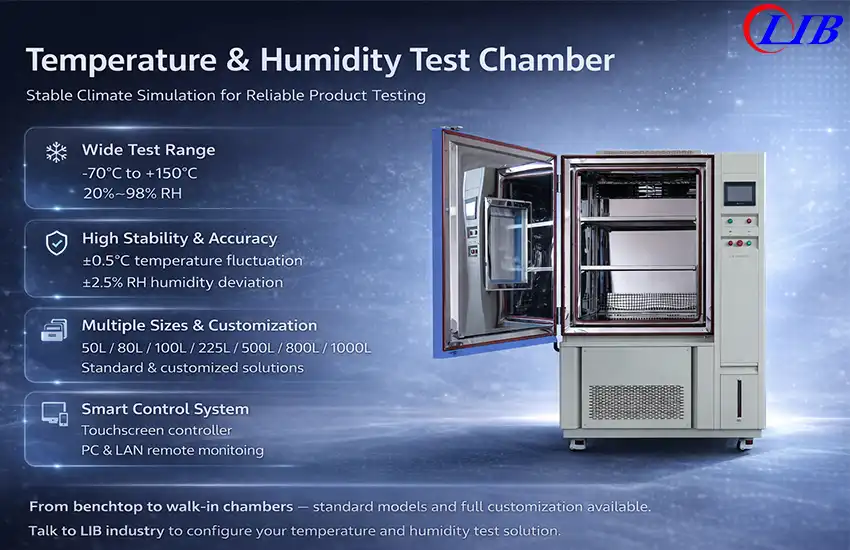
Coating systems expand and contract at different rates than their substrates when exposed to temperature variations. This differential expansion creates interfacial stress that can cause delamination, cracking, or complete coating failure. Testing chambers cycling between -40℃ and +150℃ reveal how coatings respond to these mechanical stresses. High-performance formulations maintain flexibility across temperature ranges, while inferior products develop micro-cracks that propagate into visible defects. The temperature fluctuation of ±0.5℃ achievable in advanced chambers ensures accurate stress assessment.
Moisture-Induced Adhesion Loss
Humidity penetration at the coating-substrate interface represents one of the most common failure mechanisms in protective systems. Water molecules infiltrate through microscopic coating defects, accumulating at the bond line and weakening adhesive forces. Constant climate chambers maintaining 98% RH at elevated temperatures accelerate this moisture ingress, compressing years of exposure into weeks. Electrochemical reactions intensify in humid environments, particularly on metallic substrates, creating osmotic blistering and undercutting that spreads from coating imperfections.
Combined Environmental Stress Synergy
Temperature and humidity rarely act independently in real-world applications. Their combined effects create synergistic degradation mechanisms more destructive than either factor alone. Warm, humid conditions accelerate chemical reactions within coating matrices, while thermal cycling mechanically fatigues polymer chains already plasticized by moisture absorption. Testing protocols that combine these stresses through programmable sequences provide realistic performance predictions. Chambers with heating rates of 3℃/min and cooling rates of 1℃/min simulate natural environmental transitions accurately.
Environmental Simulation for Protective Coating Validation
Accelerated Lifecycle Prediction Methodology
Traditional outdoor exposure testing requires years to generate meaningful performance data, delaying product development cycles unacceptably. Constant climate chambers compress aging processes through elevated temperature and humidity combinations that accelerate chemical reactions without altering fundamental degradation mechanisms. The Arrhenius relationship quantifies how each 10℃ temperature increase approximately doubles reaction rates, allowing extrapolation of chamber results to predict decades of field performance from months of testing.
Multi-Zone Climate Gradient Simulation
Large walk-in chambers accommodate full-scale components while creating spatial temperature gradients that replicate real operational conditions. Industrial equipment often experiences significant temperature variations across surfaces - hot zones near engines, cool areas in shade, condensation points where temperature differentials cause moisture accumulation. Advanced chamber designs with multiple independently controlled zones simulate these complex environmental patterns, revealing coating performance vulnerabilities that uniform testing environments miss completely.
Cyclic Versus Constant Condition Testing
Continuous exposure to steady-state conditions provides valuable baseline data but fails to capture fatigue mechanisms induced by environmental fluctuations. Cyclic testing protocols alternating between temperature extremes, humidity variations, and condensation cycles better represent actual service conditions. Programmable touch screen controllers enable complex test sequences with dozens of distinct phases, each targeting specific degradation pathways. The most robust coatings demonstrate consistent performance across both static and dynamic environmental challenges.
|
Test Parameter |
Constant Exposure |
Cyclic Testing |
Real-World Correlation |
|
Temperature Range |
Single setpoint |
-40℃ to +150℃ cycles |
Seasonal variations |
|
Humidity Control |
Fixed RH level |
20% to 98% RH cycles |
Day/night condensation |
|
Duration per Cycle |
Continuous |
4-24 hour periods |
Weather pattern changes |
|
Stress Mechanism |
Chemical degradation |
Mechanical + chemical |
Combined environmental attack |
|
Failure Prediction |
Long-term trends |
Fatigue acceleration |
Service life estimation |
How Do Climate Conditions Influence Coating Performance?
Glass Transition Temperature Considerations
Polymer-based coatings undergo fundamental physical property changes at their glass transition temperature (Tg), shifting from rigid, glassy states to softer, rubbery conditions. Below Tg, coatings become brittle and susceptible to cracking under mechanical stress or thermal shock. Above Tg, they soften, losing scratch resistance and potentially allowing chemical permeation. Constant climate chambers precisely controlling temperatures across coating Tg ranges identify optimal service temperature windows and reveal formulation modifications needed for specific application environments.
Condensation and Wet-Dry Cycling Damage
Rapid temperature transitions cause condensation formation on coating surfaces and within micro-defects when warm, humid air contacts cooled substrates. This condensation-evaporation cycling creates particularly aggressive conditions for coating degradation. Water accumulation in surface imperfections initiates localized corrosion cells on metallic substrates. Subsequent evaporation leaves concentrated salt deposits that accelerate electrochemical reactions during the next wet phase. Testing protocols incorporating these wet-dry transitions identify coatings with superior moisture handling characteristics.
UV Radiation Synergy with Climate Factors
While standard climate chambers focus on temperature and humidity, coating degradation in outdoor applications involves photodegradation from ultraviolet radiation. Advanced testing combines climate control with UV exposure through specialized lamp systems or hybrid chamber designs. UV energy breaks polymer bonds, creating free radicals that oxidize coating matrices. This photochemical damage accelerates dramatically at elevated temperatures and in the presence of moisture, making combined testing essential for accurate outdoor performance prediction.
Accelerated Aging and Corrosion Resistance Testing for Coatings
Salt Fog and Climate Combined Protocols
Marine environments and road salt exposure create uniquely challenging conditions combining high humidity, temperature variations, and corrosive chloride ions. Hybrid testing chambers integrate salt fog generation with climate control, exposing coatings to alternating salt spray and controlled temperature-humidity conditioning. This combined approach reveals coating barrier properties more effectively than either test alone. The SUS304 stainless steel construction in quality chambers resists corrosion during aggressive salt fog protocols, ensuring chamber integrity throughout extended testing.
Electrochemical Impedance Spectroscopy Integration
Modern coating evaluation combines traditional visual assessment with electrochemical techniques that quantify protective performance. Electrochemical impedance spectroscopy (EIS) measures coating barrier properties non-destructively during climate chamber exposure. Impedance values decreasing over time indicate moisture penetration and coating degradation before visible defects appear. This early-warning capability allows researchers to detect subtle formulation differences and optimize coating compositions for maximum protective longevity.
Cathodic Disbondment Resistance Evaluation
Pipeline and underground structure coatings must resist disbondment when cathodic protection systems create alkaline conditions at coating-steel interfaces. Constant climate chambers maintaining elevated temperatures while samples undergo cathodic polarization accelerate this disbondment mechanism. Testing at 60-80℃ in high humidity reveals coating adhesion stability under these challenging electrochemical conditions. Coatings demonstrating minimal disbondment radius after 28-day exposure provide superior long-term protection for buried infrastructure.
|
Coating Type |
Test Temperature |
Humidity Level |
Test Duration |
Performance Criteria |
|
Epoxy Primers |
50℃ |
95% RH |
1000 hours |
<5mm disbondment |
|
Polyurethane Topcoats |
60℃ |
85% RH |
720 hours |
No visible cracking |
|
Powder Coatings |
70℃ |
Dry heat |
500 hours |
Gloss retention >80% |
|
Zinc-Rich Primers |
40℃ |
98% RH |
2000 hours |
<10% blister area |
|
Fluoropolymer Coatings |
-40℃ to +80℃ |
Cycling |
300 cycles |
No adhesion loss |
Quality Assurance Standards for Industrial Coating Reliability
ISO and ASTM Testing Protocol Alignment
International standards organizations establish comprehensive testing protocols ensuring coating performance consistency across global markets. ISO 6270 specifies condensation atmosphere procedures, while ASTM D4585 details humidity cabinet testing requirements. Quality constant climate chambers feature programmable controllers that implement these standardized sequences precisely. Temperature deviation within ±2.0℃ and humidity deviation within ±2.5% RH meet the tight tolerances these standards demand, providing reproducible results that regulatory agencies and customers accept.
Automotive Industry OEM Requirements
Automotive manufacturers implement proprietary testing specifications exceeding general industry standards. GM9505P, Ford CETP 00.00-L-467, and similar protocols define exact temperature-humidity cycling sequences, exposure durations, and acceptance criteria. These demanding protocols simulate decades of vehicle service life, including engine compartment heat exposure, winter freeze-thaw cycling, and summer humidity conditions. Coating suppliers must demonstrate compliance through documented chamber testing before gaining approval as qualified material sources.
Aerospace and Defense Qualification Processes
Aircraft coatings face extraordinary environmental challenges from ground-level tropical humidity to stratospheric cold and intense UV radiation at altitude. MIL-PRF specifications establish rigorous qualification requirements including extended exposure at temperature extremes, salt fog resistance, and fuel resistance after environmental conditioning. Climate chambers supporting aerospace testing feature precise control across -70℃ to +150℃ ranges with documentation capabilities meeting traceability requirements for safety-critical applications.
Third-Party Certification and Validation
Independent testing laboratories provide unbiased coating performance verification that manufacturers cannot achieve through internal testing alone. SGS, TUV, and similar organizations operate accredited facilities with calibrated climate chambers traceable to national standards. Third-party test reports carry significant weight in liability litigation, insurance underwriting, and procurement decisions. Chamber equipment meeting ISO 9001 quality management requirements and featuring CE certification demonstrates commitment to testing accuracy and international standardization.
LIB Industry: Accurate Climate Control for Coating Durability
 |
 |
|
|
|
|
|
|
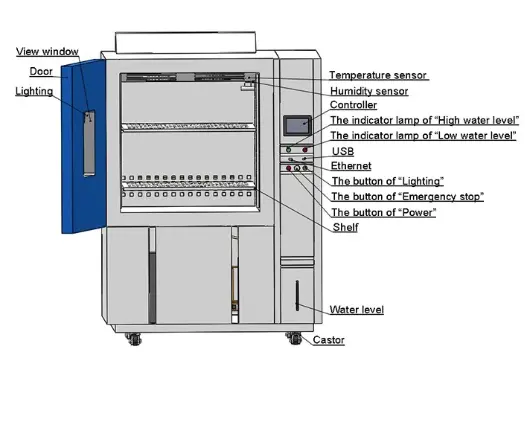
| Robust Workroom | Cable Hole | Temperature and Humidity Sensor | PID controller | |


Precision Control Systems for Reliable Results
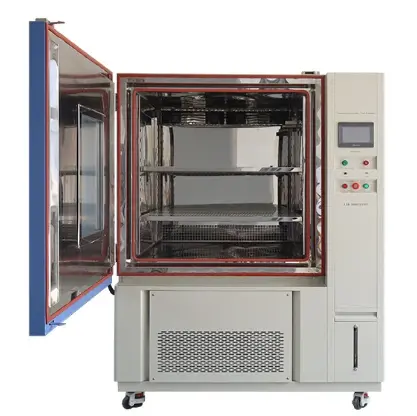
LIB constant climate chambers deliver the exceptional accuracy coating testing demands through advanced control technology. PT100 Class A temperature sensors provide ±0.001℃ resolution, detecting minute environmental variations that impact sensitive coating properties. French TECUMSEH compressor systems ensure stable refrigeration performance across continuous operation cycles. The programmable color LCD touch screen controller enables complex test sequences with Ethernet connectivity for remote monitoring and data logging, essential for extended validation studies.
Versatile Chamber Configurations
Coating testing requirements vary dramatically by component size and testing volume. LIB offers benchtop models like the TH-100 (100L capacity) for laboratory sample testing, floor-standing units such as the TH-500 (500L) for automotive panels, and walk-in chambers including the TH-1000 (1000L) accommodating full assemblies. This configuration flexibility allows manufacturers to match chamber capacity precisely to testing needs without paying for unnecessary volume. Custom constant climate chamber designs address unique requirements for oversized components or specialized testing protocols.
Comprehensive Safety and Reliability Features
Extended coating validation studies often run continuously for thousands of hours, making chamber reliability absolutely critical. LIB chambers incorporate multiple independent safety systems protecting both samples and equipment. Physical over-temperature protection operates separately from software controls, automatically cutting power if temperature exceeds safe limits. Water shortage protection prevents humidifier damage during extended unattended operation. Refrigerant high-pressure protection and earth leakage protection safeguard mechanical systems. These redundant safety mechanisms minimize test interruptions and protect valuable coating samples.
|
Chamber Model |
Internal Volume |
Temperature Range |
Ideal Application |
Key Advantage |
|
TH-100 |
100L |
-20℃ to +150℃ |
Laboratory samples |
Benchtop convenience |
|
TH-225 |
225L |
-40℃ to +150℃ |
Small components |
Mid-range capacity |
|
TH-500 |
500L |
-70℃ to +150℃ |
Automotive panels |
Extreme temperature |
|
TH-800 |
800L |
Configurable |
Industrial parts |
High volume testing |
|
TH-1000 |
1000L |
Configurable |
Full assemblies |
Walk-in accessibility |
Advanced Water Management for Long-Term Testing
Consistent humidity generation throughout extended test cycles requires sophisticated water management systems. LIB chambers feature large-capacity water storage with automatic refill capabilities supporting continuous operation exceeding 30 days without intervention. Multi-stage filtration prevents mineral scaling and microbial growth that compromise humidity accuracy. Direct connection to laboratory DI water systems eliminates manual refilling entirely. The external isolation stainless steel surface evaporation humidifier design ensures maintenance accessibility without interrupting ongoing tests.
Customization Capabilities for Specialized Applications
Coating development often requires testing conditions beyond standard chamber specifications. LIB's engineering expertise in non-standard design enables customized solutions addressing unique requirements. Modified chambers accommodate oversized samples, integrate specialized sample mounting fixtures, or combine climate control with additional environmental factors like vibration or corrosive gas exposure. This customization capability ensures testing environments accurately replicate specific application conditions rather than forcing compromises with standard equipment limitations.
Global Support Infrastructure
Coating manufacturers operate worldwide, requiring equipment suppliers who provide consistent support across international locations. LIB maintains 24/7 global technical assistance, ensuring testing interruptions receive immediate attention regardless of time zone. Every chamber includes a comprehensive 3-year warranty with lifetime service support. If repairs prove impossible within the warranty period, complete equipment replacement ensures minimal downtime impact on critical testing schedules. This support commitment protects the substantial investments manufacturers make in validation infrastructure.
Conclusion
Industrial coating performance validation through constant climate testing represents an essential quality assurance investment that prevents costly field failures while accelerating product development cycles. Precise environmental control reveals coating vulnerabilities under accelerated conditions that compress years of exposure into manageable testing timeframes. From automotive finishes to protective infrastructure coatings, systematic temperature and humidity exposure identifies formulation weaknesses and validates long-term durability before market introduction. Advanced climate chambers providing accurate, repeatable environmental conditions form the foundation of reliable coating qualification programs.
FAQ
What temperature range is most critical for coating performance testing?
Most industrial coatings require validation across -40℃ to +150℃, covering typical service environments from arctic installations to engine compartment applications. This range reveals thermal expansion compatibility, low-temperature brittleness, and high-temperature softening characteristics essential for long-term performance prediction.
How long should accelerated climate testing continue for reliable coating validation?
Standard protocols typically require 1000-2000 hours of continuous exposure, though specific industries may demand extended testing. Automotive specifications often require 3000+ hours, while aerospace applications may extend to 5000 hours with multiple environmental cycling phases.
Can climate chambers simulate outdoor weathering conditions accurately?
Climate chambers excel at controlling temperature and humidity with precision impossible outdoors, providing repeatable results. However, complete outdoor simulation requires combining climate control with UV exposure and possibly salt fog for comprehensive environmental replication matching real-world degradation mechanisms.
Partner with LIB Industry for Your Coating Testing Requirements
As a leading environmental test chamber manufacturer and supplier, LIB Industry delivers turn-key climate testing solutions tailored to your coating validation needs. Our engineering team provides comprehensive support from chamber selection through installation, commissioning, and operator training. Contact our coating testing specialists at ellen@lib-industry.com to discuss how our constant climate chambers can enhance your quality assurance capabilities.