Constant Temperature Chambers in Metrology and Measurement Labs
Constant temperature chambers serve as fundamental infrastructure within metrology and measurement laboratories, where maintaining environmental stability directly impacts measurement accuracy and reliability. These specialized enclosures create controlled thermal environments that eliminate temperature-induced variations, enabling precise calibration, testing, and measurement activities. Modern metrology facilities depend on temperature-controlled chambers to achieve measurement uncertainties within acceptable tolerances, ensuring traceability to international standards while supporting critical quality assurance processes across industries requiring high-precision instrumentation.
Why Stable Temperature Is Essential in Metrology?
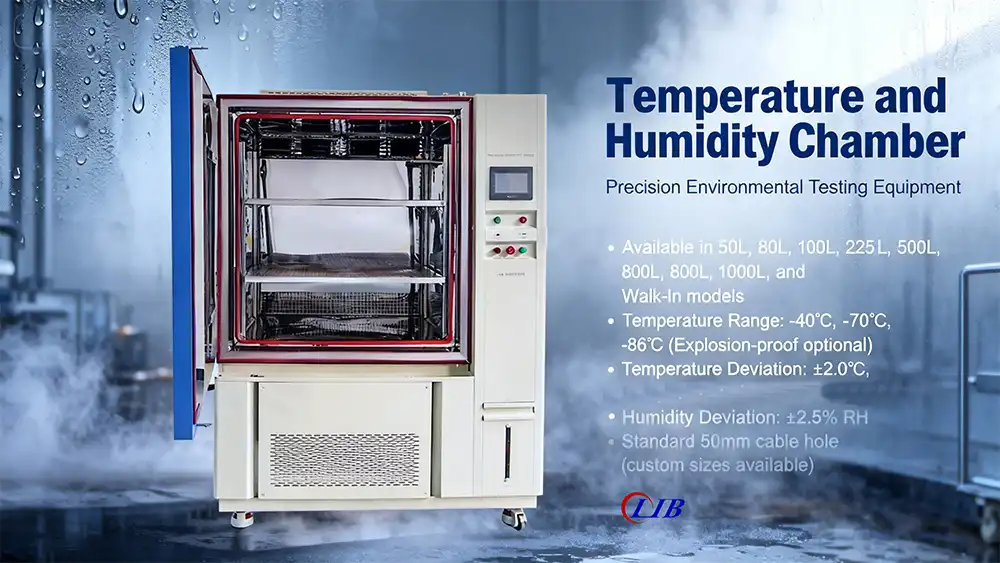
Temperature's Impact on Measurement Precision
Thermal fluctuations introduce dimensional changes in reference standards, measuring instruments, and test specimens through thermal expansion and contraction. Materials exhibit unique coefficients of thermal expansion, meaning even minor temperature variations can produce significant dimensional shifts that compromise measurement integrity. Metrology laboratories operating at ambient conditions face measurement uncertainties that often exceed acceptable limits, particularly when working with length standards, pressure calibration equipment, or electronic reference devices.
Maintaining Traceability Through Environmental Control
Measurement traceability requires documented uncertainty budgets where environmental contributions remain quantifiable and minimized. Temperature variation represents one of the largest contributors to measurement uncertainty in many calibration procedures. By housing critical measurement operations within constant temperature chambers, laboratories reduce this uncertainty component, achieving tighter confidence intervals and maintaining compliance with ISO/IEC 17025 accreditation requirements that mandate environmental monitoring and control.
Economic Benefits of Thermal Stability
Reducing temperature-related measurement drift decreases recalibration frequency and extends calibration intervals for precision instruments. Laboratories investing in constant temperature chambers often realize cost savings through improved instrument stability, reduced reject rates in calibrated items, and enhanced customer confidence. The controlled environment prevents premature aging of sensitive electronic components and preserves the long-term stability of mechanical references.
Instruments and Devices Requiring Temperature-Controlled Testing
Dimensional Metrology Equipment
Length measuring instruments including gauge blocks, micrometers, coordinate measuring machines, and laser interferometers exhibit pronounced sensitivity to thermal conditions. Gauge blocks manufactured from steel or ceramic materials demonstrate dimensional changes of approximately 11-12 micrometers per meter per degree Celsius. Calibration laboratories maintaining national or primary standards routinely operate constant temperature chambers at 20°C ± 0.1°C to align with internationally recognized reference conditions.
Pressure and Force Calibration Systems
Deadweight testers, pressure transducers, and force measurement devices require thermal equilibrium between reference standards and devices under test. Temperature gradients create buoyancy effects in pneumatic systems and alter the mechanical properties of elastic elements in transducers. Constant climate chambers eliminate these thermal artifacts, enabling accurate determination of pressure coefficients and linearity assessments across operating ranges.
Electrical and Electronic Reference Standards
Voltage references, resistance standards, and precision capacitors demonstrate temperature coefficients that introduce drift in output characteristics. Josephson voltage standards and quantum Hall resistance standards operate within cryogenic or precisely controlled thermal environments. Laboratories calibrating electronic instrumentation utilize constant temperature chambers to stabilize zener references, standard resistors, and capacitance standards during comparison calibrations.
|
Instrument Category |
Typical Temperature Sensitivity |
Required Stability |
|
Gauge Blocks |
11.5 µm/m/°C |
±0.1°C to ±0.5°C |
|
Laser Interferometers |
Wavelength drift 1 ppm/°C |
±0.2°C |
|
Standard Resistors |
1-25 ppm/°C |
±0.05°C to ±0.5°C |
|
Pressure Transducers |
0.01-0.1% FS/°C |
±0.5°C to ±2°C |
Maintaining Chamber Uniformity and Accuracy
Airflow Distribution Design
Achieving spatial uniformity within constant temperature chambers requires engineered airflow patterns that prevent stratification and eliminate hot spots. Centrifugal circulation fans combined with strategically positioned diffusers create turbulent mixing conditions that homogenize temperature throughout the working volume. Advanced chamber designs incorporate perforated walls or air plenums that distribute conditioned air uniformly, maintaining gradients below ±0.5°C across the measurement workspace.
Thermal Mass Stabilization
Large thermal masses within chambers - including calibration artifacts, mounting fixtures, and auxiliary equipment - require extended soak times to achieve thermal equilibrium. Laboratories implement stabilization protocols that account for thermal time constants, often allowing 24-48 hours for massive standards to equilibrate. Strategic placement of temperature sensors near critical measurement zones enables verification of thermal stability before commencing calibration activities.
Insulation and Construction Considerations
Chamber wall construction utilizing polyurethane foam insulation and stainless steel interiors minimizes heat transfer with external environments. Double-glazed observation windows with low-emissivity coatings permit visual monitoring while maintaining thermal barriers. Cable penetrations employ silicone seals that prevent air infiltration without restricting necessary connections to external instrumentation.
Monitoring and Logging Data for Traceable Measurements
Multi-Point Temperature Mapping
Comprehensive chamber characterization involves mapping temperature distribution using calibrated sensors positioned throughout the working volume. Metrology laboratories conduct periodic validation studies that document temperature uniformity, gradient patterns, and temporal stability. These mapping exercises generate certification data demonstrating compliance with manufacturer specifications and supporting measurement uncertainty analyses.
Automated Data Acquisition Systems
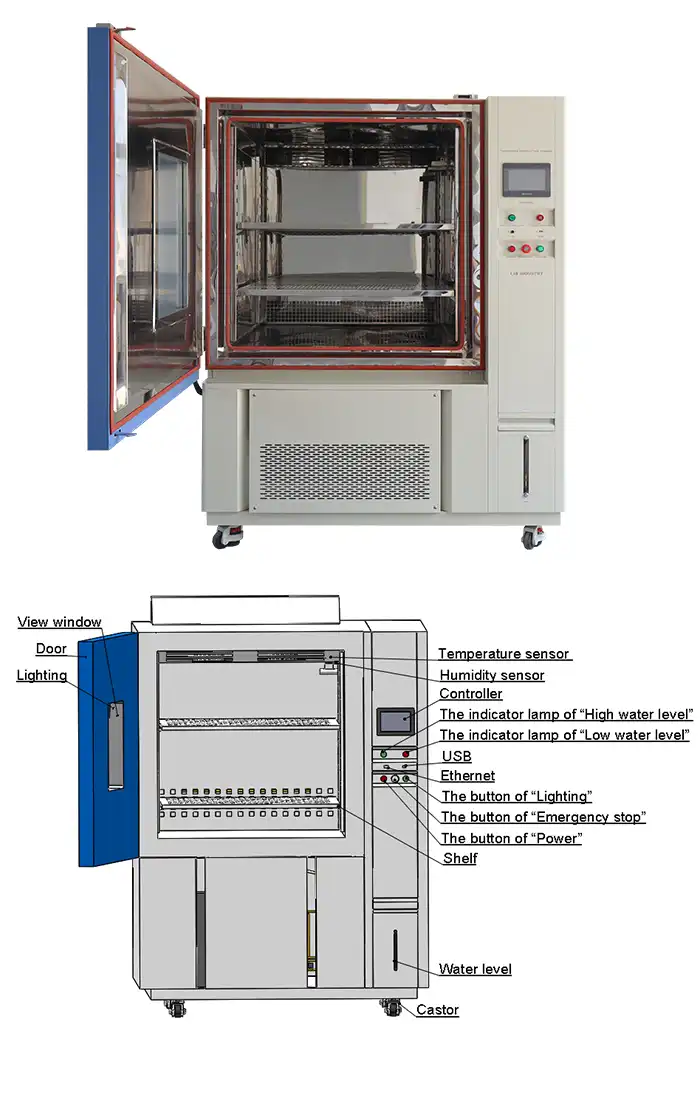
Modern constant temperature and humidity chambers integrate programmable controllers with Ethernet connectivity, enabling continuous temperature monitoring and automated data logging. Real-time trending alerts operators to excursions beyond acceptable limits, prompting corrective action before measurement integrity becomes compromised. Stored temperature records provide documented evidence of environmental conditions during calibration procedures, satisfying audit requirements and supporting traceability claims.
Calibration Certificate Integration
Temperature data logged during specific calibration events becomes incorporated into certificate documentation, demonstrating that environmental conditions remained within specified tolerances. This approach strengthens measurement traceability by linking calibration results directly to verified environmental conditions. Laboratories implementing robust data management systems can retrospectively analyze environmental contributions when investigating measurement anomalies or customer inquiries.
|
Parameter |
Monitoring Frequency |
Acceptance Criteria |
|
Chamber Temperature |
Continuous (1 sample/min) |
Within ±0.5°C of setpoint |
|
Temperature Uniformity |
Quarterly validation |
±2°C maximum deviation |
|
Controller Accuracy |
Annual calibration |
±0.1°C traceable to reference |
Preventing Environmental Drift in Measurement Results
Compensating for Ambient Temperature Variations
External temperature fluctuations influence chamber performance through heat transfer across insulated walls and increased thermal loading on refrigeration systems. Laboratories located in facilities with inadequate HVAC control experience greater chamber temperature variability, particularly during seasonal transitions. Positioning constant temperature chambers away from direct sunlight, heat-generating equipment, and loading dock areas minimizes external thermal influences.
Minimizing Door Opening Frequency
Each access cycle introduces ambient air into the controlled environment, creating temperature transients that require recovery time. Establishing protocols that batch measurement activities and minimize door openings preserves chamber stability. Advanced chambers incorporate dual-door air lock designs or partial-access ports that reduce thermal disruption during brief interventions.
Thermal Conditioning of Introduced Items
Test specimens and calibration standards introduced from ambient conditions carry thermal energy that disturbs chamber equilibrium. Pre-conditioning items in antechambers or allowing extended stabilization periods before measurements ensures thermal homogeneity between artifacts and chamber environment. This practice becomes particularly critical when calibrating massive items with substantial heat capacity.
Supporting High-Precision Measurement and Laboratory Standards
Compliance with International Recommendations
The International Organization of Legal Metrology (OIML) and various national metrology institutes publish recommendations specifying environmental conditions for different calibration activities. Many procedures reference 20°C as the standard temperature, requiring laboratories to demonstrate capability to maintain and verify this condition. Constant temperature humidity chambers provide the controlled infrastructure necessary to meet these specifications.
Accreditation Body Requirements
ISO/IEC 17025 accreditation mandates that calibration laboratories control environmental conditions to the extent necessary to ensure measurement validity. For many high-precision calibrations, this necessitates dedicated constant temperature chambers rather than relying on general laboratory HVAC systems. Assessors evaluate chamber performance data, validation records, and environmental monitoring procedures during accreditation audits.
Supporting Measurement Capability Claims
Laboratories publishing calibration and measurement capabilities (CMCs) in international databases must substantiate claimed uncertainties through uncertainty budgets. Environmental contributions often represent limiting factors in achieving small uncertainties. Investment in high-performance constant temperature chambers enables laboratories to reduce environmental uncertainty components, supporting competitive CMC claims and expanding service offerings.
|
Temperature Range |
Application |
Chamber Specifications |
|
-20°C to +150°C |
General materials testing |
Standard industrial chambers |
|
-40°C to +150°C |
Extended temperature calibrations |
Enhanced refrigeration systems |
|
-70°C to +180°C |
Specialized metrology applications |
Premium metrology-grade chambers |
Superior Measurement Consistency with LIB Industry Constant Temperature Chambers
Advanced PID Control Technology
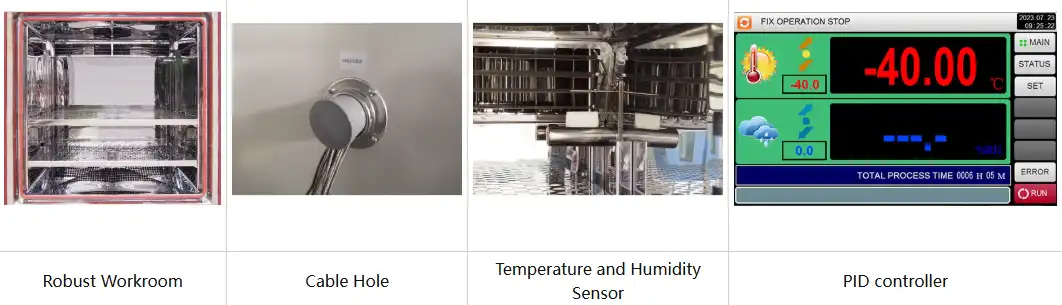
LIB industry constant temperature chambers incorporate sophisticated proportional-integral-derivative control algorithms that maintain setpoint stability within ±0.5°C. The programmable color LCD touchscreen controller enables intuitive parameter configuration, profile programming, and real-time monitoring. Ethernet connectivity facilitates integration with laboratory information management systems, supporting automated data capture and remote monitoring capabilities.
Precision-Engineered Thermal Systems
French TECUMSEH compressors paired with environmental refrigerants deliver reliable cooling performance across temperature ranges spanning -70°C to +180°C. Nichrome heating elements provide rapid thermal response, achieving heating rates of 1°C per minute. The mechanical compression refrigeration system coupled with forced air circulation via centrifugal fans ensures uniform temperature distribution throughout chamber volumes ranging from 100L to 1000L.
Quality Manufacturing and Safety Features
Constructed from stainless steel interiors (SUS304) and protective-coated steel exteriors, LIB chambers resist corrosion while maintaining structural integrity under continuous operation. Comprehensive safety systems including over-temperature protection, over-current protection, refrigerant high-pressure protection, and earth leakage protection safeguard both operators and test specimens. ISO 9001 certified manufacturing, CE marking, and EMC compliance demonstrate commitment to quality and regulatory conformance.
Conclusion
Constant temperature chambers constitute essential infrastructure enabling metrology and measurement laboratories to achieve the environmental control necessary for high-precision calibration and testing operations. These specialized systems eliminate temperature-induced measurement uncertainties, support compliance with international standards, and enhance overall measurement capability. By investing in properly specified constant temperature chambers featuring advanced control technology, uniform airflow distribution, and comprehensive data logging, laboratories establish the foundation for traceable, reliable measurements that meet evolving industry demands.
FAQ
What temperature stability is required for precision metrology work?
Most metrology applications require temperature stability within ±0.5°C to ±1°C, though ultra-precision measurements involving dimensional standards or primary references may demand ±0.1°C or better. Chamber selection depends on specific measurement uncertainty requirements and instrument sensitivities.
How long does thermal equilibrium take in constant temperature chambers?
Stabilization time varies based on thermal mass and initial temperature differentials. Small instruments may equilibrate within 2-4 hours, while massive calibration standards can require 24-48 hours. Implementing proper soak time protocols ensures measurement validity.
Can constant temperature chambers support ISO 17025 accreditation?
Properly specified and validated constant temperature chambers directly support ISO/IEC 17025 environmental control requirements. Regular calibration, performance verification, and documented monitoring procedures demonstrate ongoing compliance during accreditation assessments and surveillance audits.
Contact LIB Industry for Your Metrology Solutions
As a leading constant temperature chamber manufacturer and supplier, LIB Industry delivers turn-key environmental testing solutions tailored to your metrology laboratory requirements. Contact our technical team at ellen@lib-industry.com to discuss custom configurations and specifications.