Cyclic Corrosion Chamber Standards: ASTM and ISO Guide
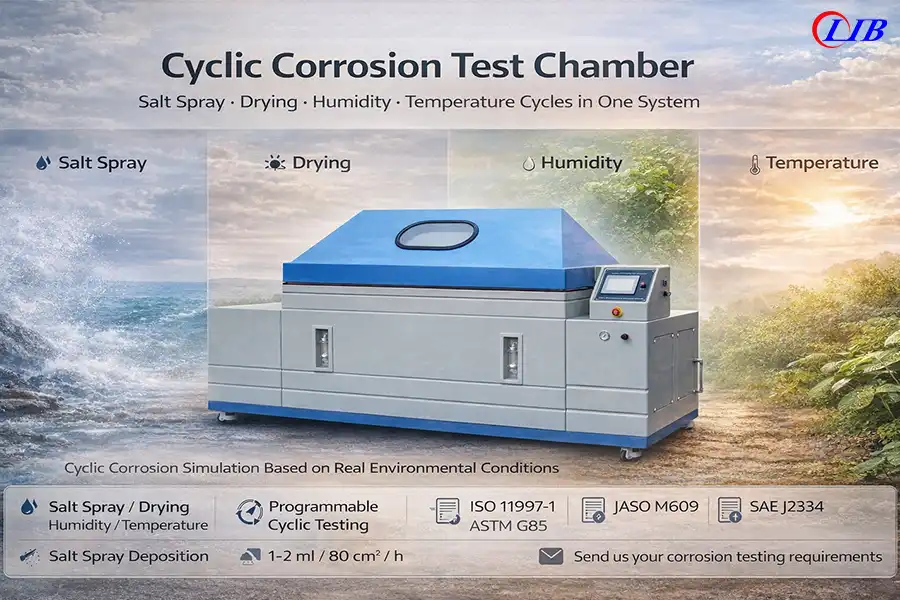
Understanding the standards governing cyclic corrosion testing is fundamental for manufacturers seeking to validate material performance, ensure product longevity, and meet stringent industry requirements. A cyclic corrosion chamber must operate according to internationally recognized protocols that define precise environmental conditions, exposure sequences, and evaluation criteria. ASTM and ISO standards provide the authoritative framework for conducting reproducible, defensible corrosion tests that accurately predict real-world performance. These standards specify everything from salt solution chemistry and deposition rates to temperature cycling parameters and humidity transitions. Manufacturers relying on compliant testing equipment gain access to global markets, satisfy customer specifications, and build confidence in their corrosion resistance claims through scientifically validated methodologies recognized across automotive, aerospace, construction, and electronics industries.
What ASTM and ISO Standards Apply to Cyclic Corrosion Testing?
ASTM G85: The Foundation for Cyclic Exposure Testing
ASTM G85 stands as the primary standard governing modified salt spray testing methodologies that extend beyond traditional continuous fog exposure. This comprehensive specification defines multiple test practices (Annexes) addressing different corrosive environments and cycling protocols. Annex A3 establishes the MASTMAASIS test involving sulfur dioxide injection, while Annex A5 details the Prohesion test combining salt solution with controlled temperature and humidity cycling. Each annex prescribes specific solution chemistries, exposure durations, temperature setpoints, and transition requirements.
ISO 14993 and ISO 11997: European Perspectives
ISO 14993 addresses corrosion testing specifically for passenger vehicles, establishing test severity levels and performance criteria aligned with European automotive requirements. This standard emphasizes realistic exposure conditions replicating the combined effects of road salt, industrial pollutants, and atmospheric moisture. ISO 11997 focuses on paints and varnishes, defining cyclic corrosion test methods for protective coatings. Both standards require precise control of temperature transitions, humidity cycling, and salt fog deposition.
Industry-Specific Standards and OEM Requirements
Automotive original equipment manufacturers have developed proprietary corrosion testing standards tailored to their specific performance requirements and warranty commitments. GMW 14872 from General Motors, VW PV 1210 from Volkswagen Group, and SAE J2334 from the Society of Automotive Engineers each prescribe unique cycling sequences, exposure conditions, and acceptance criteria. Advanced corrosion testing chambers come pre-programmed with these major automotive standards, eliminating manual programming errors and ensuring exact compliance.
Overview of Common Corrosion Testing Standards
Traditional Salt Spray Methods: NSS, AASS, and CASS
Table 1: Comparison of Traditional Salt Spray Testing Methods
|
Test Method |
Standard |
Solution |
Temperature |
pH Range |
Applications |
|
Neutral Salt Spray (NSS) |
ASTM B117 |
5% NaCl |
35°C ± 2°C |
6.5-7.2 |
General corrosion resistance |
|
Acetic Acid Salt Spray (AASS) |
ASTM B368 |
5% NaCl + acetic acid |
35°C ± 2°C |
3.1-3.3 |
Decorative coatings |
|
Copper-Accelerated (CASS) |
ASTM B368 |
5% NaCl + CuCl₂ |
50°C ± 2°C |
3.1-3.3 |
Anodized aluminum |
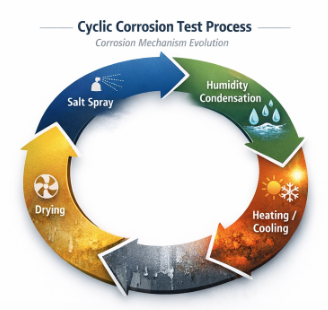
These traditional continuous exposure methods established the foundation for corrosion testing but present limitations in replicating real-world conditions. Materials experience intermittent wetting and drying in actual service, creating different corrosion mechanisms than continuous fog exposure produces.
Prohesion Testing According to ASTM G85-A5
The Prohesion test represents one of the most widely adopted cyclic corrosion protocols, particularly within automotive and coatings industries. This method alternates between dilute salt solution spray at 25°C (lasting 1 hour) and ambient drying at 35°C and 100% relative humidity (lasting 1 hour). The 2-hour complete cycle repeats continuously for test durations ranging from 240 to 2,880 hours depending on material type and performance requirements.
MASTMAASIS Testing With SO₂ Gas Injection
ASTM G85-A3 defines the MASTMAASIS protocol incorporating sulfur dioxide gas to simulate industrial atmospheric pollution effects. The test cycle includes salt spray exposure, ambient storage, SO₂ injection periods, and controlled humidity conditioning. This complex sequence requires sophisticated chamber capabilities including precision gas metering systems, sealed cyclic corrosion chamber construction preventing SO₂ leakage, and dedicated exhaust neutralization equipment.
Test Procedures and Cycle Definitions in ASTM and ISO
Environmental Conditioning Sequences and Timing
Cyclic corrosion testing derives its predictive power from carefully orchestrated sequences alternating between aggressive exposure and recovery periods. A typical automotive cycle might include 6 hours of salt spray at 35°C, followed by 2 hours of ambient drying at 60°C and 30% RH, then 16 hours of humid conditioning at 50°C and 95% RH. Chamber controllers must execute these sequences with precision timing and accurate environmental transitions.
Temperature and Humidity Transition Requirements
Standards specify maximum allowable transition times between environmental conditions to ensure test reproducibility and relevance. Rapid transitions from saturated salt fog conditions at near 100% RH to dry environments at 30% RH present significant technical challenges. A cyclic corrosion chamber must incorporate forced air circulation, mechanical refrigeration, and precision dehumidification to achieve these demanding transitions. Temperature control systems maintain setpoints within ±0.5°C while humidity accuracy reaches ±2% RH.
Solution Chemistry and Deposition Rate Control
Precise solution preparation requires demineralized or distilled water, reagent-grade chemicals, and careful pH adjustment without contaminating additives. Atomizer nozzles generate fine fog droplets that settle uniformly across the test chamber, achieving specified deposition rates of 1-2 mL/80cm²·h measured using calibrated collection funnels. Quartz glass spray nozzles resist high temperatures and corrosive solutions while maintaining consistent spray patterns through thousands of hours of operation.
How to Ensure Compliance With International Standards?
Chamber Qualification and Initial Verification
New corrosion testing equipment requires comprehensive qualification demonstrating compliance with applicable standards before beginning production testing. Qualification protocols verify temperature uniformity throughout the chamber volume, humidity accuracy at multiple setpoints, and salt deposition uniformity across specimen locations. Technicians position calibrated sensors and collection funnels at specified chamber locations, document environmental conditions over multiple test cycles, and compare results against standard requirements.
Ongoing Performance Monitoring and Trending
Standards compliance extends beyond initial qualification to encompass continuous performance monitoring throughout the chamber's service life. Regular verification activities include weekly salt deposition rate measurements, monthly temperature and humidity calibration checks, and quarterly solution pH verification. Cyclic corrosion chambers equipped with Ethernet connectivity and data logging capabilities facilitate automated performance monitoring, generating alerts when parameters approach specification limits.
Personnel Training and Procedure Standardization
Equipment capabilities alone cannot ensure standards compliance—trained personnel executing validated procedures are equally critical. Comprehensive training programs cover solution preparation techniques, specimen preparation and mounting, chamber operation and programming, data collection protocols, and troubleshooting procedures. Written standard operating procedures document each process step, reducing variability between operators and shifts.
Calibration and Validation of Corrosion Test Chambers
Temperature Sensor Calibration and Verification
Accurate temperature control depends on properly calibrated sensors and validated measurement systems. Platinum resistance thermometers (PT100 Class A) offer exceptional accuracy and long-term stability in corrosive environments, but require regular calibration against traceable standards. Calibration procedures compare chamber sensor readings against reference thermometers at multiple temperatures spanning the operating range. The saturated air barrel preheating system in advanced chambers maintains consistent inlet air temperature.
Humidity Measurement System Validation
Relative humidity sensors face particular challenges in corrosive salt fog environments that can degrade sensor elements and compromise accuracy. Capacitive humidity sensors with protective coatings resist salt contamination while maintaining measurement precision across the 30-98% RH range required for cyclic testing. External isolation of the stainless steel surface evaporation humidifier prevents salt contamination of humidity generation systems.
Salt Deposition Rate Verification Procedures
Standards specify salt deposition rates in terms of solution volume collected per unit area per hour. Verification employs standardized collection funnels positioned at specified chamber locations, capturing spray over measured time periods. Laboratory balances determine collected solution mass, converted to volume using known density values. The atomizer tower and spray nozzle system design significantly influences deposition uniformity.
Documentation and Reporting for Certification Processes
Test Plan Development and Approval
Comprehensive test planning precedes actual testing, documenting objectives, applicable standards, specimen descriptions, exposure conditions, evaluation criteria, and acceptance requirements. Test plans reference specific standard versions to ensure clarity regarding protocol details. Customer review and approval of test plans confirms mutual understanding of testing scope and deliverables.
Real-Time Data Logging and Archiving
Table 2: Essential Documentation for Standards-Compliant Testing
|
Document Type |
Purpose |
Retention Period |
|
Chamber Qualification Report |
Initial capability verification |
Life of equipment |
|
Calibration Certificates |
Traceable accuracy verification |
3-5 years minimum |
|
Test Plan |
Define testing scope |
15+ years |
|
Environmental Log Data |
Continuous monitoring |
15+ years |
|
Test Report |
Communicate results |
15+ years |
Modern cyclic corrosion chambers generate continuous environmental data streams documenting temperature, humidity, and cycle progression throughout multi-week test durations. Programmable controllers with Ethernet connectivity enable remote monitoring and automated data logging to network servers.
Certification and Audit Trail Requirements
Laboratory accreditation under ISO/IEC 17025 requires rigorous documentation systems demonstrating measurement traceability, competence, and quality management. Accredited laboratories undergo regular assessments by external auditors who scrutinize calibration records, training documentation, test procedures, and result reporting practices.
LIB Industry Compliant Corrosion Chambers Meeting ASTM and ISO Standards
 |
 |
||
|
Model |
SC-010 |
SC-016 |
SC-020 |
|
Internal dimensions (mm) |
1300*1000*600 |
1600*900*720 |
2000*1000*800 |
|
Overall dimensions (mm) |
2000*1300*1600 |
2300*1300*1700 |
2700*1300*1900 |
|
Interior Volume (L) |
780 |
1280 |
1800 |
|
Temperature Range |
+10 ℃ ~ +90 ℃ |
||
|
Humidity Range |
30% ~ 98% RH |
||
|
Salt Fog Deposition |
1~2ml / 80cm2 · h |
||
|
Cooling system |
Mechanical compression refrigeration system |
||
|
Water supply system |
Water purification system |
||
|
Air Preheating |
Saturated air barrel (31Liter) |
||
|
Spraying System |
Atomizer tower and Spray nozzles |
||
|
Salt Fog Collected |
Fog collector and fog measure cylinder |
||
|
Controller |
Programmable color LCD touch screen controller, Ethernet connection |
||
|
Safety Device |
Humidifier Dry-combustion Protection; Over-temperature Protection; Over-current Protection; Water Shortage Protection; Earth leakage Protection |
||
|
Material |
Glass fiber reinforced plastics |
||
|
Standard Configuration |
8 round bars |
||
|
|
|
| Corrosion-Resisitant Workroom | Modular grooves are used for holding samples |


Engineered for Multi-Standard Versatility
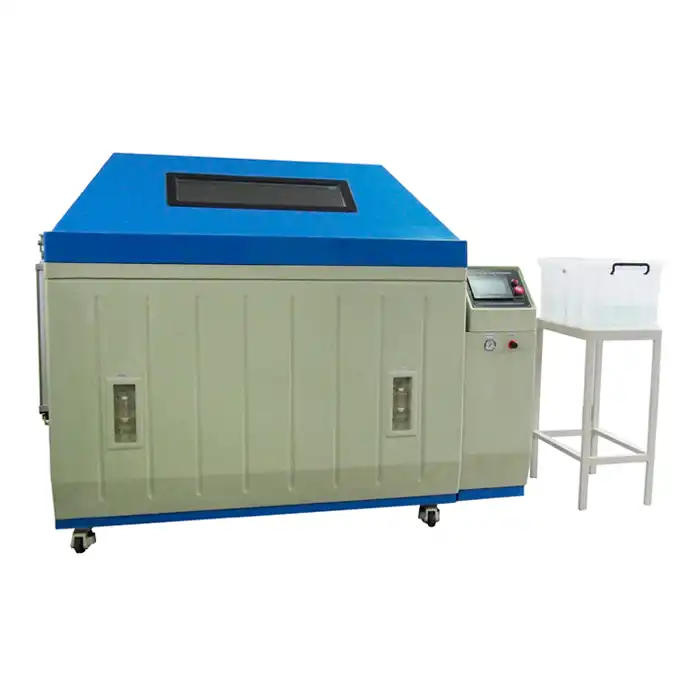
LIB Industry manufactures cyclic corrosion chambers specifically designed to accommodate the full spectrum of ASTM and ISO testing protocols within a single versatile platform. The SC series (models SC-010, SC-016, and SC-020) offers internal volumes from 780 to 1,800 liters, accommodating small components through large assemblies. Temperature control spanning +10°C to +90°C with ±0.5°C stability supports protocols from ambient Prohesion testing through elevated-temperature accelerated exposures.
Built-In Standard Library and Custom Programming
Recognizing the complexity of programming multi-step cyclic exposure protocols, LIB Industry pre-loads controller software with complete test sequences for major automotive and aerospace standards. VW PV 1210, GMW 14872, SAE J2334, and other commonly referenced specifications are available through simple menu selection. The programmable color LCD touchscreen controller supports up to 120 custom programs with 100 segments each.
Precision Environmental Control and Fast Transitions
The mechanical compression refrigeration system with air-cooled condenser delivers rapid cooling performance essential for quick transitions from high-temperature exposure to ambient conditions. Glass fiber reinforced plastic construction resists thermal expansion through countless temperature cycles while providing excellent corrosion resistance. The dedicated NaOH tank exhaust neutralization system safely processes SO₂ gas after testing completion, maintaining workplace air quality.
Conclusion
Navigating the complex landscape of cyclic corrosion testing standards requires both comprehensive technical knowledge and access to properly equipped, calibrated testing chambers. ASTM and ISO specifications provide the scientific framework ensuring reproducible, defensible test results that accurately predict material performance across diverse industries. Compliance demands attention to solution chemistry, environmental cycling sequences, calibration protocols, and meticulous documentation practices. Manufacturers investing in standards-compliant corrosion testing capabilities gain competitive advantages through validated product claims and reduced warranty risks.
FAQ
What is the difference between ASTM B117 and ASTM G85 cyclic corrosion testing?
ASTM B117 specifies continuous neutral salt spray exposure at constant temperature, while ASTM G85 encompasses multiple cyclic test methods alternating between salt spray, dry periods, humid conditioning, and ambient recovery. Cyclic protocols better replicate real-world environmental exposure patterns, providing more accurate performance predictions than continuous fog alone.
How often should cyclic corrosion chambers undergo calibration to maintain standards compliance?
Temperature and humidity sensors require verification quarterly at minimum, with annual formal calibration against traceable standards. Salt deposition rates should be verified weekly during active testing periods. Chamber qualification mapping should be repeated annually or after significant maintenance activities to ensure ongoing measurement accuracy and standards compliance.
Can a single chamber accommodate both ASTM and ISO testing requirements?
Modern cyclic corrosion chambers designed with appropriate temperature range, humidity control, and programmable cycling capabilities can execute both ASTM and ISO protocols. The key requirement involves precise environmental control across specified ranges and programmable sequencing flexibility. Chamber selection should verify specifications envelope all intended standards' environmental condition requirements.
LIB Industry stands ready to support your corrosion testing requirements with advanced cyclic corrosion chambers meeting international ASTM and ISO standards. As a leading environmental test chamber manufacturer and supplier with global service capabilities, we deliver turnkey solutions tailored to your specific testing needs. Contact our technical specialists at ellen@lib-industry.com today.