Dust Simulation Chamber Standards: IEC 60529 Explained
Understanding IEC 60529 proves essential when selecting and operating dust testing equipment that validates product ingress protection ratings. This international standard establishes systematic methodologies for evaluating enclosure effectiveness against solid particle intrusion, including dust and fine particulates. A properly configured dust simulation chamber replicates precise environmental conditions - controlled talcum powder concentration, specific pressure differentials, and standardized exposure durations - ensuring your products achieve genuine IP5X and IP6X certifications recognized globally. This comprehensive guide decodes the standard's technical requirements, test protocols, and compliance verification procedures that transform laboratory testing into marketplace confidence.
LIB’s IP6X sand and dust test chambers are widely used by global manufacturers to accurately reproduce harsh dust exposure conditions for product reliability testing. Their stable performance and long-term durability have been proven in real laboratory applications. On September 23, 2025, Robert Preez, Principal Engineer at Halcon R&D Laboratories in the UAE, shared his experience: “We regularly use the Rain and Dust Chambers and recently completed calibration for another year of operation. Everything is running smoothly.” This feedback reflects the dependable operation and consistent testing performance of LIB equipment in demanding industrial environments.

What Is IEC 60529 and Its Role in Dust Testing?
Historical Development and Global Adoption
The International Electrotechnical Commission published IEC 60529 to create unified protection classification criteria applicable across industries and geographic markets. Before this standardization, manufacturers faced conflicting regional testing requirements that complicated international trade. The standard's development involved collaboration among engineers, regulatory authorities, and industry representatives who established scientifically validated test methods. Today, certification bodies worldwide reference IEC 60529 as the authoritative framework for ingress protection verification.
Scope and Application Across Industries
This standard applies to electrical enclosures rated for voltage not exceeding 72.5kV, though many industries extend its principles beyond electrical equipment. Automotive manufacturers test headlamp assemblies, control modules, and sensor housings using these protocols. Consumer electronics companies validate smartphones, tablets, and wearables against dust ingress. Industrial equipment suppliers certify machinery controls, instrumentation, and outdoor installations. The universal applicability makes IEC 60529 knowledge indispensable for quality assurance professionals across sectors.
Relationship to Other International Standards
While IEC 60529 provides the foundation, complementary standards address specific application domains. ISO 20653 extends these principles to road vehicles, incorporating additional environmental factors relevant to automotive applications. MIL-STD-810 references similar dust testing methodologies for military equipment under harsh operational conditions. Understanding how these standards interconnect helps manufacturers select appropriate testing protocols matching their product's intended environment and regulatory landscape.
IP Code Structure and Dust Protection Levels
Decoding the Two-Digit Classification System
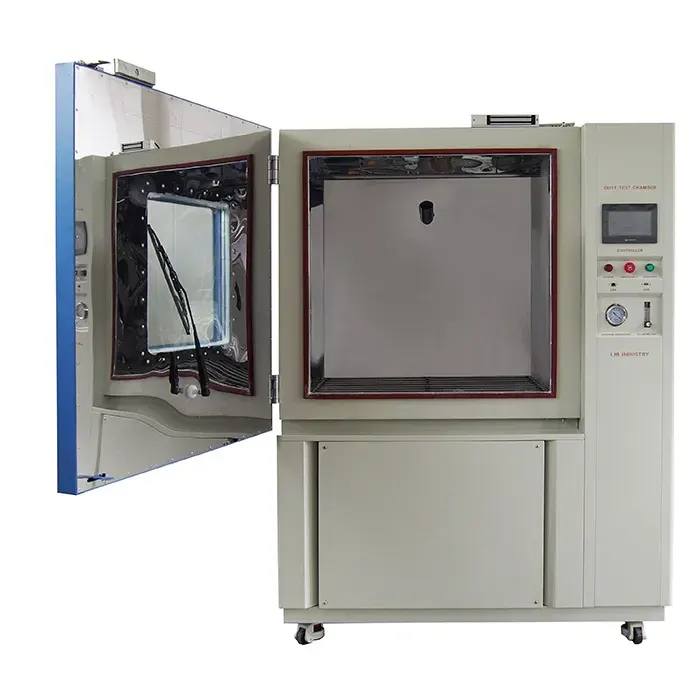
The IP code follows a standardized format: "IP" followed by two characteristic numerals. The second digit - ranging from 0 to 6 - quantifies protection against solid object intrusion. Lower values indicate resistance against larger particles, while higher values demonstrate protection against progressively smaller particles. An "X" placeholder appears when manufacturers haven't tested or don't claim protection for that characteristic. This systematic approach enables precise specification of enclosure capabilities without ambiguous marketing terminology.
|
Second Digit |
Protection Level |
Particle Size |
Common Applications |
|
0 |
No protection |
Any size |
Internal components only |
|
1 |
>50mm objects |
Large body parts |
Basic electrical cabinets |
|
2 |
>12.5mm objects |
Fingers, tools |
Standard junction boxes |
|
3 |
>2.5mm objects |
Wires, screws |
Outdoor enclosures |
|
4 |
>1mm objects |
Small wires |
Industrial controls |
|
5 |
Dust protected |
Limited ingress |
Automotive components |
|
6 |
Dust tight |
Zero ingress |
Sealed electronics |
IP5X: Dust Protected Classification
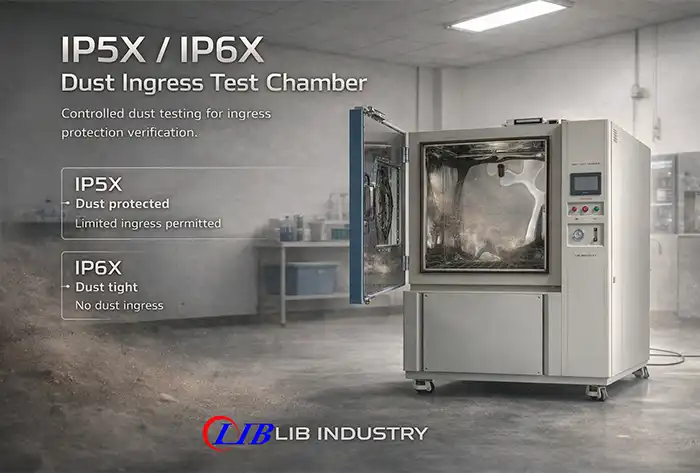
IP5X certification indicates the enclosure prevents dust accumulation that would interfere with equipment operation. Limited dust ingress may occur, but quantities remain insufficient to compromise functionality or safety. Testing involves suspending the specimen inside a dust simulation chamber containing talcum powder with standardized particle characteristics - 50μm wire diameter and 75μm nominal gap width between wires. The chamber maintains continuous dust circulation for eight hours while operators monitor the specimen's operational status.
IP6X: Complete Dust Tight Protection
The highest solid particle protection level, IP6X certification guarantees absolute prevention of dust penetration. No visible deposits appear inside the enclosure following testing, demonstrating complete sealing effectiveness. Achieving this rating requires maintaining a 2kPa pressure differential - the enclosure interior under vacuum relative to the dust-laden chamber atmosphere. This negative pressure attempts to draw dust through any potential ingress paths, simulating worst-case environmental exposure. Products requiring IP6X protection typically operate in mining environments, pharmaceutical manufacturing, or other dust-intensive applications.
Additional Letters and Supplementary Information
Beyond the two primary digits, IEC 60529 permits additional letters providing supplementary information. Letter "H" indicates suitability for high-voltage apparatus, while "M" confirms the equipment remained operational during water testing. "S" denotes the specimen stayed stationary during evaluation, and "W" specifies weather-resistant construction. These supplementary designations offer nuanced specification capabilities beyond the basic two-digit code, enabling precise communication of protection characteristics relevant to specialized applications.
Test Procedures for IP5X and IP6X Compliance
Specimen Preparation and Pre-Test Inspection
Proper preparation determines test validity and result accuracy. Clean the specimen thoroughly, removing manufacturing residues, protective films, and contamination that might interfere with dust detection. Document the specimen's condition through detailed photography capturing seam locations, ventilation openings, and potential ingress pathways. Verify all closures, gaskets, and sealing mechanisms function correctly according to manufacturer specifications. This baseline documentation enables accurate post-test evaluation of dust penetration patterns.
Chamber Configuration and Dust Characteristics
The talcum powder used in testing must meet specific physical characteristics ensuring repeatability across different laboratories. Particle size distribution, moisture content, and flowability affect test severity and result consistency. The 75μm mesh filtration system maintains proper particle sizing throughout testing cycles. Operators must verify talcum powder remains dry - humidity levels below 30% RH prevent clumping that invalidates results. Chamber temperature between ambient and 50°C simulates realistic operational conditions without introducing thermal expansion variables.
Execution of IP5X Testing Protocol
Position the specimen within the chamber's working volume where dust circulation achieves uniform concentration. The vertical dust circulation system ensures consistent particle suspension throughout the 800L to 2000L chamber volume. Activate circulation for eight continuous hours, maintaining steady dust concentration visible through the double-layer observation window. The programmable touchscreen controller automates timing and circulation parameters, eliminating operator error. Interior lighting allows real-time monitoring without disturbing test conditions, though opening the chamber during active testing invalidates the run.
IP6X Vacuum Testing Requirements
IP6X testing introduces additional complexity through the 2kPa pressure differential requirement. Connect the specimen to the integrated vacuum system through dust-proof cable ports that maintain chamber integrity while allowing powered operation testing. The pressure gauge confirms proper vacuum levels throughout the eight-hour exposure duration. Automated pressure regulation compensates for minor leaks in the specimen or test setup, maintaining consistent conditions. This vacuum challenge represents extreme exposure conditions rarely encountered in normal operation, providing substantial safety margins for certified products.
Post-Test Evaluation Criteria
Carefully remove the specimen from the dust simulation chamber, avoiding external contamination that might compromise evaluation accuracy. Disassemble the enclosure following manufacturer procedures, documenting dust presence at each step. IP5X evaluation permits limited dust ingress provided functionality remains unaffected - no accumulation on electrical contacts, circuit boards, or mechanical components that would impair operation. IP6X certification requires absolute absence of dust deposits anywhere within the enclosure interior. Photographic documentation supports certification applications and provides valuable feedback for design improvements.
|
Test Parameter |
IP5X Requirement |
IP6X Requirement |
|
Exposure Duration |
8 hours |
8 hours |
|
Dust Concentration |
Continuous circulation |
Continuous circulation |
|
Pressure Differential |
Atmospheric |
-2kPa (vacuum) |
|
Acceptable Ingress |
Limited, non-interfering |
Zero tolerance |
|
Specimen Operation |
Not required |
Powered operation optional |
How to Ensure Accurate and Compliant Testing Conditions?
Environmental Control and Monitoring
Ambient laboratory conditions influence dust behavior and test reproducibility. Temperature stability prevents convection currents that create non-uniform dust distribution. Humidity control below 30% RH maintains talcum powder flowability and prevents moisture absorption that causes particle agglomeration. The advanced dust circulation technology in professional chambers includes heated circulation chambers that actively dry recirculating dust, compensating for environmental humidity. Real-time monitoring displays environmental parameters alongside test progress, alerting operators to deviations requiring correction.
Dust Quality Verification
Not all talcum powder meets testing requirements. Particle size analysis using laser diffraction or sieve analysis confirms compliance with the 50μm wire diameter and 75μm gap width specifications. Chemical composition verification ensures absence of contaminants affecting electrical conductivity or corrosivity. Fresh talcum powder performs differently than material recycled through multiple test cycles - particle attrition creates finer dust that may yield non-representative results. Establish replacement schedules based on usage intensity rather than arbitrary time intervals.
Chamber Integrity and Leak Testing
Even minor leaks in the test chamber compromise result validity by allowing dust escape that reduces internal concentration. The multi-layer door sealing system requires periodic inspection for wear, damage, or compression set in sealing materials. Conduct periodic leak tests using smoke or tracer particles to visualize potential escape pathways. The electromagnetic door lock prevents accidental opening during testing, but operators must verify proper engagement before initiating test sequences. Sloped bottom chamber design with quick-release drainage facilitates complete dust removal between tests, preventing cross-contamination.
Calibration and Verification Requirements
Establishing Traceable Measurement Standards
Accurate pressure differential measurement proves critical for IP6X testing validity. Calibrate pressure gauges against certified reference standards traceable to national metrology institutes. The integrated vacuum system's pressure regulator requires verification that actual delivered pressure matches displayed values across the operating range. Temperature and humidity sensors need periodic calibration ensuring environmental monitoring accuracy. Documentation demonstrating measurement traceability satisfies accreditation requirements and supports certification body acceptance of test results.
Periodic Performance Verification
Beyond individual instrument calibration, verify overall system performance using reference specimens with known characteristics. Test enclosures with documented dust ingress behavior provide objective performance benchmarks. Consistent results confirm the dust simulation chamber maintains proper operating conditions. Unexpected variations indicate degradation requiring investigation - fan wear reducing circulation effectiveness, seal deterioration allowing dust escape, or moisture intrusion affecting powder characteristics. The wear-resistant fan design and strategic component positioning minimize degradation, but systematic verification detects problems before they compromise test validity.
Documentation and Record Keeping
Comprehensive calibration records demonstrate ongoing measurement capability and support quality management system requirements. Document calibration dates, reference standards used, measured values, and corrective actions taken. The Ethernet-connected controller's automated data logging simplifies record generation by capturing test parameters, environmental conditions, and timing information. Multi-language support accommodates international teams while remote access capabilities enable supervisory review of testing activities across distributed laboratory networks. USB data download provides convenient transfer to laboratory information management systems.
Documentation and Certification for Compliance Audits
Required Test Reports and Content
Certification bodies require detailed test reports documenting every aspect of the evaluation process. Reports must identify the tested specimen through part numbers, serial numbers, and detailed descriptions including photographs. Environmental conditions during testing - temperature, humidity, atmospheric pressure - appear alongside chamber identification and calibration status. Test procedure narrative describes specimen preparation, chamber configuration, exposure duration, and evaluation methodology. Results sections present objective findings supported by photographic evidence of post-test specimen condition. Clear pass/fail determinations reference specific standard requirements.
Photographic Evidence Standards
Visual documentation provides compelling evidence of test conditions and results that textual descriptions cannot convey. Pre-test photographs establish baseline specimen condition while post-test images demonstrate dust ingress extent or absence. Interior views showing gasket placement, seal condition, and closure mechanisms help evaluators understand protection strategies. Close-up detail photography reveals subtle ingress patterns informing design refinement. Consistent lighting, background, and positioning enable direct comparison across multiple test iterations or product variants. Digital photography with embedded metadata preserves timing and sequence information valuable during audit reviews.
Certification Body Submission Requirements
Different certification organizations maintain specific submission format preferences and required documentation elements. Understanding these requirements before testing prevents delays from incomplete applications. Some bodies accept electronic submissions while others require physical test reports with original signatures. Turnaround expectations vary significantly - expedited certification options exist for time-sensitive product launches. The comprehensive safety systems monitoring electrical current, temperature, phase balance, and ground fault conditions generate automated safety compliance documentation supporting broader product certification efforts beyond just ingress protection ratings.
|
Document Type |
Required Content |
Retention Period |
Audit Significance |
|
Test Report |
Full procedure, results, conditions |
Permanent |
Primary evidence |
|
Calibration Records |
Instrument traceability, dates, values |
5 years minimum |
Measurement validity |
|
Specimen Photos |
Pre-test, post-test, detail views |
3 years minimum |
Visual verification |
|
Chamber Logs |
Usage history, maintenance, issues |
Equipment lifetime |
Reliability evidence |
LIB Industry IEC 60529-Compliant Dust Chambers for Reliable Certification
One-Touch Standard Compliance
Navigating complex standard requirements challenges even experienced testing professionals. LIB dust simulation chambers eliminate guesswork through integrated one-touch presets programmed for IEC 60529 IP5X and IP6X protocols. These presets automatically configure circulation duration, pressure differential, and monitoring parameters matching standard specifications. Operators simply select the appropriate IP level and initiate testing - the system handles technical details ensuring compliant conditions. This automation reduces operator training requirements while eliminating setup errors that waste time and materials.
Multi-Stage Circulation Technology
The vertical dust circulation system represents significant engineering advancement over conventional horizontal flow designs. Strategic airflow patterns prevent the common problem of dust settling in chamber corners or accumulating on internal surfaces. This uniform distribution ensures specimens experience consistent exposure regardless of position within the working volume. The 75μm mesh filtration continuously removes oversized particles or agglomerates that might cause non-representative test conditions. Combined with heated circulation chambers maintaining optimal dust dryness, this technology delivers repeatable results matching interlaboratory comparison studies.
Heavy-Duty Sample Accommodation
Testing large automotive assemblies, industrial equipment, or multiple specimens simultaneously requires robust sample support infrastructure. The reinforced stainless steel rack system safely supports substantial loads - the DI-2000 model accommodates specimens up to 1000mm tall within its 2000L working volume. Specialized cable ports with dust-proof sealing enable powered operation testing without compromising chamber integrity. The 16A dust-proof socket delivers adequate power for demanding electronic loads while maintaining complete dust containment. This capability allows simultaneous functional testing during dust exposure, revealing failures that static testing might miss.
Global Support Infrastructure
Since 2009, LIB Industry has delivered environmental testing solutions to industry leaders including Apple, Intel, Mercedes-Benz, and BYD across 60+ countries. This extensive deployment experience informs continuous product improvement and application engineering support. When certification challenges arise - unusual specimen configurations, non-standard testing protocols, or interpretation questions - LIB's technical team provides practical guidance based on real-world experience. The comprehensive 3-year warranty with lifetime service support protects your testing investment while ensuring ongoing compliance capability as standards evolve.
Customization for Specialized Requirements
Standard chamber configurations serve most applications effectively, but unique testing demands sometimes require tailored solutions. LIB's experienced R&D team develops custom modifications addressing specific challenges - oversized chambers for large equipment, specialized sample fixtures maintaining unusual orientations, or integrated data acquisition systems capturing operational parameters during exposure. Custom testing software interfaces with existing laboratory information systems, streamlining workflow integration. These customization capabilities extend to complete turnkey laboratory installations where LIB provides coordinated dust testing, water ingress evaluation, and temperature cycling equipment configured for seamless operation.
Conclusion
Mastering IEC 60529 requirements transforms dust testing from compliance obligation into competitive advantage. The standard's systematic approach to ingress protection classification provides clear communication of product capabilities while its rigorous test protocols ensure certified products genuinely withstand challenging environmental conditions. Investing in proper dust simulation chambers, understanding detailed test procedures, maintaining calibration integrity, and documenting results thoroughly positions your organization for certification success and marketplace confidence.
FAQ
What distinguishes IP5X from IP6X testing beyond dust quantity measurements?
The fundamental difference lies in pressure differential application. IP5X testing occurs at atmospheric pressure with acceptance criteria permitting limited non-interfering dust ingress. IP6X requires 2kPa vacuum inside the specimen throughout eight-hour exposure, demanding absolute zero dust penetration. This pressure challenge simulates extreme conditions providing substantial protection margins.
Can I use the same talcum powder indefinitely through multiple test cycles?
Repeated circulation causes particle attrition generating progressively finer dust that may produce non-representative results. Monitor particle size distribution periodically and replace powder when measurements deviate significantly from specifications. Usage intensity determines replacement frequency - high-volume laboratories may require monthly replacement, while occasional users achieve longer intervals.
How do certification bodies verify my testing equipment meets IEC 60529 requirements?
Auditors examine calibration records demonstrating measurement traceability, review chamber design confirming proper dust circulation and pressure control, and may request reference specimen testing comparing your results against known standards. Maintaining comprehensive documentation of equipment specifications, calibration history, and performance verification studies facilitates smooth audit processes.
Partner with a Leading Dust Simulation Chamber Manufacturer
LIB Industry delivers precision-engineered dust testing solutions as a trusted dust simulation chamber manufacturer and supplier. Our factory-certified equipment and expert technical support ensure your certification success. Contact our team at ellen@lib-industry.com to discuss how our IEC 60529-compliant chambers meet your specific testing requirements.