EV Battery Leak Testing With a Water Immersion Tank
 EV battery leak testing with a water immersion tank validates the waterproof integrity of battery packs by simulating real-world water exposure scenarios under controlled pressure conditions. This critical quality assurance process submerges sealed battery enclosures at depths equivalent to 50 meters, maintaining precise pressure parameters while monitoring for any moisture penetration that could trigger thermal runaway or electrical failures. Advanced immersion testing equipment combines pneumatic lid systems, programmable controllers, and automatic water supply mechanisms to replicate flooding, submersion, and heavy rain conditions that electric vehicles encounter. Understanding proper immersion depths, duration protocols, and detection methodologies ensures battery manufacturers meet stringent safety standards while protecting consumers from catastrophic failure modes.
Recent feedback from a Vietnam-based customer using the LIB industry R78-1000 IPX7/IPX8 Water Immersion Test Chamber highlights strong long-term performance after extended laboratory use. The unit has been operating through repeated waterproof testing cycles, including IPX7 full immersion and IPX8 pressurized water depth simulation, without any abnormal fluctuation in control stability or sealing performance.
After several months of continuous operation in daily test routines, the customer noted: “After a period of use, your machine is still running very well.”
This feedback not only reflects stable hardware performance under frequent start-stop testing conditions, but also confirms consistent pressure control, reliable water circulation behavior, and dependable results output over time—key requirements for product validation in laboratory waterproof testing environments.
Why Is Leak Testing Critical for EV Battery Safety?
Preventing Thermal Runaway Events
Lithium-ion battery packs generate substantial heat during charging and discharging cycles, requiring sophisticated thermal management systems. Water infiltration into battery enclosures disrupts these carefully engineered cooling pathways while introducing conductive contamination between cells. Even microscopic moisture penetration can create electrochemical reactions that accelerate cell degradation, dendrite formation, and internal short circuits. These cascading failures rapidly escalate into thermal runaway—an uncontrolled temperature increase that can reach 800°C within seconds, releasing toxic gases and potentially igniting adjacent cells in a chain reaction.
Protecting High-Voltage Electrical Systems
EV battery packs operate at voltages ranging from 400V to 800V in modern architectures, creating lethal shock hazards if moisture breaches enclosure sealing. Water provides conductive pathways between high-voltage terminals and chassis ground, endangering occupants, emergency responders, and service technicians. Comprehensive leak testing validates that gasket compression, weld integrity, and connector sealing maintain electrical isolation even when vehicles traverse deep water crossings or experience prolonged exposure to precipitation and road spray.
Ensuring Long-Term Reliability and Warranty Compliance
Battery warranties extending 8-10 years or 100,000+ miles depend on maintaining sealed environmental protection throughout the vehicle's operational lifetime. Water damage voids warranties and triggers expensive replacement costs that erode consumer confidence in electric mobility. Rigorous immersion testing during development and production quality control identifies sealing vulnerabilities before market introduction, preventing field failures that damage brand reputation and generate recall liabilities.
Failure Risks Associated With Battery Water Ingress
 Corrosion of Internal Components and Connections
Battery management systems incorporate hundreds of electrical connections, sensors, and circuit boards vulnerable to corrosive attack from moisture exposure. Water intrusion initiates electrochemical corrosion at copper terminals, aluminum bus bars, and steel fasteners that degrades electrical continuity and increases circuit resistance. Elevated resistance generates parasitic heating that accelerates aging while creating voltage imbalances between parallel cell groups. These imbalances reduce usable capacity and trigger premature battery replacement.
Electrolyte Contamination and Cell Performance Degradation
While individual lithium-ion cells feature hermetically sealed casings, battery pack-level water ingress introduces humidity into the enclosed atmosphere surrounding cells. This moisture condenses on cold surfaces during temperature fluctuations, creating liquid water droplets that migrate toward cell terminals and safety vents. Water molecules react with electrolyte components that escape through microscopic seal imperfections, forming corrosive hydrofluoric acid compounds that etch aluminum cell casings and accelerate capacity fade.
Safety System Malfunction and Fire Hazards
Modern battery packs incorporate sophisticated safety mechanisms including fuses, contactors, cooling pumps, and sensor networks that monitor cell voltages, temperatures, and isolation resistance. Water damage to these protection systems disables fault detection capabilities, allowing dangerous conditions to persist undetected. Corroded sensors provide false readings that prevent battery management systems from implementing protective shutdowns, while moisture-damaged contactors may weld closed, eliminating the ability to disconnect high-voltage circuits during emergency scenarios.
|
Water Ingress Location |
Primary Failure Mechanism |
Safety Consequence |
Detection Challenge |
|
Cell Terminal Area |
Electrochemical corrosion, increased resistance |
Thermal hotspots, voltage imbalance |
Gradual degradation over months |
|
Battery Management System |
Electronic component failure, false sensor readings |
Loss of protection monitoring |
Intermittent malfunctions |
|
High-Voltage Connectors |
Insulation breakdown, arc tracking |
Electric shock hazard, fire ignition |
Requires megohm resistance testing |
|
Cooling System Passages |
Coolant contamination, pump corrosion |
Thermal management failure |
Performance degradation symptoms |
Water Immersion Methods for Battery Pack Integrity Testing
Submersion Depth and Pressure Simulation
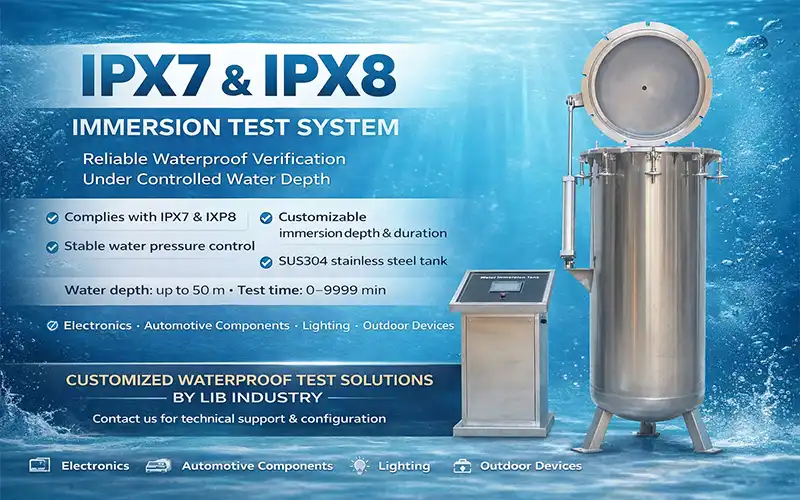
Automotive IP67 and IP68 ratings specify temporary submersion capabilities ranging from 1 meter for 30 minutes to continuous underwater operation at greater depths. The LIB water immersion tank model R78-600 replicates pressure conditions equivalent to 50-meter water depth through its cylindrical chamber design and reinforced A3 steel plate construction with 15mm wall thickness. This pressure simulation ensures battery seals withstand extreme flooding scenarios far beyond typical vehicle wading depths, validating protection margins for unforeseen emergency conditions.
Duration Protocols for Real-World Exposure Scenarios
Standard immersion testing protocols balance thoroughness with production efficiency by establishing minimum submersion durations that reveal sealing defects without excessive testing time. Short-duration tests (30 minutes to 2 hours) identify gross leakage paths from improperly installed gaskets or damaged connector seals. Extended immersion cycles (8-24 hours) expose slower permeation through polymer seals and detect pressure-driven water intrusion through microscopic gaps that expand under sustained hydraulic forces.
Temperature Cycling During Immersion Testing
Battery packs experience dramatic temperature variations during operation, with cells reaching 45-60°C during fast charging then cooling to ambient during rest periods. These thermal cycles create expansion and contraction of enclosure materials that can compromise seal compression and open temporary leakage pathways. Advanced immersion testing incorporates heating elements that cycle water temperature between 5°C and 50°C while maintaining submersion, replicating the stress conditions that reveal temperature-dependent sealing failures.
Pneumatic Lid Systems for Safe Test Sample Access
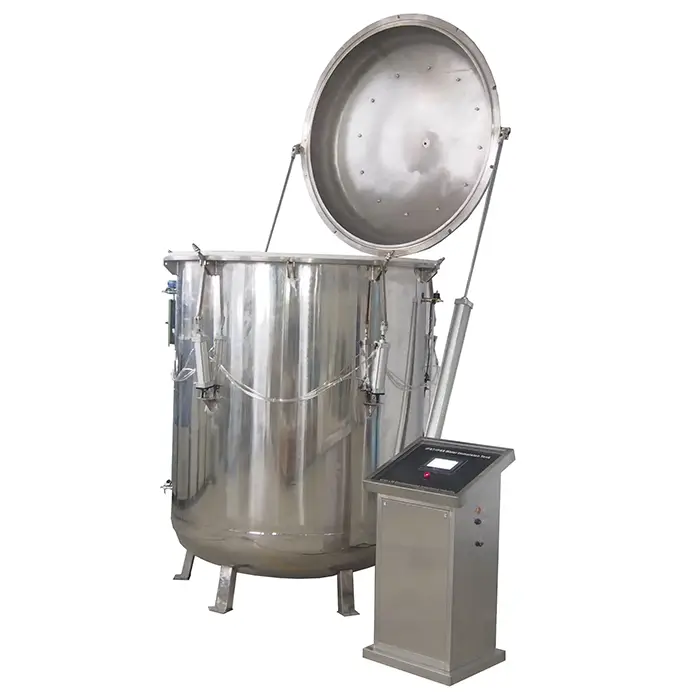
The LIB R78-600 incorporates pneumatic lid operation that enables controlled opening and closing of the pressure vessel without manual effort or safety risks. Hydraulic rod mechanisms with 304 stainless steel construction provide corrosion resistance while supporting the substantial weight of reinforced lids designed to contain 50-meter equivalent pressures. This automation reduces operator injury risks while enabling faster test cycle times through efficient sample loading and retrieval.
How to Detect Micro-Leaks in Sealed Battery Systems?
Visual Inspection and Desiccant Indicators
Post-immersion visual examination reveals obvious water intrusion through presence of liquid pooling, condensation on internal surfaces, or corrosion products forming at vulnerable junctions. Desiccant packets placed inside battery enclosures before immersion provide sensitive moisture detection through color-change indicators that reveal humidity increases from sub-visible water vapor permeation. These simple indicators cost pennies per test while providing immediate pass/fail results without sophisticated instrumentation.
Electrical Isolation Resistance Monitoring
High-voltage battery systems maintain electrical isolation between pack voltage and chassis ground measured in megohms. Water intrusion creates conductive pathways that dramatically reduce isolation resistance, providing quantitative leak detection. Automated testing equipment applies 500V DC between battery terminals and enclosure while measuring leakage current with microamp sensitivity. Isolation resistance below 100 ohms per volt indicates compromised sealing requiring investigation, while values exceeding 500 ohms per volt confirm adequate protection.
Pressure Decay and Helium Leak Detection
Sensitive leak detection pressurizes battery enclosures with dry air or helium tracer gas while monitoring internal pressure over time. Leak rates measured in standard cubic centimeters per second (sccm) quantify sealing effectiveness with precision unattainable through immersion alone. Helium mass spectrometry detects leak rates below 1×10⁻⁶ sccm, revealing microscopic imperfections in weld seams and gland penetrations that might permit slow water permeation over months of vehicle operation.
|
Detection Method |
Sensitivity Level |
Test Duration |
Equipment Cost |
Best Application |
|
Desiccant Color Indicators |
Moderate (visible moisture) |
1-24 hours |
Very low |
Production screening |
|
Isolation Resistance |
High (electrical paths) |
5-15 minutes |
Moderate |
Quality control gates |
|
Pressure Decay |
Very high (quantitative) |
30-120 minutes |
Moderate |
Development validation |
|
Helium Mass Spectrometry |
Extremely high (molecular) |
15-45 minutes |
High |
Failure analysis |
 |
 |
Test Conditions: Depth, Duration, and Pressure Control
Calculating Equivalent Water Depth Pressure
Hydrostatic pressure increases linearly with depth at approximately 0.1 bar (1.45 psi) per meter of submersion. A water immersion tank rated for 50-meter equivalent depth must maintain 5 bar (72.5 psi) internal pressure while ensuring structural integrity and operator safety. The LIB R78-600 achieves this through cylindrical geometry that distributes hoop stresses uniformly across the 15mm wall thickness A3 steel construction, incorporating safety factors that prevent catastrophic failure even under overpressure scenarios.
Programmable Controller Automation
Modern water ingress testing demands precise control of multiple parameters including fill level, pressure application, soak duration, and drainage sequences. The programmable color LCD touchscreen controller integrated into LIB immersion tanks stores up to 120 programs with 100 segments each, enabling complex test profiles that ramp pressure gradually, maintain plateau conditions, and monitor results throughout cycles. Ethernet connectivity allows remote monitoring and data logging that satisfies quality management system documentation requirements.
Automatic Water Supply and Level Management
Maintaining consistent immersion depth throughout multi-hour test cycles requires automated water level control that compensates for evaporation, thermal expansion, and pressure-induced volume changes. The integrated storage tank and automatic water supply system ensure samples remain submerged at the specified minimum distance (typically 1 meter from sample bottom to water surface) without manual intervention. This automation improves test repeatability while freeing technicians for value-added activities.
Safety Interlocks and Pressure Relief Systems
Pressure vessels containing sufficient water volume to submerge large battery packs present significant stored energy hazards if improperly operated. Comprehensive safety systems prevent lid opening under pressure through pneumatic interlocks, monitor pressure continuously through redundant sensors, and incorporate pressure relief valves calibrated to vent before structural limits. These engineered safeguards protect operators while preventing equipment damage from procedural errors.
Compliance Standards for EV Battery Waterproof Testing
IP67 and IP68 Ingress Protection Ratings
The International Electrotechnical Commission's IEC 60529 standard defines IP codes that specify enclosure protection against solid particles and liquids. IP67 certification requires protection against temporary submersion to 1-meter depth for 30 minutes, while IP68 extends to continuous submersion at manufacturer-specified depths typically ranging from 1 to 3 meters. EV battery packs targeting all-weather operation require IP67 minimum protection, with IP68 specified for vehicles marketed with enhanced water fording capabilities.
UN ECE R100 Electric Vehicle Safety Regulations
The United Nations Economic Commission for Europe Regulation 100 establishes comprehensive safety requirements for electric vehicle battery systems including mechanical integrity, electrical safety, and environmental protection. Water immersion testing validates compliance with requirements that battery enclosures prevent water ingress capable of causing electrical hazards or functional impairment during normal vehicle operation and reasonably foreseeable misuse scenarios including flooding and high-pressure washing.
SAE and ISO Automotive Testing Standards
The Society of Automotive Engineers and International Organization for Standardization publish detailed test methodologies that specify immersion depths, durations, water temperatures, and acceptance criteria. SAE J2380 defines vibration testing requirements that complement immersion testing by validating seal integrity after mechanical stress. ISO 20653 extends IEC 60529 with automotive-specific test conditions including high-pressure water jets that simulate roadway splash and commercial vehicle washing.
|
Standard |
Submersion Requirement |
Duration |
Additional Conditions |
Target Application |
|
IEC 60529 IP67 |
1 meter depth |
30 minutes |
Static immersion |
Passenger vehicles |
|
IEC 60529 IP68 |
Manufacturer-specified (1-3m) |
Continuous or extended |
May include pressure cycling |
Off-road, amphibious vehicles |
|
UN ECE R100 |
Functional safety verification |
Test method per IP rating |
Post-crash immersion scenarios |
European market approval |
|
ISO 20653 |
IP69K high-pressure jets |
Variable |
80°C water at 8-10 MPa |
Commercial vehicles, buses |
LIB Industry Advanced Solutions for EV Battery Leak Detection and Safety Testing
|
Model |
R78-600 |
|
|
Internal Dimension (mm) |
Diameter 600 mm * Height 1500 mm |
|
|
Overall Dimension (mm) |
Diameter 800 mm * Height 1800 mm |
|
|
Pressure |
50m water depth pressure |
|
|
Open mode |
Pneumatic lid |
|
|
Material |
A3 steel plate, wall thickness 15 mm |
|
|
Controller |
Programmable color display touch screen controller |
|
|
Water Supply System |
Storage water tank, Automatic water supply |

Customized Tank Dimensions for Large Battery Packs
EV battery packs range from compact modules in hybrid vehicles to skateboard platforms exceeding 2 meters in length for long-range electric trucks. The standard R78-600 water immersion tank (600mm diameter × 1500mm height) accommodates typical passenger vehicle modules, while LIB engineering teams design custom cylindrical chambers up to 3 meters diameter for complete pack assemblies. Tripod support systems distribute concentrated loads while maintaining structural stability during pressurization cycles.
Integrated Data Acquisition and Quality Management
Modern automotive production environments require seamless integration between test equipment and enterprise quality systems. LIB water immersion tanks feature Ethernet connectivity that links programmable controllers to manufacturing execution systems (MES), automatically uploading test parameters, duration records, and pass/fail results. This digital integration eliminates manual transcription errors while providing real-time production metrics and statistical process control data that identify trends before defect rates increase.
Multi-Application Environmental Testing Capabilities
Battery leak testing represents one component of comprehensive environmental validation programs that include thermal cycling, vibration exposure, mechanical shock, and altitude simulation. LIB's turnkey laboratory solutions integrate water immersion tanks with temperature chambers, shake tables, and vacuum systems that streamline testing workflows. Unified control platforms coordinate test sequences across equipment types, reducing sample handling and accelerating development cycles from months to weeks.
Global Installation and Technical Support Services
EV battery production spans Asia, Europe, and North America, requiring equipment suppliers with international engineering capabilities. LIB provides comprehensive installation services including facility planning, utility connections, operator training, and regulatory compliance documentation. Remote diagnostic capabilities enable troubleshooting without site visits, while regional spare parts distribution minimizes downtime. This global support infrastructure ensures consistent test results across manufacturing locations while accommodating local voltage standards and safety regulations.
Conclusion
Water immersion tank testing provides indispensable validation of EV battery waterproof integrity through controlled simulation of extreme submersion scenarios. Proper testing protocols combining appropriate depth pressures, extended durations, and sensitive leak detection methodologies identify sealing vulnerabilities before production while ensuring compliance with international safety standards. LIB's advanced immersion systems deliver the precision, automation, and documentation capabilities that battery manufacturers require to protect consumers and build confidence in electric vehicle reliability across diverse operating environments.
FAQ
What immersion depth and duration are required for EV battery IP67 certification?
IP67 certification mandates battery enclosure submersion at 1-meter minimum depth for 30 consecutive minutes without water intrusion causing functional impairment. Testing should maintain water temperature between 5°C and 35°C while positioning the lowest point of the enclosure at least 1 meter below the water surface throughout the entire duration.
Can water immersion testing damage functional battery packs during validation?
Properly executed immersion testing poses minimal damage risk to well-designed battery enclosures. Test protocols disconnect high-voltage circuits before submersion and monitor isolation resistance continuously. Batteries passing immersion testing experience no performance degradation, while failures reveal design defects requiring correction before production rather than discovering problems after market introduction.
How does pressure equivalent to 50 meters compare to actual vehicle water exposure?
Vehicles rarely encounter submersion depths exceeding 1 meter during normal operation. Testing at 50-meter equivalent pressure (5 bar) provides substantial safety margins that account for dynamic water forces during vehicle movement, pressure spikes from wave impacts, and long-term seal degradation. This conservative approach ensures batteries maintain protection throughout their operational lifetime.
Protect your EV battery investments with proven leak testing solutions. LIB Industry, a trusted water immersion tank manufacturer and supplier, delivers customized environmental testing equipment backed by comprehensive installation and support services. Contact our engineering team at ellen@lib-industry.com to discuss your battery testing requirements and receive detailed technical specifications.