How Rain Testing Ensures IP Compliance in Automotive Parts?
Rain testing serves as the definitive validation method for automotive components requiring ingress protection certification against water exposure. Through controlled simulation of rainfall conditions at varying intensities, manufacturers verify that electrical enclosures, lighting assemblies, and sensor housings maintain their protective integrity under real-world environmental challenges. Compliance with IP (Ingress Protection) ratings demands rigorous testing protocols that replicate everything from light rain spray to high-pressure water jets. Specialized JIS D 0203 R1 R2 rain test equipment creates reproducible conditions where automotive parts undergo systematic evaluation, revealing potential vulnerability points before products reach production lines. This preventive validation eliminates costly field failures while ensuring passenger safety and regulatory conformance across global automotive markets.
What Are IP Ratings and Their Automotive Relevance?
Decoding the IP Classification System
The International Electrotechnical Commission established the IP code as a two-digit classification defining protection levels against solid objects and liquids. The initial digit represents defense against particulate matter, ranging from 0 (no protection) to 6 (complete dust sealing). The subsequent digit addresses liquid ingress protection from 0 through 9, with higher numbers indicating resistance to more severe water exposure. Automotive applications predominantly focus on IPX3 through IPX6 ratings, where the "X" placeholder indicates untested or irrelevant solid particle protection.
Critical Automotive Applications Requiring Water Protection
Modern vehicles integrate numerous electronic systems exposed to environmental moisture. Exterior lighting assemblies including headlamps, tail lights, and fog lamps require minimum IPX4 certification to withstand driving rain and roadway spray. Engine compartment sensors monitoring temperature, pressure, and emissions face both thermal stress and water exposure, necessitating IPX5 or higher ratings. Electric vehicle charging ports demand stringent IPX6K ratings to prevent electrical hazards during high-pressure washing or flood scenarios.
Regulatory Frameworks Governing Automotive Ingress Protection
International standards including IEC 60529, ISO 20653, and Japanese Industrial Standards JIS D 0203 establish testing methodologies for automotive component validation. European automotive manufacturers reference ISO 20653 specifically designed for road vehicles, incorporating additional classifications for high-pressure steam cleaning scenarios. North American markets align with IEC standards while adding manufacturer-specific requirements. Japanese automotive suppliers utilize JIS D 0203 protocols that define R1 (rain simulation) and R2 (driving rain) test conditions matching actual vehicle operation environments.
|
IP Rating |
Protection Level |
Automotive Application Examples |
Minimum Test Duration |
|
IPX3 |
Spray up to 60° from vertical |
Interior electronics, dashboard components |
5-10 minutes |
|
IPX4 |
Splash from any direction |
Exterior mirrors, door handle assemblies |
10 minutes |
|
IPX5 |
Low-pressure jets |
Underbody components, wheel sensors |
3 minutes minimum |
|
IPX6 |
High-pressure jets |
Headlamps, charging ports |
3 minutes minimum |
|
IPX6K |
High-pressure/high-temperature |
Commercial vehicle electronics |
2 minutes minimum |
Water Ingress Protection Standards Explained
IEC 60529 International Benchmark
The foundational IEC 60529 standard specifies test apparatus configurations, water volume requirements, and pass/fail criteria applicable across industries. Testing chambers must maintain controlled spray patterns with calibrated nozzle diameters and water pressure ranges. IPX3 testing employs oscillating spray tubes covering 60-degree arcs on either side of vertical, delivering 10 liters per minute. IPX4 evaluations utilize omnidirectional spray nozzles distributing 10 liters per minute across all approach angles, simulating rain from unpredictable directions during vehicle motion.
ISO 20653 Automotive-Specific Adaptations
Recognizing unique automotive environmental challenges, ISO 20653 extends IEC classifications with road vehicle-specific test parameters. The standard introduces IPX4K and IPX6K classifications addressing high-pressure cleaning equipment common in automotive maintenance, typically evaluated in a rain test chamber. IPX9K ratings validate components against high-temperature steam jet cleaning at 80°C and 8-10 MPa pressure. These enhanced specifications ensure automotive electronics withstand professional car wash equipment and underbody steam cleaning procedures that exceed typical consumer water exposure scenarios.
JIS D 0203 Japanese Automotive Testing Protocol
Japanese Industrial Standards define R1 and R2 rain simulation tests specifically calibrated for automotive component validation. R1 conditions replicate moderate rainfall at 1.9 liters per minute through precisely positioned spray nozzles, while R2 testing intensifies exposure to 3.3 liters per minute simulating heavy driving rain. The standard additionally specifies S1 and S2 spray conditions at 24.5 and 39.2 liters per minute respectively, matching high-pressure wash scenarios. Component positioning on rotating turntables ensures uniform exposure across all surfaces during the 17 revolutions per minute cycle.
How Rain Testing Supports IPX3 and IPX4 Compliance?
Oscillating Spray Methodology for IPX3
IPX3 certification requires test specimens to withstand water spray from ±60 degrees off vertical, simulating rain falling on parked or slowly moving vehicles. JIS D 0203 R1 R2 rain test equipment incorporates precision-balanced oscillating spray arms that sweep through defined arcs at controlled velocities. Dual-hole nozzles with 0.5mm diameter orifices generate consistent droplet sizes matching natural rainfall characteristics. Water delivery pressure maintained between 0.03-0.30 MPa ensures spray pattern uniformity across the entire test envelope without creating artificial impact forces.
Omnidirectional Exposure for IPX4 Validation
IPX4 testing elevates complexity by requiring splash protection from all horizontal and vertical angles, replicating highway driving conditions where water approaches from unpredictable directions. Multi-nozzle configurations with 40 spray points positioned around the test specimen create comprehensive coverage. Each 1.2mm diameter nozzle contributes to the total flow rate specification while maintaining individual spray cone geometries. Rotating turntables at 17 rpm expose specimens to continuously varying attack angles, eliminating potential blind spots that stationary testing might miss.
Duration and Cycle Requirements
Standard testing protocols mandate minimum exposure durations calibrated to stress levels exceeding normal operational lifetimes. IPX3 evaluations typically continue for 5-10 minutes depending on component size and surface area. IPX4 testing extends to minimum 10-minute cycles ensuring adequate exposure across all approach angles. Automotive-specific protocols may specify multiple test cycles with intermediate inspection intervals to identify progressive seal degradation or coating breakdown. Temperature conditioning before and after water exposure reveals thermal stress effects on gasket materials and enclosure expansion characteristics.
|
Test Parameter |
IPX3 Configuration |
IPX4 Configuration |
JIS D 0203 R1 |
JIS D 0203 R2 |
|
Spray Angle |
±60° from vertical |
360° omnidirectional |
360° rotating |
360° rotating |
|
Water Flow Rate |
10 L/min |
10 L/min |
1.9 L/min |
3.3 L/min |
|
Nozzle Distance |
200mm typical |
200mm typical |
~400mm |
~400mm |
|
Test Duration |
5-10 minutes |
10 minutes |
Per specification |
Per specification |
|
Turntable Speed |
N/A |
Optional |
17 rpm |
17 rpm |
Testing Procedures for Automotive Components
Pre-Test Preparation and Conditioning
Successful IP validation begins with proper specimen preparation matching actual installation configurations. Mounting brackets, cable entries, and gasket compression replicate vehicle assembly conditions rather than idealized laboratory setups. Electrical components undergo functional testing while energized during water exposure to detect current leakage or short-circuit conditions invisible during unpowered evaluation. Climate conditioning at temperature extremes followed by immediate testing reveals thermal expansion effects on seal integrity that ambient temperature testing cannot expose.
Chamber Setup and Calibration Verification
JIS D 0203 R1 R2 rain test equipment requires systematic calibration verification before each testing session. Flow meters confirm water delivery rates match specification tolerances within ±5%. Spray nozzle inspection ensures no blockages compromise pattern uniformity - a single clogged orifice can create untested surface areas invalidating certification. Turntable rotation speed verification using tachometer measurements confirms 17 rpm operation maintaining consistent exposure velocities. Water pressure gauges at nozzle points validate 0.03-0.30 MPa operating ranges preventing excessive impact forces.
Real-Time Monitoring and Documentation
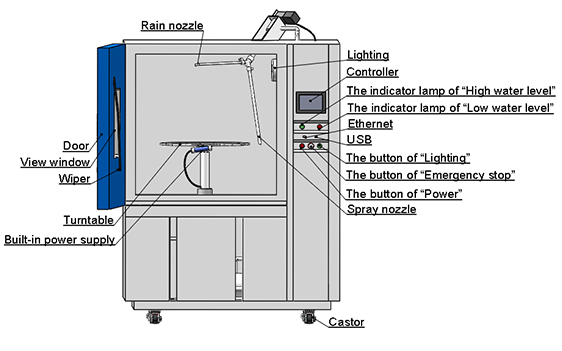
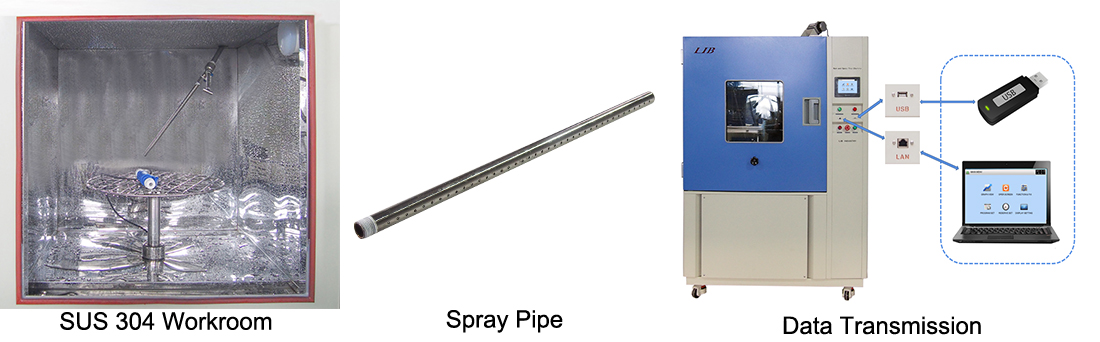
Contemporary testing protocols demand comprehensive documentation proving test validity and result traceability. Programmable touchscreen controllers log water pressure, flow rate, rotation speed, and test duration with timestamp precision. Ethernet connectivity enables remote monitoring where engineers observe testing progress without chamber access that might interrupt controlled conditions. Internal observation windows with wiper systems allow visual inspection during operation, identifying catastrophic seal failures requiring immediate test termination. High-resolution cameras capture spray pattern coverage and component response throughout exposure cycles.
Post-Test Inspection Criteria
Passing IP certification requires specimens to show no evidence of water penetration affecting component functionality or safety. Visual inspection under adequate lighting reveals moisture accumulation inside transparent enclosures or water tracking along internal surfaces. Electrical resistance measurements between isolated circuits detect moisture bridging that creates potential failure pathways. Dielectric strength testing at elevated voltages validates insulation integrity after water exposure. Components requiring IPX5 or higher ratings often undergo functional testing cycles post-exposure to confirm operational parameters remain within specification tolerances.
Identifying Leakage Points and Failure Modes
Seal and Gasket Degradation Patterns
Elastomeric seals represent the primary defense against water ingress yet remain vulnerable to compression set, chemical attack, and thermal cycling effects. Rain testing reveals seal failures manifesting as localized water intrusion at gasket interfaces, typically beginning at corners where compression may be inconsistent. Material incompatibility between gasket compounds and housing materials creates differential thermal expansion, opening microscopic gaps during temperature fluctuation. Long-duration testing exposes progressive seal deterioration that short validation cycles might overlook.
Cable Entry and Connector Vulnerabilities
Wire harness penetrations through enclosure walls create inherent vulnerability points requiring specialized sealing techniques. Inadequate strain relief allows cable movement that pumps water along conductor pathways through capillary action, bypassing external seals entirely. Connector assemblies face water intrusion through mating interfaces where contact pressure alone provides protection. Rain testing at multiple orientations reveals whether connector designs maintain sealing effectiveness when positioned at unfavorable angles where water accumulation concentrates on mating surfaces.
Ventilation and Pressure Equalization Challenges
Many automotive enclosures incorporate ventilation features preventing internal pressure buildup from thermal cycling or altitude changes. Membrane vents designed to pass air while blocking liquid water can fail under sustained spray exposure or when contaminated with oils and particulates. Rain testing validates vent placement and membrane selection, ensuring breathable barriers maintain water exclusion throughout exposure duration. Components showing internal condensation despite no direct water ingress indicate insufficient pressure equalization creating vacuum conditions that draw moisture through microscopic pathways.
Manufacturing Defect Detection
Production variability introduces defects invisible during visual inspection yet catastrophic during water exposure. Incomplete adhesive application around optical assemblies creates pathways where water migrates behind lenses, causing fogging and corrosion. Improper ultrasonic welding parameters produce seemingly solid joints containing microscopic voids that propagate under thermal stress. Rain testing using a rain test machine serves as final quality verification, identifying manufacturing process deviations before defective components reach vehicle assembly lines where field failures generate warranty costs exceeding testing investments.
Achieving Certification Through Reliable Testing
Third-Party Validation Requirements
Automotive OEM supplier qualification programs typically mandate independent laboratory testing rather than accepting manufacturer self-certification. Accredited facilities operating under ISO/IEC 17025 standards provide impartial evaluation with traceable calibration and documented procedures. Testing laboratories maintain environmental control preventing ambient humidity and temperature fluctuations that compromise result repeatability. Equipment calibration certificates traceable to national standards institutes prove measurement accuracy, satisfying auditor requirements during certification reviews.
Documentation and Traceability Standards
Comprehensive test reports must include specimen identification, test standard references, equipment calibration status, environmental conditions, and detailed pass/fail criteria. Photographic documentation captured before, during, and after testing provides visual evidence of initial condition and any degradation observed. Chain-of-custody records track specimens from production through testing and final disposition, preventing sample substitution or result manipulation. Digital data logging from automated test controllers generates time-stamped records immune to manual transcription errors, strengthening certification validity.
Batch Validation and Sample Size Determination
Statistical sampling plans balance testing costs against confidence levels in production quality. Automotive suppliers often adopt AQL (Acceptable Quality Level) sampling schemes where sample sizes increase with batch quantities. Critical safety components may require 100% testing or destructive validation of representative samples from each production lot. Rain testing equipment supporting batch processing with multiple specimen positions simultaneously reduces per-unit testing costs while maintaining individual result documentation.
|
Certification Element |
Requirement |
Validation Method |
Documentation Required |
|
Equipment Calibration |
Annual minimum |
Flow meters, pressure gauges |
Calibration certificates |
|
Test Standard Compliance |
Exact protocol adherence |
Procedure verification |
Test method documentation |
|
Sample Traceability |
Individual identification |
Serialization system |
Chain-of-custody records |
|
Environmental Control |
Specified temperature/humidity |
Monitoring systems |
Environmental logs |
|
Result Documentation |
Comprehensive reporting |
Automated data capture |
Test reports with imagery |
Turnkey Solutions Streamlining IPX Certification - LIB Industry
 |
 |
Arc-Shaped Nozzle ArrangementIntegrated Testing Capabilities
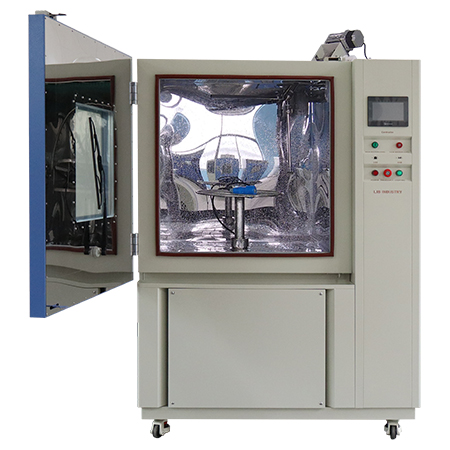
LIB Industry's JIS D 0203 R1 R2 rain test equipment consolidates IPX3, IPX4, IPX5, and IPX6 testing capabilities within unified equipment eliminating multiple apparatus requirements. The versatile configuration accommodates component sizes from compact sensor housings to complete headlamp assemblies through adjustable fixture positioning. Programmable control systems store testing protocols for different IP ratings, enabling rapid changeover between validation procedures without manual reconfiguration. This consolidation reduces laboratory footprint requirements while ensuring consistent environmental conditions across all testing levels.
Precision Engineering and Component Selection
Superior testing reliability stems from premium component integration throughout system architecture. OMRON relays provide switching precision eliminating contact degradation affecting long-term repeatability. Schneider contactors handle pump motor control with thermal overload protection preventing equipment damage during extended operation. Danfoss electromagnetic valves regulate water flow with ±2% accuracy maintaining spray pattern consistency across thousands of test cycles. RKC temperature controllers with ±0.5°C stability ensure climate conditioning repeatability essential for thermal stress validation.
Metrological Accuracy and Calibration Infrastructure
Flow meter technology with digital readouts enables real-time monitoring of water delivery rates, providing immediate alerts when parameters drift outside specification tolerances. Pressure sensors at multiple nozzle positions verify uniform distribution across spray arrays, detecting partial blockages before pattern degradation affects test validity. Turntable speed monitoring with closed-loop feedback maintains 17 rpm rotation regardless of specimen loading variations. All measurement systems include calibration provisions using traceable reference standards, supporting ISO/IEC 17025 laboratory accreditation requirements.
Conclusion
Rain testing provides the empirical validation essential for automotive component IP certification, transforming theoretical design calculations into proven environmental protection. Specialized equipment following JIS D 0203 protocols creates reproducible conditions where components undergo systematic evaluation revealing vulnerabilities before production commitment. The investment in proper testing infrastructure prevents field failures generating warranty costs far exceeding validation expenses. Through rigorous methodology and comprehensive documentation, manufacturers demonstrate regulatory compliance while ensuring passenger safety and product reliability throughout vehicle operational lifespans.
FAQ
How frequently must rain test equipment undergo calibration to maintain certification validity?
Annual calibration represents the industry standard minimum, though high-utilization laboratories may implement quarterly verification schedules. Flow meters, pressure gauges, and turntable speed sensors require documented calibration traceable to national metrology institutes. Water quality testing ensures dissolved solids and pH remain within specification ranges preventing nozzle deposits or specimen contamination affecting results.
Can rain testing predict long-term seal degradation under actual field conditions?
Accelerated testing protocols compress years of environmental exposure into hours through intensified water delivery and thermal cycling. Correlation studies comparing laboratory results with field performance data establish confidence factors. While testing cannot replicate every field variable, systematic validation identifies fundamental design weaknesses and manufacturing defects before extensive field deployment reveals costly failures.
What specimen preparation procedures ensure test results accurately reflect production component performance?
Components must undergo installation exactly replicating vehicle assembly procedures including torque specifications, gasket compression, and electrical connections. Pre-conditioning at temperature extremes followed by ambient stabilization reveals thermal expansion effects on seal integrity. Energizing electrical assemblies during water exposure detects current leakage and short-circuit pathways that unpowered testing overlooks completely.
Partner with LIB Industry for Complete Rain Testing Solutions
LIB Industry delivers turnkey JIS D 0203 R1 R2 rain test equipment solutions engineered specifically for automotive component validation and IP certification programs. As a globally recognized manufacturer and supplier, we provide comprehensive support encompassing equipment specification, installation, calibration, operator training, and ongoing technical assistance. Our ISO 9001 certified production facilities ensure consistent quality backed by CE certification and third-party validation. Contact our automotive testing specialists at ellen@lib-industry.com to discuss your ingress protection testing requirements and discover customized chamber configurations meeting your exact certification protocols.