Salt fog testing improves automotive coating durability by subjecting coated components to an accelerated corrosive atmosphere inside a controlled salt fog test machine. This environment replicates years of real-world exposure - road salt, moisture, and temperature shifts - within days or weeks. Engineers detect adhesion failures, blistering, and substrate corrosion long before a vehicle reaches consumers. By pinpointing coating vulnerabilities early in the development cycle, manufacturers refine formulations, optimize application processes, and validate surface treatments with measurable confidence. The outcome is a vehicle that withstands rust and preserves its visual appeal across diverse climates. Salt fog testing remains among the most dependable accelerated corrosion methods deployed across the global automotive supply chain.
In their laboratory in Mexico, a team using the LIB industry S-150 salt fog test machine experienced smooth, uninterrupted operation over multiple tests. Even when a small saline container leak occurred, the issue was swiftly addressed with LIB’s guidance, allowing testing to continue without delay. The customer praised the chamber’s stable performance and ease of use, confirming that it delivers reliable, real-world results for daily corrosion assessments. Such firsthand experiences demonstrate the chamber’s practical value and the peace of mind it brings to laboratory operations.

What Causes Coating Failure in Automotive Components?
Moisture Infiltration and Osmotic Blistering
Water molecules penetrate microscopic pores in automotive coatings through osmotic pressure. Once moisture reaches the metal substrate, electrochemical reactions initiate corrosion beneath the paint film. This process generates blistering - dome-shaped defects that compromise both protective function and appearance. Vehicles operating in coastal or high-humidity regions face amplified risk, as persistent moisture contact accelerates this degradation mechanism considerably.
Chemical and UV-Induced Degradation
Road de-icing chemicals, acidic rain, and bird droppings attack coating surfaces at a molecular level. Prolonged ultraviolet radiation breaks polymer chains within clear coats, causing chalking and loss of gloss. These combined chemical and photolytic stresses weaken the coating matrix, reducing its capacity to shield underlying metal substrates from environmental aggression over time.
Mechanical Stress and Adhesion Loss
Stone chips, gravel impact, and vibration from road irregularities create micro-fractures in coating layers. These fractures expose bare metal, providing initiation sites for filiform and under-film corrosion. Thermal cycling between extreme heat and freezing temperatures adds expansion-contraction stress, further challenging the bond between coating and substrate throughout a vehicle's service life.
Corrosion Risks for Automotive Bodies, Chassis, and Metal Parts
Body Panel Vulnerability to Environmental Corrosion
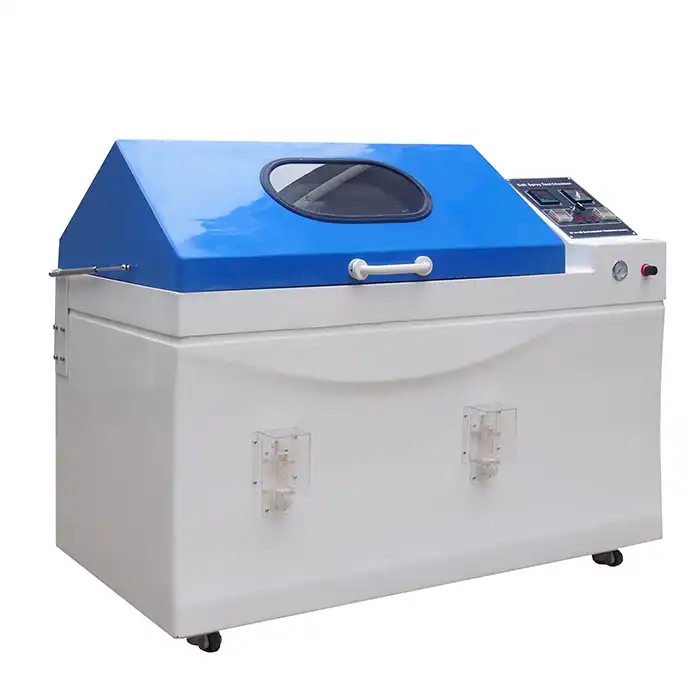
Exterior body panels encounter direct salt spray during winter driving and coastal exposure. Door edges, hood lips, and trunk lids trap moisture in hemmed flanges where drainage is restricted. A salt fog test machine reveals how quickly corrosion propagates in these geometrically complex areas, enabling engineers to specify appropriate coating systems and sealant placement before production begins.
Chassis and Underbody Exposure to Road Salt
The chassis and underbody absorb relentless salt-laden water spray during vehicle operation. Weld seams, suspension mounting points, and brake lines are particularly susceptible because protective coatings often thin during manufacturing. Accelerated salt spray testing quantifies corrosion creep from scribes and edges, guiding improvements in e-coat coverage and underbody wax application for extended durability.
Fasteners, Brackets, and Hidden Cavities
Bolted joints and stamped brackets create crevices where salt solution pools and oxygen gradients develop. Galvanic corrosion intensifies when dissimilar metals - steel bolts in aluminum brackets - contact each other. Corrosion testing in a controlled salt fog machine exposes these hidden failure modes, prompting design changes such as isolation washers or upgraded plating specifications.
Salt Fog Testing Standards in the Automotive Industry
|
Standard |
Scope |
Typical Duration |
Key Feature |
|
ASTM B117 |
Neutral salt spray |
24-5,000 h |
Continuous 5% NaCl fog at 35 °C |
|
ISO 9227 |
NSS, ASS, CASS tests |
Varies by coating type |
Covers neutral, acetic acid, and copper-accelerated methods |
|
SAE J2334 |
Cyclic corrosion |
60-80 cycles |
Combines humidity, salt application, and drying phases |
|
GM 9540P |
Cyclic corrosion |
Varies |
OEM-specific multi-environment cycling |
ASTM B117 and ISO 9227 Protocols
ASTM B117 prescribes continuous exposure to a 5% sodium chloride fog at 35 °C, making it the most widely referenced salt spray method worldwide. ISO 9227 expands upon this baseline by including acetic acid salt spray (ASS) and copper-accelerated acetic acid salt spray (CASS) variants. Automotive OEMs frequently use these protocols as qualification benchmarks for primers, topcoats, and metallic plating finishes.
OEM-Specific Cyclic Corrosion Standards
Major automakers develop proprietary cyclic corrosion tests - such as GM 9540P and SAE J2334 - that alternate between salt application, controlled humidity, and ambient drying stages. These multi-phase cycles approximate outdoor weathering more closely than constant fog exposure alone. By running these programs in a salt fog test machine with programmable temperature and humidity control, laboratories replicate OEM field-corrosion correlation data with high fidelity.
Selecting the Right Standard for Your Application
Coating type, substrate material, and end-use environment dictate which testing protocol delivers the most meaningful results. A zinc-plated chassis fastener requires a different test regime than an exterior clear-coat panel. Consulting the relevant OEM specification and cross-referencing with ASTM or ISO guidelines ensures that your salt spray evaluation genuinely predicts in-service corrosion performance.
Simulating Road Salt and Humid Environmental Conditions
Controlled Temperature and Humidity Cycling
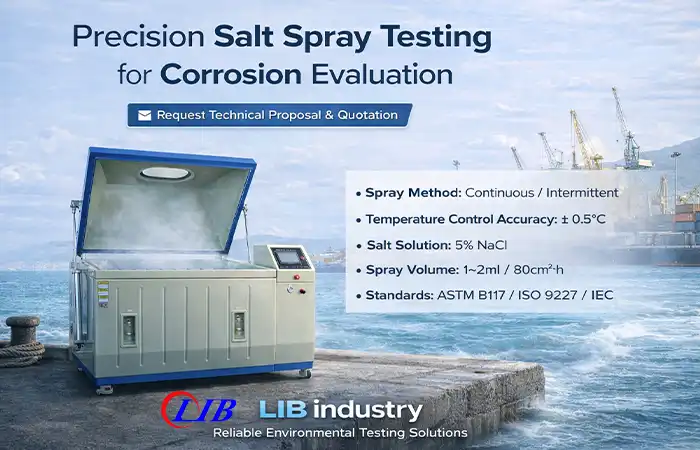
Modern salt fog chambers maintain temperature ranges from ambient to +60 °C with fluctuations as low as ±0.5 °C. Humidity levels between 30% and 98% RH can be programmed to mirror seasonal shifts. This precise environmental regulation allows automotive labs to simulate the transition from wet winter highways to dry summer conditions within a single automated test sequence.
Salt Concentration and Fog Deposition Rates
Standard tests call for a 5% NaCl solution depositing 1-2 ml per 80 cm² per hour across the specimen surface. Saturated air barrels preheat and humidify compressed air before it reaches the spray nozzle, guaranteeing consistent droplet size. Accurate deposition ensures each test coupon receives identical salt loading, eliminating variability that would obscure coating performance differences.
Continuous vs. Periodic Spray Modes
Continuous spray mode, specified by ASTM B117, provides uninterrupted fog exposure for rapid screening. Periodic spray mode alternates fog application with drying or humidity-only phases, replicating the wet-dry cycles vehicles encounter on actual roads. Both modes are configurable in advanced salt fog test machines through PID controllers with multi-stage programming and real-time data logging capabilities.
Evaluating Paint, Powder Coatings, and Surface Treatments
|
Coating Type |
Typical Substrate |
Salt Fog Test Focus |
Common Defect Observed |
|
Electrocoat (e-coat) |
Steel body-in-white |
Edge coverage, throw power |
Creep from scribe |
|
Powder coating |
Aluminum wheels, trim |
Adhesion after humidity |
Blistering, delamination |
|
Hot-dip galvanizing |
Chassis members |
White rust formation |
Zinc oxide buildup |
|
Anodizing |
Aluminum brackets |
Pit density, seal quality |
Pitting corrosion |
Electrocoat and Primer Performance Assessment
Electrocoat forms the foundational anti-corrosion layer on automotive steel bodies. Salt fog exposure evaluates throw power into recesses and creep resistance along scribed lines. Results guide bath chemistry adjustments - pH, voltage, and pigment-to-binder ratios - that directly affect corrosion protection in the most geometrically challenging areas of a vehicle's body structure.
Powder Coating Adhesion and Chip Resistance
Powder coatings applied to wheels, exterior trim, and engine components must retain adhesion after prolonged moisture and salt contact. Cross-hatch adhesion testing performed immediately after salt fog cycling reveals whether the coating-substrate bond degrades under corrosive stress. Data from these evaluations shapes cure-schedule optimization and surface pretreatment selection.
Galvanizing, Anodizing, and Conversion Coatings
Zinc and zinc-alloy galvanizing on chassis parts sacrificially protect steel, yet excessive white rust signals inadequate passivation. Anodized aluminum components require uniform seal quality to resist pit formation. Salt fog testing in a controlled chamber quantifies these degradation mechanisms, supplying objective data for supplier qualification and incoming material inspection programs.
Enhancing Automotive Coating Durability Through Corrosion Testing
Identifying Weak Points Before Mass Production
Running prototype parts through salt fog cycles uncovers localized coating deficiencies - thin spots, pinholes, or contaminated surfaces - that batch inspection methods miss. Catching these weaknesses at the development stage averts costly field recalls and warranty claims. Corrosion test data feeds directly into design-of-experiment matrices that accelerate coating system optimization.
Optimizing Coating Thickness and Application Methods
Salt fog results correlate coating thickness with corrosion creep, enabling engineers to define minimum film-build specifications with precision. Whether adjusting electrostatic spray parameters or modifying dip-coating withdrawal speeds, test data replaces guesswork with quantifiable targets. This data-driven approach reduces material waste while maintaining protection above the threshold demanded by OEM durability standards.
Building Long-Term Consumer Confidence
Vehicles that resist corrosion over a full ownership cycle generate fewer warranty repairs and stronger brand loyalty. Publishing salt fog test hours alongside perforation warranty terms communicates transparent quality assurance to consumers. Rigorous accelerated corrosion validation translates into market differentiation and reduced total cost of ownership for the end user.
Consistent Salt Spray Distribution for Accurate Coating Evaluation - LIB Industry
Spray Uniformity and Precision Nozzle Technology
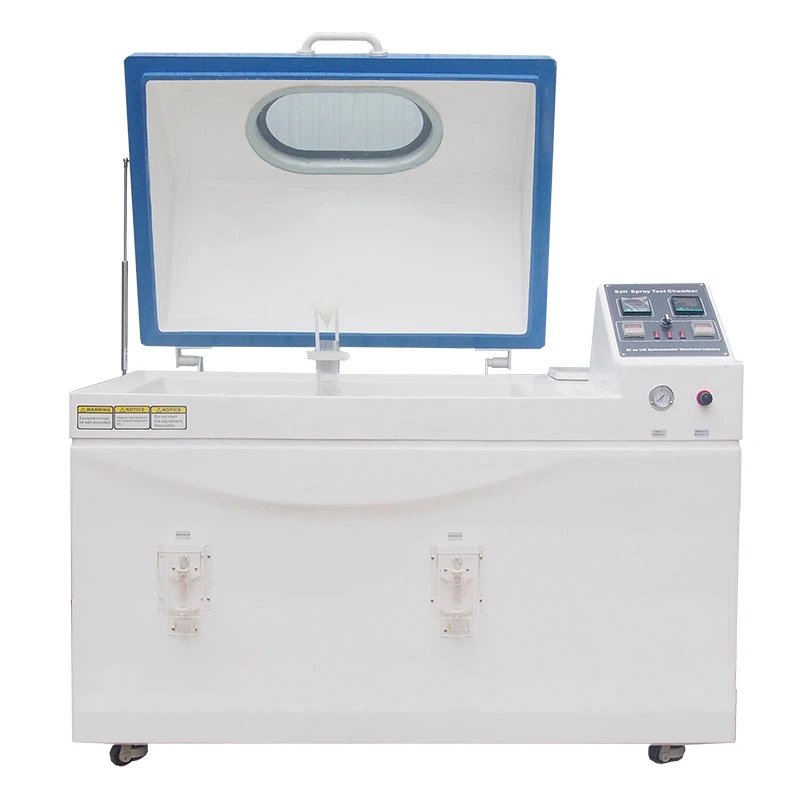
LIB Industry's salt fog test machine employs a dual pressure regulation system controlling air intake and spray pressure simultaneously. Precision quartz glass nozzles prevent crystallization and clogging, distributing fine, evenly dispersed salt particles across all specimen positions. This uniformity ensures each test coupon receives identical environmental exposure, producing repeatable and comparable corrosion data.
Reinforced Fiberglass Construction for Harsh Environments
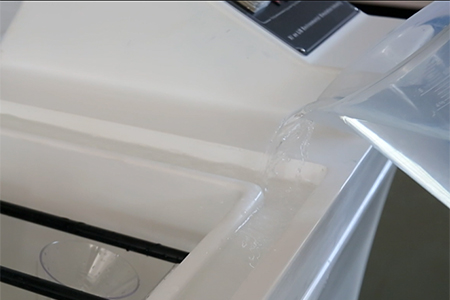
The chamber body is fabricated from glass fiber reinforced plastics with continuous welding that prevents salt water leakage into electrical systems. A water seal design blocks salt mist escape, protecting adjacent laboratory equipment. This structural resilience allows extended continuous operation without degradation of the chamber itself - even under aggressive CASS or acidified salt spray protocols.
Advanced Control, Data Logging, and Customization
 |
 |
|
|
Model |
Internal Dimensions (mm) |
Volume (L) |
|
S-150 |
590 × 470 × 400 |
110 |
|
S-250 |
1000 × 640 × 500 |
320 |
|
S-750 |
1100 × 750 × 500 |
410 |
|
S-010 |
1000 × 1300 × 600 |
780 |
|
S-016 |
900 × 1600 × 720 |
1,030 |
|
S-020 |
1000 × 2000 × 800 |
1,600 |
|
Durable, Leak-Resistant Workspace |
Flexible Sample Rack System |
|
Water-Sealed Lid Design |
Intelligent Controller |
|
Uniform Salt Solution Agitation |
Included Industrial-Grade Salt |
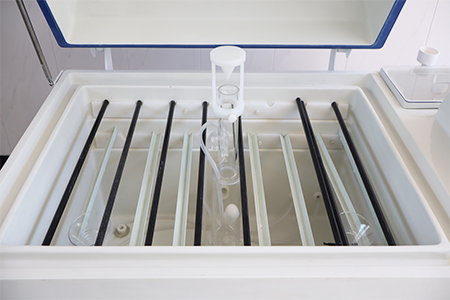
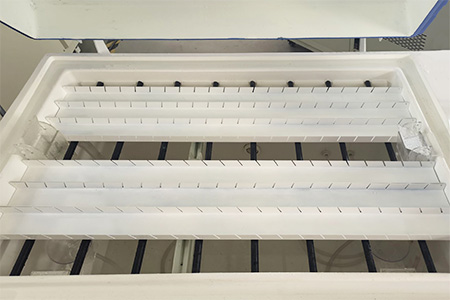
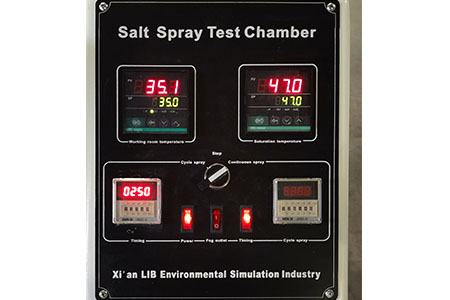
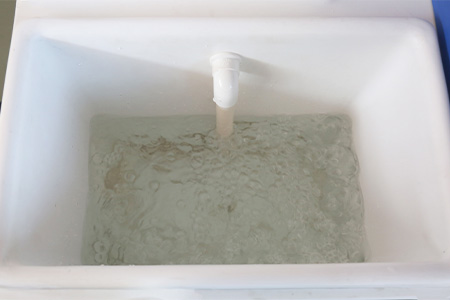
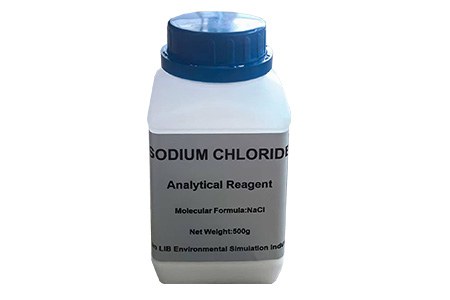
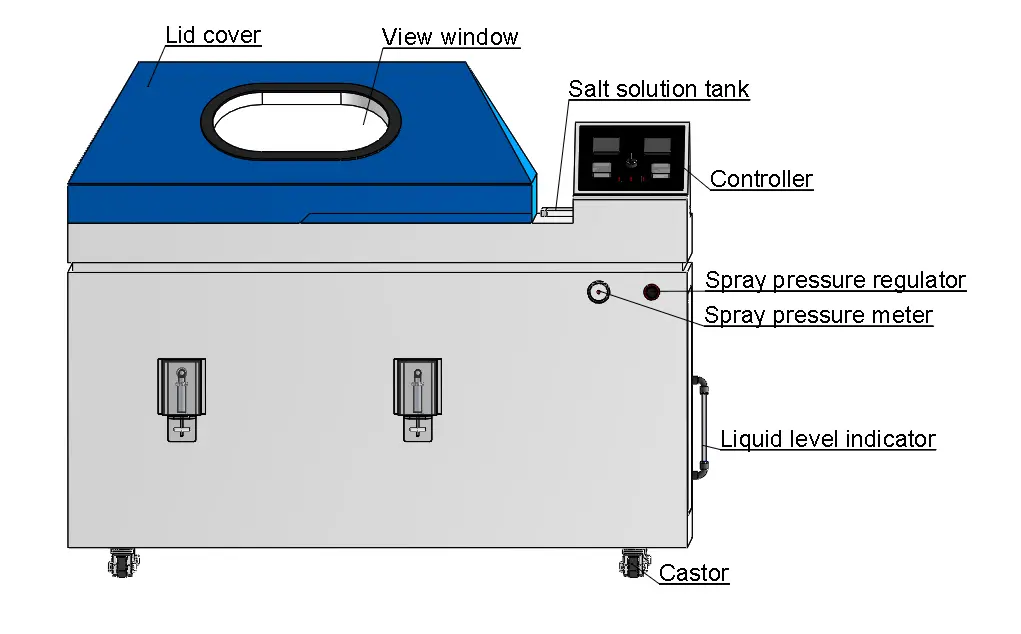
A network-connected PID controller with multi-language touchscreen supports multi-stage programming, real-time data recording, and USB export. Built-in PT100 A-grade sensors monitor temperature within ±0.5 °C fluctuation. Multiple chamber volumes accommodate both small-batch R&D coupon testing and large-scale production validation, while a flexible rack system prevents specimen shadowing during exposure.
Conclusion
Salt fog testing stands as an indispensable pillar of automotive coating development and quality control. By recreating aggressive salt spray, humidity, and temperature conditions inside a salt fog test machine, engineers isolate coating weaknesses, validate surface treatments, and establish film-build specifications grounded in measurable data. Adherence to recognized standards - ASTM B117, ISO 9227, and OEM-specific cyclic protocols - ensures that test results correlate reliably with real-world vehicle durability. Investing in precise, repeatable corrosion testing shortens development timelines, prevents costly field failures, and reinforces the brand reputation that drives long-term commercial success in the competitive automotive market.
FAQ
How long does a typical automotive salt fog test last?
Durations range from 24 hours for rapid screening to over 1,000 hours for full qualification, depending on coating type, substrate, and the applicable OEM or ASTM standard.
Can a salt fog test machine simulate real road conditions?
Advanced chambers combine salt spray with controlled temperature and humidity cycling, closely replicating the wet-dry transitions vehicles encounter on salted winter roads and in coastal climates.
What salt concentration is used in standard automotive salt fog tests?
Most protocols specify a 5% sodium chloride solution by weight, atomized to achieve a deposition rate of 1-2 ml per 80 cm² per hour across specimen surfaces.
Need a dependable salt fog test machine for your automotive coating laboratory? LIB Industry is a professional environmental test chamber manufacturer, supplier, and factory delivering turnkey corrosion testing solutions to clients worldwide. Reach out today at ellen@lib-industry.com to discuss specifications, customization options, and volume requirements tailored to your project.