Thermal Cycling Testing for Automotive Electronic Components
Automotive electronic components operate in one of the most thermally hostile environments imaginable. From frigid winter startups at -40°C to engine compartment temperatures exceeding +150°C, every sensor, control module, and circuit board endures relentless temperature swings throughout its service life. Thermal cycling testing replicates these punishing conditions inside a controlled chamber, subjecting components to programmable ramp rates and precise temperature transitions. This process exposes latent weaknesses - solder joint fatigue, material delamination, connector degradation - long before a vehicle reaches a customer. By leveraging thermal cycling equipment during product validation, automotive manufacturers and their tier-one suppliers ensure that electronic assemblies meet rigorous durability benchmarks and deliver dependable performance across millions of miles.
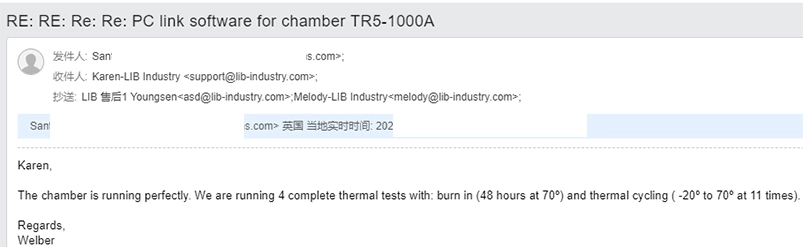
An automotive electronics manufacturer in Italy recently carried out extensive testing using a rapid temperature change chamber to evaluate the durability of electronic modules. During the test, control boards and sensors were exposed to repeated temperature transitions from –50°C to +150°C, replicating the severe thermal shocks that components may encounter in real vehicle environments. The system maintained stable operation throughout several days of continuous cycling, delivering accurate temperature transitions without fluctuation or interruption. This reliable performance enabled engineers to efficiently detect components vulnerable to thermal fatigue, significantly shortening the validation process and supporting higher standards of product quality.
What Thermal Challenges Do Automotive Electronics Face?
Extreme Ambient Temperature Swings
Vehicles operate across the globe - from Arctic tundra to equatorial deserts. Under-hood electronics may experience ambient air temperatures from -40°C during polar cold snaps to well above +85°C in sun-soaked engine bays. Each ignition cycle introduces a thermal transient, and seasonal shifts compound cumulative stress over years of ownership. Components must tolerate these swings without parametric drift or catastrophic failure.
Heat Generation from Power Electronics
Modern vehicles incorporate high-power electronic modules for engine management, electric drive inverters, and battery management systems. These devices generate substantial internal heat during operation. Combined with external ambient temperatures, localized junction temperatures on semiconductor dies can spike far beyond the surrounding air temperature, creating steep thermal gradients within compact assemblies.
Moisture Ingress Amplified by Temperature Variation
Rapid cooling draws humid air into enclosures through pressure differentials - a phenomenon known as thermal breathing. Condensed moisture attacks metallization layers, promotes dendritic growth between conductors, and accelerates corrosion at terminal interfaces. Thermal cycling testing identifies packaging vulnerabilities by forcing repeated expansion-contraction cycles that stress seals, gaskets, and conformal coatings under realistic moisture-laden scenarios.
Temperature Cycling Effects on Sensors, ECUs, and Control Modules

Sensor Drift and Calibration Instability
Temperature sensors, pressure transducers, and MEMS accelerometers rely on stable material properties to maintain accurate output. Repeated thermal excursions induce micro-structural changes in piezoresistive elements and thin-film resistors, causing progressive calibration drift. Cycling tests quantify this drift rate, enabling engineers to establish recalibration intervals or select more thermally robust sensing materials.
ECU Substrate Warpage and Component Shift
Electronic control units (ECUs) employ multilayer PCBs populated with hundreds of passive and active components. Differential CTE between ceramic capacitors, silicon chips, and organic substrates causes board warpage during temperature ramps. Over many cycles, this warpage shifts component positions enough to strain solder joints beyond their fatigue endurance limit, culminating in intermittent electrical opens.
Connector and Terminal Fretting Corrosion
Automotive connectors endure vibration and thermal expansion simultaneously. Temperature changes cause pin-socket pairs to undergo micro-motion - a mechanism that wears through protective plating and exposes base metals to oxidation. Thermal cycling testing, particularly when paired with vibration inputs, reveals the onset cycle of fretting corrosion and guides terminal plating thickness specifications.
Table 1: Common Thermal Cycling Failure Modes in Automotive Electronics
|
Component |
Failure Mode |
Root Cause |
Detection Approach |
|
MEMS Sensor |
Calibration drift |
Micro-structural change |
Output comparison pre/post test |
|
ECU PCB |
Solder joint crack |
CTE mismatch, board warpage |
X-ray, cross-section analysis |
|
Wire Harness Connector |
Fretting corrosion |
Thermal micro-motion |
Contact resistance monitoring |
|
Power Module |
Die-attach delamination |
Thermal fatigue at bond line |
Scanning acoustic microscopy |
|
LED Headlamp |
Lumen depreciation |
Phosphor degradation |
Photometric measurement |
Automotive Industry Standards for Thermal Cycling Testing
AEC-Q100 and AEC-Q200 Qualification Frameworks
The Automotive Electronics Council publishes the AEC-Q100 standard for integrated circuits and AEC-Q200 for passive components. Both prescribe thermal cycling conditions - typically -40°C to +125°C or -65°C to +150°C - conducted in a thermal cycling test chamber, along with mandatory cycle counts ranging from 500 to 1,000. Meeting these benchmarks is a prerequisite for any semiconductor or passive device intended for automotive deployment.
ISO 16750 Environmental Testing Provisions
ISO 16750 addresses the environmental conditions and testing procedures for electrical and electronic equipment installed in road vehicles. Part 4 of this standard specifies climatic loads, including temperature cycling profiles tailored to specific mounting locations: passenger compartment, engine bay, and exterior-mounted zones. Each location carries distinct temperature boundaries and ramp rate expectations.
OEM-Specific Validation Protocols
Beyond industry-wide standards, major automakers - BMW, Toyota, General Motors, Volkswagen - maintain proprietary test specifications that often exceed baseline AEC or ISO requirements. These protocols may demand extended cycle counts, wider temperature ranges, or faster transition rates to address application-specific risk profiles. Tier-one suppliers must adapt their thermal cycling test programs to satisfy multiple OEM requirements concurrently.
Table 2: Temperature Cycling Requirements by Automotive Standard
|
Standard |
Temperature Range |
Typical Cycle Count |
Ramp Rate |
Dwell Time |
|
AEC-Q100 Grade 1 |
-40°C to +125°C |
1,000 |
≥ 10°C/min |
10-15 min |
|
AEC-Q100 Grade 0 |
-40°C to +150°C |
1,000 |
≥ 10°C/min |
10-15 min |
|
ISO 16750-4 (Engine) |
-40°C to +125°C |
1,000 |
Per profile |
30 min |
|
ISO 16750-4 (Cabin) |
-40°C to +85°C |
500 |
Per profile |
30 min |
|
OEM-Specific |
Varies (up to -65°C to +150°C) |
1,000-2,000 |
5-15°C/min |
10-30 min |
|
|
||||
Simulation of Engine Compartment and Outdoor Temperature Variations
Recreating Under-Hood Thermal Profiles
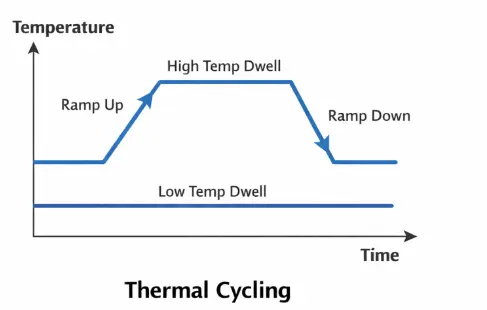
The engine compartment presents a uniquely aggressive thermal environment. Temperatures can surge from cold soak at -40°C to above +140°C within minutes of engine startup. Thermal cycling equipment must reproduce these rapid transitions with controlled ramp rates - typically 5°C/min to 15°C/min - while maintaining temperature uniformity across the test volume to ensure every specimen receives equivalent exposure.
Replicating Diurnal and Seasonal Outdoor Cycles
Exterior-mounted electronics - rain/light sensors, camera modules, antenna amplifiers - face day-night temperature oscillations and seasonal extremes. A desert-installed camera might cycle between +60°C midday and +5°C overnight, accumulating thousands of transitions annually. Programmable chambers simulate years of such diurnal cycling within weeks, compressing field-equivalent stress into laboratory-manageable timeframes.
Cold Start and Hot Shutdown Transients
The most severe thermal transients occur during cold start events in winter and during heat soak after engine shutdown in summer. These asymmetric profiles - where heating rates differ from cooling rates - demand chambers with independently controllable ramp speeds. Capturing these realistic asymmetric transients in test programs provides a more faithful representation of actual in-vehicle thermal loading.
Reliability Testing for Solder Joints and Electronic Connections
Lead-Free Solder Fatigue Characterization
The automotive industry's transition to lead-free solder alloys (SAC305, SAC405) introduced materials with different fatigue characteristics compared to traditional tin-lead solder. Lead-free joints exhibit higher yield strength but lower ductility, making them more susceptible to crack propagation under repetitive strain. Thermal cycling test equipment applies the repetitive strain cycles needed to map Coffin-Manson fatigue curves for each alloy composition.
Wire Bond and Die-Attach Integrity Assessment
Power modules and high-reliability ICs rely on wire bonds (aluminum or gold) and die-attach materials (solder paste, sintered silver, adhesive) to maintain electrical and thermal paths. Cyclic temperature excursions fatigue wire heel bonds and degrade die-attach interfaces through void growth and delamination. Post-test ultrasonic inspection reveals the progression of damage at these buried interfaces.
Crimp and Press-Fit Connection Endurance
Automotive electronics increasingly use press-fit and crimped connections to eliminate soldering in high-vibration zones. Thermal expansion and contraction alter the interference fit between pin and plated through-hole, potentially relaxing contact force below the minimum threshold for reliable current transfer. Cycling tests combined with contact resistance monitoring expose the cycle count at which press-fit retention force drops to unacceptable levels.
Improving Durability of Automotive Electronics Through Thermal Cycling
Material Selection Driven by Test Data
Thermal cycling test results guide material choices at every level of the assembly. When a particular FR-4 laminate delaminates at 700 cycles, engineers can evaluate higher-Tg alternatives or polyimide substrates and re-test. Solder alloy selection, conformal coating chemistry, and encapsulant formulation all benefit from iterative cycling data that reveals performance boundaries under automotive-grade conditions.
Design Optimization Through Failure Analysis
Each failed specimen provides a wealth of diagnostic information. Cross-sectional metallography, scanning electron microscopy, and energy-dispersive X-ray spectroscopy pinpoint the failure location, mechanism, and contributing factors. Designers use these insights to modify pad geometries, optimize via structures, refine copper weight, or reposition high-stress components away from board edges and flex zones.
Production Screening and Lot Acceptance Testing
Beyond design qualification, thermal cycling serves as a production-level screening tool. Sampling units from each production lot undergo abbreviated cycle counts to verify that manufacturing process variations - paste print thickness, reflow profile, wave solder parameters - have not compromised baseline reliability. This ongoing surveillance catches process excursions before defective batches reach assembly lines.
Fast Ramp Rates for Automotive Grade Validation - LIB Industry
|
|
  |
||||


|
|
|
|
| Robust Workroom | Cable Hole | Temperature and Humidity Sensor |


Controllable Ramp Rates Up to 15°C Per Minute
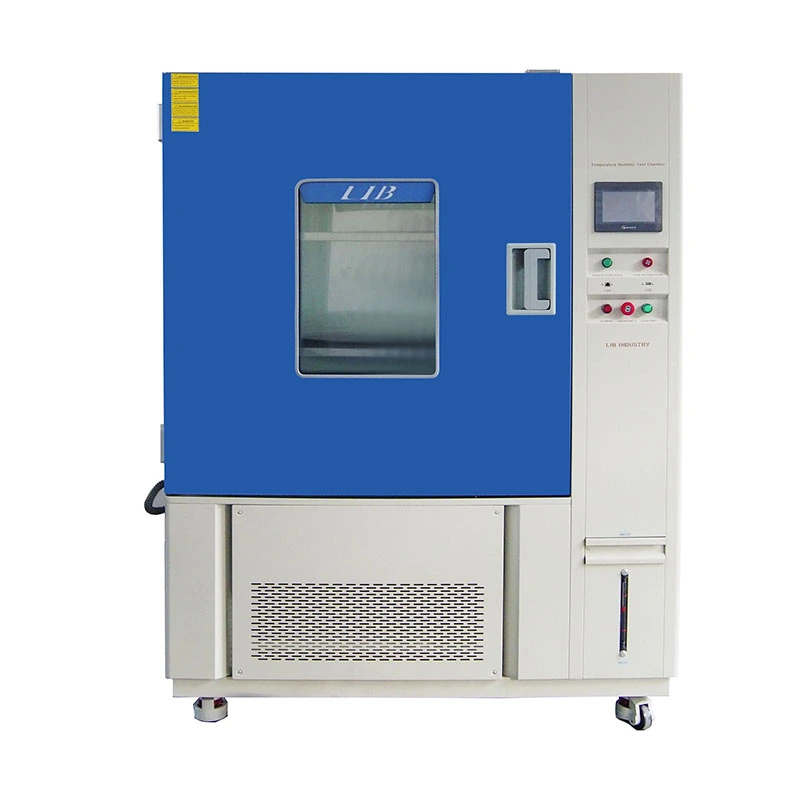
LIB Industry thermal cycling equipment delivers adjustable temperature ramp rates of 5°C/min, 10°C/min, and 15°C/min - matching and exceeding the transition speed requirements stipulated by AEC-Q100 and ISO 16750. The average ramp rate of 10°C/min ensures that automotive-grade components experience the stress intensity necessary to uncover early-life failures during qualification campaigns.
Chamber Volume Options for Diverse Specimen Sizes
LIB offers five standard models - TR5-100, TR5-225, TR5-500, TR5-800, and TR5-1000 - spanning 100L to 1,000L interior volumes. Custom configurations extend up to 3,000L for testing oversized assemblies such as complete instrument clusters, battery management system enclosures, or full wiring harness segments. A French TECUMSEH compressor powers the mechanical compression refrigeration system with environmentally friendly refrigerant.
Table 3: LIB Industry Thermal Cycling Equipment Specifications
|
Specification |
TR5-100 |
TR5-225 |
TR5-500 |
TR5-800 |
TR5-1000 |
|
Internal Dimensions (mm) |
400×500×500 |
500×600×750 |
700×800×900 |
800×1000×1000 |
1000×1000×1000 |
|
Interior Volume |
100 L |
225 L |
500 L |
800 L |
1,000 L |
|
Temperature Range |
-70°C to +150°C |
-70°C to +150°C |
-70°C to +150°C |
-70°C to +150°C |
-70°C to +150°C |
|
Temperature Fluctuation |
±0.5°C |
±0.5°C |
±0.5°C |
±0.5°C |
±0.5°C |
|
Temperature Deviation |
±2.0°C |
±2.0°C |
±2.0°C |
±2.0°C |
±2.0°C |
Advanced Control and Safety Architecture
Each thermal cycling equipment features a programmable color LCD touch screen controller with Ethernet connectivity and PC Link capability, allowing engineers to build complex multi-step profiles, export logged data via USB, and integrate with laboratory information management systems. Safety provisions - over-temperature protection, over-current protection, refrigerant high-pressure protection, and earth leakage protection - safeguard both operators and specimens. An explosion-proof door, smoke detector with buzzer, and water spray fire suppression system provide additional layers of protection during unattended overnight runs.
Conclusion
Automotive electronic components face relentless thermal stress from the moment a vehicle leaves the factory until its end of service life. Thermal cycling testing compresses years of temperature-induced fatigue into controlled laboratory programs, revealing solder joint cracks, delamination, connector degradation, and material drift well before these defects threaten vehicle safety or customer satisfaction. Standards like AEC-Q100 and ISO 16750 establish baseline rigor, while OEM-specific protocols push boundaries even further. Investing in precise, fast-ramp thermal cycling equipment empowers manufacturers and suppliers to validate designs, screen production lots, and deliver electronic assemblies that withstand the full severity of real-world automotive environments.
FAQ
What temperature ramp rate is needed for automotive thermal cycling tests?
Automotive standards like AEC-Q100 typically require ramp rates of at least 10°C per minute. LIB Industry equipment offers controllable rates of 5°C/min, 10°C/min, and 15°C/min to meet diverse qualification profiles.
How many thermal cycles are required for automotive component qualification?
Most automotive qualification programs specify between 500 and 2,000 thermal cycles depending on the reliability grade and mounting location. Higher-grade components destined for engine compartments often require 1,000 or more cycles.
Can thermal cycling equipment simulate both engine bay and cabin conditions?
Yes. Programmable chambers allow engineers to set distinct temperature ranges - such as -40°C to +125°C for engine bays or -40°C to +85°C for cabin electronics - with adjustable dwell times and ramp rates for each profile.
Need a reliable thermal cycling equipment manufacturer and supplier for your automotive testing program? LIB Industry delivers turn-key environmental testing solutions - from design and production to installation and training. Reach out at ellen@lib-industry.com to discuss your project specifications.