Salt Fog Corrosion Testing for Construction Materials
Salt fog corrosion testing exposes construction materials - structural steel, protective coatings, fasteners, and galvanized surfaces - to accelerated saline environments that replicate years of atmospheric degradation within days. This method allows engineers, architects, and quality teams to predict how metals and surface treatments will behave in coastal zones, marine-adjacent infrastructure, and regions where de-icing salts are prevalent. A salt fog test machine creates precisely controlled conditions of temperature, humidity, and atomized saline solution, enabling repeatable evaluation of corrosion resistance across diverse material systems. The resulting data drives informed decisions on material selection, coating specification, and maintenance scheduling - reducing lifecycle costs and preventing premature structural failure in buildings, bridges, and civil infrastructure worldwide.
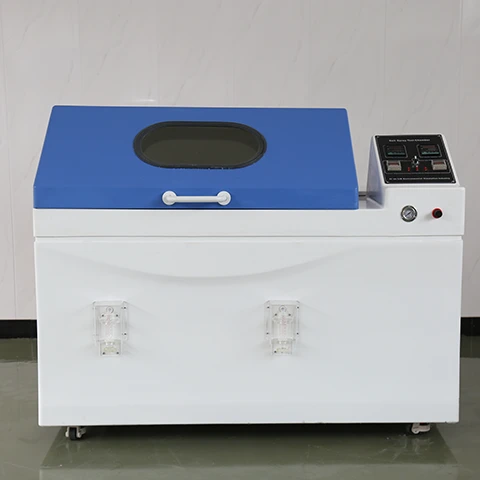
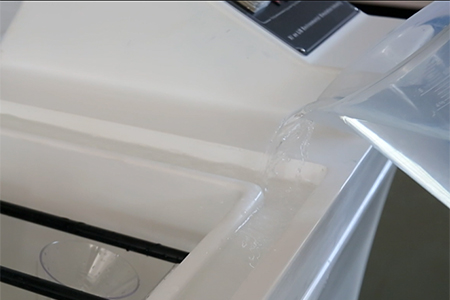
A Mexican customer shared their hands-on experience with the LIB S-150 Salt Spray Chamber. They praised its stable performance during everyday testing and noted that even a small saline spill was swiftly resolved. With the clear maintenance instructions, the team could carry out preventive care confidently. Their feedback highlights the chamber’s reliability and LIB’s commitment to responsive technical assistance

Why Construction Materials Require Corrosion Resistance Testing?
The Financial Toll of Untested Materials
Corrosion-related damage costs the global construction sector billions of dollars annually. Premature rusting of rebar, cladding, and structural connections leads to unplanned repairs, project delays, and liability disputes. Laboratory corrosion testing before deployment catches vulnerabilities that visual inspection and theoretical models cannot predict, safeguarding both capital investment and public safety.
Regulatory and Code Compliance Demands
Building codes in many jurisdictions mandate minimum corrosion resistance for load-bearing metalwork and exterior cladding. Standards such as ASTM B117, ISO 9227, and JIS Z 2371 prescribe salt spray test procedures that materials must pass before approval. Running these protocols on calibrated equipment generates compliance documentation acceptable to regulatory authorities and project specifiers.
Environmental Exposure Variability
A coastal high-rise faces salt-laden wind gusts, while an inland bridge endures seasonal de-icing chemical runoff. Each environment imposes a distinct corrosive load. Accelerated salt fog testing compresses decades of field exposure into controlled laboratory cycles, letting engineers compare material candidates against the specific conditions their project will encounter - without waiting years for real-world data.
Corrosion Risks for Structural Steel and Metal Building Components
Atmospheric Corrosion Mechanisms
Structural steel corrodes when moisture, oxygen, and chloride ions converge on its surface. Chlorides - abundant in marine aerosols and road salt - penetrate passive oxide films, initiating pitting that propagates beneath protective layers. Atmospheric corrosion rates climb sharply within 2 km of coastlines, making salt fog evaluation essential for any project sited near the ocean.
Fastener and Connection Degradation
Bolts, rivets, and weld joints represent concentrated stress points where corrosion-induced material loss has outsized structural consequences. Galvanic coupling between dissimilar metals at connections - stainless steel bolts in carbon steel flanges, for example - accelerates localized attack. Salt fog testing of assembled connection specimens reveals galvanic corrosion rates and validates the effectiveness of isolation washers or barrier coatings.
Embedded Steel in Concrete Structures
Reinforcing bar embedded in concrete relies on the high pH of the surrounding cement matrix for passivation. Chloride ingress from marine splash or de-icing agents breaks down this passive layer, triggering rebar corrosion and expansive rust formation that cracks the concrete cover. Accelerated salt fog tests on concrete-steel composite specimens help quantify chloride threshold concentrations and evaluate corrosion-inhibiting admixtures.
|
Corrosivity Category |
Environment Description |
Typical Steel Corrosion Rate (µm/year) |
|
C1 - Very Low |
Heated interiors, dry climates |
≤ 1.3 |
|
C2 - Low |
Rural areas, low pollution |
1.3 - 25 |
|
C3 - Medium |
Urban and mild coastal zones |
25 - 50 |
|
C4 - High |
Industrial and moderate coastal |
50 - 80 |
|
C5 - Very High |
Harsh marine and industrial |
80 - 200 |
|
CX - Extreme |
Offshore, tropical coastal |
> 200 |
Salt Fog Test Machines for Simulating Harsh Outdoor Environments
Precision-Controlled Saline Atomization
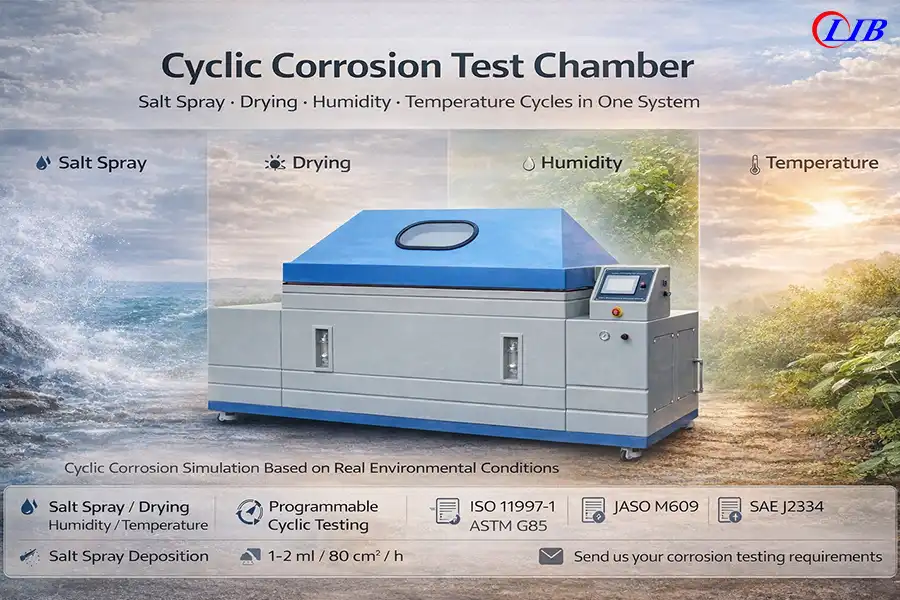
A salt fog machine atomizes a sodium chloride solution - typically 5% concentration at neutral pH - into a fine mist that envelops test specimens uniformly. Spray tower height and nozzle pressure are adjustable to meet different standard requirements, while fog deposition rates of 1-2 ml/80 cm²·h ensure consistent chloride loading across all rack positions. Quartz glass nozzles resist crystallization and clogging, maintaining droplet size consistency throughout extended campaigns.
Temperature and Humidity Regulation
Corrosion kinetics depend heavily on temperature and surface wetness. Chambers maintain controlled air temperatures - ambient to +60°C or up to +90°C in advanced models - with fluctuation held within ±0.5°C. Humidity levels between 30% and 98% RH can be programmed to alternate between salt spray, condensation, and drying phases, replicating the wet-dry cycling that drives real-world corrosion far more aggressively than constant immersion.
Cyclic Corrosion Test Capability
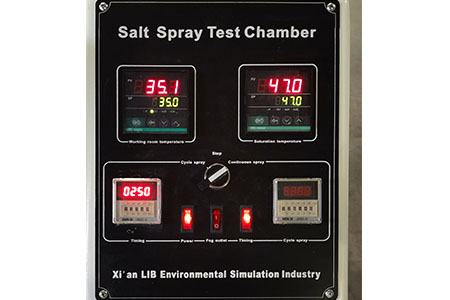
Modern salt fog testing extends beyond continuous neutral spray. Cyclic protocols - such as those specified in ASTM G85, GM 9540P, and SAE J2334 - alternate between salt fog, humid dwelling, and ambient drying stages. Chambers equipped with programmable PID controllers and multi-stage profile storage execute these complex sequences automatically, producing corrosion morphologies that closely mirror field observations.
Testing Protective Coatings for Bridges, Railings, and Infrastructure
Organic Coating Adhesion and Blister Resistance
Epoxy, polyurethane, and alkyd paint systems applied to bridge girders and railings serve as the primary corrosion barrier. Salt fog exposure causes osmotic blistering where coating adhesion is weak, and undercutting at scribe marks reveals how aggressively corrosion creeps beneath the film. Testing coated panels per ASTM D1654 provides a numerical rating of creepage and blistering that coating manufacturers and specifiers use to qualify systems.
Powder Coatings on Aluminum Curtain Walls
Architectural aluminum cladding and curtain wall extrusions receive PVDF or polyester powder coatings that must resist chalking, fading, and filiform corrosion. Salt fog chambers allow quality teams to evaluate coating thickness, cure quality, and pretreatment effectiveness on production samples, catching process deviations before panels reach the job site.
Duplex Coating Systems
Many infrastructure projects specify duplex systems - hot-dip galvanizing followed by a topcoat - for maximum service life. Salt fog testing quantifies the synergistic protection these layered systems provide, measuring time to red rust at scribed areas and establishing maintenance repainting intervals. Data from these tests informs life-cycle cost analyses that guide asset management decisions.
|
Standard |
Test Type |
Typical Duration |
Application Focus |
|
ASTM B117 |
Continuous neutral salt spray |
24-5000 h |
General metal coatings |
|
ISO 9227 (NSS) |
Neutral salt spray |
24-2000 h |
International baseline |
|
ASTM G85 Annex A5 |
Cyclic acidified salt fog |
Varies |
Automotive & infrastructure |
|
ASTM D1654 |
Evaluation of scribed coatings |
Post-exposure |
Coating creepage rating |
|
ISO 12944-6 |
Protective paint systems - lab tests |
Up to 1440 h |
Steel structures (bridges, tanks) |
Evaluation of Galvanized Steel and Treated Metal Surfaces
Hot-Dip Galvanizing Thickness Verification
Hot-dip galvanized structural members rely on a zinc coating that sacrificially protects the underlying steel. Coating mass - expressed in g/m² - directly correlates with service life. Salt fog testing verifies that the zinc layer meets the minimum thickness specified by ASTM A123 or ISO 1461 and reveals localized thin spots caused by drainage issues during the galvanizing process.
Zinc-Aluminum-Magnesium (ZAM) Alloy Coatings
Newer ZAM-coated steel sheet products offer enhanced corrosion protection compared to traditional galvanizing. Salt fog chambers provide a controlled environment to benchmark ZAM performance against conventional zinc coatings, generating comparative time-to-red-rust data that supports material substitution decisions on roofing, decking, and structural framing.
Phosphate and Chromate Conversion Treatments
Conversion coatings applied to steel and aluminum substrates improve paint adhesion and provide mild standalone corrosion resistance. Salt fog testing measures the hours of neutral spray a conversion-coated panel withstands before white rust (zinc corrosion products) or red rust appears, enabling surface treatment suppliers to optimize bath chemistry and process parameters.
Improving Long-Term Durability of Construction Materials Through Testing
Accelerated Aging Correlation
Correlating salt fog test hours to expected field service years requires project-specific calibration - accounting for chloride deposition rate, time of wetness, temperature, and UV exposure at the installation site. Laboratories that maintain historical correlation data can translate chamber results into reliable service-life predictions, strengthening warranty commitments and maintenance planning.
Material Selection Optimization
Comparing candidate alloys, coating systems, and sealant formulations under identical salt fog conditions eliminates guesswork from the specification process. Engineers can rank options by time-to-failure metrics, enabling evidence-based material selection that balances performance, cost, and availability for each project context.
Quality Assurance in Production
Ongoing salt fog testing of production samples - not just prototype coupons - catches batch-to-batch variability in coating thickness, alloy composition, and surface preparation. Integrating salt fog chambers into a factory quality assurance workflow ensures that every shipment meets the corrosion resistance benchmarks established during the qualification phase.
Robust Construction for Long-Term, Reliable Testing Cycles - LIB Industry
 |
 |
|
|
Model |
Internal Dimensions (mm) |
Volume (L) |
|
S-150 |
590 × 470 × 400 |
110 |
|
S-250 |
1000 × 640 × 500 |
320 |
|
S-750 |
1100 × 750 × 500 |
410 |
|
S-010 |
1000 × 1300 × 600 |
780 |
|
S-016 |
900 × 1600 × 720 |
1,030 |
|
S-020 |
1000 × 2000 × 800 |
1,600 |
|
Durable, Leak-Resistant Workspace |
Flexible Sample Rack System |
|
Water-Sealed Lid Design |
Intelligent Controller |
|
Uniform Salt Solution Agitation |
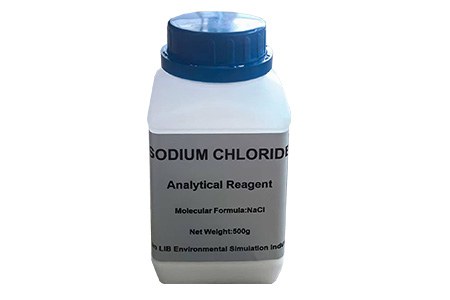
Included Industrial-Grade Salt |
Fiberglass-Reinforced Chamber Body
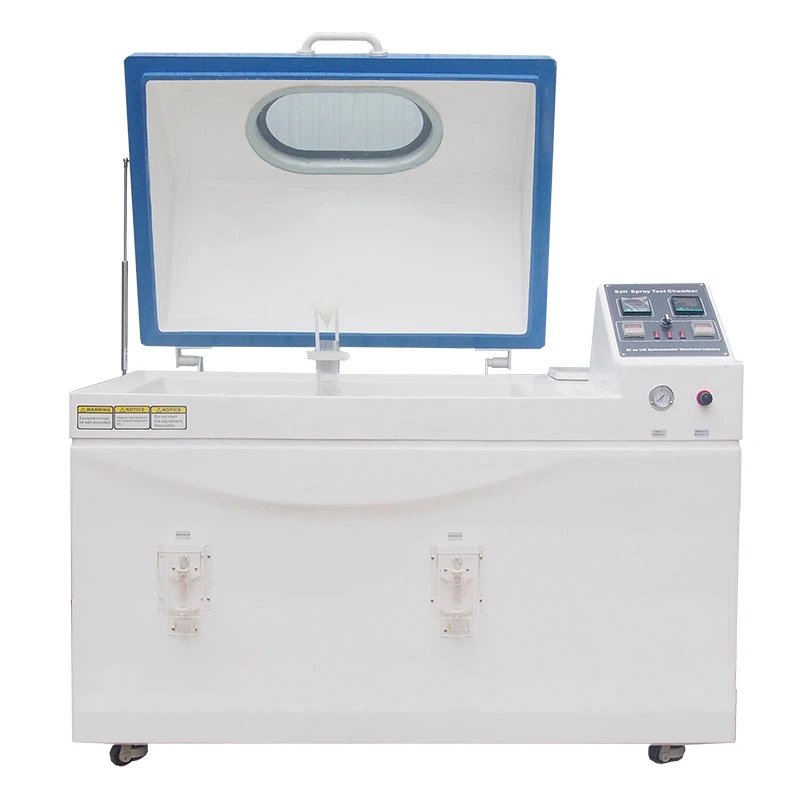
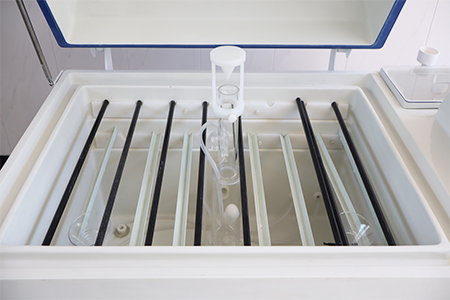
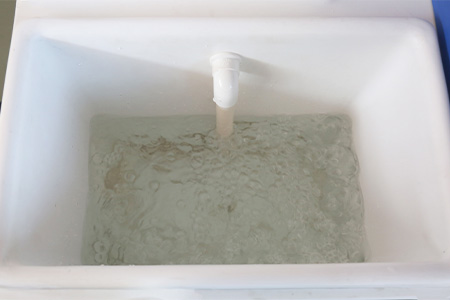
LIB Industry's salt fog test machines are constructed from glass fiber reinforced plastics, inherently immune to the saline environment they generate. Seamless welding prevents electrolyte leakage into electrical compartments, while the water-seal lid design blocks mist escape and protects surrounding laboratory equipment from corrosive fallout.
Automated Brine Management
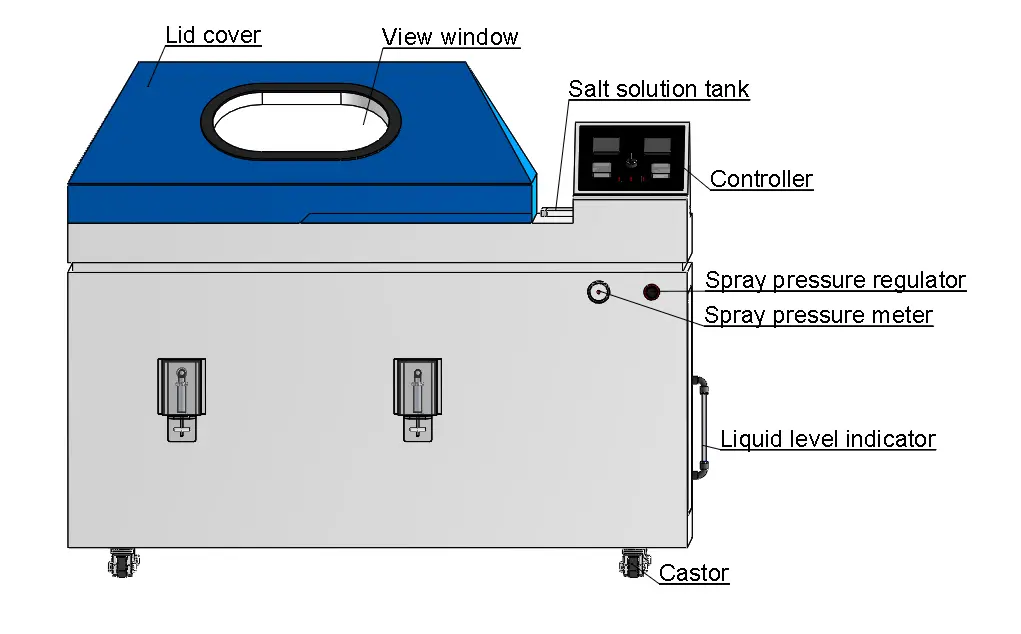
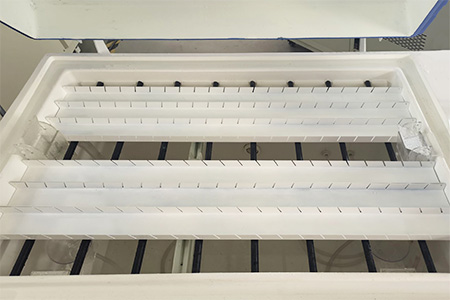
A built-in salt solution tank paired with an external reservoir and brine mixing system maintains uniform solution concentration throughout prolonged test campaigns. Automated salt water preparation and filtration reduce contamination risks, and the clear pulse cover with pneumatic support arms prevents operator exposure during specimen loading and retrieval.
Scalable Capacity and Custom Engineering
Standard models range from 110L to 1600L, accommodating everything from small coupon arrays to full-scale structural connection assemblies. LIB Industry's custom R&D capability allows chamber dimensions, rack configurations, and control features to be tailored to unique project requirements - ensuring that the equipment fits the test, not the other way around.
Conclusion
Salt fog corrosion testing delivers measurable, repeatable insights into how construction materials withstand saline and atmospheric degradation. From structural steel and galvanized decking to powder-coated curtain walls and duplex-protected bridge girders, accelerated salt spray evaluation compresses years of field exposure into manageable laboratory timelines. Reliable test data empowers engineers to select optimal materials, validate coating systems, and satisfy regulatory requirements with confidence. Investing in a well-engineered salt fog test machine transforms corrosion risk management from reactive guesswork into a proactive, data-driven discipline - protecting infrastructure investments and the communities that depend on them.
FAQ
How long does a typical salt fog corrosion test last for construction coatings?
Continuous neutral salt spray tests per ASTM B117 or ISO 9227 commonly run from 500 to 2000 hours for construction coatings, though demanding infrastructure specifications may extend the duration to 5000 hours.
Can a salt fog test machine run cyclic corrosion protocols?
Yes. Chambers equipped with programmable PID controllers alternate between salt spray, humidity dwelling, and drying phases - executing multi-stage cyclic protocols like ASTM G85 and SAE J2334 automatically without manual intervention.
What chamber size is suitable for testing large structural steel specimens?
Models with 780L to 1600L interior volumes - such as LIB Industry's S-010 through S-020 - accommodate oversized coupons and assembled connection specimens while maintaining uniform salt fog distribution across all rack positions.
Looking for a dependable salt fog test machine for your laboratory? LIB Industry is a professional salt fog test machine manufacturer and supplier offering turnkey solutions - from design and production through installation and training. Reach out at ellen@lib-industry.com to discuss your specifications and receive a tailored proposal.