Thermal Cycling Tests for Battery Performance and Safety
Thermal cycling tests subject batteries to repeated temperature fluctuations - ranging from extreme cold to elevated heat - to evaluate how cells, modules, and packs respond to environmental stress. These tests reveal critical data about capacity fade, internal resistance growth, seal integrity, and structural durability. As batteries power everything from electric vehicles to aerospace systems, validating their resilience under rapid temperature transitions has become indispensable. Thermal cycling equipment enables engineers to replicate real-world temperature profiles in a controlled laboratory setting, exposing weaknesses that might otherwise remain hidden until field deployment. This blog explores how thermal cycling tests safeguard battery performance, what specific failure modes they uncover, and why purpose-built test chambers are essential for accurate, repeatable results.
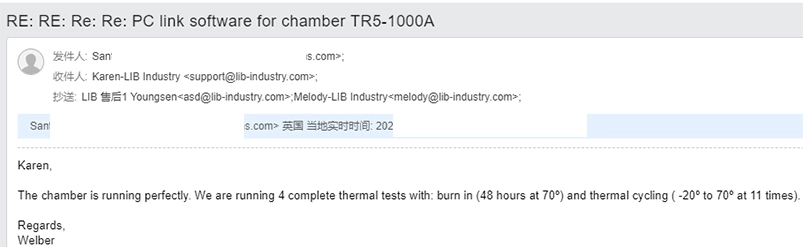
An automotive electronics manufacturer in Italy shared their experience with the rapid temperature change chamber: "The chamber is running perfectly. We are running 4 complete thermal tests with: burn in (48 hours at 70) and thermal cycling (–20° to 70 at 11 times)." The chamber’s stable operation throughout these rigorous tests allowed the team to carry out extended burn-in and repeated thermal cycling with confidence, ensuring accurate temperature transitions and helping them efficiently evaluate the durability of electronic modules under real-world thermal conditions.

How Do Temperature Changes Affect Battery Performance?
Electrochemical Reactions Under Temperature Stress
Battery electrochemistry is inherently temperature-sensitive. At low temperatures, lithium-ion diffusion slows, increasing internal resistance and reducing discharge capacity. Elevated temperatures accelerate parasitic side reactions at the electrode-electrolyte interface, consuming active lithium and degrading the solid electrolyte interphase (SEI) layer. Repeated swings between hot and cold intensify these mechanisms, compounding capacity loss over hundreds of cycles. Understanding these electrochemical shifts is essential when designing thermal cycling test protocols.
Electrolyte Viscosity and Ion Transport Shifts
Electrolyte viscosity rises sharply below 0°C, restricting ion mobility and diminishing rate capability. Conversely, high temperatures reduce viscosity but promote electrolyte decomposition. Thermal cycling alternates between these extremes, stressing the electrolyte formulation and revealing composition weaknesses. Test data from these cycles helps engineers select electrolyte additives and solvent blends that maintain stable ion transport across a broad operating window.
Capacity Retention and Internal Resistance Trends
Monitoring capacity retention and resistance evolution during thermal cycling provides a quantifiable measure of battery health. A well-designed test program tracks these parameters at defined intervals, generating degradation curves that predict field longevity. Chambers with precise temperature control and programmable ramp rates - such as 5°C/min or 10°C/min - ensure that every test cycle mirrors the intended thermal profile without deviation.
|
Temperature Range |
Typical Effect on Battery |
Key Concern |
|
-40°C to -20°C |
Elevated internal resistance, reduced capacity |
Lithium plating risk |
|
-20°C to 0°C |
Sluggish ion transport, lower power output |
Cold-start failure |
|
0°C to +25°C |
Optimal operating window |
Baseline reference |
|
+25°C to +60°C |
Accelerated SEI growth, gas generation |
Calendar aging acceleration |
|
+60°C to +150°C |
Electrolyte decomposition, separator softening |
Thermal runaway onset |
Thermal Expansion Impact on Battery Cells and Modules
Differential Expansion of Multi-Material Assemblies
A battery cell is a layered assembly of copper, aluminum, polymer separators, and electrode coatings - each with a distinct coefficient of thermal expansion (CTE). When temperature swings rapidly, these layers expand and contract at different rates, generating mechanical stress at interfaces. Over many cycles, this differential expansion can delaminate electrodes, fracture current collectors, and open micro-gaps within the cell stack.
Weld Joint and Tab Fatigue
Ultrasonic and laser welds connecting electrode tabs to bus bars endure substantial thermo-mechanical loading during cycling. Mismatched CTE between copper tabs and aluminum bus bars concentrates stress at the weld nugget, promoting fatigue crack initiation. Thermal cycling tests allow engineers to quantify weld joint durability under realistic temperature profiles and validate manufacturing process windows before mass production.
Swelling, Warping, and Dimensional Instability
Pouch and prismatic cells are particularly susceptible to swelling when gas is generated at elevated temperatures. Rapid cooling then contracts the softened enclosure unevenly, causing permanent warpage. Thermal cycling test chambers capable of ramping between -70°C and +150°C at controlled rates expose these dimensional changes early, enabling design corrections to cell geometry and restraint systems.
Thermal Cycling Equipment for Battery Safety Validation

Replicating Real-World Temperature Extremes
Field-deployed batteries encounter temperature extremes dictated by geography, season, and operating duty. Vehicles parked in desert sunlight may reach 70°C on the battery enclosure surface, while arctic conditions push temperatures below -40°C. Thermal cycling equipment replicates these extremes with programmable profiles, allowing safety engineers to confirm that protective circuits, vents, and shutdown separators function correctly across the full environmental envelope.
Programmable Ramp Rates and Dwell Times
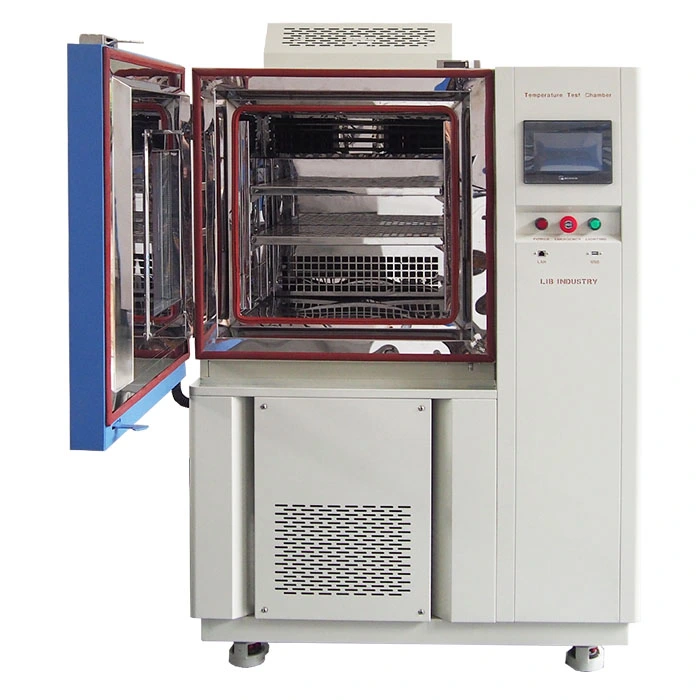
The rate at which temperature changes matters as much as the endpoint. A 10°C/min ramp stresses materials differently than a 5°C/min ramp. Advanced chambers - like the LIB Industry TR5 series - offer selectable ramp rates of 5°C, 10°C, and 15°C per minute, along with adjustable dwell times at each temperature plateau. This flexibility enables engineers to follow standardized test protocols or create custom profiles tailored to specific applications.
Safety Interlocks and Explosion-Proof Design
Testing batteries inherently carries risk. Off-gas events, thermal runaway, and electrolyte leaks can occur during aggressive thermal profiles. Purpose-built chambers incorporate explosion-proof doors, smoke detectors with audible alarms, water-spray suppression, and over-temperature shutdowns. These safeguards protect laboratory personnel and prevent cascading equipment damage.
Testing Battery Enclosures, Sealing Systems, and Connectors
Gasket and O-Ring Integrity Under Cyclic Stress
Enclosure seals - typically silicone or EPDM O-rings - must remain resilient across a wide temperature band. Repeated cycling causes compression set, hardening, and eventual cracking. Thermal cycling tests quantify the number of cycles before ingress protection (IP rating) degrades, ensuring that the chosen elastomer and groove design meet the battery pack's expected service life.
Connector Pin Fretting and Contact Resistance
High-voltage connectors experience micro-motion (fretting) at contact interfaces when thermal expansion shifts mating components. This fretting removes plating, generates oxide debris, and increases contact resistance - a pathway to localized overheating. Cycling tests paired with in-situ resistance monitoring pinpoint the onset of fretting degradation and guide connector material selection.
Enclosure Coating and Corrosion Resistance
Protective coatings on steel or aluminum enclosures must withstand thermal shock without cracking, blistering, or delaminating. Thermal cycling machines equipped with humidity control options can combine temperature cycling with moisture exposure, simulating coastal or tropical field conditions. This combined stress test validates coating adhesion and substrate corrosion resistance simultaneously.
Detection of Structural Degradation and Performance Loss
Post-Cycle Capacity and Impedance Mapping
After defined blocks of thermal cycles, cells are characterized through capacity tests and electrochemical impedance spectroscopy (EIS). These measurements reveal increases in charge-transfer resistance and losses in usable capacity that correlate with structural degradation within the electrode stack. Data logging features built into modern chambers - including Ethernet connectivity and USB download - streamline the capture and export of environmental data to laboratory analysis software.
Non-Destructive Inspection Techniques
Computed tomography (CT) scanning and ultrasonic imaging allow engineers to examine internal cell structures without disassembly. Comparing pre- and post-cycling images reveals electrode delamination, gas pocket formation, and separator wrinkling - damage modes directly attributable to cyclic thermal stress.
Failure Mode Classification and Root Cause Analysis
Cataloging failure modes observed during thermal cycling - such as seal breach, weld crack, or capacity fade - enables statistical analysis and design prioritization. A well-maintained failure database accelerates root cause identification and feeds back into design-for-reliability practices, shortening development timelines for next-generation battery platforms.
|
Standard |
Scope |
Typical Temperature Range |
Cycle Count |
|
IEC 62660-2 |
EV traction cells |
-40°C to +85°C |
30+ cycles |
|
UN 38.3 T.2 |
Transport safety |
-40°C to +72°C |
10 cycles |
|
SAE J2464 |
Abuse testing |
-40°C to +70°C |
Varies |
|
GB/T 31486 |
Power battery modules |
-40°C to +85°C |
5 cycles |
Enhancing Battery Lifecycle Stability Through Thermal Cycling Testing
Accelerated Aging Correlation to Field Data
Accelerated thermal cycling compresses years of field exposure into weeks of laboratory testing. Correlation studies that map lab-generated degradation curves against real-world fleet data validate the acceleration factors used and improve the predictive accuracy of lifecycle models. Chambers with tight temperature deviation (±2.0°C) and fluctuation (±0.5°C) ensure that acceleration factors remain reliable across test campaigns.
Design Optimization Feedback Loops
Thermal cycling results feed directly into design iterations. When a particular cell chemistry shows excessive capacity fade below -20°C, engineers can reformulate the electrolyte or modify electrode porosity - then retest under identical conditions. Programmable controllers with stored test profiles make this iterative process efficient and repeatable.
Standards Compliance and Certification Readiness
Battery manufacturers must satisfy standards such as IEC 62660-2, UN 38.3, and SAE J2464, all of which include thermal cycling requirements. Running these protocols on calibrated, specification-compliant equipment generates data packages that regulatory bodies and OEM customers accept without dispute, smoothing the path to market approval.
Stable Cycling for Precise Battery Aging Simulation – LIB Industry
 |
 |
|||||||
| Name | Fast Change Rate Thermal Cycle Chamber | |||||||
|
Temperature range |
-70℃ ~+150 ℃ |
|||||||
| Explosion-Proof Design | explosion-proof door chains, explosion-proof viewing window, smoke detector, and fire suppression sprinkler system Explosion-proof enclosure | |||||||
|
Low type |
A: -70℃ B:-40℃ C -20℃ |
|||||||
|
Temperature fluctuations |
± 0.5 ℃ |
|||||||
|
Humidity Range |
20%~98% |
|||||||
|
Heating rate |
5 ℃/15 ℃ / min |
|||||||
|
Cooling rate |
5 ℃/15℃ / min |
|||||||
|
Controller |
Programmable color LCD touch screen controller, Multi-language interface, Ethernet , USB |
|||||||
|
Exterior material |
Steel Plate with protective coating |
|||||||
|
Interior material |
SUS304 stainless steel |
|||||||
|
Standard configuration |
1 Cable hole (Φ 50) with plug; 2 shelves |
|||||||
|
Timing Function |
0.1~999.9 (S,M,H) settable |
|||||||
|
|
|
|
| Robust Workroom | Cable Hole | Temperature and Humidity Sensor |


Mechanical Compression Refrigeration with TECUMSEH Compressors
LIB Industry's TR5 series thermal cycling equipment employs French TECUMSEH compressors within a mechanical compression refrigeration architecture. This configuration delivers stable cooling capacity across the full temperature range, maintaining consistent ramp rates even during prolonged test campaigns. The system reaches temperatures as low as -70°C without sacrificing recovery speed on subsequent heating ramps.
Programmable Control and Remote Monitoring
A color LCD touch screen controller manages temperature profiles, dwell times, and ramp sequences. Ethernet connectivity enables remote monitoring from any networked workstation, while USB ports allow direct data download. Compatibility with local laboratory software means test data integrates seamlessly into existing quality management systems.
Customizable Chamber Configurations
Standard models span 100L to 1000L, with extended options reaching 2000L and 3000L for full-pack testing. Cable holes (50mm, 100mm, 200mm) with soft silicone plug seals accommodate instrumentation leads without compromising chamber integrity. Explosion-proof doors, observation windows with interior lighting, and water-spray fire suppression come as part of the safety package - ensuring that aggressive battery test profiles are conducted within a protected environment.
Conclusion
Thermal cycling tests occupy a central role in validating battery performance, structural integrity, and safety across diverse operating environments. From electrochemical degradation and seal failures to weld fatigue and coating breakdown, these tests expose vulnerabilities that static temperature testing cannot reveal. Purpose-built thermal cycling equipment - offering programmable ramp rates, tight temperature tolerances, and robust safety systems - transforms raw environmental data into actionable design improvements. Investing in rigorous thermal cycling protocols and reliable test chambers shortens product development cycles, strengthens regulatory compliance, and ultimately delivers batteries that endure.
FAQ
What temperature ramp rates are available in thermal cycling equipment for battery testing?
Programmable ramp rates of 5°C, 10°C, and 15°C per minute are typical. LIB Industry's TR5 series supports all three, enabling engineers to match ramp profiles to specific standards or custom protocols.
Can thermal cycling chambers accommodate full battery packs?
Yes. Extended-volume models reaching 2000L and 3000L provide sufficient interior space for full-pack testing, with oversized cable holes and adjustable shelving to support large assemblies.
What safety features protect against battery off-gassing during thermal cycling?
Explosion-proof doors, smoke detectors with audible alarms, water-spray suppression systems, and over-temperature shutdowns work together to contain off-gas events and protect laboratory personnel.
Ready to strengthen your battery testing program? LIB Industry is a professional thermal cycling equipment manufacturer and supplier delivering turnkey solutions - from chamber design through installation, commissioning, and training. Contact us at ellen@lib-industry.com to discuss your requirements and receive a customized proposal tailored to your laboratory needs.


