Salt Fog Test Machines for Marine Equipment Corrosion Testing
Marine equipment operates in some of the harshest conditions imaginable - relentless saltwater exposure, fluctuating humidity, and aggressive electrochemical reactions that eat through metals and coatings over time. For engineers and manufacturers tasked with validating corrosion resistance, a salt fog test machine is the industry-standard instrument. These chambers replicate coastal and offshore environments under controlled laboratory conditions, compressing years of natural weathering into days or weeks of accelerated testing. By subjecting metals, fasteners, protective coatings, and structural components to a precisely regulated saline atmosphere, manufacturers gain actionable data on material longevity before products ever reach the sea. LIB Industry's salt fog test machines are purpose-built for this demanding application, combining precision engineering with versatile chamber configurations.
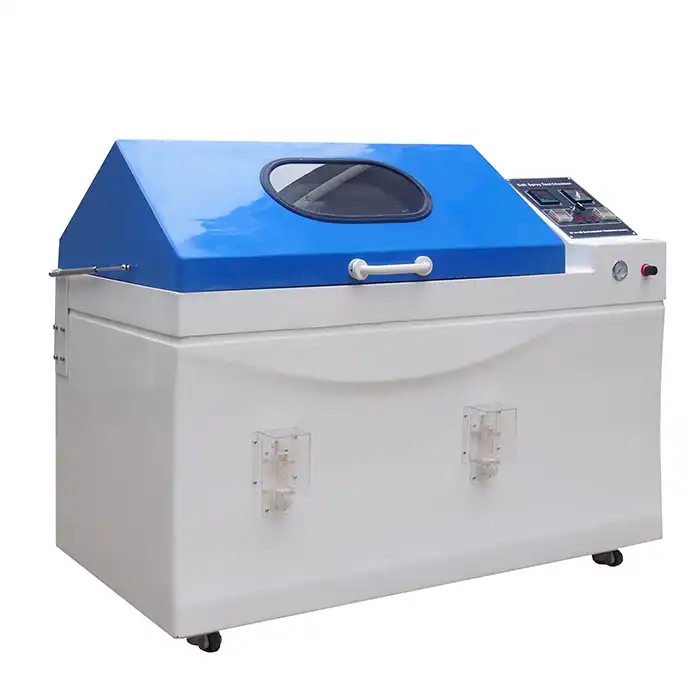
A client from Mexico recently shared their experience with the LIB S-150 (23A) Salt Spray Test Chamber. During testing, they encountered a minor issue with the saline container, which was quickly resolved with guidance from LIB’s support team. Since then, the chamber has operated reliably and consistently, performing salt spray tests without interruption. This feedback underscores not only the robustness of the S-150 but also the prompt and effective technical support that ensures smooth operation for every LIB system.

Why Marine Equipment Faces Severe Corrosion Risks?
The Electrochemical Nature of Saltwater Attack
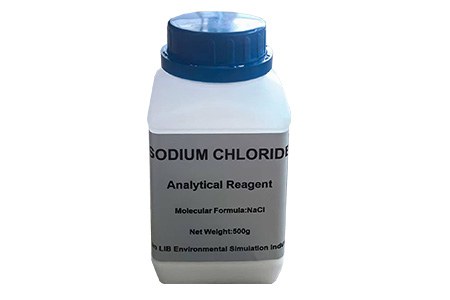
Seawater is a potent electrolyte containing chloride ions, dissolved oxygen, and trace minerals that accelerate galvanic and crevice corrosion. When dissimilar metals contact this electrolyte, electron transfer occurs at extraordinary rates - far exceeding freshwater or atmospheric exposure. The chloride ion is particularly aggressive, penetrating passive oxide layers on stainless steel and aluminum alloys to initiate pitting corrosion at the microscale.
Environmental Amplifiers: Temperature and Humidity
Marine environments rarely present corrosion in isolation. Elevated temperatures in tropical coastal zones accelerate oxidation kinetics, while high relative humidity sustains thin electrolyte films on metal surfaces between spray events. Offshore platforms encounter cyclic wet-dry conditions as waves and spray alternate with sun exposure - a combination that amplifies coating degradation and stress corrosion cracking beyond what static immersion tests can reveal.
Economic and Safety Consequences of Inadequate Testing
Structural failure of marine hardware - from mooring bollards and propeller shafts to navigation enclosures and offshore electrical panels - carries severe economic and human safety implications. A single corroded fastener in a critical load path can precipitate catastrophic assembly failure. Comprehensive pre-deployment corrosion testing using salt spray chambers allows manufacturers to identify material or coating vulnerabilities before products enter service, dramatically reducing warranty claims and liability exposure.
|
Corrosion Type |
Primary Mechanism |
Typical Marine Targets |
|
Galvanic corrosion |
Electrochemical potential difference between dissimilar metals |
Bronze propellers, aluminum hulls, steel fasteners |
|
Crevice corrosion |
Oxygen depletion in confined spaces beneath coatings or gaskets |
Flanged joints, lap welds, under-deck fittings |
|
Pitting corrosion |
Localized chloride ion penetration of passive layers |
Stainless steel fittings, aluminum masts, valve bodies |
|
Stress corrosion cracking |
Combined tensile stress and corrosive environment |
High-strength mooring chains, rigging wire, structural bolts |
Saltwater Exposure and Corrosion Mechanisms in Marine Environments
Chloride Ion Concentration and Testing Standards
International test standards - including ASTM B117, ISO 9227, and IEC 60068-2-11 - specify 5% sodium chloride solution as the baseline for neutral salt spray (NSS) testing. This concentration approximates the chloride activity of open ocean water and provides a reproducible reference point across laboratories and manufacturers worldwide. Some marine applications mandate higher-severity variants such as acetic acid salt spray (AASS) or copper-accelerated acetic acid salt spray (CASS) to evaluate decorative plating and anodized finishes.
Cyclic Corrosion Testing vs. Continuous Salt Fog
Continuous salt spray chambers subject specimens to uninterrupted saline mist, delivering rapid comparative data on bare metal or single-coat systems. Cyclic corrosion testers alternate between salt fog, humidity dwell, and drying phases - more faithfully replicating the wet-dry cycles encountered on vessels transiting between tropical and temperate zones. LIB Industry's chambers support both continuous and periodic spray modes, enabling laboratories to run either protocol from a single platform.
pH Monitoring and Solution Consistency
Collected fog pH must remain within 6.5-7.2 (NSS) per ISO 9227, verified using calibrated pH sensors after condensation collection. LIB Industry integrates built-in PT100 A-grade sensors with real-time monitoring to maintain precise pH control, and the brine mixing system prevents salt concentration gradients that would otherwise skew deposition uniformity across large chamber volumes.
Salt Fog Test Machines for Simulating Coastal and Offshore Conditions
Chamber Volume Selection for Marine Component Size
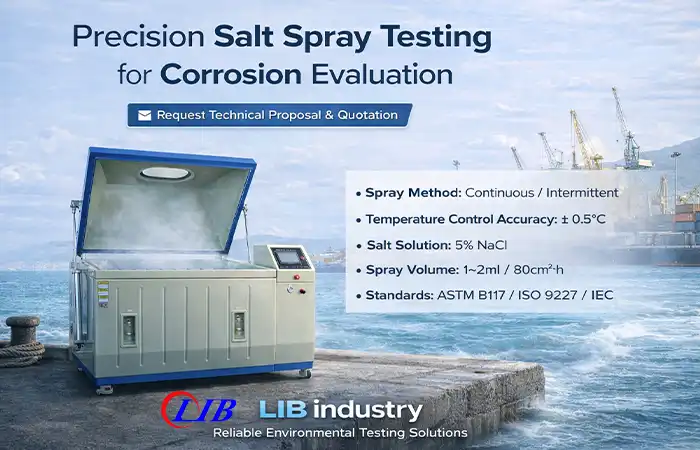
Marine hardware spans an enormous size range - from M6 stainless fasteners to full-length antenna masts and navigation enclosure panels. LIB Industry offers chamber volumes from 110 L (Model S-150) through 1,600 L (Model S-020), with internal dimensions reaching 1000 × 2000 × 800 mm. This range accommodates both compact R&D sample batches and production-scale qualification of large structural components in a single test run.
Spray Uniformity Across All Test Positions
Uneven fog distribution produces misleading corrosion data - specimens near the nozzle receive disproportionate salt loading while peripheral positions remain under-exposed. LIB Industry's dual-direction airflow management combined with adjustable spray tower height and precision quartz glass nozzles ensures uniform deposition of 1-2 ml/80 cm²·h across all rack positions, regardless of chamber volume.
Temperature and Humidity Precision Control
Salt spray test chambers maintain 35 ± 2°C with continuous fluctuation ≤ ±0.5°C, matching ASTM B117 requirements. LIB Industry's saturated air barrel pre-heats and humidifies the compressed air supply before it reaches the spray nozzle, preventing condensation inside feed lines and maintaining a stable 95-98% RH environment throughout the test duration.
Corrosion Testing for Marine Metals, Fasteners, and Structural Components
Bare Metal Qualification for Hull and Structural Applications
Carbon steel, low-alloy marine-grade steel, and cast iron components require baseline corrosion resistance data before coating selection. Salt spray exposure hours to first red rust - typically 24-500 h depending on material grade - provide a rapid comparative metric for alloy selection. LIB Industry's chambers accommodate flat panels, tubes, and complex weld assemblies simultaneously using configurable V-groove and round-bar rack systems.
Fastener and Hardware Corrosion Validation
Marine fasteners - stainless A4 bolts, hot-dip galvanized anchors, and titanium rigging screws - must meet coating adhesion and base-metal performance thresholds defined by ASTM F1428 and ISO 4042. Salt spray testing reveals hydrogen embrittlement susceptibility in plated high-strength fasteners and verifies that threaded coatings maintain adhesion under the combined stresses of salt loading and mechanical torque.
Weld and Fabrication Zone Assessment
Heat-affected zones adjacent to welds exhibit altered microstructure and residual stress, making them preferential corrosion initiation sites. Salt spray testing of fabricated assemblies - rather than coupon samples alone - allows engineers to evaluate whether post-weld heat treatment, passivation, or coating systems adequately protect these vulnerable regions under realistic chloride exposure.
|
Model |
Internal Volume (L) |
Internal Dimensions (mm) |
Typical Application |
|
S-150 |
110 |
590 × 470 × 400 |
Small fasteners, coupons, R&D samples |
|
S-250 |
320 |
1000 × 640 × 500 |
Medium assemblies, coated panels |
|
S-750 |
410 |
1100 × 750 × 500 |
Structural brackets, weld assemblies |
|
S-010 |
780 |
1000 × 1300 × 600 |
Large marine hardware, full enclosures |
|
S-016 |
1030 |
900 × 1600 × 720 |
Navigation equipment, antenna mounts |
|
S-020 |
1600 |
1000 × 2000 × 800 |
Full-scale production qualification |
Testing Protective Coatings and Anti-Corrosion Treatments
Epoxy and Polyurethane Marine Coating Evaluation
High-build epoxy primers and polyurethane topcoats form the backbone of marine anti-corrosion systems. Salt spray testing to ISO 12944-6 defines exposure duration categories - C5-M (marine very high) requiring 1,440 h of salt fog exposure without blister formation or corrosion creep beyond 2 mm from a scribe line. LIB Industry salt fog test machine deliver the temperature precision and fog uniformity that ISO 12944-6 certification demands.
Hot-Dip Galvanizing and Thermal Spray Zinc Assessment
Zinc-based sacrificial coatings - hot-dip galvanizing and thermal arc-sprayed zinc - protect structural steel through cathodic sacrifice. Salt spray hours to white rust and subsequent red rust formation quantify zinc consumption rates, enabling engineers to specify coating thickness for defined service-life targets. Standard acceptance thresholds per ASTM A123 and ISO 1461 are validated through chamber testing before shipment.
Anodizing and Conversion Coating Performance
Anodized aluminum and chromate or trivalent passivation conversion coatings on zinc-plated fasteners are assessed using CASS (copper-accelerated acetic acid salt spray) per ASTM B368. This accelerated variant correlates strongly with outdoor marine exposure data and reveals porosity, coating thickness deficiencies, and adhesion failures that neutral salt spray alone may not detect within practical test durations.
Improving Marine Equipment Durability Through Accelerated Corrosion Testing
Correlating Laboratory Hours to Field Service Life
Accelerated testing compresses field exposure time, but correlation to real-world service requires validated acceleration factors. Published literature and industry experience suggest that 96 h of NSS exposure approximates 1-2 years of moderate coastal atmospheric exposure for zinc coatings, while specific correlation ratios vary by substrate, coating system, and deployment geography. LIB Industry's real-time data logging exports test parameters and deposition records for statistical correlation analysis.
Design Iteration and Material Down-Selection
Salt spray chambers enable rapid material down-selection in early design stages, where cost of design change is lowest. Testing three or four coating or alloy candidates simultaneously across a single chamber load - using the configurable rack system - compresses what would otherwise be months of sequential field trials into a single laboratory week, accelerating time-to-market without compromising corrosion qualification rigor.
Regulatory and Customer Certification Requirements
Classification societies including DNV GL, Bureau Veritas, and Lloyd's Register mandate corrosion testing documentation for offshore structural materials and marine electrical equipment. IEC 60945 specifies salt fog resistance requirements for marine navigation instruments. Having calibrated, ISO 9227-compliant salt fog test chamber data on file satisfies these regulatory bodies and provides a defensible evidence base for product certification submissions.
Superior Corrosion Resistance with Advanced Chamber Design - LIB Industry
|
|
Model |
S-150 |
|
|
Internal dimensions (mm) |
470*590*400 |
||
|
Overall dimensions (mm) |
620*1400*1050 |
||
|
Temp. Range |
Ambient ~ +60 degree |
||
|
Temp. Fluctuation |
± 0.5 ℃ |
||
|
Temp. Deviation |
± 2.0℃ |
||
|
Humidity Range |
95 % ~ 98 % RH |
||
|
Salt Fog Deposition |
1~2ml / 80cm2 · h |
||
|
Spray Type |
Continuous / Periodic |
||
|
Heating Element |
Nichrome heater |
||
|
Salt Fog Collected |
Fog collector and fog measure cylinder |
||
|
Controller |
PID controller |
||
|
Material |
Glass fiber reinforced plastics |
||
|
Standard Configuration |
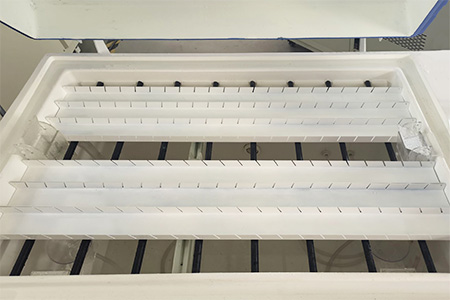
8 round bars and 7 V-shaped grooves |
||
|
Durable, Leak-Resistant Workspace |
Flexible Sample Rack System |
|
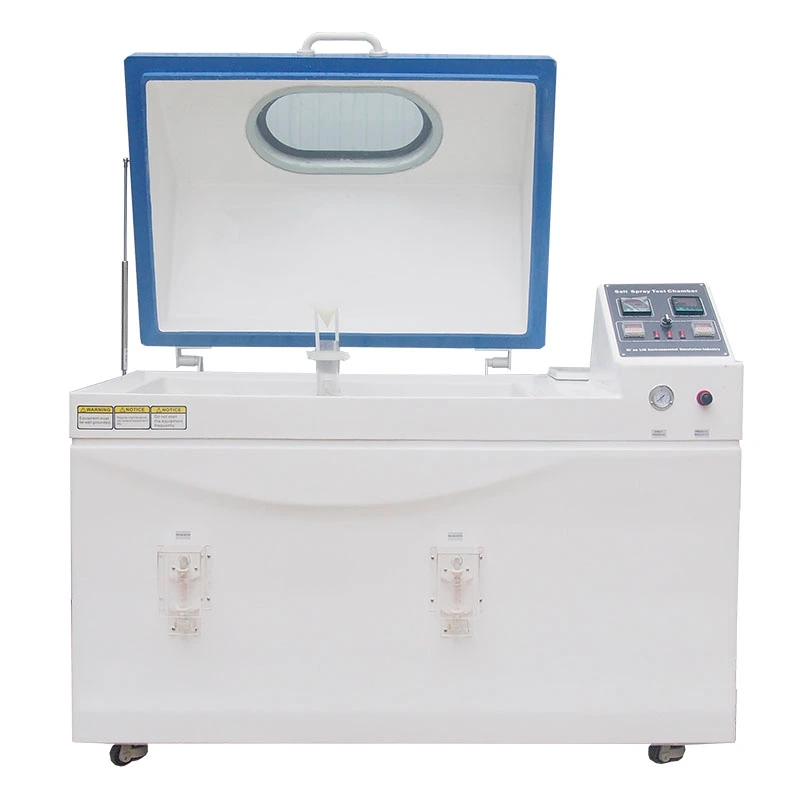
Water-Sealed Lid Design |
Intelligent Controller |
|
Uniform Salt Solution Agitation |
Included Industrial-Grade Salt |
Robust Construction for Continuous Industrial Operation
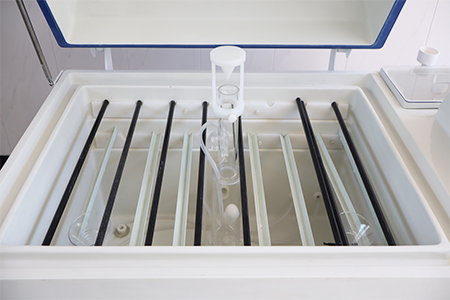
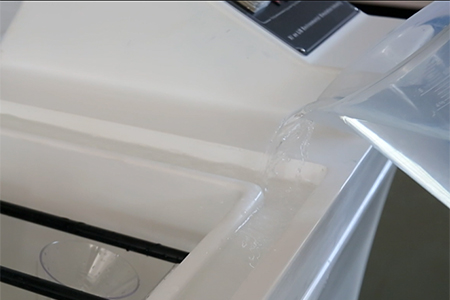
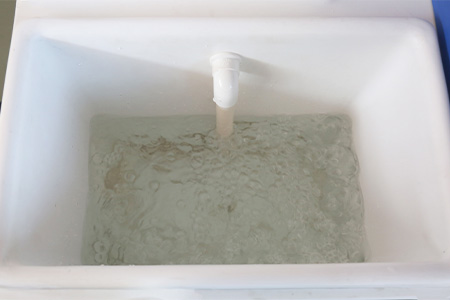
LIB Industry's salt fog test machine are fabricated from glass fiber reinforced plastics (GRP) throughout the wetted interior, providing inherent resistance to the salt fog environment that stainless steel cannot match at equivalent cost. Continuous welded seams eliminate salt water ingress paths to electrical systems, and the water-seal lid design actively blocks mist escape during lid opening - protecting adjacent laboratory equipment and personnel.
Intelligent Control and Remote Monitoring
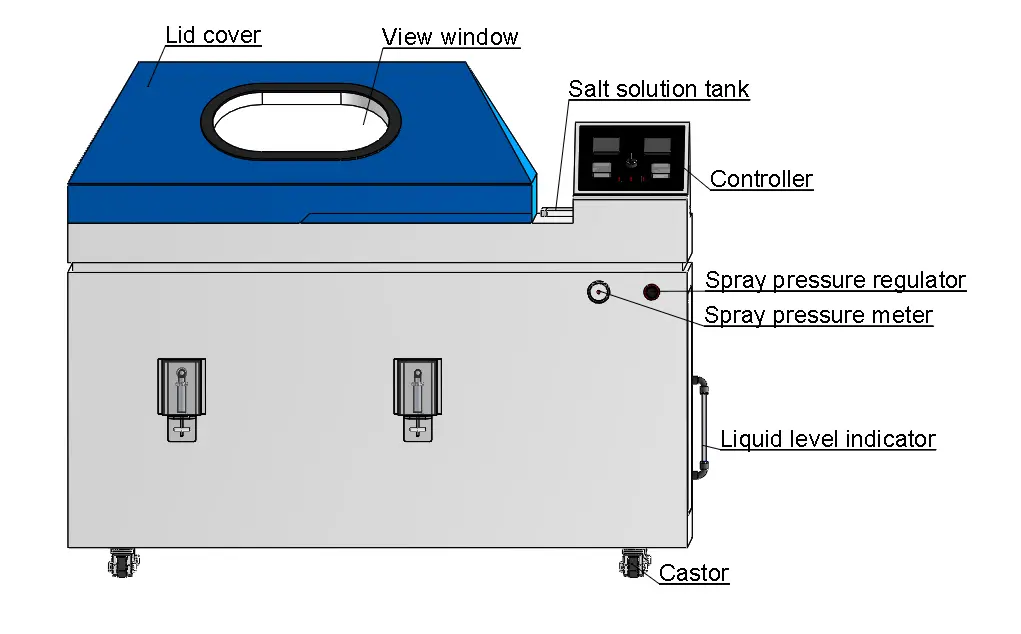
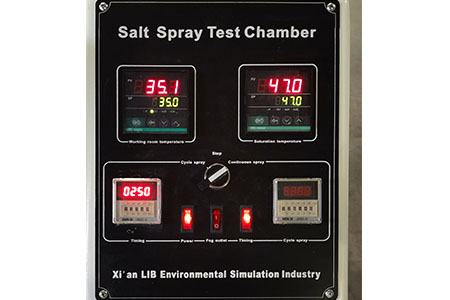
The network-connected touchscreen controller supports multi-language interfaces (English, French, Spanish, German, Russian) and multi-stage programmable test profiles with real-time data logging and USB export. Remote monitoring capability allows laboratory managers to track temperature, humidity, pH, and spray deposition from a desktop or mobile device, reducing on-site attendance requirements during extended 1,000+ hour certification tests.
Comprehensive Safety Architecture
Six integrated protection systems - humidifier dry-combustion prevention, over-temperature cutoff, over-current protection, water shortage alarm, and earth leakage protection - ensure continuous unattended operation without risk of chamber damage or laboratory incident. The 3-year warranty with lifetime service coverage and 24/7 global support network guarantee that production qualification schedules are not disrupted by equipment downtime.
|
Standard |
Test Method |
Typical Application in Marine Industry |
|
ASTM B117 |
Neutral Salt Spray (NSS) |
General metal and coating qualification |
|
ISO 9227 |
NSS / AASS / CASS |
International coating and plating certification |
|
IEC 60068-2-11 |
Salt Mist (environmental) |
Marine electronics and navigation equipment |
|
IEC 60945 |
Salt fog for bridge instruments |
Navigation electronics certification |
|
ISO 12944-6 |
Cyclic and salt spray for coatings |
Offshore structural coating qualification (C5-M) |
|
ASTM B368 |
CASS test |
Decorative and functional plating on marine hardware |
Conclusion
Salt fog test machines are indispensable instruments for any manufacturer supplying hardware, coatings, or structural components to marine markets. By replicating the aggressive chloride-laden atmospheres of coastal and offshore environments under controlled laboratory conditions, these chambers deliver the corrosion qualification data that classification societies, OEMs, and end-users demand. LIB Industry's range of salt spray chambers - from 110 L benchtop models to 1,600 L production-scale systems - combines robust GRP construction, precision environmental control, and intelligent data management into a platform engineered for the most demanding marine certification programs.
FAQ
What salt concentration is used in a salt fog test machine for marine equipment testing?
Standard neutral salt spray tests per ASTM B117 and ISO 9227 use a 5% sodium chloride solution, which approximates open-ocean chloride activity. Some marine coating standards require acetic acid or copper-accelerated variants for evaluating anodized and plated finishes where neutral spray acceleration is insufficient.
How many hours of salt spray exposure are needed to qualify marine protective coatings?
ISO 12944-6 defines 1,440 hours of salt spray exposure for marine C5-M corrosivity category certification. General hardware qualification under ASTM B117 may specify 96-500 hours depending on substrate and coating system. Always consult the applicable product or classification society standard for your specific component.
Can a single salt fog test machine handle both small fastener batches and large structural components?
LIB Industry offers chambers from 110 L to 1,600 L with configurable rack systems, accommodating everything from M6 fasteners to full-length antenna housings. Selecting the right chamber volume prevents specimen shadowing, maintains uniform fog deposition, and ensures test results accurately represent real-world corrosion performance.
Contact LIB Industry - your trusted salt fog test machine manufacturer, supplier, and factory for turn-key environmental testing solutions. Whether you need a standard chamber or a custom configuration, our engineering team is ready to assist. Reach us at: ellen@lib-industry.com