Temperature Cycling Test Chambers in Medical Device Validation
Medical device manufacturers face stringent validation requirements ensuring products withstand extreme thermal conditions throughout their lifecycle. A temperature cycling test chamber provides the controlled environmental extremes necessary for verifying device reliability, detecting latent manufacturing defects, and demonstrating regulatory compliance. These specialized testing systems subject medical devices to rapid temperature transitions - from sub-zero conditions to elevated heat - revealing thermal stress vulnerabilities that could compromise patient safety. By simulating years of operational temperature variations in compressed timeframes, thermal cycling chambers enable manufacturers to validate device durability, identify design weaknesses, and meet FDA, ISO 13485, and IEC 60601 requirements before market release.
Why Are Temperature Cycling Chambers Used in Medical Device Validation?
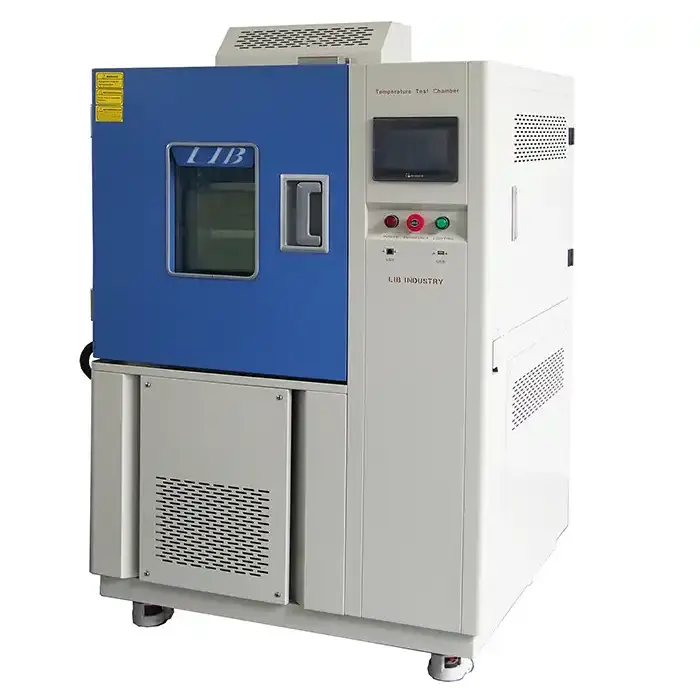
Detecting Latent Manufacturing Defects Before Market Release
Manufacturing processes inevitably introduce microscopic defects - incomplete solder joints, contaminated surfaces, improperly seated connectors, or material inconsistencies. These latent defects may not manifest during standard functional testing but emerge under thermal stress conditions. Rapid temperature transitions impose expansion and contraction forces that amplify these weaknesses, causing premature failures. Environmental stress screening through thermal cycling identifies manufacturing anomalies during validation phases, preventing field failures that could endanger patients.
Validating Device Performance Across Clinical Use Environments
Medical devices operate across diverse environmental conditions - from refrigerated pharmaceutical storage to tropical emergency response scenarios. Implantable devices experience body temperature fluctuations during patient fever episodes. Diagnostic equipment transitions between air-conditioned laboratories and heated ambulance compartments. Temperature cycling test chambers replicate these extreme environmental transitions, validating that devices maintain calibration accuracy, functional performance, and safety characteristics across their entire operational temperature range specified in regulatory submissions.
Meeting International Regulatory Standards and Documentation Requirements
Regulatory authorities including FDA, European Medicines Agency, and Health Canada mandate comprehensive environmental testing demonstrating device safety and effectiveness. ISO 14971 risk management principles require manufacturers to identify and mitigate environmental hazards. IEC 60068-2-14 specifies temperature cycling test procedures and acceptance criteria. Validated thermal cycling chambers provide the reproducible test conditions and automated data logging necessary for regulatory submissions, quality system audits, and 510(k) premarket notifications.
Thermal Reliability Testing for Medical Electronic Components
Solder Joint Integrity and PCB Assembly Validation
Electronic medical devices contain hundreds of solder connections joining components to printed circuit boards. Thermal cycling induces differential expansion between dissimilar materials - silicon dies, copper traces, solder alloys, and FR-4 substrates expand at different rates. These coefficient of thermal expansion mismatches generate mechanical stresses concentrating at solder joints. Testing assemblies through 500-2000 temperature cycles at 5-15°C/min ramp rates reveals solder joint vulnerabilities and validates assembly processes.
Battery Performance and Safety Under Thermal Stress
Lithium-ion batteries powering portable medical devices exhibit temperature-dependent behavior affecting capacity, discharge rates, and safety characteristics. Thermal cycling in a temperature cycling test chamber between -20°C and +60°C validates battery management system functionality and verifies thermal protection circuits. The 1000W heat load capacity accommodates powered device testing, enabling simultaneous electrical loading and thermal cycling that replicates actual clinical use conditions.
Semiconductor Component Reliability and Failure Analysis
Integrated circuits and sensors within medical devices experience thermal stress affecting junction reliability and parametric drift. Wire bond connections undergo fatigue failure from repeated thermal expansion. Temperature cycling accelerates these failure mechanisms, compressing years of operational thermal exposure into weeks of accelerated testing. The PTR Platinum Resistance PT100Ω Class A temperature sensors provide ±0.1°C measurement accuracy, ensuring precise thermal stress application.
Sterilization and Temperature Cycling Compatibility Assessment

|
Sterilization Method |
Temperature Exposure |
Critical Validation Parameters |
|
Steam Autoclave |
121-134°C, saturated steam |
Material degradation, seal integrity |
|
Ethylene Oxide |
37-63°C, humidity exposure |
Polymer compatibility, residual gas |
|
Gamma Irradiation |
Ambient to 50°C |
Material embrittlement, optical clarity |
|
Hydrogen Peroxide Plasma |
45-50°C chamber temperature |
Electrical insulation, connector corrosion |
Material Compatibility with Repeated Sterilization Cycles
Reusable medical devices undergo dozens to hundreds of sterilization cycles throughout their service life. Each autoclave cycle exposes materials to 121-134°C saturated steam, while subsequent cooling creates rapid thermal transitions. Thermal cycling chambers simulate these repetitive sterilization exposures, validating material selection and predicting service life limitations. Testing protocols alternate between elevated temperature soaks and rapid cooling transitions, replicating the thermal history of clinically sterilized instruments.
Seal Integrity and Package Barrier Property Validation
Sterile barrier systems protecting implants and surgical instruments must maintain integrity through distribution temperature variations. Temperature cycling between -20°C and +60°C stresses packaging seals, revealing adhesive failures or material delamination. The programmable controller supporting 120 test programs enables complex thermal profiles mimicking cold chain distribution followed by warehouse storage and tropical climate deployment.
Optical Component Performance After Thermal Stress
Endoscopes and ophthalmic devices incorporate precision optical elements requiring stable performance despite temperature variations. Thermal cycling stresses optical cements bonding lens assemblies, causing delamination or refractive index changes. Testing optical assemblies through temperature cycles validates mechanical stability and coating durability. The double-layer observation window with interior LED lighting enables non-invasive monitoring during thermal cycling.
How Does Thermal Stress Affect Medical Device Performance?
Dimensional Stability and Mechanical Tolerance Changes
Precision mechanical assemblies with tight dimensional tolerances require validation across temperature ranges. Materials exhibit thermal expansion coefficients ranging from 10-200 ppm/°C, causing dimensional changes. Temperature cycling between -40°C and +150°C reveals interference fits that loosen during heat exposure or binding conditions emerging at low temperatures. The SUS304 stainless steel interior maintains spatial temperature uniformity essential for accurate dimensional validation.
Adhesive Bond Strength and Delamination Resistance
Medical device assemblies frequently employ adhesive bonding joining dissimilar materials. Temperature cycling in a temperature cycling test chamber generates differential thermal expansion between bonded materials, concentrating shear and peel stresses at adhesive interfaces. Rapid heating at 5-10°C/min and cooling at equivalent rates amplifies thermal shock effects. Testing bonded assemblies through 200–1000 thermal cycles quantifies bond durability and validates adhesive selection.
Calibration Drift and Sensor Accuracy Degradation
Diagnostic devices rely on sensor accuracy for clinical decision-making. Temperature excursions affect sensor characteristics through multiple mechanisms - thermocouple reference junction drift, strain gauge resistance changes, and optical detector variations. Thermal cycling validation confirms sensors maintain calibration within specified tolerances. The programmable controller displays real-time temperature curves, enabling correlation between thermal exposure and measured calibration shifts.
Environmental Simulation for Long-Term Medical Device Reliability
Accelerated Life Testing Through Temperature Cycling
Medical device reliability predictions require estimating failure rates over 5-20 year service lives. Accelerated life testing applies elevated thermal stress following the Coffin-Manson relationship, where fatigue life inversely correlates with thermal cycle range. Testing at ΔT = 100°C cycles compresses years of normal operational cycling into months of laboratory testing. The TR5-series chambers offering volumes from 100L to 1000L accommodate various device sizes.
Transportation and Distribution Simulation Testing
Medical devices experience severe temperature variations during global distribution. Air freight cargo holds fluctuate between -40°C and +50°C. Thermal cycling chambers replicate these distribution scenarios, validating device functionality after transportation. Testing protocols incorporate power-on functional verification at temperature extremes, confirming devices operate immediately upon unpacking in tropical field hospitals or arctic research stations.
Humid Heat and Thermal Cycling Combined Exposure
Real-world environments combine temperature cycling with humidity variations, creating synergistic degradation mechanisms. Combined temperature-humidity cycling reveals moisture-related vulnerabilities invisible during dry thermal cycling alone. Optional humidity control systems enable protocols alternating between 85% RH at +85°C and low temperature exposure, replicating tropical climate conditions or steam sterilization scenarios.
Regulatory Testing Requirements for Medical Device Temperature Cycling
FDA Premarket Submission Environmental Testing Expectations
FDA guidance documents emphasize environmental testing as essential design validation. Premarket notification 510(k) submissions require evidence demonstrating device performance under reasonably foreseeable environmental conditions. The automated data logging capabilities with timestamp records and USB export functionality provide documentation infrastructure supporting regulatory submissions, enabling reviewers to verify test protocol compliance.
IEC 60068-2-14 Test N: Change of Temperature Standards
International Electrotechnical Commission standard IEC 60068-2-14 specifies standardized temperature cycling procedures applicable to medical electrical equipment. Temperature cycling test chambers meeting IEC specifications incorporate precise temperature control within ±2°C tolerance, controlled ramp rates from 1-20°C/min, and chamber volumes accommodating complete medical device systems. Compliance ensures international acceptance of validation data across multiple regulatory jurisdictions.
ISO 14971 Risk Management and Environmental Hazard Mitigation
ISO 14971 medical device risk management standard requires manufacturers to identify environmental hazards potentially compromising device safety. Thermal cycling testing provides objective evidence that design controls adequately mitigate temperature-related risks. The comprehensive safety protection systems including over-temperature shutdown and earth leakage protection demonstrate equipment reliability supporting critical validation activities.
LIB Industry Environmental Test Chambers for Reliable Medical Device Validation
 |
 |
 |
 |
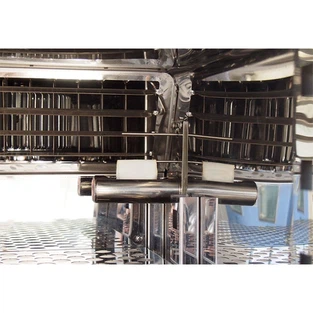 |
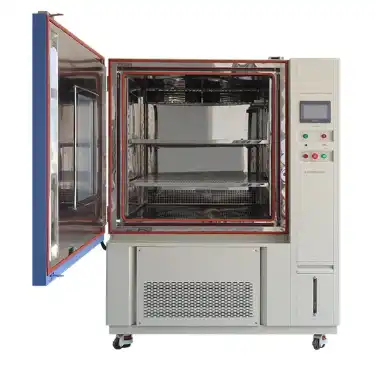
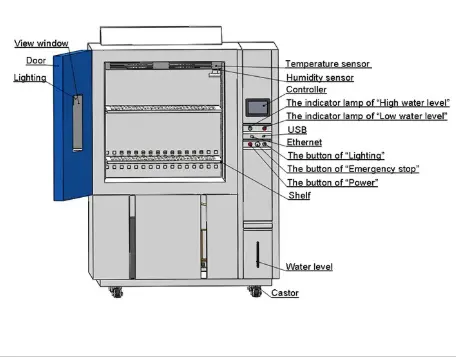
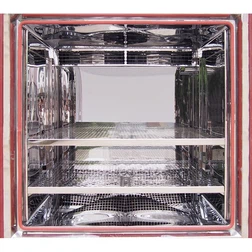
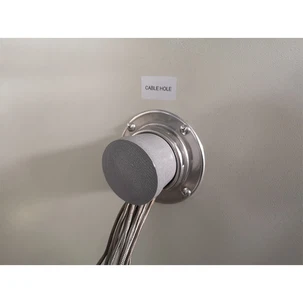
| Robust Workroom | Cable Hole | Temperature and Humidity Sensor |
Precision Thermal Control for Reproducible Validation Results
LIB temperature cycling test chambers achieve ±0.5°C temperature fluctuation with maximum spatial deviation of ±2.0°C throughout the test volume. French TECUMSEH compressors paired with nichrome heating elements deliver rapid 5-10°C/min heating and cooling rates with overshoot-free control. The centrifugal circulation fan creates laminar airflow ensuring thermal exposure consistency across all surfaces.
Programmable Controller Supporting Complex Medical Device Protocols
The programmable color LCD touchscreen controller supports 120 independent test programs, each accommodating 100 discrete test steps. This capability enables automated execution of multi-week validation protocols alternating between different temperature zones and transition rates. PC connectivity through Ethernet enables remote protocol development and integration with laboratory information management systems.
Robust Construction for Continuous Validation Operation
LIB chambers feature fully-welded SUS304 stainless steel interiors resistant to thermal fatigue. The 4mm A3 steel external framework provides industrial-grade structural integrity. Double-layer silicone sealing strips maintain chamber integrity throughout extended testing campaigns, supporting 24/7 operation across years of validation service.
|
Chamber Model |
Internal Volume |
Temperature Range |
Medical Device Applications |
|
TR5-100 |
100L |
-20°C to +150°C |
Implants, small instruments, sensor validation |
|
TR5-225 |
225L |
-40°C to +150°C |
Portable monitors, diagnostic cartridges |
|
TR5-500 |
500L |
-70°C to +150°C |
Infusion pumps, ventilators, surgical instruments |
|
TR5-800 |
800L |
Configurable |
Patient monitors, imaging components |
|
TR5-1000 |
1000L |
Configurable |
Complete device systems, batch validation |
Turn-Key Validation Laboratory Solutions and Support Services
LIB Industry delivers comprehensive environmental testing solutions including application consulting, installation services, operator training, and ongoing technical support. Medical device manufacturers benefit from validation protocol development assistance, helping translate regulatory requirements into appropriate thermal cycling test parameters. Installation teams ensure proper chamber placement and performance verification including spatial temperature mapping.
Conclusion
Temperature cycling test chambers represent critical infrastructure for medical device validation, enabling manufacturers to demonstrate product reliability and achieve regulatory compliance. Precise thermal control, programmable cycling profiles, and comprehensive safety systems deliver reproducible environmental conditions necessary for validating device performance. Selecting chambers from experienced manufacturers ensures measurement accuracy and operational reliability supporting diverse medical device testing requirements.
FAQ
What temperature cycling parameters are typically required for medical device validation testing?
Medical device thermal cycling commonly employs -40°C to +85°C ranges with 5-10°C/min transition rates, accumulating 500-2000 cycles depending on device risk classification. Specific protocols align with IEC 60068-2-14 standards and device-specific regulatory guidance.
Can temperature cycling chambers accommodate powered medical device testing during thermal exposure?
Advanced chambers support powered device testing through cable penetrations enabling electrical connections while maintaining environmental isolation. The 1000W heat load capacity accommodates operating device power consumption without compromising temperature control accuracy.
How does thermal cycling testing differ from standard temperature aging for medical devices?
Thermal cycling imposes rapid temperature transitions stressing material interfaces and mechanical assemblies, revealing fatigue failures. Temperature aging maintains constant elevated temperatures accelerating chemical degradation. Comprehensive validation programs employ both methodologies addressing different failure mechanisms.
Partner with LIB Industry - Your Trusted Environmental Test Chamber Manufacturer and Supplier
LIB Industry delivers complete medical device validation solutions including temperature cycling test chamber design, manufacturing, installation, and training services globally. Contact our specialists at ellen@lib-industry.com to discuss validation requirements and receive customized recommendations.