Temperature Humidity Chamber for Electronics Reliability Testing
Electronics reliability testing demands precise environmental simulation to validate product durability under real-world conditions. A temperature humidity chamber replicates extreme climatic scenarios - from tropical moisture to arctic cold - exposing semiconductors, PCBs, and assemblies to accelerated aging protocols. These chambers integrate programmable thermal cycling with controlled humidity levels, enabling engineers to identify potential failure modes before market release. Advanced models feature cascade refrigeration systems reaching -70°C, touchscreen controllers managing 120-program sequences, and SUS304 stainless steel construction resisting corrosion. Whether validating automotive electronics or medical devices, these chambers deliver repeatable environmental stress screening critical for quality assurance.
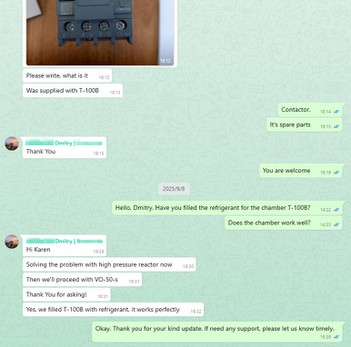
In a recent installation completed in September 2025, a Russian client validated the performance of a LIB environmental chamber. The delivered T-100B temperature and humidity test chamber, along with key spare components including a T-100B contactor, was fully commissioned and charged with refrigerant on site. After setup, the system operated smoothly and was confirmed to be running in excellent condition.
This real-world feedback highlights the priorities of everyday laboratory use: consistent operational stability, straightforward maintenance, and reliable test performance over time.
Why Are Temperature Humidity Chambers Critical for PCB Reliability?
Moisture-Induced Conductive Pathways
Printed circuit boards operate in diverse environments where moisture penetration creates unintended electrical pathways between traces. Condensation forms ionic bridges that trigger electrochemical migration, particularly in densely populated surface-mount assemblies. Testing chambers simulate tropical humidity conditions at 85°C/85% RH, accelerating dendrite growth that would naturally occur over years. Engineers utilize these accelerated stress tests to validate conformal coating effectiveness and solder mask integrity.
Thermal Expansion Coefficient Mismatches
Component packages, solder joints, and substrate materials expand at different rates during temperature fluctuations. A temperature humidity chamber cycles between temperature extremes while maintaining specific moisture levels, stressing the mechanical interfaces where materials meet. Ball grid array (BGA) connections prove particularly vulnerable, as repetitive expansion creates microscopic cracks. Testing protocols like JESD22-A104 require hundreds of thermal cycles to expose latent manufacturing defects before assembly integration.
Hygroscopic Material Degradation
FR-4 substrates, encapsulants, and adhesives absorb atmospheric moisture, altering their dielectric properties and dimensional stability. When exposed to rapid temperature changes during reflow or operational heating, absorbed moisture vaporizes explosively - a phenomenon called "popcorning." Environmental chambers control humidity exposure duration before thermal shock testing, simulating storage conditions that precede manufacturing processes. This validation ensures components meet moisture sensitivity levels (MSL) ratings.
Key Failure Mechanisms in Electronics Under Humidity Stress
Corrosion of Metallic Conductors
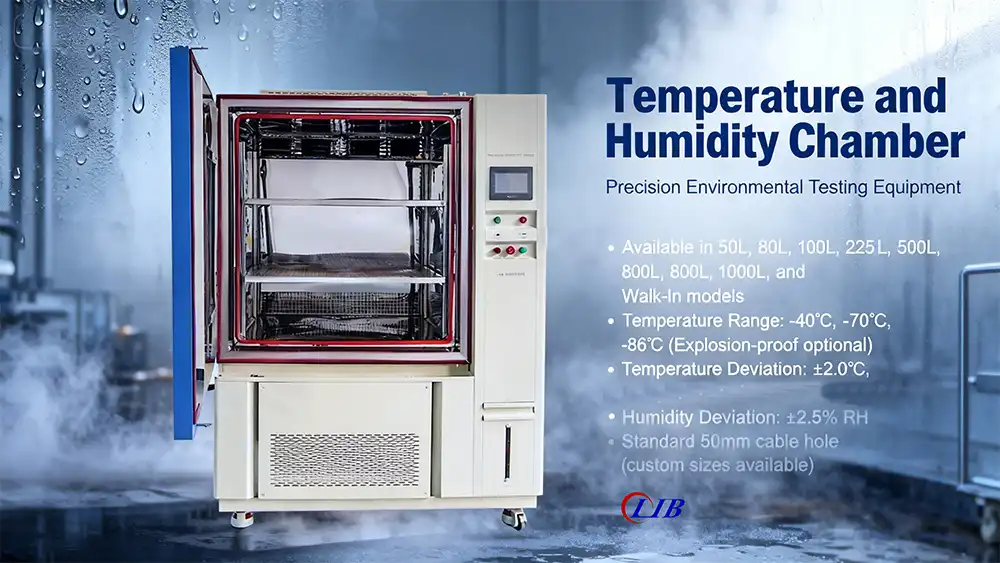
Atmospheric moisture combines with ionic contaminants to form electrolytes that corrode copper traces, lead frames, and wire bonds. Gold, nickel, and tin plating provide varying degrees of protection, but galvanic couples between dissimilar metals accelerate deterioration. Chambers configured for salt spray testing or mixed flowing gas environments replicate industrial and marine atmospheres. The LIB TH Series chambers maintain humidity deviation within ±2.5% RH, ensuring consistent corrosion rate predictions across test batches.
Delamination at Material Interfaces
Interfacial adhesion between die attach, molding compounds, and leadframes weakens under prolonged humidity exposure. Temperature cycling exacerbates this separation as differential thermal expansion creates shear stresses at already weakened boundaries. Acoustic microscopy after chamber testing reveals hidden delamination that compromises heat dissipation and electrical performance. Qualification standards mandate specific dwell times at maximum humidity before thermal shock sequences.
Electromigration in Fine-Pitch Interconnects
High current densities in miniaturized conductors promote atomic migration when moisture provides ionic transport media. Silver, copper, and tin atoms migrate along grain boundaries, eventually forming hillocks or voids that alter resistance values. Temperature and humidity chambers operating at elevated voltages while maintaining 85% RH accelerate this phenomenon from decades to weeks. Testing reveals design margins and validates barrier layer effectiveness in advanced packaging technologies.
|
Failure Mechanism |
Primary Environmental Factor |
Typical Test Condition |
Detection Method |
|
Electrochemical Migration |
Humidity + Bias Voltage |
85°C/85% RH + 5V |
Insulation Resistance Monitoring |
|
Solder Joint Fatigue |
Thermal Cycling |
-40°C to +125°C |
Cross-sectional Analysis |
|
Popcorn Cracking |
Moisture Absorption + Thermal Shock |
MSL Preconditioning + Reflow |
Acoustic Microscopy |
Environmental Simulation Parameters for Electronic Components
Temperature Range Selection
Electronic systems encounter operational temperatures from automotive underhood (+150°C) to aerospace stratospheric conditions (-55°C). Testing chambers must exceed these extremes to validate design margins. The LIB TH-500 model offers configurations spanning -20°C to +150°C for commercial applications, with cascade refrigeration options reaching -70°C for military specifications. Heating rates of 3°C/min and cooling rates of 1°C/min replicate realistic environmental transitions rather than instantaneous shocks.
Humidity Control Precision
Relative humidity significantly impacts failure acceleration factors in reliability physics models. Chambers employ stainless steel surface evaporation humidifiers with automatic water purification systems to prevent mineral contamination. PT100 Class A sensors deliver ±0.001°C temperature resolution, translating to precise humidity control even at extreme low levels of 20% RH. The 98% RH upper limit replicates condensing conditions without compromising chamber integrity.
Spatial Uniformity Requirements
Test validity depends on consistent environmental exposure across all specimen locations. Temperature deviation specifications of ±2.0°C and temperature fluctuation within ±0.5°C ensure repeatable results regardless of sample placement. Advanced chambers incorporate multi-point airflow distribution and mapping protocols that verify uniformity throughout the working volume. This becomes critical when testing multiple PCB assemblies simultaneously during qualification programs.
How Does High Humidity Affect Semiconductor Performance?
Threshold Voltage Shifts in MOSFETs
Moisture penetration through packaging materials introduces mobile ionic species that alter gate oxide charge distribution. These contamination-induced threshold voltage shifts degrade transistor switching characteristics and increase leakage currents. Highly accelerated stress testing (HAST) combines elevated temperature, humidity, and bias voltage to compress years of field exposure into days. Chamber conditions of 130°C/85% RH with applied voltages reveal design vulnerabilities in power management integrated circuits.
Package Cracking During Reflow
Moisture absorbed during storage converts to steam during solder reflow profiles, generating internal pressures exceeding package strength. Quad flat packages (QFP) and small outline packages prove particularly susceptible to this mechanism. Industry standards mandate moisture sensitivity level testing where components undergo humidity exposure in calibrated chambers before simulated reflow. Proper temp humidity chamber control ensures reproducible preconditioning that correlates with actual production scenarios.
Dielectric Breakdown Acceleration
High humidity reduces the breakdown voltage of insulating materials by lowering their resistivity and creating conductive pathways. Polyimide passivation layers, silicon dioxide, and underfill materials all exhibit accelerated degradation when exposed to moisture at elevated temperatures. Temperature humidity chambers configured for highly accelerated life testing (HALT) push components beyond rated specifications to establish operational limits. This data informs derating guidelines for mission-critical applications.
|
Test Standard |
Temperature Condition |
Humidity Condition |
Duration |
Application |
|
IPC-TM-650 2.6.3.3 |
85°C ± 2°C |
85% ± 5% RH |
1000 hours |
PCB Assembly Reliability |
|
JESD22-A101 |
-55°C to +150°C |
Ambient |
1000 cycles |
Semiconductor Thermal Cycling |
|
MIL-STD-810H |
Variable |
95% RH |
240 hours |
Military Equipment Validation |
Test Standards for Electronics Reliability Validation
IPC Standards for PCB Assemblies
The Institute for Printed Circuits establishes environmental testing protocols that manufacturers worldwide recognize. IPC-TM-650 defines test methods for materials and assemblies, including moisture resistance evaluations at 85°C/85% RH for extended durations. These standards specify chamber performance requirements, sample preparation procedures, and failure criteria. Compliance demonstrates product suitability for industrial electronics markets where field returns carry significant warranty costs.
JESD Standards for Semiconductor Components
Joint Electron Device Engineering Council (JEDEC) standards address component-level reliability across the semiconductor industry. JESD22-A104 outlines temperature cycling protocols with specific ramp rates and dwell times. JESD22-A113 covers preconditioning procedures for moisture sensitivity classification. Temperature humidity chambers must meet stringent uniformity and control requirements to generate test data acceptable for qualification documentation. These standards enable cross-vendor comparison and supply chain quality assurance.
Military and Aerospace Specifications
Defense applications demand rigorous environmental qualification under MIL-STD-810 and MIL-STD-883 frameworks. These standards specify combined temperature, humidity, and altitude testing that simulates deployment scenarios from desert heat to maritime corrosion. Chambers configured for military testing often incorporate features like automatic pressure control and gas purging capabilities. The extended operational temperature ranges and accelerated aging protocols ensure equipment survivability in combat conditions.
Selecting the Right Chamber for Electronics Testing Applications
Volumetric Capacity Planning
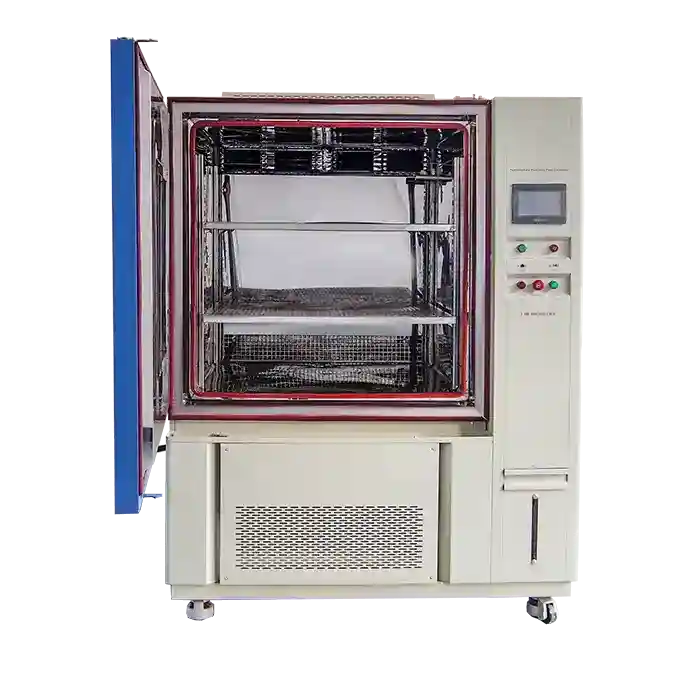
Test chamber selection begins with evaluating specimen dimensions and quantity. A single PCB assembly fits comfortably in 100L models like the LIB TH-100 (400×500×500mm), while full system-level validation requires 1000L chambers accommodating complete rack-mounted equipment. Heat load considerations become critical - the standard 1000W capacity handles typical electronics, but high-power devices may necessitate enhanced heat extraction systems. Proper sizing prevents overcrowding that compromises airflow uniformity.
Temperature Performance Requirements
Commercial electronics testing typically requires -40°C to +85°C capability, satisfied by Configuration B chambers. Automotive applications demand -40°C to +125°C per AEC-Q100 standards. Aerospace and military programs necessitate -55°C to +150°C or extreme configurations reaching -70°C through cascade refrigeration. The LIB TH Series offers three temperature configurations (A, B, C) allowing specification matching without over-investment in unnecessary capabilities.
Control System Sophistication
Modern reliability testing demands programmable profiles with precise control parameters. Touchscreen controllers managing 120 programs with 100 steps each enable complex thermal cycling sequences without operator intervention. Ethernet connectivity facilitates remote monitoring and data logging in CSV or Excel formats, essential for documentation-heavy qualification programs. PID control algorithms maintain setpoint accuracy while the electronic expansion valve technology reduces energy consumption by 30% compared to conventional systems.
Advanced Feature Requirements
Applications involving corrosive environments benefit from salt spray capabilities or mixed flowing gas options. Altitude simulation requires pressure control systems for avionics testing. The double-layer silicone sealing and heated anti-fog windows in LIB temperature humidity test chambers prevent condensation while maintaining visibility during testing. Cable penetrations with sealed plugs accommodate electrical connections to specimens under test without compromising environmental isolation. Customization capabilities address specialized requirements like multi-zone control or explosive atmosphere ratings.
|
Chamber Model |
Internal Volume |
Temperature Range (Config B) |
Humidity Range |
Ideal Application |
|
TH-100 |
100L (400×500×500mm) |
-40°C to +150°C |
20% ~ 98% RH |
Component-level Testing |
|
TH-225 |
225L (500×600×750mm) |
-40°C to +150°C |
20% ~ 98% RH |
PCB Assembly Validation |
|
TH-500 |
500L (700×800×900mm) |
-40°C to +150°C |
20% ~ 98% RH |
Multi-board System Testing |
|
TH-1000 |
1000L (1000×1000×1000mm) |
-40°C to +150°C |
20% ~ 98% RH |
Complete System Qualification |
LIB Industry Temperature Humidity Chambers for Precision Electronics Reliability
 |
 |
|||
|
|
|
|
|
|
| Robust Workroom | Cable Hole | Temperature and Humidity Sensor | PID controller | |


Engineering Excellence and Certification
LIB Industry maintains ISO 9001 certification with CE compliance validated through third-party testing by SGS and TUV authorities. This quality framework ensures manufacturing consistency across the TH Series product line, from 100L benchtop models to 1000L floor-standing systems. The French TECUMSEH compressor technology provides proven reliability in mechanical refrigeration systems, while nichrome heating elements deliver rapid temperature ramping. Each chamber undergoes factory calibration and performance mapping before shipment, documenting spatial uniformity and control accuracy.
Comprehensive Service and Support Infrastructure
A 3-year warranty with lifetime service support demonstrates confidence in product durability and customer commitment. The global support network provides 24/7 technical assistance, with replacement guarantees when repairs cannot resolve issues during the warranty period. Installation services include site preparation guidance, commissioning procedures, and operator training programs. Remote diagnostics via Ethernet connectivity enable rapid troubleshooting, minimizing downtime during critical testing campaigns.
Customization Capabilities for Specialized Requirements
Non-standard design expertise addresses unique testing scenarios that standard configurations cannot accommodate. Custom chamber dimensions, specialized material selections for chemical compatibility, or integrated vibration tables for combined environmental testing represent typical customization requests. The engineering team collaborates with customers from concept through commissioning, ensuring delivered systems meet exact application requirements. This flexibility proves essential for research institutions developing novel testing protocols or manufacturers qualifying emerging technologies.
Material Quality and Construction Integrity
Interior SUS304 stainless steel construction resists corrosion from prolonged high-humidity exposure while maintaining structural integrity. The 4mm A3 steel exterior frame with powder coating treatment provides industrial-grade durability suitable for demanding production environments. Polyurethane foam insulation combined with insulation cotton minimizes thermal losses, improving energy efficiency and temperature stability. The 8cm double-layer tempered glass observation window incorporates built-in LED lighting, enabling visual monitoring without environmental disruption. These construction details translate to reduced maintenance requirements and extended operational lifespan.
Conclusion
Temperature humidity chambers constitute indispensable tools for electronics reliability validation, accelerating failure mechanisms that would otherwise remain hidden until field deployment. Precision environmental control, adherence to international testing standards, and proper chamber selection enable engineers to predict product longevity with statistical confidence. LIB Industry's TH Series chambers combine advanced refrigeration technology, sophisticated programmable controls, and robust construction to deliver repeatable testing results across diverse application requirements.
FAQ
What temperature humidity chamber size do I need for PCB assembly testing?
The chamber should accommodate your largest assembly with 20% clearance for airflow. A TH-225 (225L) handles standard PCBs, while TH-500 suits multi-board fixtures. Consider future testing needs and sample quantity when sizing.
Can temperature humidity chambers perform both IPC and JEDEC standard tests?
Yes, programmable chambers execute multiple test protocols. Configure separate programs for IPC-TM-650 moisture resistance (85°C/85% RH) and JESD22-A104 thermal cycling (-40°C to +125°C) within the same equipment platform.
How does cascade refrigeration differ from single-stage cooling systems?
Cascade systems utilize two independent refrigeration circuits to achieve temperatures below -40°C efficiently. This configuration maintains stability at -70°C, necessary for military specifications, whereas single-stage systems struggle below -40°C.
Ready to elevate your electronics reliability testing program? Contact LIB Industry, a leading temperature humidity chamber manufacturer and supplier, for customized environmental testing solutions tailored to your specifications. Our engineering team provides comprehensive turnkey services from design through commissioning. Reach out today at ellen@lib-industry.com to discuss your testing requirements.