Testing Submersible Devices Using Water Immersion Tanks
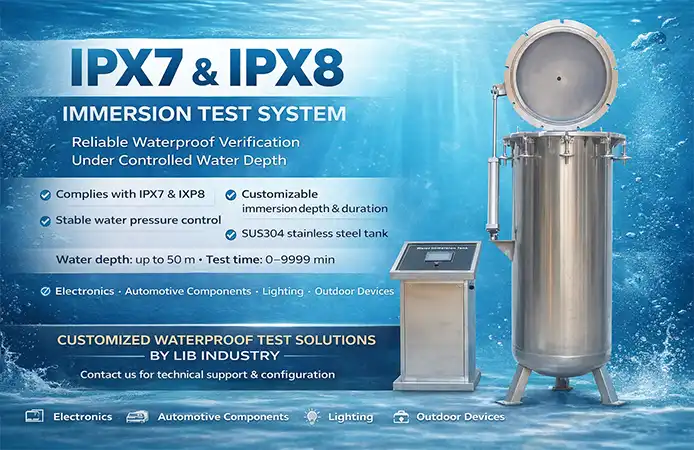
Testing submersible devices using water immersion tanks represents a critical validation process that ensures underwater equipment meets stringent waterproofing standards before deployment. These specialized testing chambers simulate real-world aquatic conditions, subjecting electronic components, marine instruments, and diving equipment to controlled water pressure environments. By replicating depths ranging from shallow immersion to extreme underwater pressures equivalent to 50 meters, manufacturers can verify seal integrity, identify potential failure points, and certify compliance with international IPX7 and IPX8 ratings. This comprehensive testing methodology protects both product reliability and end-user safety in demanding underwater applications.
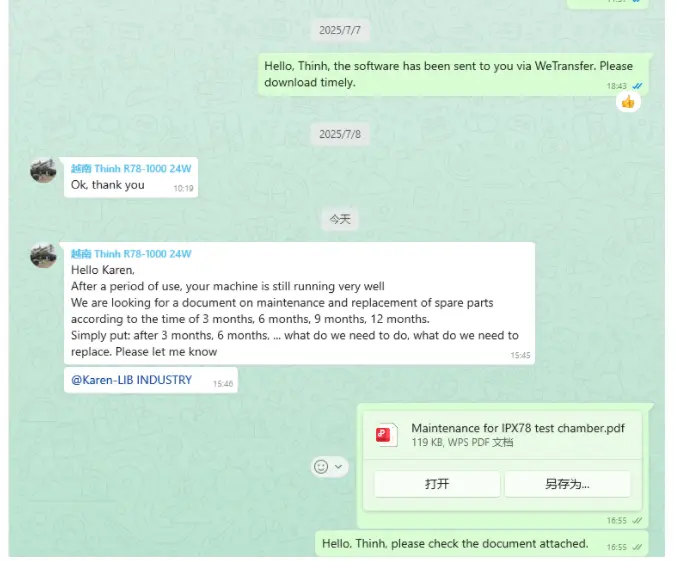
After months of daily operation, a customer from Vietnam confirmed that their IPX7/IPX8 immersion tank continues to deliver stable and reliable performance. They also praised the support team’s prompt assistance, providing clear instructions for routine maintenance and parts replacement at 3-, 6-, 9-, and 12-month intervals. This real-world experience demonstrates both the long-term durability of the system and the value of professional after-sales care in keeping testing processes consistent and trouble-free.
What Are Submersible Devices and Their Environmental Challenges?
Categories of Submersible Equipment
Submersible devices encompass a broad spectrum of equipment designed for underwater operation, including dive computers, underwater cameras, marine sensors, ROV (remotely operated vehicle) components, and submersible pumps. Each category faces unique environmental stressors based on operational depth, exposure duration, and functional requirements. Consumer electronics like smartwatches and action cameras typically require shallow water resistance, while professional oceanographic instruments must withstand prolonged deep-sea conditions.
Pressure-Related Vulnerabilities in Waterproof Seals
Hydrostatic pressure increases approximately one atmosphere every 10 meters of depth, creating tremendous force against device enclosures. This pressure differential exploits microscopic imperfections in gasket materials, adhesive bonds, and mechanical seals. Temperature fluctuations compound these challenges by causing thermal expansion and contraction cycles that can compromise seal integrity over repeated exposure cycles.
Corrosion and Material Degradation Factors
Saltwater environments accelerate electrochemical corrosion processes on metallic components, while freshwater can promote biological growth within inadequately sealed cavities. Polymer materials used in seals and housings may absorb water molecules, leading to dimensional changes and reduced elasticity. UV exposure during surface intervals can further degrade protective coatings, creating pathways for moisture ingress during subsequent immersion.
Test Standards and Depth Requirements for Submersibles
IPX7 Temporary Immersion Specifications
The IPX7 rating certifies protection against temporary immersion in water up to 1 meter depth for a duration of 30 minutes. This standard addresses accidental submersion scenarios rather than continuous underwater operation. Test protocols mandate specific temperature ranges and require devices to remain functional after the immersion period, with no water ingress detected upon internal inspection.
IPX8 Continuous Submersion Parameters
IPX8 certification indicates suitability for continuous submersion beyond 1 meter depth, with specific depth and duration parameters defined by the manufacturer. Testing is typically conducted in a water immersion tank under conditions that exceed normal operational requirements, often involving depths of 3 meters or greater for extended periods. The device must maintain full functionality throughout the test and show no evidence of water penetration affecting critical components.
Industry-Specific Depth Certifications
|
Application Sector |
Typical Depth Rating |
Duration Requirement |
Additional Considerations |
|
Consumer Electronics |
1-5 meters |
30-60 minutes |
Impact resistance, button functionality |
|
Professional Diving Equipment |
40-100 meters |
Continuous operation |
Pressure compensation, temperature extremes |
|
Oceanographic Instruments |
100-6000 meters |
Long-term deployment |
Corrosion resistance, data transmission integrity |
|
Marine Construction Tools |
10-50 meters |
Intermittent use |
Mechanical load cycles, vibration tolerance |
Designing Immersion Test Profiles for Long-Term Exposure
Establishing Baseline Testing Conditions
Effective test profiles begin with defining worst-case operational scenarios that devices will encounter throughout their service life. This includes maximum anticipated depth, longest continuous immersion period, and environmental extremes such as temperature ranges and water chemistry variations. Baseline parameters should incorporate safety margins of 25-50% beyond stated operational limits to account for manufacturing variations and aging effects.
Cyclic Testing Protocols for Repeated Use
Equipment subject to repeated dive cycles requires cyclic testing that simulates pressure variations between surface and operational depth. These protocols involve multiple immersion and withdrawal cycles with controlled pressurization and depressurization rates. Such testing reveals cumulative fatigue effects on sealing materials and identifies progressive failure modes that single long-duration tests might overlook.
Accelerated Aging Through Extended Immersion
Extended immersion testing compresses months of operational exposure into concentrated test periods by maintaining continuous submersion under elevated pressure conditions. This methodology accelerates water diffusion through polymer materials and promotes corrosion processes, enabling rapid assessment of long-term reliability. Test durations typically range from 72 hours to several weeks depending on the device's intended service life.
Monitoring Device Functionality Under Water Pressure
Real-Time Performance Verification Methods
Maintaining device functionality throughout immersion testing requires continuous monitoring of critical parameters. Electrical connections through specialized pressure-rated feedthroughs enable real-time data collection, power supply, and command signal transmission. Testing chambers equipped with transparent observation ports allow visual inspection of display screens, indicator lights, and mechanical actuators during pressurized conditions.
Electrical Continuity and Signal Integrity Testing
|
Test Parameter |
Measurement Method |
Acceptance Criteria |
Monitoring Frequency |
|
Insulation Resistance |
Megohm meter through feedthrough |
>100 MΩ minimum |
Every 15 minutes |
|
Battery Voltage |
Digital multimeter connection |
≥95% of pre-test value |
Continuous logging |
|
Data Transmission |
Protocol analyzer |
Zero bit error rate |
Per transmission cycle |
|
Sensor Output |
Calibrated reference comparison |
±2% of nominal value |
Every 30 minutes |
Detecting Early Warning Signs of Seal Failure
Subtle changes in device behavior often precede catastrophic seal failure. Monitoring parameters such as increasing power consumption, drift in sensor readings, or intermittent electrical faults can indicate moisture ingress before visible water accumulation occurs. Humidity sensors placed inside test specimens provide quantitative measurement of seal performance degradation, enabling predictive failure analysis.
Data Evaluation and Failure Analysis for Submersible Devices
Quantitative Leak Rate Assessment Techniques
Post-test evaluation employs various methods to quantify seal effectiveness after submersion in a water immersion tank. Gravimetric analysis measures weight gain from absorbed water, with detection sensitivity below 0.01% of device mass. Tracer gas testing using helium leak detectors identifies specific failure locations by analyzing gas escape rates. These quantitative approaches provide objective compliance verification against established specifications.
Microscopic Examination of Seal Interfaces
Detailed post-failure analysis requires disassembly and microscopic examination of sealing surfaces. Stereomicroscopy reveals mechanical damage, contamination, or improper compression of gasket materials. Higher-magnification scanning electron microscopy (SEM) characterizes surface finish quality, identifies chemical degradation patterns, and locates micron-scale defects responsible for seal compromise.
Correlation Between Test Results and Field Performance
Statistical analysis of test data establishes predictive relationships between controlled laboratory conditions and real-world operational reliability. Accelerated testing models incorporate factors such as pressure cycling intensity, temperature exposure ranges, and chemical environment variations. Validation through field tracking of deployed devices refines these models, improving the accuracy of lifetime predictions based on qualification testing.
Enhancing Reliability and Safety Through Immersion Testing
Design Iteration Based on Testing Feedback
Immersion testing serves as a critical feedback mechanism throughout the product development cycle. Initial prototype testing identifies fundamental design weaknesses requiring major revisions such as alternative sealing concepts or material substitutions. Subsequent design verification testing validates implemented improvements and ensures performance margins meet target specifications before production commitment.
Material Selection for Harsh Aquatic Environments
|
Material Category |
Common Options |
Advantages |
Limitations |
|
Elastomeric Seals |
Nitrile, EPDM, Silicone, Fluorocarbon |
Excellent compression set resistance, broad temperature range |
Degradation from chemicals, UV exposure |
|
Housing Materials |
Titanium, Stainless steel, Engineering polymers |
High strength-to-weight ratio, corrosion resistance |
Cost considerations, machinability challenges |
|
Adhesives |
Epoxy, Polyurethane, Silicone |
Strong bonding, gap-filling capability |
Cure time requirements, thermal expansion mismatch |
|
Coatings |
Parylene, Ceramic, Fluoropolymer |
Conformal coverage, chemical inertness |
Application complexity, thickness uniformity |
Quality Control Integration in Manufacturing
Systematic immersion testing protocols establish quality benchmarks throughout production. Sample testing from each manufacturing batch verifies process consistency and detects variations in raw material properties or assembly procedures. Automated test equipment with programmable controllers enables high-throughput screening while maintaining rigorous documentation for traceability and regulatory compliance.
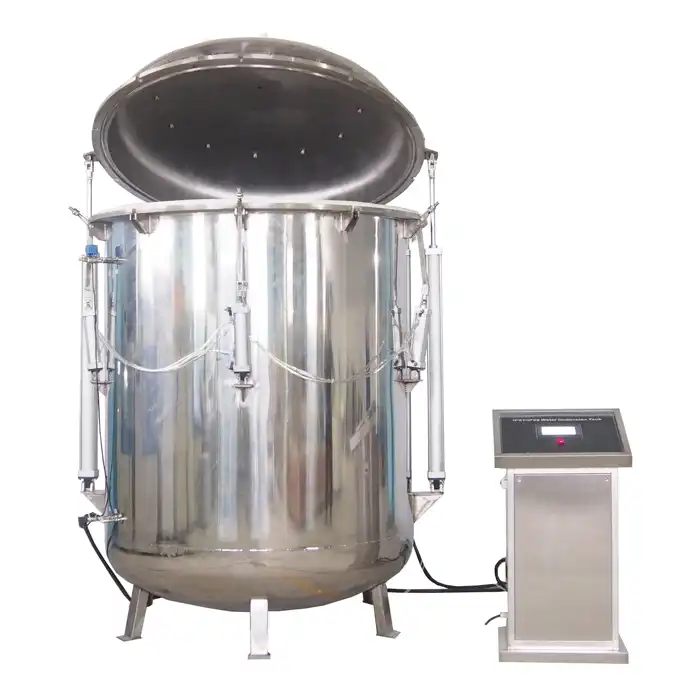
Reliable Submersion Performance with LIB Industry Water Immersion Tanks
 |
|
|
Model |
R78-600 |
|
Internal Dimension (mm) |
Diameter 600mm * Height 1500 mm |
|
Overall Dimension (mm) |
Diameter 800mm * Height 1800 mm |
|
Pressure |
50m water depth pressure |
|
Open mode |
Pneumatic lid |
|
Material |
A3 steel plate, wall thickness 15mm |
|
Controller |
Programmable color LCD touch screen controller, Ethernet connection |
|
Water Supply System |
Storage water tank, Automatic water supply |
 |
 |
| Test Area | Footstand |
 |
 |
| Control Panel | Safety Lock |
Advanced Features of Professional Testing Equipment
Modern water immersion tanks incorporate sophisticated control systems that precisely regulate testing parameters. The R78-600 model features programmable touch screen controllers with Ethernet connectivity, enabling remote monitoring and automated test sequence execution. Pneumatic lid operation with heavy-duty fastening valves ensures safe pressurization to 50-meter water depth equivalents, while the cylindrical A3 steel construction with 15mm wall thickness provides structural integrity under extreme conditions.
Customized Testing Solutions for Diverse Applications
Professional testing facilities require flexibility to accommodate various device geometries, test protocols, and compliance standards. Storage water tanks with automatic supply systems maintain consistent water quality throughout extended test campaigns. USB data logging captures comprehensive test records for quality documentation, while LAN interfaces enable integration with laboratory information management systems.
Technical Support and Calibration Services
Maintaining measurement accuracy requires regular calibration of pressure sensors, temperature controllers, and timing systems traceable to national standards. Equipment manufacturers provide comprehensive technical support including installation guidance, operator training programs, and preventive maintenance protocols. This ensures testing facilities achieve reproducible results aligned with international certification requirements.
Conclusion
Testing submersible devices using water immersion tanks provides essential validation that underwater equipment meets rigorous waterproofing standards required for safe, reliable operation. Through systematic evaluation of seal integrity, functional performance under pressure, and material durability, manufacturers can confidently certify compliance with international ratings while identifying design improvements. Advanced testing chambers with precise pressure control, automated monitoring, and comprehensive data logging streamline the qualification process, reducing development time and enhancing product quality.
FAQ
What is the difference between IPX7 and IPX8 water resistance ratings?
IPX7 certification covers temporary immersion up to 1 meter depth for 30 minutes, suitable for accidental submersion scenarios. IPX8 allows continuous submersion beyond 1 meter at depths and durations specified by the manufacturer, typically representing more demanding operational requirements for professional underwater equipment.
How does water pressure at depth affect electronic device seals?
Hydrostatic pressure increases exponentially with depth, forcing water molecules through microscopic imperfections in sealing materials. At 50 meters depth, devices experience approximately 5 atmospheres of pressure, creating significant stress on gaskets, adhesive bonds, and mechanical seal interfaces that may compromise waterproof integrity.
What test duration is recommended for validating long-term submersible reliability?
Extended immersion testing typically ranges from 72 hours to several weeks depending on the device's intended service life and operational duty cycle. Accelerated testing under elevated pressure conditions compresses months of real-world exposure into concentrated test periods while revealing progressive seal degradation patterns.
Partner with LIB Industry, your trusted water immersion tank manufacturer and supplier, for comprehensive environmental testing solutions. Our expert team delivers turnkey installations, operator training, and ongoing technical support worldwide. Contact us at ellen@lib-industry.com to discuss your submersible device testing requirements.