Thermal Stress Testing Applications of Temperature Cycling Chambers
Thermal stress testing applications of temperature cycling chambers enable manufacturers to evaluate product reliability under extreme temperature fluctuations. These specialized test systems simulate real-world environmental conditions by rapidly transitioning specimens between hot and cold extremes, exposing weaknesses in material interfaces, solder joints, and component assemblies. Industries ranging from automotive to aerospace utilize thermal cycling to validate durability, accelerate failure mechanisms, and ensure products withstand temperature-induced mechanical stresses throughout their operational lifespan. By subjecting materials to controlled thermal expansion and contraction cycles, engineers identify potential failures before market release, reducing warranty costs and enhancing product reputation.
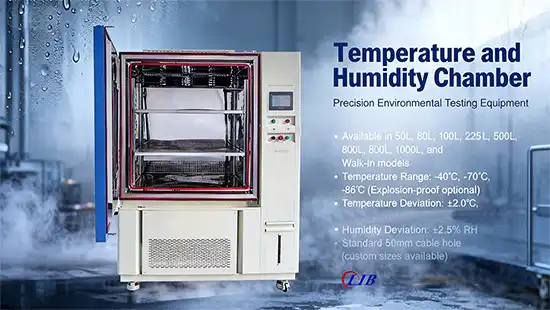
A Russian instrumentation company recently shared their experience: “The LIB temperature cycling chamber operates seamlessly. Its performance is spot-on, meeting all our expectations.” Testimonials like this underscore the dependability and effectiveness of LIB industry equipment in maintaining beverage quality standards worldwide.

Understanding Thermal Stress in Materials and Assemblies
Coefficient of Thermal Expansion Mismatches
Different materials expand and contract at varying rates when exposed to temperature changes. This fundamental property, quantified as the coefficient of thermal expansion (CTE), creates interfacial stresses when dissimilar materials are bonded together. Aluminum expands approximately twice as much as steel for the same temperature change, generating significant mechanical stress at their junction. Modern electronics combine materials with CTEs ranging from 2.6 ppm/°C for silicon to 17 ppm/°C for copper, creating vulnerable stress points.
Mechanical Stress Accumulation Through Cycling
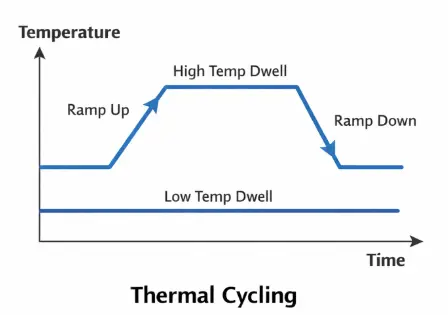
Repeated thermal cycling causes cumulative damage rather than single-event failure. Each temperature transition generates micro-cracks, delamination at interfaces, and gradual degradation of material properties. The stress magnitude depends on temperature differential, ramp rate, and dwell time at extreme temperatures. Components that survive individual temperature exposures may fail after hundreds of cycles due to progressive fatigue mechanisms that weaken structural integrity.
Critical Failure Modes from Temperature-Induced Stress
Thermal stress manifests through distinct failure patterns including solder joint cracking in electronics, adhesive delamination in composites, and seal failures in hermetic packages. Ball grid array (BGA) solder joints exhibit characteristic corner cracking due to maximum shear stress concentrations. Plastic packages experience wire bond failures as silicon chips move relative to leadframes during thermal excursions, breaking the delicate gold wire connections.
Designing Effective Thermal Stress Test Profiles
Determining Temperature Range Requirements
Test profile development begins with identifying operational and storage temperature specifications. Automotive electronics typically require testing from -40°C to +125°C, while aerospace applications may demand ranges extending to -70°C or +150°C. The selected range should exceed expected field conditions by 10-20°C to provide adequate safety margins. Consideration of geographical deployment locations ensures test profiles capture extreme climate variations from desert heat to arctic cold.
Optimizing Ramp Rates for Accelerated Testing
Temperature transition speed significantly impacts stress severity and test duration. Standard test specifications like JEDEC JESD22-A104 recommend 10°C/min to 15°C/min ramp rates for semiconductor reliability assessment. Faster transitions amplify thermal gradients within specimens, accelerating failure mechanisms while reducing overall test time. Temp cycle chamber capabilities must support consistent ramp rates across the full temperature span, as the TR5 series maintains controllable rates of 5°C, 10°C, or 15°C per minute.
|
Test Parameter |
Standard Testing |
Accelerated Testing |
Gentle Testing |
 |
|
Ramp Rate |
10°C/min |
15°C/min |
5°C/min |
|
|
Dwell Time |
15-30 minutes |
5-10 minutes |
30-60 minutes |
|
|
Total Cycles |
500-1000 |
200-500 |
1000-2000 |
|
|
Typical Duration |
2-4 weeks |
1-2 weeks |
4-8 weeks |
Establishing Dwell Times and Cycle Counts
Adequate dwell time at temperature extremes ensures specimens reach thermal equilibrium, maximizing stress exposure. Typical dwell periods range from 10 to 30 minutes depending on sample thermal mass and test objectives. Cycle count determination requires understanding expected product lifetime and accelerated aging factors. Consumer electronics may undergo 500 cycles while military applications demand 1000+ cycles to simulate decades of field exposure.
Applications Across Automotive, Electronics, and Aerospace Industries
Validating Automotive Electronic Control Units
Modern vehicles contain over 100 electronic control units (ECUs) exposed to engine compartment heat, winter cold, and rapid transitions during vehicle operation. Thermal cycling validates engine control modules, transmission controllers, and battery management systems under these harsh conditions. Testing reveals solder joint reliability, conformal coating effectiveness, and connector durability critical for automotive safety systems that must function flawlessly throughout 15-year service lives.
Qualifying Semiconductor Packaging Reliability
Integrated circuit manufacturers employ thermal cycling as a primary qualification method for new package designs. The testing stresses die attach materials, bond wires, encapsulants, and substrate interconnections. Package types from traditional quad flat packs to advanced flip-chip ball grid arrays each exhibit unique failure mechanisms under thermal stress. Qualification requires demonstrating survival through minimum cycle counts specified in industry standards like JEDEC and AEC-Q100.
Certifying Aerospace Components for Flight Environments
Aircraft components experience dramatic temperature variations from ground operations in extreme climates to high-altitude cruise conditions where exterior temperatures plummet to -56°C. Avionics, sensor systems, and structural assemblies undergo rigorous thermal cycling qualification to meet aerospace standards like MIL-STD-810 and RTCA DO-160. The testing validates performance across flight envelopes, ensuring navigation systems, flight controls, and communication equipment maintain reliability regardless of operating environment.
Measuring Material Response During Rapid Temperature Changes
Real-Time Strain Gauge Measurements
Strain gauges bonded to critical locations provide quantitative stress data throughout thermal cycling. These precision sensors detect micro-strain changes as materials expand and contract, revealing stress concentrations that predict eventual failure locations. Multi-channel data acquisition systems record strain evolution across temperature profiles, enabling correlation between thermal exposure and mechanical response. Advanced installations measure strain simultaneously at multiple points on complex assemblies.
Electrical Continuity Monitoring Systems
Continuous resistance measurement detects the precise cycle when electrical failures occur in circuits and interconnections. Daisy-chain test structures route current through all critical solder joints, wire bonds, or connector interfaces. Resistance increases signal degradation while open circuits identify catastrophic failures. This real-time monitoring pinpoints failure timing without interrupting tests for periodic inspection, improving efficiency and failure mechanism understanding.
High-Resolution Thermal Imaging Analysis
Infrared cameras capture temperature distribution across specimen surfaces during cycling inside a temperature cycling test chamber, identifying thermal gradients and hotspots that concentrate stress. Non-uniform heating or cooling patterns indicate design flaws, inadequate heat sinking, or air circulation problems within assemblies. Thermal imaging complements strain measurements by revealing areas experiencing maximum thermal stress, guiding subsequent design optimization efforts to improve uniformity and reduce vulnerability.
Correlating Thermal Stress Test Results with Field Performance
Acceleration Factor Calculation Methods
Converting laboratory cycle counts to field lifetime equivalents requires calculating acceleration factors based on test severity versus usage conditions. The Coffin-Manson relationship describes fatigue life dependence on temperature range and cycling frequency. Typical acceleration factors range from 10 to 50, meaning 1000 test cycles may represent 10,000 to 50,000 field cycles. Conservative calculation approaches account for uncertainties in field usage patterns and stress distribution differences.
|
Application Domain |
Typical Field Cycles |
Test Cycles Required |
Acceleration Factor |
Qualification Standard |
|
Consumer Electronics |
200-500 (10 years) |
500-1000 |
20-30 |
JEDEC JESD22-A104 |
|
Automotive (Engine Bay) |
5,000-10,000 (15 years) |
1000-2000 |
50-100 |
AEC-Q100 |
|
Aerospace Avionics |
10,000-20,000 (30 years) |
1500-3000 |
100-200 |
MIL-STD-810 Method 503 |
Statistical Analysis of Failure Distributions
Weibull analysis characterizes failure distributions from thermal cycling data, providing reliability metrics and confidence intervals. The shape parameter indicates whether failures result from random defects or wear-out mechanisms. Scale parameter determines characteristic lifetime, while location parameter identifies failure-free operation periods. Statistical treatment of multiple test samples enables prediction of field failure rates and warranty return percentages with quantified uncertainty.
Warranty Cost Prediction Models
Financial impact assessment translates thermal cycling results into warranty expense projections. Historical correlation between test performance and field returns enables predictive modeling of failure rates across product populations. Products exhibiting marginal test performance may proceed to market with increased warranty reserves, while robust test results justify reduced reserves. This financial analysis supports business decisions about design modifications, manufacturing investments, and market launch timing.
Using Thermal Cycling Data to Optimize Product Design
Identifying Critical Design Weaknesses
Systematic failure analysis of thermally cycled specimens reveals specific design elements requiring modification. Cross-sectioning failed samples under microscopy exposes crack propagation paths, delamination interfaces, and material degradation patterns. This forensic investigation identifies root causes - inadequate material selection, improper geometry, or manufacturing defects. Understanding failure mechanisms enables targeted design improvements rather than expensive wholesale redesigns.
Material Selection and Interface Engineering
Thermal cycling data guides selection of compatible material combinations that minimize CTE mismatch stress. Engineers choose adhesives, solders, and substrate materials balancing performance requirements with thermal expansion compatibility. Interface engineering techniques including stress-relief features, compliant interlayers, and optimized geometry distributions reduce peak stress magnitudes. Advanced material systems like silver-filled epoxies provide intermediate CTE values bridging disparate materials.
Iterative Design Validation Cycles
Rapid prototyping combined with abbreviated thermal cycling enables quick evaluation of design modifications. Rather than committing to full qualification testing, engineers perform screening tests with reduced cycle counts to assess improvement effectiveness. Successful design changes progress to complete validation while unsuccessful approaches are abandoned early, accelerating development timelines. This iterative methodology reduces time-to-market while ensuring robust final designs.
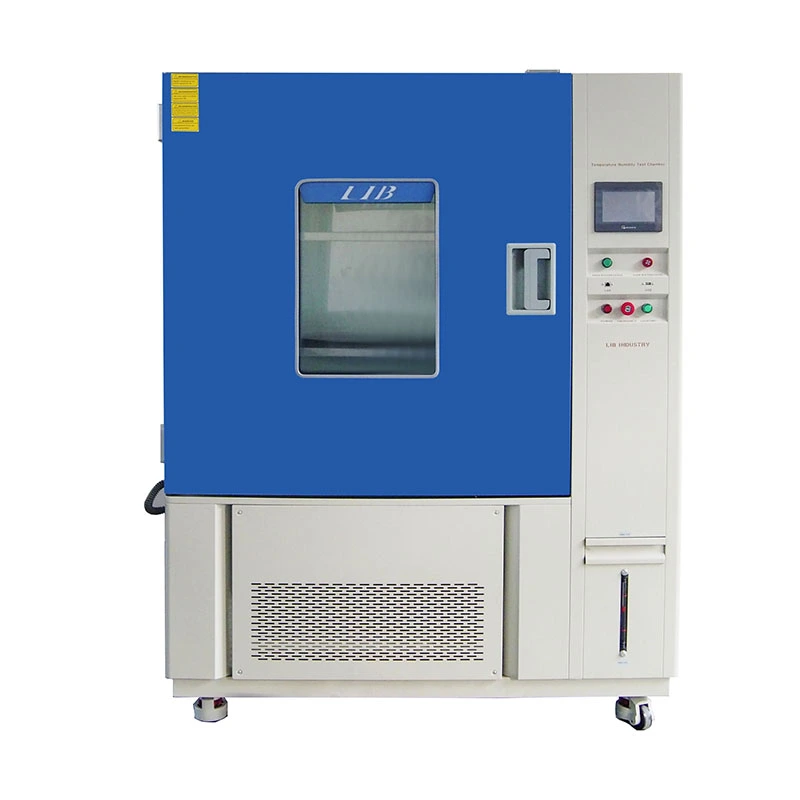
Rapid and Stable Stress Testing with LIB Industry Temperature Cycling Chambers
|
|
Name | Temperature Cycling Chamber | ||||
|
Model |
TH-100 |
|||||
|
Temperature range |
-20℃ ~+150 ℃ |
|||||
|
Low type |
A: -40℃ B:-70℃ C -86℃ |
|||||
|
Humidity Range |
20%-98%RH |
|||||
|
Temperature deviation |
± 2.0 ℃ |
|||||
|
Heating rate |
3 ℃ / min |
|||||
|
Cooling rate |
1 ℃ / min |
|||||
|
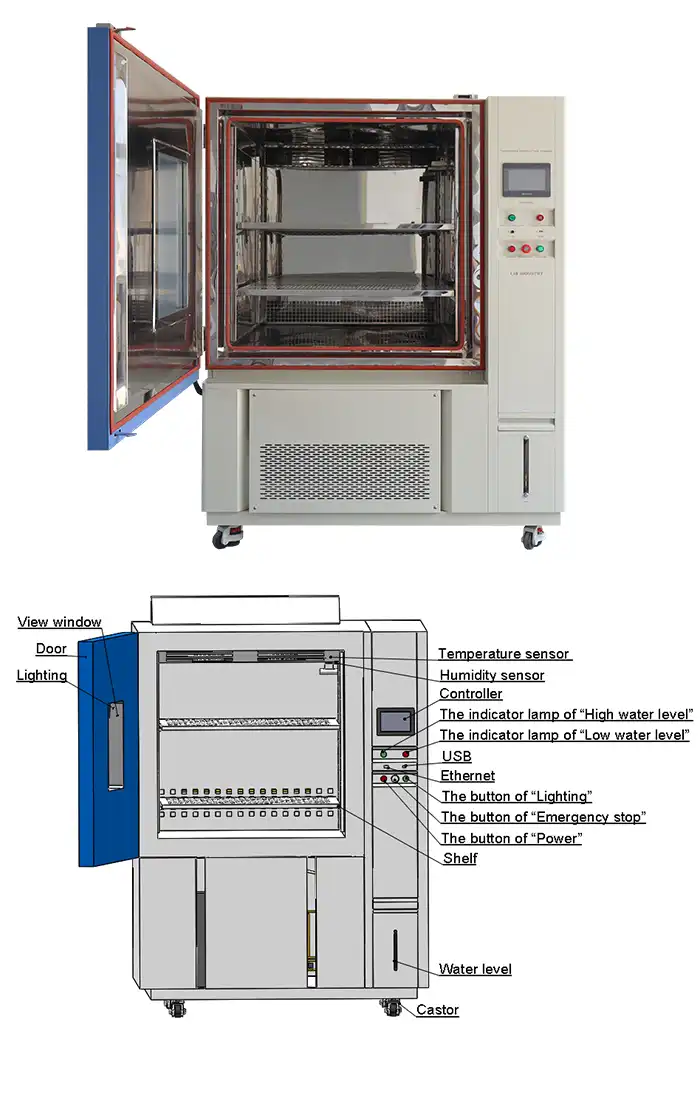
Controller |
Programmable color LCD touch screen controller, Multi-language interface, Ethernet , USB |
|||||
|
Exterior material |
Steel Plate with protective coating |
|||||
|
Interior material |
SUS304 stainless steel |
|||||
|
Standard configuration |
1 Cable hole (Φ 50) with plug; 2 shelves |
|||||
|
Timing Function |
0.1~999.9 (S,M,H) settable |
|||||
Precision Temperature Control for Repeatable Results
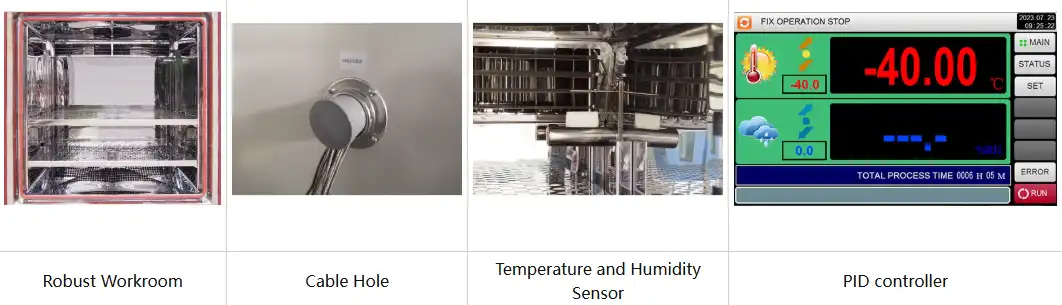
LIB Industry temperature cycling chambers maintain temperature uniformity within ±0.5°C throughout the test volume, ensuring consistent specimen exposure. High-precision PT100 Class A sensors provide 0.001°C resolution, while advanced PID controllers manage heating and cooling systems for stable temperature maintenance. The programmable LCD touch screen controller enables one-click generation of complex test profiles with up to 100 preset cycles, simplifying test setup and ensuring repeatability across multiple test runs.
Advanced Refrigeration Systems for Reliable Operation
The cascade refrigeration architecture employs French TECUMSEH compressors with multi-stage energy control for efficient operation across wide temperature ranges. Electronic expansion valves automatically adjust refrigerant flow based on thermal load, maintaining consistent cooling performance whether testing small electronic components or massive automotive assemblies. Anti-frost technology preserves system efficiency during extended test cycles, while independent hardware temperature limiters provide dual-layer protection for valuable test specimens.
Comprehensive Safety and Monitoring Features
Dual-layered protection combines software controls with independent hardware safety systems including over-temperature protection, over-current protection, refrigerant high-pressure protection, and earth leakage protection. Optional explosion-proof configurations accommodate battery testing applications with smoke detectors, alarm buzzers, and fire suppression system interfaces. Remote monitoring capabilities via mobile applications and web interfaces enable engineers to track test progress from any location, receiving instant alerts when cycles complete or anomalies occur.
Conclusion
Thermal stress testing with temperature cycling chambers represents an indispensable validation methodology for modern products facing diverse environmental challenges. The systematic application of controlled temperature extremes reveals hidden vulnerabilities, accelerates failure mechanisms, and provides quantitative reliability data essential for engineering decisions. Industries leveraging comprehensive thermal cycling programs achieve reduced field failures, lower warranty costs, and enhanced customer satisfaction through products proven reliable under rigorous conditions. Investment in advanced testing equipment and methodologies pays dividends through improved product quality and competitive market advantage.
FAQ
What temperature range should I specify for my thermal cycling chamber?
Select a temperature range exceeding your product's operational specifications by 10-20°C. Automotive electronics typically require -40°C to +125°C, while aerospace applications may need -70°C to +150°C. Consider geographical deployment locations and worst-case environmental conditions to ensure adequate safety margins.
How many thermal cycles are required for adequate reliability qualification?
Cycle count depends on industry standards and expected product lifetime. Consumer electronics typically undergo 500-1000 cycles, automotive components require 1000-2000 cycles, while aerospace applications demand 1500-3000+ cycles. Acceleration factors between test and field conditions determine the equivalent field lifetime represented.
Can thermal cycling tests predict field failure rates accurately?
Thermal cycling provides reliable failure rate predictions when combined with proper acceleration factor calculations and statistical analysis. Weibull distribution modeling of test data enables quantitative reliability projections. Historical correlation between test performance and actual field returns validates predictive accuracy for specific product categories and applications.
Partner with LIB Industry for Your Testing Needs
LIB Industry delivers comprehensive temperature cycling chamber solutions as a trusted manufacturer and supplier of environmental testing equipment. Our engineering team provides customized configurations, installation support, and lifetime technical assistance. Contact ellen@lib-industry.com to discuss your thermal stress testing requirements and discover how our chambers accelerate your product development.