MIL-STD-810G Rain Test Chambers for Aerospace Components
Aerospace components face relentless environmental challenges, and water intrusion remains among the most destructive. MIL-STD-810G rain test chambers deliver controlled simulation environments where avionics, sensors, structural elements, and protective enclosures undergo rigorous validation against precipitation exposure. These specialized systems replicate wind-driven rain, torrential downpours, and persistent drip conditions that aircraft encounter during takeoff, cruise, ground operations, and storage. Understanding how these chambers function - and what test parameters matter - helps aerospace manufacturers prevent costly failures, maintain regulatory compliance, and protect mission-critical systems from moisture-related degradation.
Why Aerospace Components Require Rain Resistance Testing?
Moisture Threatens Avionics and Electrical Systems
Avionic modules contain sensitive circuitry vulnerable to short circuits, corrosion, and performance degradation when moisture penetrates protective housings. Even microscopic water ingress can cause signal interference, component failure, or catastrophic system shutdown during flight operations.
Flight Envelope Exposes Components to Varied Precipitation
Aircraft transition through diverse atmospheric conditions - from tropical monsoons at ground level to freezing rain at altitude. Each flight phase presents unique moisture challenges that protective seals, coatings, and enclosures must withstand without compromise.
Regulatory Standards Mandate Environmental Validation
Aviation authorities require documented proof that components maintain functionality after exposure to standardized rain conditions. MIL-STD-810G provides the testing framework that satisfies Department of Defense procurement specifications and commercial airworthiness certification requirements.
Simulating Flight and Ground Rain Conditions in Test Chambers
Procedure I: Wind-Driven Rain Replicates In-Flight Exposure
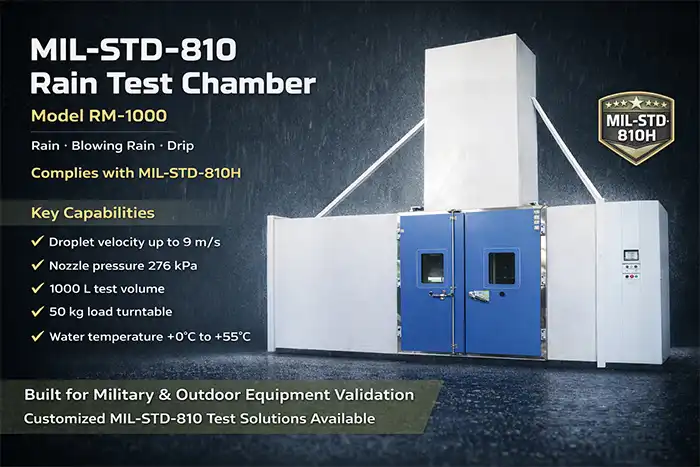
The blowing rain test chamber generates rainfall rates exceeding 1.7 mm/min while powerful blowers produce wind velocities reaching 9m/s, mimicking the horizontal rain impact experienced during landing approaches, taxiing operations, and open-hatch ground servicing. The rotating turntable ensures complete surface coverage as water droplets strike components from multiple angles.
Procedure II: Exaggerated Rain Tests Storm Resilience
Nozzle configurations deliver 20.8L/min through pressurized systems operating at 276kpa, creating downpour intensities that exceed natural rainfall maximums. This accelerated testing reveals weaknesses in drainage paths, seal compression, and material saturation limits within compressed timeframes.
Procedure III: Drip Testing Validates Static Exposure Protection
The drip array distributes over 280L/m²/h through precisely spaced holes positioned 20 to 25.4mm apart, simulating prolonged exposure during maintenance periods, hangar storage, or tarmac delays. This method identifies slow-penetration failures that aggressive rain tests might mask.
MIL-STD-810G Test Parameters for Aerospace Qualification
Rainfall Characteristics and Droplet Specifications
Droplet diameters range from 0.5mm to 4.5mm, matching natural precipitation profiles while terminal velocities ensure realistic impact forces. Proper droplet size distribution prevents unrealistic erosion damage while accurately representing water penetration mechanisms.
Temperature Differential Requirements
Test specimens undergo heating cycles maintaining water temperatures 10°C above ambient, with maximum differentials reaching 55°C. This thermal gradient simulates the condensation and thermal shock conditions encountered when cold airframes enter warm, humid environments or when heated avionics enclosures meet exterior precipitation.
Duration and Cycle Configuration
|
Test Procedure |
Typical Duration |
Wind Speed |
Application |
|
Procedure I (Rain + Wind) |
30-120 minutes |
Up to 18 m/s |
External surfaces, antenna radomes |
|
Procedure II (Exaggerated) |
15-60 minutes |
N/A |
Drainage systems, hatch seals |
|
Procedure III (Drip) |
4-12 hours |
N/A |
Stationary enclosures, connectors |
Evaluating Seals, Fasteners, and Sensitive Equipment Under Rain
Gasket Performance Under Compression and Aging
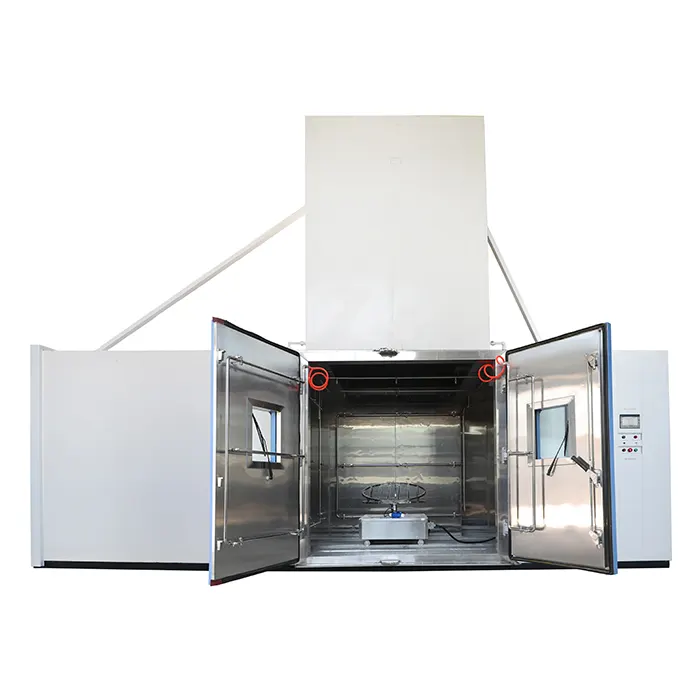
Environmental seals deteriorate through ultraviolet exposure, thermal cycling, and mechanical stress before encountering moisture. Blowing rain test machine testing following accelerated aging protocols reveals whether gasket materials maintain compression set, chemical resistance, and elastic recovery necessary for long-term water exclusion.
Fastener Corrosion and Torque Retention
Threaded fasteners securing access panels, equipment mounts, and structural joints create potential leak paths when corrosion compromises thread engagement or when dissimilar metal galvanic action degrades clamping force. Post-test torque verification and visual inspection identify fastener systems requiring material substitution or coating enhancement.
Connector Integrity and Contact Resistance
Electrical connectors represent critical vulnerability points where moisture ingress causes immediate functional failure or delayed corrosion damage. Testing validates whether connector backshells, environmental seals, and contact plating resist water intrusion while maintaining electrical performance specifications.
|
Component Type |
Primary Failure Mode |
Detection Method |
|
Avionics enclosures |
Seal degradation, condensation |
Leak detection, functional testing |
|
Cable assemblies |
Connector wicking, insulation damage |
Continuity testing, insulation resistance |
|
Antenna systems |
Radome delamination, water pooling |
RF performance, visual inspection |
Interpreting Test Data for Aerospace Component Reliability
Quantifying Water Intrusion Severity
Post-test inspection protocols document water presence through multiple detection methods: visual examination identifies obvious pooling or staining, electrical resistance measurements reveal conductive path formation, and weight differential analysis quantifies absorbed moisture mass. These combined approaches establish intrusion severity classifications guiding corrective actions.
Correlating Chamber Results with Field Performance
Calibration certificates with CNAS/ILAC traceability ensure measurement accuracy, enabling confident extrapolation from accelerated test conditions to anticipated service life. Statistical analysis comparing test severity factors with operational exposure data validates whether chamber protocols provide appropriate safety margins.
Establishing Pass/Fail Criteria Beyond Simple Leak Detection
Functional testing during and immediately following rain exposure reveals latent failures that visual inspection misses. Components must demonstrate continued operation under wet conditions, successful restart after drying periods, and maintained performance parameters throughout subsequent environmental cycling that follows moisture exposure.
Reducing In-Flight and Ground Exposure Failures Through Rain Testing
Design Iteration Based on Test Feedback
Early prototype testing identifies design deficiencies when modification costs remain minimal. MIL STD 810 G rain test chamber results guide engineers toward improved seal configurations, alternative materials, enhanced drainage paths, and protective coatings that prevent moisture accumulation before production tooling investment occurs.
Supplier Qualification and Incoming Inspection
Aerospace manufacturers leverage rain chamber testing for supplier validation, ensuring procured components meet environmental specifications before assembly integration. Periodic qualification testing maintains supplier accountability while incoming sample testing verifies batch-to-batch consistency.
Maintenance Procedure Development
Test chamber data informs maintenance interval establishment, seal replacement schedules, and inspection protocols. Understanding how components degrade under moisture exposure helps maintenance planners optimize servicing frequency, balancing operational availability against preventive maintenance costs.
|
Testing Phase |
Objective |
Typical Frequency |
|
Design validation |
Prototype evaluation |
Per design iteration |
|
Production qualification |
Manufacturing conformity |
First article + periodic |
|
Lot acceptance |
Batch verification |
Statistical sampling |
Guarantee Aerospace Reliability with LIB Industry MIL STD 810 G Rain Test Chambers
|
|
|
|
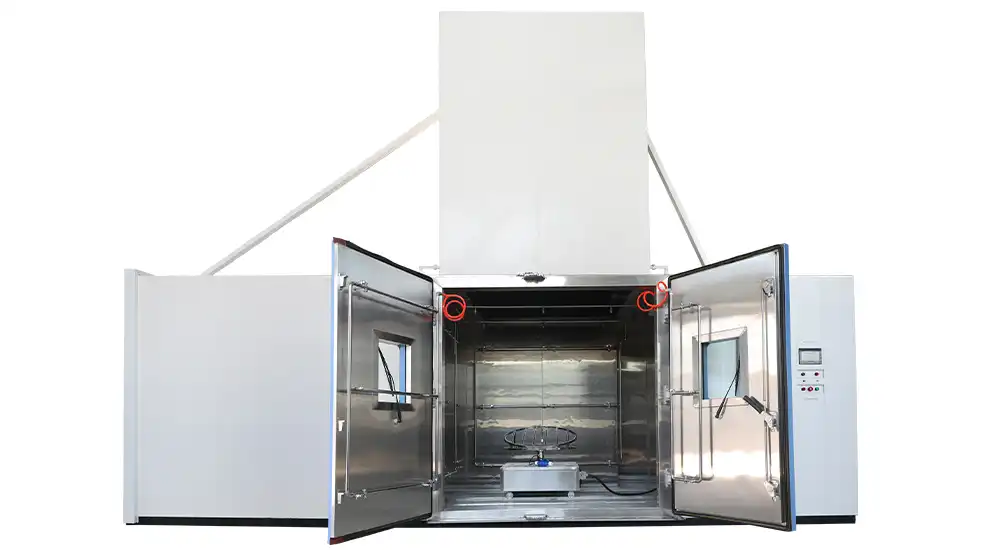
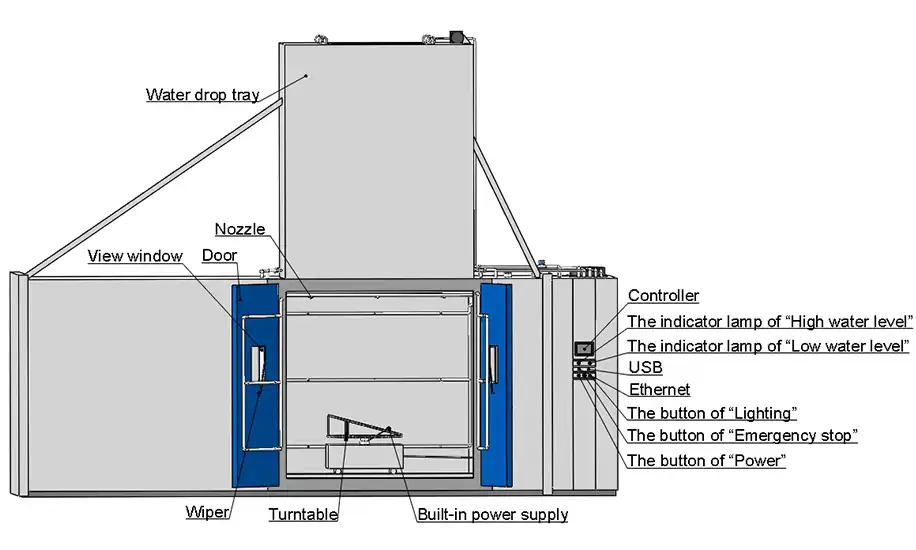
Model: RIM-1000 Interior Volume: 1000 L Turntable Load: 50 kg Turntable Diameter: 800 mm Door Lock: Electromagnetic lock Interior Material: SUS304 stainless steel Test Standard: MIL-STD-810H Test Time: 0 – 999 min, adjustable |
|
|
Rain & Blowing Rain Final Rain Droplet Velocity: 9 m/s on test item Rainfall Rate≥ 1.7 mm/min Droplet Size: 0.5 – 4.5 mm Water Temperature: +10°C to max. +55°C |
|
|
Drip Drip Area Dimensions: 1600 × 1000 mm, height adjustable Drip Hole Diameter: 20 – 25.4 mm Distance Between Holes: 25 mm Water Volume: ≥ 280 L/m²/h Water Temperature: +10°C to max. +55°C |
|
|
Exaggerated Rain Nozzle Pressure: 276 kPa Rainfall Rate: 20.8 L/min Nozzle Arrangement: One nozzle per 0.56 m² of surface area, approx. 48 cm from test surface Droplet Size:0.5 – 4.5 mm |
|
Advanced Multi-Procedure Capability
The chamber supports all three fundamental methods outlined in the standard - Procedure I for rain and blowing rain with wind speeds up to 18m/s, Procedure II for exaggerated rain simulating storm conditions, and Procedure III for precise drip testing. This comprehensive capability eliminates the need for multiple specialized systems while ensuring complete standard compliance.
Precision Control Systems for Repeatable Results
Integrated flow meters and rain gauges provide closed-loop feedback for rainfall rate monitoring, temperature control systems maintain specified differentials, 360° test orientation through adjustable turntables ensures uniform water distribution, and rotating stages operating from 1-7 rpm deliver complete surface exposure. These control features guarantee consistent test conditions across multiple runs and between different facilities.
Global Support Network and Quality Documentation
Since 2009, LIB has established trusted partnerships with world-renowned companies including Apple, IBM, Amazon, Intel, SGS, TUV, and Mercedes-Benz, with 29 global agents and service centers across Malaysia, Canada, the United Kingdom, and United States. This international presence ensures rapid technical support, spare parts availability, and expert consultation regardless of installation location.
Conclusion
MIL-STD-810G rain test chambers provide aerospace manufacturers with essential tools for validating component resilience against moisture intrusion. Through precise control of rainfall intensity, droplet characteristics, wind velocity, and temperature differentials, these systems replicate the environmental challenges aircraft face throughout operational lifecycles. Comprehensive testing during design, production, and supplier qualification phases prevents costly field failures while ensuring regulatory compliance and mission readiness.
FAQ
How long does a typical MIL-STD-810G rain test cycle require for aerospace component qualification?
Test duration varies by procedure and component type, ranging from 30 minutes for accelerated exaggerated rain testing to 12 hours for drip exposure validation. Complete qualification programs typically incorporate multiple procedures with intermediate drying and functional testing periods.
Can rain test chambers accommodate large aerospace assemblies like complete avionics racks or wing sections?
Chamber dimensions of 1000×1000×1000mm with 50kg turntable capacity suit most individual components and subassemblies. Larger structures require custom chamber configurations or representative sample testing approaches validated through engineering analysis.
What maintenance intervals do MIL-STD-810G rain test chambers require to maintain calibration accuracy?
Annual calibration verification ensures measurement accuracy for rainfall rate, pressure, temperature, and wind velocity parameters. Routine maintenance includes water filtration system servicing, nozzle inspection, seal replacement, and control system validation performed quarterly or following intensive testing campaigns.
Ready to enhance your aerospace component validation capabilities? Contact LIB Industry, your trusted environmental test chamber manufacturer, for expert consultation on MIL STD 810 G rain test chamber solutions tailored to your specific requirements. Reach us at ellen@lib-industry.com