Applications of UV Weathering Tests in Automotive Materials
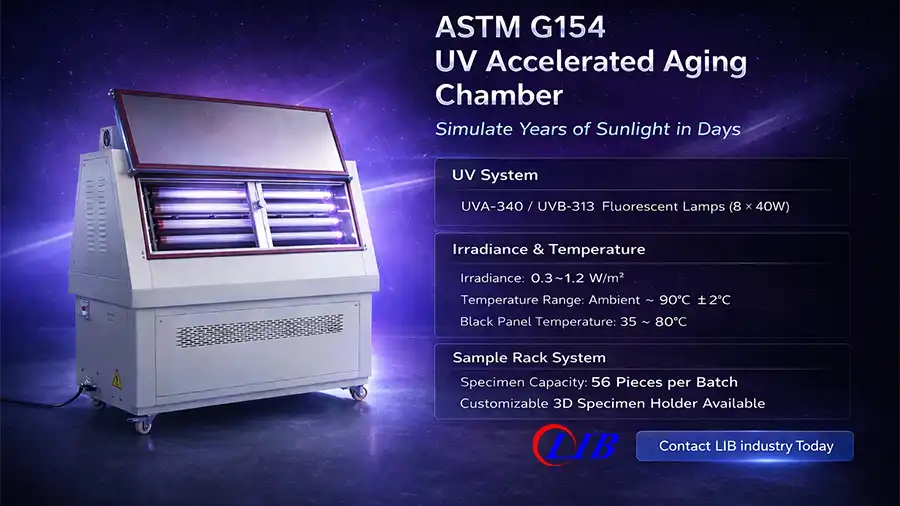
Automotive materials face relentless exposure to sunlight, rain, and temperature fluctuations throughout their service life. UV weathering tests simulate these harsh outdoor conditions in controlled laboratory settings, enabling manufacturers to predict material longevity before vehicles reach consumers. The ASTM G154 UV test machine accelerates degradation processes through precise control of ultraviolet radiation, moisture cycles, and thermal stress, delivering comprehensive performance data within weeks rather than years. This accelerated evaluation helps automotive engineers select durable polymers, coatings, and composites that maintain structural integrity, aesthetic appeal, and functional safety across diverse climate zones worldwide.
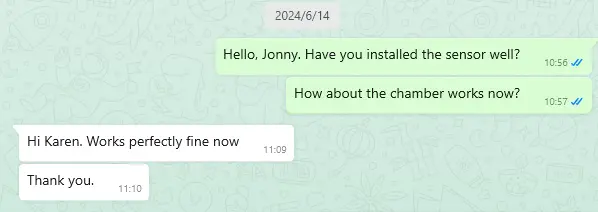
Proven in real-world applications, LIB industry’s UV Resistance Test Chamber consistently delivers smooth and dependable operation, earning praise from users who rely on it every day. Its demonstrated stability makes it an indispensable tool for PCB qualification, enabling consistent, reproducible results, accelerating material aging studies, and helping manufacturers confidently meet rigorous industry testing standards.
Why UV Resistance Is Critical for Automotive Materials?
Photodegradation Mechanisms in Polymer Compounds
Ultraviolet radiation triggers molecular chain scission in polymer-based automotive components through photochemical reactions. High-energy UV photons break carbon-hydrogen and carbon-carbon bonds within polymer structures, generating free radicals that propagate degradation cascades. This photolytic damage manifests as surface chalking, gloss reduction, and mechanical property deterioration that compromises both appearance and structural performance over time.
Economic Consequences of Premature Material Failure
Warranty claims related to faded dashboards, cracked bumpers, and delaminated paint finishes impose substantial financial burdens on automotive manufacturers. Industry data reveals that cosmetic defects from UV exposure account for significant customer dissatisfaction and brand reputation damage. Preventive testing using ASTM G154 UV test machines substantially reduces these costs by identifying vulnerable formulations during development rather than after market release.
Regulatory Compliance and Safety Standards
Modern automotive regulations mandate minimum durability thresholds for exterior and interior components exposed to sunlight. Testing protocols verify that materials maintain essential properties such as impact resistance in bumpers and optical clarity in headlight lenses throughout expected vehicle lifespans. Accelerated UV weathering validates compliance with international standards, ensuring vehicles meet safety requirements across global markets.
Typical Automotive Components Evaluated by UV Weathering Tests
Exterior Trim and Body Panels
Painted surfaces, clearcoats, and decorative trim pieces undergo rigorous UV exposure assessment to prevent color shift and surface degradation. Automotive manufacturers subject metallic finishes, pearlescent coatings, and matte textures to standardized weathering cycles that replicate years of outdoor exposure. These evaluations ensure visual consistency and corrosion protection across vehicle lifetimes, maintaining consumer appeal and resale value.
Dashboard and Interior Plastics
Instrument panels, door panels, and console components receive continuous sunlight exposure through vehicle windows, making UV resistance essential. Testing in a UV test machine reveals susceptibility to color fading, surface cracking, and embrittlement in polypropylene, ABS, and thermoplastic elastomer formulations. Advanced screening identifies optimal stabilizer packages and pigment systems that preserve interior aesthetics and tactile properties under sustained UV bombardment.
Headlight and Taillight Assemblies
Optical clarity and mechanical durability of polycarbonate and acrylic lenses directly impact vehicle safety and regulatory compliance. UV weathering tests measure haze development, yellowing, and micro-cracking that degrade light transmission and beam pattern integrity. Material selection informed by accelerated aging data ensures headlamp assemblies maintain DOT and ECE performance standards throughout mandated service intervals.
|
Component Category |
Primary Materials |
Key Degradation Concerns |
|
Exterior Paint Systems |
Polyurethane, Acrylic |
Gloss loss, color fading, chalking |
|
Bumper Fascia |
PP, TPO, PC/ABS |
Embrittlement, impact resistance decline |
|
Interior Trim |
PP, ABS, PVC |
Color shift, surface texture changes |
|
Lighting Components |
Polycarbonate, PMMA |
Yellowing, haze formation, cracking |
|
Weatherstripping |
EPDM, TPV |
Hardening, compression set, leakage |
ASTM G154 Requirements for Automotive Material Qualification
Lamp Selection and Spectral Distribution
ASTM G154 specifies UVA-340 lamps that replicate the critical short-wavelength ultraviolet spectrum present in natural sunlight. These fluorescent sources emit peak energy at 340 nanometers, matching the most damaging portion of terrestrial solar radiation. Alternative UVB-313 lamps provide more aggressive testing for quality control applications, though they generate unnaturally severe degradation compared to outdoor exposure.
Test Cycle Configuration Parameters
Standard automotive qualification cycles alternate UV exposure periods with condensation phases to simulate day-night thermal cycling and moisture effects. Typical protocols specify eight hours of UV irradiance at 60°C black panel temperature followed by four hours of condensation at 50°C. The ASTM G154 UV test machine precisely controls these transitions, maintaining irradiance levels between 0.89 and 1.55 W/m² at 340 nanometers throughout exposure periods.
Specimen Preparation and Mounting Procedures
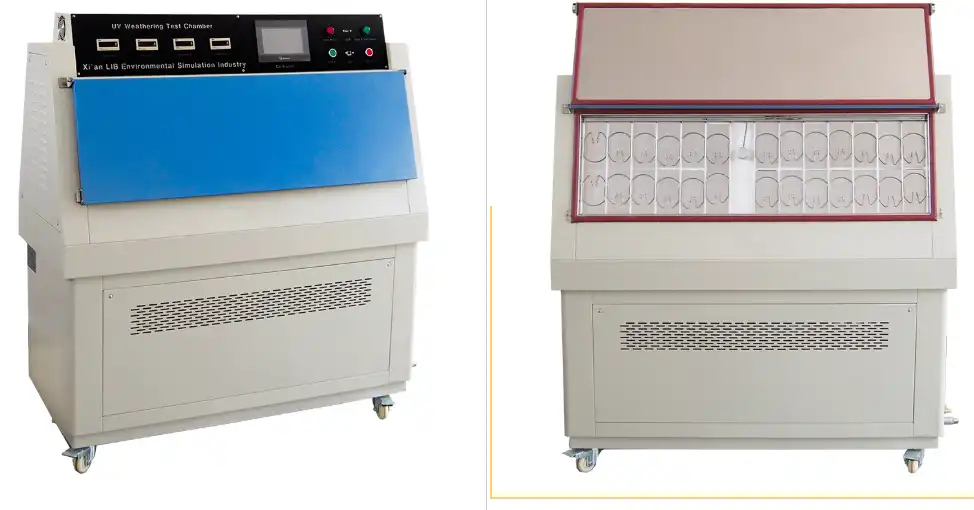
Proper sample preparation directly influences test validity and repeatability. ASTM G154 requires clean, representative specimens mounted at standardized distances from UV lamps within UV testing equipment to ensure uniform irradiance exposure. Flat specimen holders accommodate standard 75×150 mm panels, while specialized fixtures enable testing of curved components and assembled parts. Temperature monitoring via black panel thermometers or black standard thermometers verifies accurate environmental simulation.
Combined UV, Temperature, and Moisture Aging Effects
 |
 |
|
Model |
UV-SI-260 |
|
Internal Dimension (mm) |
450*1170*500 |
|
Overall Dimension (mm) |
680*1300*1500 |
|
Irradiation Source |
Fluorescent UV lamps (8) - 40 W |
|
Temperature Range |
Ambient ~ 90 ℃ ±2℃ |
|
Black Panel Temperature (BPT) |
35 ~ 80 ℃ |
|
Humidity Range |
≥95% RH |
|
Bandwidth |
290 ~ 400 nm |
|
Irradiance Control |
0.3~20 W/㎡ |
|
Distance of Specimen and lamp |
50 mm |
|
Heating Element |
Nichrome heater |
|
Controller |
Programmable color LCD touch screen controller |
|
Ethernet connection, PC Link,USB |
|
|
Water Supply System |
Automatic water supply, Water purification system |
|
Interior Material |
SUS304 stainless steel |
Synergistic Degradation Acceleration
Simultaneous exposure to ultraviolet radiation, elevated temperatures, and moisture creates degradation synergies absent in single-factor testing. Heat accelerates chemical reaction rates while moisture facilitates hydrolytic degradation and dimensional changes in hygroscopic materials. UV radiation initiates photochemical reactions amplified by thermal energy, producing degradation rates far exceeding simple additive effects of individual stressors.
Condensation Cycle Simulation
The condensation phase in ASTM G154 cycles replicates dew formation occurring during natural outdoor exposure. Elevated temperature and humidity conditions promote moisture absorption in polymer matrices, causing plasticizer migration, hydrolysis, and interfacial debonding in composite structures. This wet-dry cycling reveals vulnerabilities to moisture-induced degradation mechanisms critical for automotive durability assessment.
Thermal Shock Effects from Water Spray
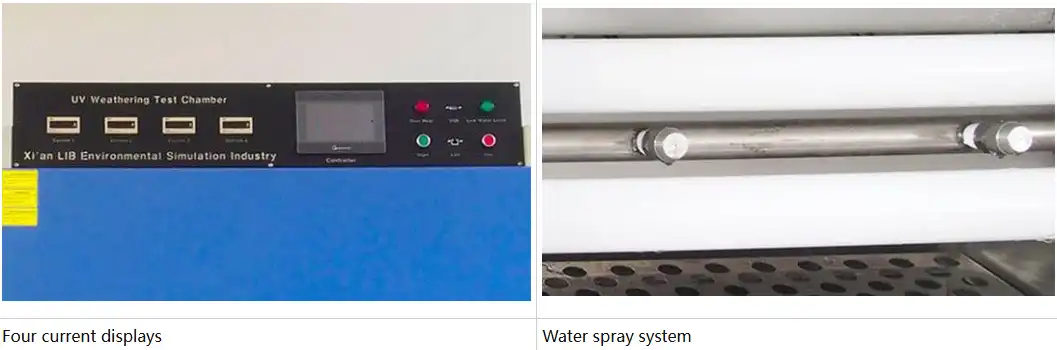
Water spray features available in advanced ASTM G154 UV test machines simulate sudden temperature drops from rain events on sun-heated components. Ten programmable nozzles deliver controlled water application rates, creating thermal shock stresses that accelerate crack propagation and surface defects. This capability proves particularly valuable for evaluating coated systems and multi-material assemblies susceptible to differential thermal expansion.
|
Environmental Factor |
Automotive Impact |
Test Simulation Method |
|
UV Radiation (290-400nm) |
Chain scission, color loss |
UVA-340/UVB-313 lamps |
|
Temperature (50-90°C) |
Reaction rate acceleration |
Programmable heating system |
|
Moisture (≥95% RH) |
Hydrolysis, swelling |
Condensation chamber cycling |
|
Water Spray |
Thermal shock, leaching |
Timed nozzle spray cycles |
Interpreting UV Test Results for Automotive Durability
Quantitative Performance Metrics
Objective measurement parameters provide standardized benchmarks for material comparison and qualification decisions. Gloss retention percentage quantifies surface degradation, with automotive specifications typically requiring 80% retention after defined exposure intervals. Colorimetry measurements capture ΔE values representing perceptible color changes, with acceptance thresholds varying by component visibility and customer expectations. Mechanical property retention, measured through tensile testing and impact evaluation, ensures structural components maintain safety margins.
Visual Assessment and Appearance Grading
Trained evaluators conduct visual inspections using standardized rating scales to document surface phenomena difficult to quantify instrumentally. Chalking severity, checking patterns, and gloss uniformity receive numerical grades that correlate with consumer acceptance thresholds. Digital imaging systems increasingly supplement human evaluation, capturing high-resolution records that enable statistical analysis of appearance degradation progression over extended test durations.
Correlation to Natural Weathering Exposure
Accelerated test results require correlation factors to predict real-world service life accurately. Correlation studies compare ASTM G154 exposure with outdoor weathering data from multiple geographic locations representing diverse climate zones. Acceleration factors typically range from 4:1 to 8:1 for automotive materials, meaning one year of accelerated testing approximates four to eight years of natural exposure under average conditions.
|
Property Measured |
Test Method |
Automotive Acceptance Criteria |
|
Gloss Retention |
ASTM D523 |
≥80% after 2000 hours |
|
Color Change (ΔE) |
ASTM D2244 |
ΔE ≤3.0 for visible surfaces |
|
Tensile Strength |
ASTM D638 |
≥85% retention |
|
Impact Resistance |
ASTM D256 |
≥75% retention |
|
Surface Cracking |
Visual inspection |
No cracks at 10× magnification |
Reducing Material Degradation Risks Through Early UV Testing
Design Phase Material Screening
Incorporating UV weathering evaluation during conceptual design stages using an ASTM G154 UV test machine identifies potential durability issues before tooling investments and production commitments. Comparative testing of candidate materials reveals performance differences among suppliers and formulation variations, enabling data-driven selection decisions. This proactive approach prevents costly redesigns and warranty exposures associated with late-stage material failures discovered during field trials.
Formulation Optimization Strategies
Iterative testing cycles refine additive packages, pigment systems, and polymer blends to maximize UV resistance without compromising processing characteristics or cost targets. Stabilizer synergies between hindered amine light stabilizers and UV absorbers require empirical validation through accelerated weathering. The ASTM G154 UV test machine enables rapid evaluation of formulation modifications, compressing development timelines while improving material performance.
Quality Control and Batch Verification
Production quality monitoring through periodic UV testing ensures manufacturing consistency and detects raw material variations that could compromise field durability. Incoming material certification combined with finished component sampling provides statistical confidence in delivered product quality. Accelerated exposure at elevated irradiance levels enables rapid go/no-go decisions for production lots, maintaining tight process control.
Ensure Automotive Quality Standards with LIB Industry ASTM G154 UV Test Machines
Precision Engineering for Reliable Results
LIB Industry UV-SI-260 chambers deliver the environmental control accuracy demanded by automotive qualification protocols. Eight 40-watt fluorescent UV lamps provide uniform irradiance distribution across 56 specimen positions, eliminating edge effects that compromise test validity. Programmable touchscreen controllers simplify cycle programming while maintaining precise temperature regulation within ±0.5°C, ensuring reproducible test conditions across multiple test campaigns.
Comprehensive Environmental Simulation Capabilities
The integrated condensation and water spray systems replicate complete outdoor weathering conditions beyond simple UV exposure. Automatic water purification maintains consistent spray quality, preventing mineral deposits that could affect thermal shock simulation. Temperature transition rates up to 5°C per minute enable realistic cycling between exposure and recovery phases, accelerating degradation mechanisms through rapid environmental transitions.
Global Support and Compliance Assurance
CE certification and third-party validation from SGS and TUV demonstrate compliance with international safety and performance standards. ISO 9001 quality management throughout manufacturing ensures consistent chamber performance and long-term reliability. Three-year warranties backed by 24/7 technical support provide confidence for critical automotive qualification programs, while customization capabilities address unique testing requirements for specialized components.
Conclusion
UV weathering resistance fundamentally determines automotive material longevity, influencing warranty costs, customer satisfaction, and brand reputation. Accelerated testing through ASTM G154 protocols conducted in an ASTM G154 UV test machine identifies vulnerable formulations during development, preventing field failures that compromise safety and aesthetics. Comprehensive environmental simulation combining ultraviolet radiation, thermal cycling, and moisture exposure reveals degradation mechanisms invisible through single-factor testing. Material qualification data from standardized weathering programs enables confident specification decisions that balance performance, cost, and sustainability objectives across global automotive markets.
FAQ
How long does a typical automotive UV weathering test cycle last?
Standard automotive qualification protocols range from 1000 to 3000 hours of accelerated exposure, equivalent to several years of outdoor service. Cycle duration depends on component criticality, material history, and acceptance criteria. Preliminary screening tests may run 500 hours while comprehensive validation extends to 5000 hours for critical safety components.
Can ASTM G154 testing replace outdoor weathering exposure entirely?
Accelerated UV testing provides rapid comparative data and preliminary qualification but cannot capture all outdoor exposure complexities. Most automotive programs combine accelerated screening with limited outdoor validation at representative climate locations. The correlation between laboratory and field results strengthens material selection confidence while maintaining practical development timelines.
What specimen dimensions are required for ASTM G154 testing?
Standard specimen holders accommodate 75×150 mm flat panels, though custom fixtures enable testing of production parts and curved surfaces. Sample thickness should represent production components, with minimum quantities of 3-5 replicates recommended for statistical validity. Larger test chambers accommodate full assemblies such as bumpers or lighting modules requiring integrated system evaluation.
LIB Industry specializes in manufacturing ASTM G154 UV test machines engineered for demanding automotive qualification programs. Our comprehensive solutions include installation, training, and ongoing technical support tailored to your testing requirements. Contact our team at ellen@lib-industry.com to discuss how our weathering test chambers can strengthen your material development and quality assurance processes.