Thermal Stress Testing for Solar Inverter Durability Explained
Solar inverter durability directly impacts photovoltaic system reliability, energy production continuity, and long-term return on investment. Thermal stress testing evaluates how inverter components withstand the extreme temperature fluctuations encountered during daily operation and seasonal variations. Temperature cycling test chambers replicate these harsh thermal transitions - from scorching midday heat exceeding 85°C on rooftop installations to overnight cooling below freezing - subjecting power electronics, solder joints, and capacitors to accelerated aging protocols. This rigorous evaluation reveals thermal fatigue mechanisms, identifies design vulnerabilities, and validates compliance with international standards like IEC 62093 and UL 1741. By exposing inverters to thousands of thermal cycles compressed into weeks, manufacturers predict field performance spanning 25-year operational lifetimes while optimizing designs for maximum reliability.
Why Is Thermal Stress Testing Important for Solar Inverters?
Preventing Catastrophic Field Failures in Renewable Installations
Solar inverters operate continuously in uncontrolled outdoor environments where ambient temperatures swing dramatically. Rooftop installations in desert climates experience junction temperatures exceeding 100°C during peak sunlight, plummeting to near-freezing overnight. These repetitive thermal excursions create mechanical stress at material interfaces - solder joints crack, capacitor connections loosen, and semiconductor die attach degrades. Premature inverter failure disrupts energy production, triggers costly warranty replacements, and damages manufacturer reputations. Thermal cycling testing identifies weak points before deployment, enabling design corrections that prevent field failures affecting thousands of installed units.
Meeting Stringent Certification Requirements
Global solar markets demand compliance with rigorous safety and performance standards. IEC 62093 specifies thermal cycling protocols requiring inverters to survive 200+ cycles between -40°C and +85°C with controlled transition rates. UL 1741 certification for North American markets mandates environmental testing demonstrating reliable operation across specified temperature ranges. European markets reference EN 50530 efficiency testing requiring stable performance despite thermal variations. Without documented thermal cycling test data from accredited chambers, manufacturers cannot achieve certifications enabling market access. Temperature cycling test chambers providing precise ramp rate control (5-15°C/min) and temperature uniformity (±2.0°C) generate compliant validation data.
Validating Extended Warranty Commitments
Solar inverter manufacturers increasingly offer 10-15 year warranties supporting photovoltaic system economics. These warranty periods demand exceptional reliability predictions based on accelerated testing correlating chamber exposure to real-world degradation. Thermal cycling protocols compress decades of daily temperature variation into manageable test durations - 500 thermal cycles might represent 5-10 years of field exposure depending on climate zone and installation configuration. Quantitative accelerated life testing establishes failure rate predictions, informing warranty policies and reserve calculations. Temperature cycling test chambers enabling extended uninterrupted operation prove essential for generating statistically robust reliability datasets.
Temperature Cycling Effects on Solar Inverter Power Components
Semiconductor Junction Thermal Fatigue
Power semiconductors - IGBTs, MOSFETs, and diodes - constitute the heart of solar inverter power conversion stages. These devices experience extreme self-heating during operation, with junction temperatures cycling between ambient and maximum ratings (typically 150-175°C for silicon devices). The coefficient of thermal expansion (CTE) mismatch between silicon die, solder layers, and copper substrates generates mechanical stress during each thermal excursion. Repeated cycling propagates microcracks in solder interfaces and bond wires, increasing thermal resistance and eventually causing catastrophic failure. Chamber testing at controlled ramp rates reveals solder fatigue characteristics, enabling packaging optimization and die attach material selection.
Electrolytic Capacitor Degradation Acceleration
Aluminum electrolytic capacitors handling DC link voltage filtering face particularly severe thermal stress. Elevated temperatures accelerate electrolyte evaporation, reducing capacitance and increasing equivalent series resistance (ESR). Temperature cycling compounds degradation by mechanically stressing seal interfaces, enabling faster moisture ingress and electrolyte loss. Standard capacitor life models double failure rate for each 10°C temperature increase - components rated for 2000 hours at 105°C might last only 8000 hours at 85°C. Thermal cycling chambers enable accelerated life testing validating capacitor selections and predicting inverter lifespan limitations imposed by these vulnerable components.
Printed Circuit Board Interconnect Stress
Multi-layer PCBs hosting inverter control electronics contain thousands of solder joints connecting integrated circuits, passive components, and connectors. The CTE difference between FR-4 laminate (13-17 ppm/°C) and component leads creates shear stress during temperature excursions. Through-hole and surface-mount solder joints experience fatigue crack initiation and propagation through repeated thermal cycling. Modified Coffin-Manson relationships predict cycles-to-failure based on temperature swing magnitude and dwell times. Testing protocols incorporating rapid transitions (10°C/min ramp rates) with extended high/low temperature dwells (30-60 minutes) replicate field stress patterns, revealing vulnerable joint configurations requiring design modification.
|
Component Type |
Failure Mechanism |
Critical Temperature Range |
Typical Cycle Count to Failure |
|
Power Semiconductors |
Solder fatigue, Bond wire lift-off |
-40°C to +125°C junction |
50,000 - 200,000 cycles |
|
Electrolytic Capacitors |
Electrolyte evaporation, Seal degradation |
85°C - 105°C ambient |
Time-dependent (Arrhenius) |
|
Solder Joints |
Thermal fatigue cracking |
-40°C to +85°C ambient |
1,000 - 10,000 cycles |
|
Connectors |
Contact force relaxation |
-40°C to +125°C |
500 - 5,000 cycles |
Thermal Expansion Risks in Renewable Energy Electronics
Coefficient of Thermal Expansion Mismatches
Solar inverter assemblies integrate materials exhibiting vastly different thermal expansion properties. Aluminum heat sinks (23 ppm/°C) bonded to copper base plates (17 ppm/°C) mounting silicon semiconductors (2.6 ppm/°C) create interfaces experiencing differential movement during temperature changes. A 100°C temperature swing produces measurable dimensional changes - a 100mm aluminum component expands 0.23mm while silicon moves only 0.026mm. This 200-micron differential generates interfacial shear stress potentially exceeding material yield strength. Thermal cycling testing quantifies these stress magnitudes, informing thermal interface material selection, mounting configurations, and stress-relief design features.
Enclosure and Potting Compound Interactions
Inverter electronics often receive conformal coating or complete potting for environmental protection. Silicone, polyurethane, and epoxy encapsulants exhibit CTE values (50-300 ppm/°C) far exceeding PCB substrates and component bodies. During thermal cycling, expanding encapsulants apply compressive forces to embedded components, while cooling creates tensile stress potentially cracking ceramic capacitors or fracturing component leads. Temperature cycling test chambers enable evaluation of potting material compatibility - specimens undergo prescribed thermal excursions while monitoring for visual cracks, electrical continuity changes, or dielectric breakdown indicating mechanical damage.
Housing and Seal Integrity Under Thermal Stress
Inverter enclosures protecting electronics from moisture and contaminants must maintain seal integrity despite thermal expansion. Metal housings with elastomeric gaskets experience differential movement during temperature cycling - housing dimensions change while gasket properties vary with temperature. Inadequate seal compression during cold extremes allows moisture ingress, while excessive compression during heat accelerates gasket degradation. Combined temperature-humidity cycling protocols evaluate seal performance - chambers programmed for thermal transitions followed by high-humidity dwells reveal whether moisture penetration occurs. IP65 or IP67 ratings require validation demonstrating maintained protection throughout extended thermal exposure.
How Do Temperature Fluctuations Impact Inverter Lifespan?
Cumulative Damage Accumulation Through Daily Cycling
Solar inverters experience predictable daily thermal cycling patterns driven by solar irradiance variations. Morning startup initiates heating from overnight ambient temperatures, midday operation reaches peak thermal stress, afternoon cooldown begins, and nighttime ambient temperatures represent the cold extreme. This daily cycle repeats throughout 25-year system lifetimes, accumulating 9,000+ thermal cycles. Each cycle contributes incremental damage through fatigue mechanisms - crack propagation advances, material interfaces degrade, and cumulative deformation increases. Miner's rule and similar damage accumulation models predict remaining lifetime based on cycle counting and material fatigue curves generated through chamber testing.
Seasonal Variation Impact on Degradation Rates
Beyond daily cycling, seasonal temperature variations impose longer-period thermal stress. Summer operations sustain elevated baseline temperatures accelerating thermally-activated degradation mechanisms, while winter operations reduce average temperatures but potentially increase daily temperature swing magnitudes. Geographic deployment location dramatically affects thermal stress profiles - Arizona installations face extreme heat with moderate daily swings, while northern climates experience moderate summers but severe winter cold. Chamber testing protocols incorporate location-specific thermal profiles, programming annual temperature patterns compressed into weeks, enabling geographic suitability validation.
Thermal Runaway and Cascade Failure Risks
Component degradation from thermal cycling can trigger positive feedback loops accelerating failure progression. Increased solder joint resistance raises localized heating, further stressing adjacent joints and components. Capacitor ESR increase elevates ripple current heating, accelerating additional degradation. Thermal interface material degradation reduces heat transfer efficiency, increasing junction temperatures and stress on semiconductors. Temperature cycling test chambers enable detection of these cascade failure initiation points - monitoring component temperatures throughout cycling reveals anomalous heating patterns indicating degradation onset, enabling intervention before catastrophic failure occurs.
|
Climate Zone |
Daily Temperature Swing |
Annual Cycle Count |
Dominant Failure Mechanism |
Recommended Test Profile |
|
Desert (Arizona) |
30-40°C |
~9,000 |
Electrolyte evaporation, High-temp degradation |
-20°C to +85°C, 500 cycles |
|
Temperate (Germany) |
15-25°C |
~9,000 |
Solder fatigue, Moderate stress |
-30°C to +70°C, 1000 cycles |
|
Tropical (India) |
10-20°C |
~9,000 |
Humidity + thermal stress |
+10°C to +85°C with humidity |
|
Arctic (Canada) |
20-35°C |
~9,000 |
Cold embrittlement, Large swings |
-40°C to +60°C, 750 cycles |
Accelerated Durability Testing for Solar Power Conversion Systems
Establishing Acceleration Factors for Thermal Cycling
Accelerated life testing compresses product lifetime into practical test durations through environmental stress intensification. Thermal cycling acceleration depends on temperature swing magnitude, transition rates, and dwell durations. The Norris-Landzberg equation relates thermal cycling acceleration to these parameters, enabling test protocol design. A testing protocol cycling between -40°C and +125°C with rapid transitions (10°C/min) and short dwells might achieve 5-10× acceleration compared to typical field conditions cycling -20°C to +85°C. Careful validation through field correlation studies ensures chamber-accelerated failures replicate actual degradation mechanisms rather than introducing artifacts.
Multi-Stress Testing Protocols
Real-world solar inverter operation involves simultaneous environmental stressors beyond pure thermal cycling. Humidity fluctuations, electrical loading, and vibration from wind or seismic activity compound thermal stress effects. Advanced testing protocols utilize temperature cycling test chambers with integrated capabilities - humidity control systems add moisture stress during thermal transitions, power cycling synchronizes electrical loading with temperature extremes, and vibration tables beneath chambers add mechanical stress. These combined-environment protocols more accurately replicate field conditions, revealing failure modes invisible during single-stress testing.
Statistical Qualification and Reliability Prediction
Inverter manufacturers require quantitative reliability predictions supporting warranty decisions and lifecycle cost modeling. Accelerated thermal cycling generates failure distribution data enabling statistical analysis. Weibull distribution fitting characterizes failure populations, calculating parameters like characteristic life and shape factor. Acceleration factor modeling translates chamber test results to field-equivalent lifetimes. A rigorous qualification might test 30+ inverters through 1000+ thermal cycles, recording time-to-failure data enabling 95% confidence lifetime predictions. Temperature cycling test chambers supporting parallel multi-unit testing generate statistically robust datasets within reasonable timeframes.
Environmental Reliability Standards for Solar Inverter Testing
IEC 62093 Photovoltaic Component Testing
The International Electrotechnical Commission's IEC 62093 standard establishes comprehensive environmental testing protocols specifically for balance-of-system photovoltaic components including inverters. Temperature cycling requirements specify 200 cycles between -40°C and +85°C with controlled transition rates not exceeding 100°C/hour and minimum dwell times of 10 minutes at temperature extremes. Chambers must demonstrate temperature uniformity within ±2°C throughout the test volume. Specimens must maintain functional operation and meet performance specifications after completing prescribed cycles. This standardized protocol enables comparative evaluation across manufacturers and technologies.
UL 1741 North American Certification
Underwriters Laboratories Standard 1741 governs inverter safety certification for North American markets. While primarily focused on electrical safety, the standard incorporates environmental testing requirements including temperature cycling evaluation. Inverters must operate safely across rated ambient temperature ranges, typically -25°C to +60°C. Supplemental testing at temperature extremes verifies protective functions remain operational despite thermal stress. Temperature cycling test chambers must maintain calibration traceable to national standards, with documented temperature mapping demonstrating spatial uniformity meeting UL test procedure requirements.
IEC 60068-2-14 Generic Environmental Testing
Beyond solar-specific standards, generic environmental testing specifications apply to inverter qualification. IEC 60068-2-14 Test N defines thermal cycling protocols with multiple severity levels corresponding to different application environments. Inverters intended for harsh outdoor deployment typically undergo severity level corresponding to -40°C to +85°C transitions. The standard specifies chamber performance requirements including air velocity limitations (0.5-2 m/s), temperature change rates, and measurement accuracy. Chamber compliance with these fundamental environmental testing standards ensures test validity and international acceptance.
|
Standard |
Temperature Range |
Cycle Count |
Transition Rate |
Application Scope |
|
IEC 62093 |
-40°C to +85°C |
200 cycles |
≤100°C/hour |
PV-specific components |
|
UL 1741 |
-25°C to +60°C |
Per test plan |
Not specified |
North American safety |
|
IEC 60068-2-14 |
Variable by severity |
5-200 cycles |
Specified per severity |
Generic electronics |
|
MIL-STD-810H |
-55°C to +85°C |
Variable |
Up to 50°C/hour |
Military applications |
LIB Industry Temperature Cycling Test Chambers for Solar Inverter Durability Verification
 |
 |
 |
 |
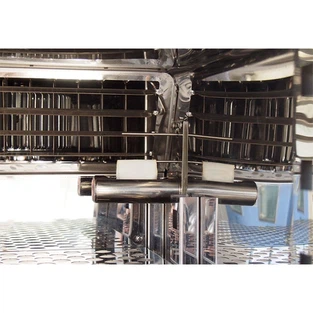 |
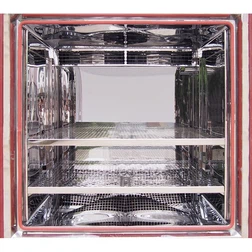
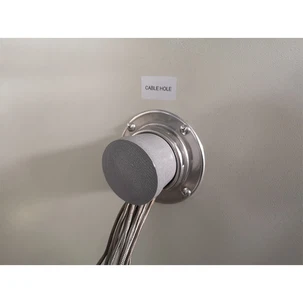
| Robust Workroom | Cable Hole | Temperature and Humidity Sensor |
Rapid Transition Capability for Aggressive Testing
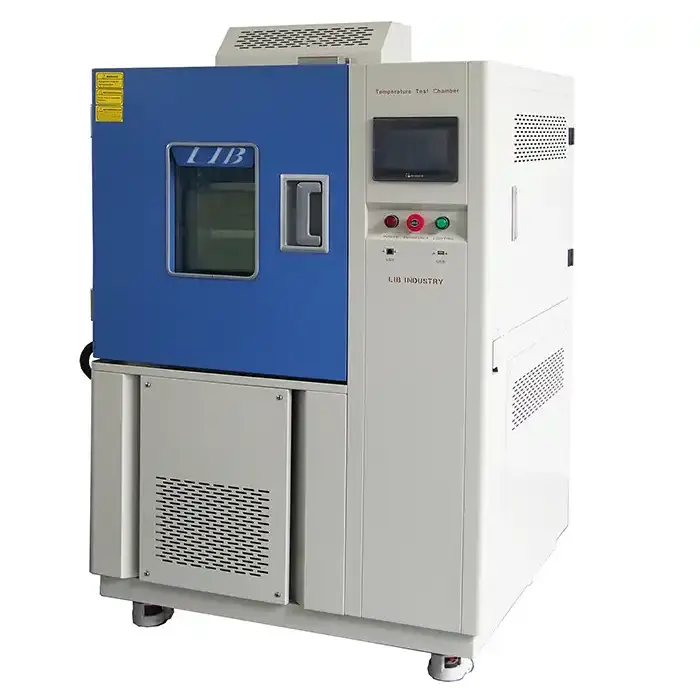
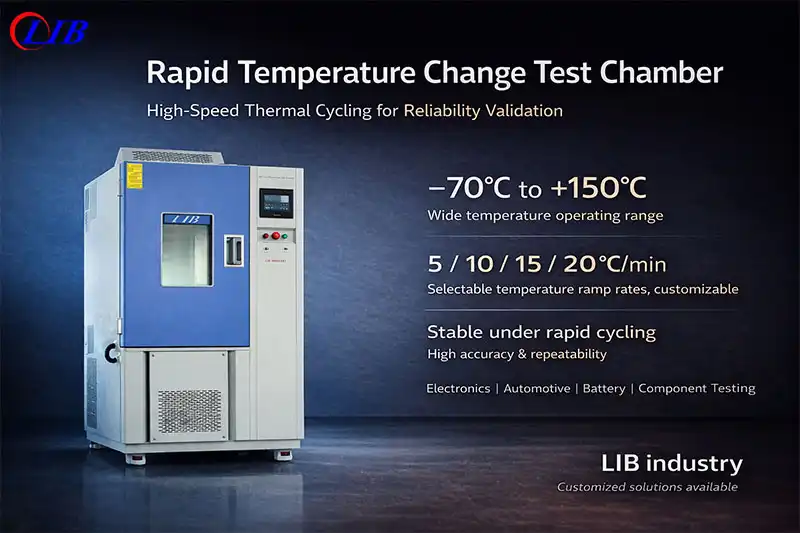
Solar inverter qualification demands chambers capable of swift temperature transitions replicating rapid ambient changes and enabling accelerated testing protocols. LIB Industry's temperature cycling test chamber delivers programmable ramp rates from 5°C/min to 15°C/min, with custom configurations achieving 20°C/min for extreme acceleration protocols. This rapid cycling capability proves essential for testing large power semiconductors experiencing swift thermal transients during operational load changes. The mechanical compression refrigeration system utilizing premium TECUMSEH compressors provides reliable performance throughout thousands of thermal cycles without degradation in transition rate performance.
Precision Temperature Control Across Wide Ranges
Inverter testing requires chambers spanning extreme temperature ranges while maintaining exceptional setpoint accuracy. LIB chambers operate across -70°C to +150°C with temperature fluctuation controlled within ±0.5°C and spatial deviation below ±2.0°C throughout test volumes from 100L to 1000L. High-precision PT100 Class A platinum resistance sensors provide ±0.001°C resolution, enabling accurate data logging and precise cycle profiling. This temperature stability proves critical when evaluating component degradation - even minor temperature variations during extended testing could introduce uncontrolled variables obscuring actual failure mechanisms.
Programmable Controller Supporting Complex Test Sequences
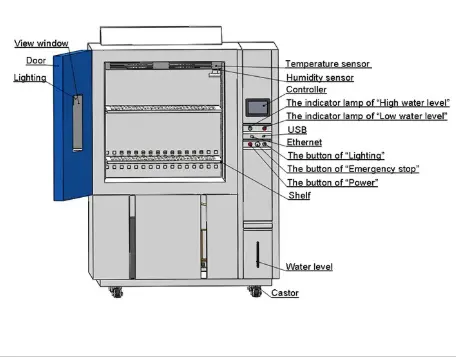
Solar inverter qualification protocols demand intricate thermal cycling sequences incorporating multiple temperature setpoints, varying dwell periods, and customized transition rates. LIB's programmable color LCD touchscreen controller accommodates up to 120 distinct test programs, each supporting 100 individual steps defining target temperature, dwell duration, and ramp rate. This programming flexibility enables precise replication of field thermal profiles - users might program annual seasonal variation patterns, diurnal cycling sequences, or standardized qualification protocols like IEC 62093. Real-time curve display shows measured values tracking setpoints, enabling immediate detection of control deviations.
Robust Construction for Continuous Operation
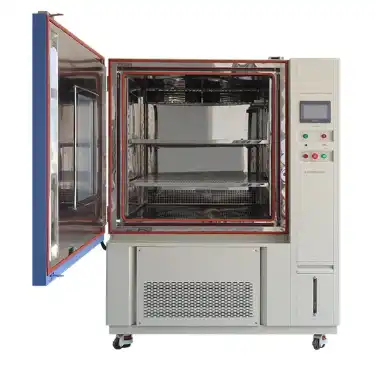
Inverter qualification testing often extends across weeks or months of uninterrupted chamber operation. LIB chambers incorporate industrial-grade construction ensuring reliability throughout extended campaigns. Fully-welded SUS304 stainless steel interiors withstand repeated thermal expansion-contraction cycles without structural degradation. Polyurethane foam insulation combined with specialized insulation cotton maintains thermal efficiency, reducing energy consumption during prolonged testing. Premium components including Schneider electrical elements and Danfoss expansion valves provide dependable performance, while hot gas bypass control minimizes compressor stress during frequent temperature transitions.
Conclusion
Thermal stress testing through controlled temperature cycling provides essential validation of solar inverter durability, reliability, and compliance with international standards. Temperature cycling test chambers enable accelerated life testing compressing decades of field exposure into manageable laboratory timeframes while revealing design vulnerabilities before market deployment. LIB Industry's precision chambers deliver the rapid transition rates, temperature uniformity, and programmable control capabilities demanded by rigorous solar inverter qualification protocols. Investing in comprehensive thermal cycling validation prevents costly field failures, supports extended warranty offerings, and ensures photovoltaic systems deliver promised 25-year operational lifetimes.
FAQ
How many thermal cycles should solar inverters undergo during qualification testing?
Standard IEC 62093 requires minimum 200 cycles between -40°C and +85°C. However, comprehensive qualification often extends to 500-1000 cycles enabling accelerated life predictions and reliability modeling. Cycle count depends on target lifetime, climate deployment zone, and acceptable failure rate thresholds.
What temperature ramp rates best replicate real-world solar inverter thermal stress?
Field thermal transitions typically occur at 1-3°C/min driven by solar irradiance changes and ambient temperature variations. Accelerated testing employs 5-15°C/min ramp rates intensifying stress without introducing unrealistic failure mechanisms. Validation requires confirming chamber-tested failures match field degradation patterns observed in deployed systems.
Can temperature cycling chambers accommodate energized inverters during testing?
Advanced chambers feature cable ports enabling electrical connections to inverters under test. This allows functional testing throughout thermal cycling - monitoring output quality, efficiency, and protective functions at temperature extremes. Proper safety protocols including GFCI protection and voltage interlocks ensure operator safety when testing energized high-voltage equipment.
Advance Your Solar Inverter Testing with LIB Industry
As a leading temperature cycling test chamber manufacturer and supplier, LIB Industry provides specialized environmental testing solutions for renewable energy electronics. Our engineering team supports chamber selection, protocol development, installation, and ongoing technical assistance throughout your inverter development and qualification programs. Contact our renewable energy testing specialists at ellen@lib-industry.com to discuss how our advanced chambers accelerate your solar inverter durability validation.