Using a UV Resistance Test Chamber for Coatings Weathering Evaluation
Coating weathering evaluation through UV resistance test chambers enables manufacturers to predict material performance before real-world deployment. These specialized chambers replicate ultraviolet radiation, temperature fluctuations, and moisture conditions that cause coating degradation outdoors. By accelerating natural weathering processes, laboratories can assess gloss retention, color stability, and surface integrity within weeks rather than years. This controlled methodology helps coating formulators optimize product formulations, validates protective performance claims, and ensures compliance with international durability standards across automotive, architectural, and industrial applications.
Why Weathering Testing is Essential for Coatings?Protecting Investment and Brand Reputation
Coatings serve as the primary defense mechanism against environmental degradation for countless products and structures. When protective layers fail prematurely, manufacturers face warranty claims, customer dissatisfaction, and potential safety hazards. Weathering evaluation identifies formulation weaknesses before market release, preventing costly field failures. Automotive manufacturers, architectural firms, and industrial equipment suppliers rely on accelerated testing to validate performance claims and maintain competitive positioning.
Understanding Real-World Degradation Mechanisms
Natural weathering involves complex interactions between UV radiation, moisture, temperature cycles, and atmospheric pollutants. These factors trigger photochemical reactions, hydrolysis, thermal expansion, and oxidative stress within coating matrices. Laboratory testing isolates and intensifies these variables, revealing degradation pathways that inform formulation improvements. Researchers can systematically evaluate how different resin systems, pigments, and additives respond to environmental stressors.
Meeting Customer Expectations for Durability
End-users increasingly demand extended service life from coated products, whether architectural facades lasting decades or automotive finishes maintaining appearance through years of exposure. Weathering data provides quantifiable evidence of durability, supporting marketing claims and technical specifications. This transparency builds customer confidence and differentiates premium products in competitive markets.
Simulating Sunlight and Environmental Stress on CoatingsReplicating UV Spectral Distribution
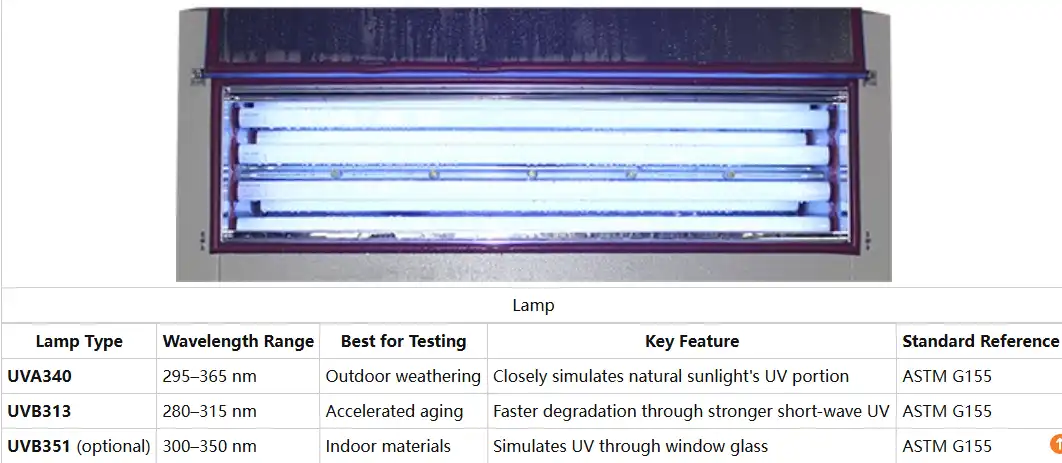
Natural sunlight contains UV radiation spanning 290-400 nanometers, with different wavelengths causing distinct degradation mechanisms. UVA radiation (340nm) drives long-term photochemical reactions, while UVB (313nm) produces more aggressive surface damage. Modern UV resistance test chambers utilize specialized fluorescent lamps calibrated to specific wavelengths, matching outdoor exposure conditions for particular geographic locations or application environments.
Incorporating Moisture and Temperature Cycling
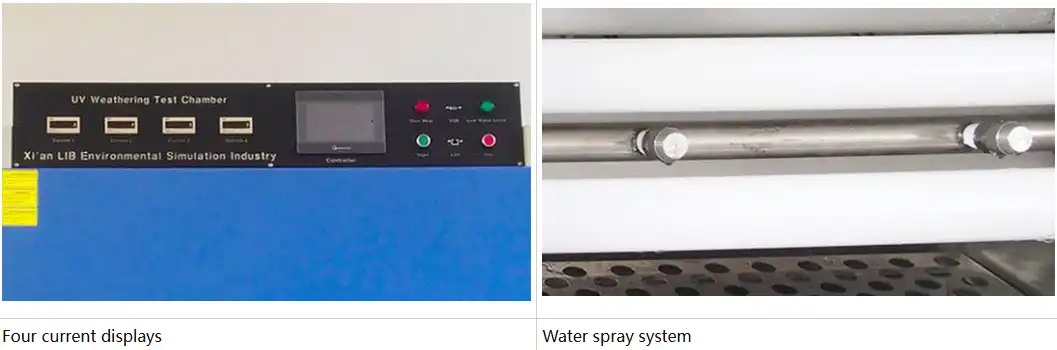
Coating degradation accelerates when UV exposure combines with moisture presence and thermal stress. Test chambers integrate water spray systems that simulate dew, rain, and humidity conditions. Programmable controllers cycle between UV irradiation phases and moisture exposure, replicating daily weather patterns. Temperature control systems maintain precise conditions between ambient and 90°C, inducing thermal expansion and contraction that stresses coating-substrate interfaces.
Controlling Irradiance Levels for Consistency
UV intensity varies with season, latitude, and atmospheric conditions in natural environments. Laboratory chambers maintain constant irradiance between 0.3-20 W/m², ensuring reproducible test conditions across different facilities and time periods. This precision enables comparative evaluation of coating formulations and facilitates correlation between accelerated test results and outdoor exposure data from reference sites.
Evaluating Color, Gloss, and Surface Integrity
Quantifying Color Stability and Fade Resistance
Color changes represent the most visible weathering symptom, directly impacting aesthetic appeal and customer satisfaction. Spectrophotometers measure color coordinates in standardized color spaces (Lab or LCh), calculating total color change (ΔE) after specified exposure intervals. Coating formulators target ΔE values below acceptable thresholds, typically ranging from 2-5 units depending on application requirements. Pigment selection, dispersant chemistry, and stabilizer packages significantly influence fade resistance.
Monitoring Gloss Retention Through Exposure
Surface gloss deteriorates as UV radiation degrades resin networks and creates microscopic surface roughness. Glossmeters positioned at 20°, 60°, or 85° angles measure specular reflectance, tracking gradual reduction through weathering cycles. High-performance architectural coatings maintain 80% initial gloss after 2000 hours accelerated exposure, while automotive clearcoats require even stricter retention. Gloss loss correlates with consumer perception of product aging and quality.
|
Performance Level |
Gloss Retention @ 2000h |
Typical Applications |
|
Premium |
>85% |
Automotive OEM finishes |
|
Standard |
70-85% |
Architectural coatings |
|
Economy |
50-70% |
Industrial maintenance |
Assessing Surface Defects and Mechanical Properties
Advanced weathering produces chalking, cracking, blistering, and delamination - defects compromising both appearance and protective function. Visual inspection following standardized rating scales (ASTM methods) documents surface deterioration progression. Complementary mechanical testing evaluates flexibility, adhesion, and hardness changes. Coating systems must maintain critical performance thresholds throughout intended service life, requiring iterative formulation optimization validated through accelerated testing.
Accelerated UV Exposure Techniques for CoatingsUnderstanding Acceleration Factors
Accelerated weathering compresses years of outdoor exposure into weeks or months by intensifying UV irradiance and optimizing exposure conditions. Acceleration factors ranging from 4:1 to 12:1 are achievable depending on lamp selection, irradiance levels, and cycling protocols. However, excessive acceleration risks altering degradation mechanisms, potentially producing unrealistic failure modes. Correlation studies comparing UV resistance test chambers results with outdoor exposure sites validate acceleration factors for specific coating types.
Designing Exposure Cycles for Realistic Results
Optimal test protocols alternate UV exposure with moisture condensation phases, mimicking natural diurnal cycles. A typical automotive coating protocol might specify 8 hours UV at 60°C followed by 4 hours condensation at 50°C, repeated continuously. Seasonal variations can be simulated through longer-term protocols incorporating intensity adjustments. Protocol selection depends on intended application environment - tropical, temperate, or arid conditions require different cycling patterns.
Comparing Chamber Testing with Outdoor Exposure
Outdoor weathering stations in locations like Florida, Arizona, and Australia provide real-world validation for accelerated test predictions. Side-by-side exposure programs track coating performance both in chambers and outdoor racks, establishing correlation equations. This dual approach confirms that laboratory findings accurately predict field performance while maintaining testing efficiency. Discrepancies prompt protocol refinement to improve predictive accuracy.
Predicting Coating Lifespan under Harsh ConditionsEstablishing Performance Endpoints
Service life predictions require clearly defined failure criteria based on application requirements. Architectural coatings might specify maximum acceptable color change, minimum gloss retention, and absence of cracking. Automotive finishes incorporate stricter aesthetic thresholds alongside functional requirements. Test protocols incorporate intermediate measurements at regular intervals, plotting performance degradation curves that indicate when failure criteria will be exceeded.
Extrapolating Laboratory Data to Real-World Conditions
Mathematical models translate accelerated test results into outdoor exposure equivalents using reciprocity principles and dose-response relationships. Cumulative UV dose received in chambers correlates with annual outdoor exposure in specific climates. Weathering databases containing decades of outdoor exposure data support these extrapolations. Statistical analysis incorporates confidence intervals, acknowledging uncertainties inherent in accelerated testing predictions.
Validating Durability Claims for Warranties
Manufacturers rely on weathering data to substantiate warranty periods and performance guarantees. A coating warranted for 10-year durability must demonstrate adequate performance when subjected to equivalent accelerated exposure. Regulatory bodies and industry associations increasingly require documented weathering evidence supporting marketing claims. This validation protects manufacturers from unsubstantiated claims while providing customers with reliable performance expectations.
Ensuring Compliance with Industry StandardsNavigating ASTM and ISO Testing Standards
Standardized test methods ensure reproducibility and enable industry-wide performance comparisons. ASTM G154 specifies fluorescent UV exposure procedures, detailing lamp types, irradiance levels, and exposure cycles. ISO 4892 provides parallel guidance recognized internationally. Additional standards address specific coating types - ASTM D7356 covers architectural coatings, while SAE J2527 focuses on automotive applications. Compliance with relevant standards facilitates product qualification and customer acceptance.
Meeting Automotive and Architectural Specifications
Original equipment manufacturers maintain proprietary weathering specifications exceeding generic standards. Automotive companies require extensive testing programs spanning thousands of hours with multiple evaluation checkpoints. Architectural coating specifications from organizations like AAMA (American Architectural Manufacturers Association) define performance classes based on weathering resistance. Suppliers must demonstrate compliance through certified testing facilities using UV resistance test chambers.
|
Standard |
Application |
Key Requirements |
|
ASTM G154 |
General UV weathering |
Lamp type, irradiance, cycling protocol |
|
ISO 4892-3 |
International weathering |
Fluorescent UV methods and procedures |
|
AAMA 2605 |
Architectural coatings |
4000h exposure with color/gloss limits |
|
SAE J2527 |
Automotive exterior |
2000h+ with appearance retention |
Documenting Test Results for Regulatory Approval
Comprehensive test reports document equipment calibration, exposure conditions, measurement procedures, and performance results. Chain-of-custody protocols and laboratory accreditation ensure data integrity for regulatory submissions. Regulatory agencies reviewing coating approvals for food contact, medical devices, or hazardous environments scrutinize weathering evidence demonstrating maintained protective properties. Thorough documentation expedites approval processes and withstands regulatory scrutiny.
Accelerated Aging Studies with LIB Industry's UV Resistance Test ChamberTechnical Capabilities Supporting Research Programs
The LIB UV-SI-260 chamber provides controlled weathering environments accommodating 56 specimens simultaneously. Eight 40-watt fluorescent UV lamps deliver precisely controlled irradiance between 0.3-20 W/m² across the 290-400nm bandwidth. Temperature regulation spanning ambient to 90°C with ±2°C precision ensures consistent exposure conditions. Programmable color LCD touch screen controllers enable complex cycling protocols with independent control of UV, temperature, and moisture phases lasting up to 9999 hours.
Flexible Sample Configuration and Monitoring
Removable sample holders accommodate both flat and three-dimensional specimens measuring 75×150mm, allowing evaluation of complex geometries. The 50mm lamp-to-specimen distance ensures uniform irradiance distribution across the exposure area. Automated water spray systems with ten 0.5mm nozzles deliver controlled moisture application at 0.8-1.0mm per 80cm² hourly. Black panel temperature monitoring provides additional exposure condition verification, measuring actual specimen surface temperatures during testing.
Supporting Quality Assurance and Product Development
Research laboratories utilize the chamber for formulation screening, comparing multiple candidate coatings under identical conditions. Quality control departments validate production batch consistency against reference standards. Product development teams optimize additive packages and resin selection based on systematic weathering evaluations. The chamber's Ethernet connectivity enables remote monitoring and data logging, supporting modern laboratory information management systems and quality documentation requirements.
Conclusion
UV resistance test chambers provide indispensable tools for modern coating development and quality assurance programs. By replicating years of environmental exposure within controlled laboratory timeframes, these systems enable data-driven formulation optimization, warranty validation, and regulatory compliance. The integration of precise UV spectral control, moisture cycling, and temperature management creates realistic weathering conditions that predict long-term coating performance across diverse applications and climates.
FAQsHow long does accelerated UV testing take compared to outdoor exposure?
Accelerated testing typically compresses 1-3 years of outdoor weathering into 1000-2000 hours of chamber exposure, depending on the coating type and testing protocol. Acceleration factors between 4:1 and 12:1 are common, though correlation studies with outdoor exposure data are essential for accurate lifetime predictions.
Can UV resistance chambers test coatings on actual product components?
Modern chambers accommodate three-dimensional specimens, enabling testing of coated parts rather than just flat panels. The UV-SI-260 features removable sample holders designed for both flat and complex geometries, allowing manufacturers to evaluate production parts under controlled weathering conditions that replicate end-use performance.
What wavelength setting should be used for coating evaluation?
UVA-340 lamps at 340nm best simulate natural sunlight's long-term degradation effects for most coating applications. UVB-313 lamps at 313nm provide faster, more aggressive testing useful for comparative screening. Selection depends on whether realistic outdoor correlation or accelerated comparative evaluation is the primary objective.
Contact LIB Industry - your trusted UV resistance test chamber manufacturer and supplier - to discuss customized weathering evaluation solutions for your coating development programs. Our technical team provides comprehensive support from equipment selection through protocol development and results interpretation. Reach us at ellen@lib-industry.com to enhance your coating testing capabilities.