How Can an Accelerated Weathering Tester Improve PVC Window Frame Durability?
PVC window frames are expected to maintain their color, surface appearance, dimensional stability, and mechanical performance after years of outdoor exposure. But UV radiation, heat, rain, humidity, and repeated temperature changes can gradually cause yellowing, chalking, cracking, embrittlement, and loss of mechanical strength.
For manufacturers, the challenge is simple:
How can you evaluate years of outdoor weathering before a PVC window profile reaches the market?
An accelerated weathering tester provides a controlled laboratory environment to reproduce key outdoor degradation factors and compare PVC formulations in a much shorter testing period.
Need a test chamber for ASTM G155 or ISO 4892-2? Request a quote in 24 hours.
Request a Quote → accelerated weathering testers
What Weathering Problems Can Affect PVC Window Frames?
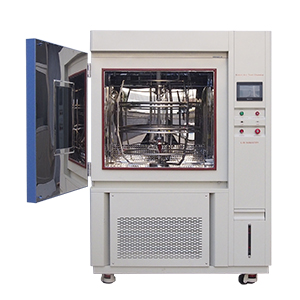 PVC profiles installed outdoors are continuously exposed to changing environmental conditions. The most important factors include:
UV Radiation and Color Fading
Solar UV radiation can cause photochemical degradation of PVC, resulting in:
- Yellowing or discoloration
- Surface chalking
- Loss of gloss
- Embrittlement
- Surface cracking
For white and colored PVC profiles, maintaining appearance after prolonged UV exposure is often an important part of product qualification.
Temperature Changes and Thermal Stress
PVC window frames can experience significant temperature changes between day and night and between different seasons.
Repeated heating and cooling can cause expansion and contraction of the profile, potentially affecting:
Dimensional stability
Welded corners
Seals and joints
Surface integrity
Mechanical performance
Rain, Humidity, and Wet/Dry Cycling
Outdoor exposure is not simply sunlight. Rain, condensation, and humidity interact with UV radiation and temperature to create more complex weathering conditions.
A laboratory weathering test can therefore combine light, temperature, humidity, and water spray rather than evaluating UV exposure alone.
How Can You Test PVC Window Frame Weathering Performance?
A suitable accelerated weathering tester can reproduce important environmental stresses under controlled and repeatable conditions.
For PVC window profiles, the test program may include:
Xenon arc light exposure to simulate natural sunlight.
Controlled black panel temperature to reproduce material surface heating.
Humidity conditioning to simulate humid outdoor environments.
Water spray cycles to reproduce rain and wet/dry exposure.
Programmable light/dark cycles for repeatable long-term testing.
The exact test cycle should be selected according to the applicable standard, material specification, geographic exposure, and customer's qualification requirements.
Which Standards Are Used for PVC Weathering Tests?
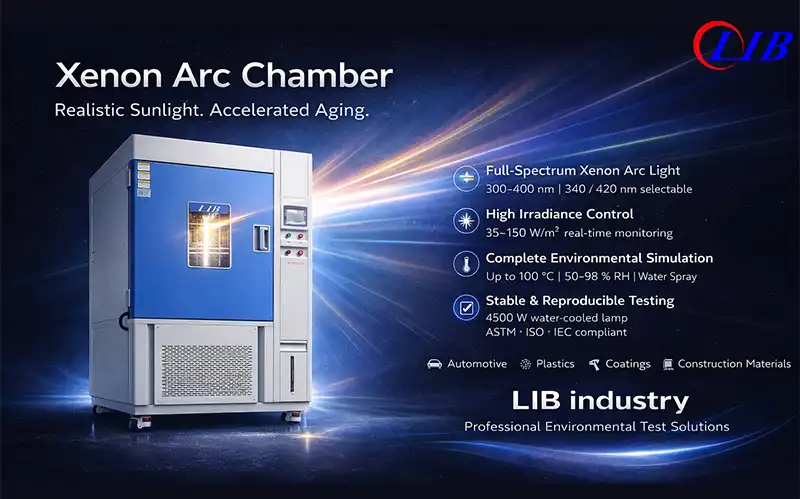
Two important standards for xenon arc weathering evaluation are:
ASTM G155
ASTM G155 provides procedures for operating xenon arc light apparatus for exposure of non-metallic materials. It is widely referenced when evaluating the weathering resistance of plastics, coatings, and building materials.
ISO 4892-2
ISO 4892-2 specifies methods for exposing plastics to laboratory light sources using xenon-arc lamps. It provides guidance on light source configuration, irradiance control, temperature, and moisture conditions.
For PVC window profiles, the applicable test conditions should be selected according to the specific product standard and qualification requirement rather than applying one test cycle to every application.
What Should You Evaluate After Weathering?
Accelerated weathering is not only about completing a certain number of test hours. The condition of the PVC profile before and after exposure should also be compared.
Typical evaluation items include:
Color Change
Color measurement can be used to quantify discoloration using ΔE values. This provides a more objective comparison between exposed and unexposed samples.
Surface Cracking and Chalking
Visual inspection or microscopic examination can identify surface cracks, crazing, chalking, and other signs of degradation.
Gloss Retention
Gloss measurements can help determine whether the surface finish has deteriorated during weathering.
Mechanical Properties
Depending on the qualification requirement, tensile strength, impact resistance, elongation, or other mechanical properties can be measured after exposure.
This combination of environmental exposure and post-test evaluation provides more useful information than simply recording the total exposure time.
How Does LIB Industry Test PVC Window Frame Durability?
|
|
 |
 |
|
|
|
|


xenon lamp and filters
 |
 |
Comprehensive Spectral Control for Authentic Simulation
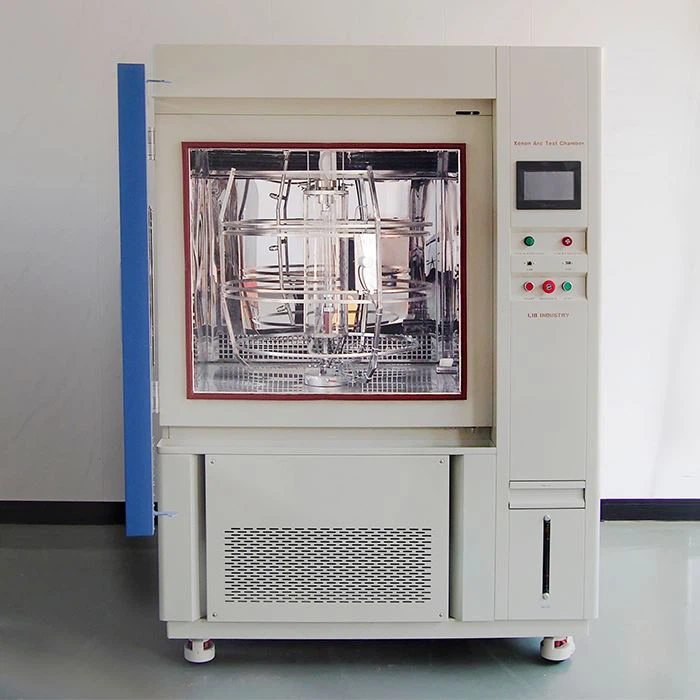
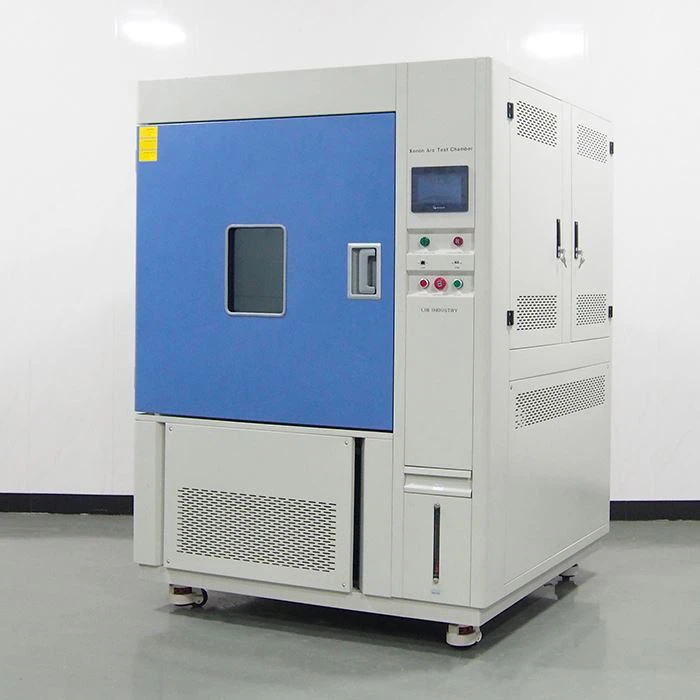
LIB Industry provides xenon arc weathering chambers designed for accelerated aging and weathering evaluation of plastics, profiles, coatings, and other outdoor materials.
For PVC window frame testing, the equipment can combine controlled light exposure with temperature, humidity, and water spray to create repeatable weathering conditions.
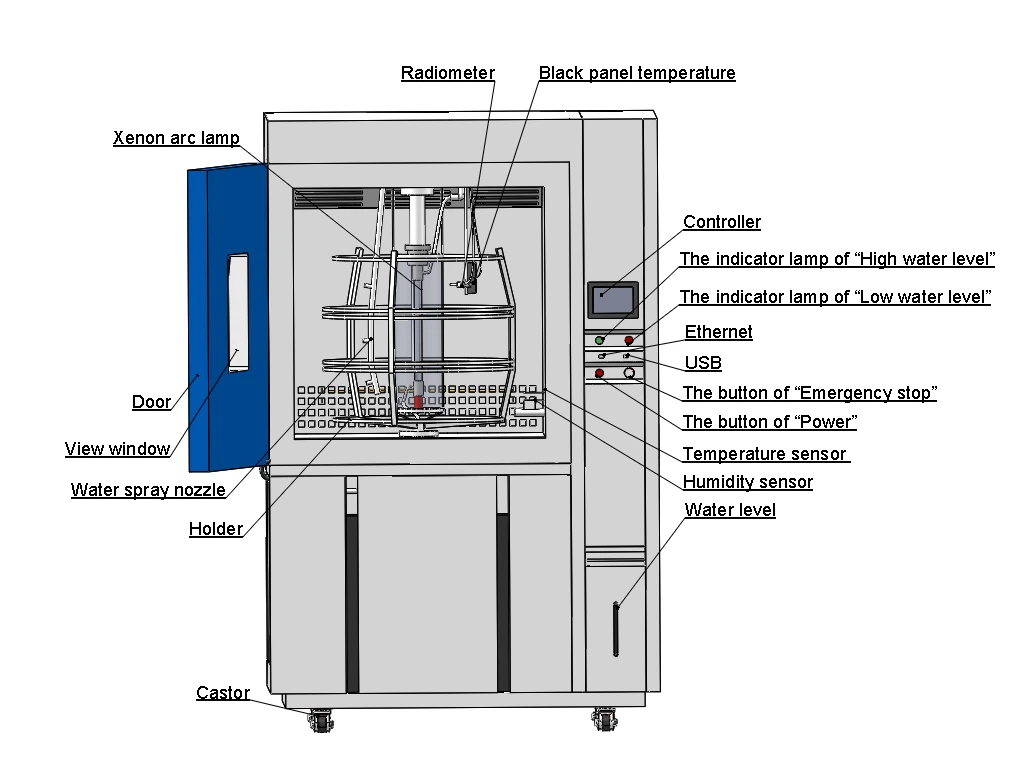
4500W Water-Cooled Xenon Arc Lamp
LIB's xenon weathering chamber uses a 4500W water-cooled xenon arc lamp with interchangeable optical filters for different exposure requirements.
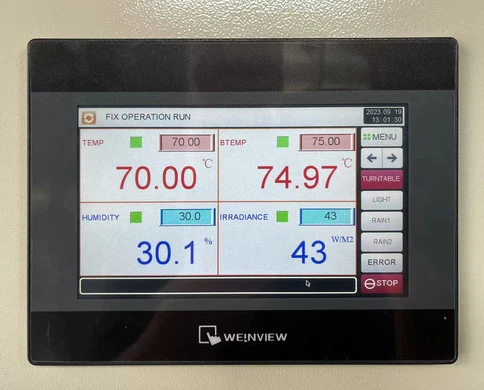
The system provides an irradiance range of approximately 35–150 W/m², with controlled exposure across the relevant solar spectrum.
Programmable Temperature and Humidity
The chamber provides controlled temperature and humidity conditions so manufacturers can create repeatable weathering cycles instead of relying on uncontrolled outdoor exposure.
Water Spray for Wet/Dry Cycling
Programmable water spray can be incorporated into the test sequence to simulate rain exposure and alternating wet/dry conditions.
42-Sample Rotating Holder
The rotating specimen holder can accommodate up to 42 specimens, making the chamber suitable for comparative testing of different PVC formulations, pigments, stabilizer packages, or profile designs.
LIB Industry provides xenon arc weathering chambers for PVC profile testing, with configurable light, temperature, humidity, and water-spray conditions for ASTM G155 and ISO 4892-2 based testing. Check specifications and pricing → ellen@lib-industry.com
Which LIB Industry Test Chamber Is Right for Your Application?
Different durability questions require different environmental simulations. LIB Industry can provide several test chamber options for PVC window and building material manufacturers.
|
|
|
|
Accelerated Weathering TesterBest for evaluating UV/weathering resistance, color change, chalking, gloss retention, and surface degradation. The xenon arc system can simulate solar radiation while controlling temperature, humidity, and water spray. |
Temperature & Humidity Test ChamberBest for evaluating the effects of temperature and humidity aging on PVC profiles, seals, coatings, and related components. It is suitable when the primary concern is thermal/hygrothermal durability rather than solar radiation. |
Water Spray ChamberBest for evaluating rain and water exposure, including water resistance and wet/dry environmental conditions. It can be used as a complementary test solution when water exposure needs to be evaluated separately from xenon weathering. |


Why Choose LIB Industry for PVC Weathering Testing?
PVC profile manufacturers may have different specimen sizes, test standards, exposure cycles, and evaluation requirements. LIB Industry can configure the test chamber according to the actual application rather than providing a one-size-fits-all system.
Key advantages include:
Xenon arc weathering solutions for accelerated aging
Programmable temperature, humidity, and water spray
Configurable specimen holders and test fixtures
Support for ASTM and ISO-based testing requirements
Customized chamber dimensions and test configurations
3-year warranty and lifetime service support
The engineering team can also help customers select the appropriate chamber configuration based on PVC profile dimensions, required standards, exposure conditions, and test objectives.
FAQ
How long should PVC window frames be tested in a xenon weathering chamber?
There is no single exposure time suitable for every PVC profile. The required duration depends on the applicable product specification, test standard, material formulation, and qualification objective. Common development programs may use shorter exposures for formulation comparison and longer exposures for durability qualification.
Can a xenon weathering tester simulate rain as well as sunlight?
Yes. A suitable xenon weathering chamber can combine xenon arc irradiation with programmable water spray, temperature, and humidity cycles to reproduce more representative outdoor weathering conditions.
Can LIB customize a weathering chamber for large PVC window profiles?
Yes. LIB Industry can customize chamber dimensions, specimen holders, exposure configurations, and control systems according to the size and testing requirements of PVC window profiles.
What does LIB provide after the chamber is installed?
LIB Industry provides installation guidance, operation support, technical assistance, and after-sales service. The standard service commitment includes a 3-year warranty and lifetime maintenance support.
Need to Test PVC Window Frame Durability?
Choosing the right weathering test depends on what you need to evaluate: UV resistance, color stability, thermal aging, humidity resistance, rain exposure, or overall outdoor durability.
LIB Industry provides accelerated weathering, temperature & humidity, and water spray testing solutions to help PVC window manufacturers develop and qualify more durable products.
Tell us your PVC profile size, testing standard, and required exposure conditions. LIB Industry can recommend a suitable test chamber for your application.