ASTM B117: The Standard for Salt Spray Corrosion Tests
ASTM B117 represents the internationally recognized standard practice for operating salt spray apparatus, establishing rigorous protocols for evaluating the corrosion resistance of metallic coatings, surface treatments, and substrate materials. This standardized methodology, titled "Standard Practice for Operating Salt Spray (Fog) Apparatus," defines precise parameters including 5% sodium chloride solution concentration, 35°C chamber temperature (±2°C), continuous fog generation producing 1-2 ml/80cm² hourly deposition, and pH maintenance between 6.5-7.2. Salt spray chambers designed to ASTM B117 specifications provide manufacturers across automotive, aerospace, marine, and electronics industries with reproducible accelerated corrosion testing, compressing years of environmental exposure into days or weeks of laboratory evaluation.
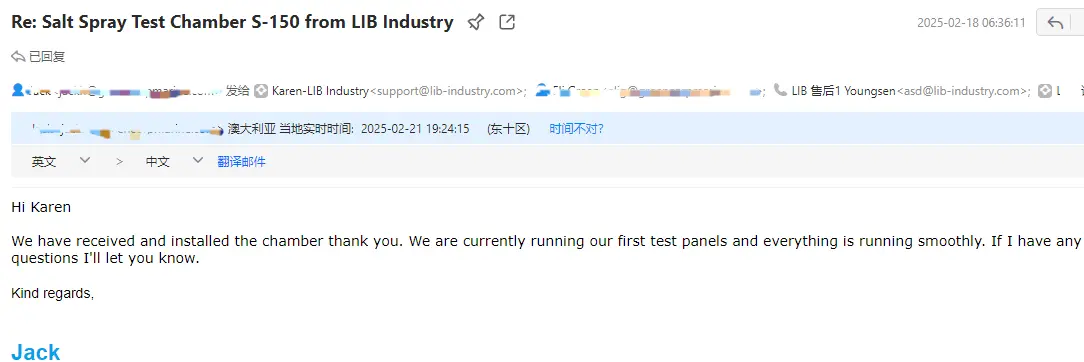
An Australian coatings manufacturer recently integrated a salt spray corrosion test system into its marine coating validation program. Following installation, the team began testing offshore and coastal coating panels and reported: “The salt spray chamber has been installed, and our first test runs are operating smoothly.”
The system delivered stable salt fog exposure and consistent test conditions, allowing engineers to efficiently evaluate coating durability, blister resistance, and corrosion protection. The successful startup enabled the team to move forward with extended exposure testing and formulation comparisons, demonstrating how a reliable salt spray system can accelerate validation while ensuring repeatable results.
Understanding the Purpose of ASTM B117 Testing
Accelerated Corrosion Assessment Methodology
ASTM B117 testing serves as a fundamental accelerated corrosion evaluation tool, subjecting materials to aggressive chloride environments far exceeding typical atmospheric exposure. This methodology exposes test specimens to continuous salt fog, creating surface moisture saturation that sustains electrochemical corrosion reactions without the drying periods inherent in natural weathering. The acceleration effect derives from elevated chloride concentration, constant humidity levels (95-98% RH), and optimized temperature maintaining active corrosion mechanisms.
Comparative Performance Evaluation Framework
The standard provides a controlled framework for comparing different protective coating systems, plating processes, or substrate materials under identical exposure conditions. Manufacturers testing zinc versus zinc-nickel plating, evaluating powder coat formulations, or qualifying alternative passivation treatments rely on ASTM B117's standardized parameters ensuring reproducible results. This comparative capability proves invaluable during material selection and supplier qualification where relative performance ranking matters more than absolute service life prediction.
Quality Control and Specification Compliance
ASTM B117 testing functions as a quality assurance checkpoint verifying production processes maintain consistent corrosion resistance characteristics. Automotive suppliers testing batch samples after electroplating operations, appliance manufacturers validating coating adhesion, and fastener producers qualifying surface treatments utilize salt spray chambers as go/no-go quality gates. Many industry specifications reference ASTM B117 exposure durations as acceptance criteria - automotive standards may require 240-720 hours without red rust appearance.
Key Components of a Salt Spray Chamber System
Exposure Chamber Construction and Materials
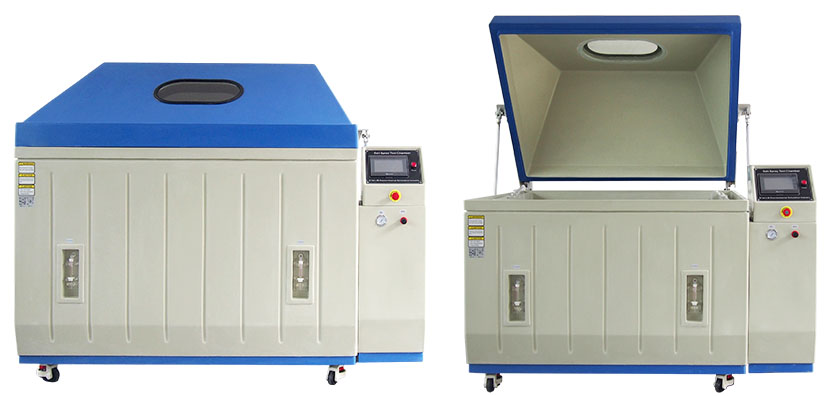
Salt spray chambers require specialized construction materials resisting the highly corrosive testing environment. LIB Industry chambers utilize glass fiber reinforced plastics (FRP) providing superior corrosion resistance compared to traditional coated metals. The chamber interior must maintain uniform temperature distribution while preventing condensate from dripping onto test specimens - a requirement addressed through proper ventilation design and heated chamber lids. The transparent viewing window enables visual inspection without opening the chamber, preventing environmental disruption during multi-day or multi-week test cycles.
Atomization System and Fog Generation
The atomizing nozzle represents the critical component generating uniform salt fog throughout the exposure chamber. ASTM B117 specifies that fog must be produced by atomizing a 5% sodium chloride solution using compressed air at 10-25 psi. The spray tower height adjustment capability allows calibration meeting the standard's deposition rate requirement of 1-2 ml per 80 cm² per hour, measured using fog collectors positioned within the exposure zone. LIB chambers feature adjustable spray towers and precision nozzles constructed from corrosion-resistant materials.
Temperature and Humidity Control Systems
Maintaining chamber temperature at 35°C ±2°C requires integrated heating elements and precise temperature control. The saturated air barrel preheats compressed air before atomization, preventing temperature fluctuations that would affect fog generation consistency. Humidity levels of 95-98% RH occur naturally from continuous fog generation, though monitoring systems verify these conditions throughout testing. The PID control system continuously adjusts heating elements maintaining setpoint temperature despite ambient variations.
Table 1: ASTM B117 Critical Test Parameters
|
Parameter |
ASTM B117 Specification |
Tolerance |
|
Salt Solution Concentration |
5% NaCl by mass |
±0.1% |
|
Chamber Temperature |
35°C |
±2°C |
|
Solution pH |
6.5-7.2 |
±0.2 units |
|
Fog Collection Rate |
1.0-2.0 ml/80cm²/hour |
±0.5 ml |
|
Humidity Range |
>95% RH |
Not specified |
Preparing Test Specimens for Corrosion Evaluation
Surface Preparation and Cleaning Requirements
ASTM B117 emphasizes proper specimen preparation as critical to reproducible results. Test panels must undergo thorough cleaning removing manufacturing oils, cutting fluids, handling contamination, and other surface residues interfering with corrosion processes. The standard recommends cleaning methods appropriate to substrate material - degreasing with suitable solvents, alkaline cleaning, or ultrasonic cleaning depending on contamination type. Improper cleaning creates non-representative failure modes where corrosion initiates at contaminated sites rather than coating deficiencies.
Specimen Positioning and Orientation
Test panel positioning within the salt spray chamber significantly affects exposure uniformity and result validity. ASTM B117 specifies specimens should be positioned 15-30 degrees from vertical, preventing direct impingement of atomized spray while allowing condensate drainage. Panels must not contact each other or chamber walls, ensuring complete exposure to salt fog environment. The rotating sample rack design in LIB salt spray chambers supports multiple specimen orientations simultaneously, accommodating 6 round bars and 5 V-shaped grooves in standard configuration.
Masking and Edge Protection Considerations
Sharp edges, sheared surfaces, and drilled holes often corrode preferentially, potentially confusing test interpretation when evaluating coating performance rather than substrate corrosion resistance. ASTM B117 permits edge masking using inert materials like wax or tape, isolating coating performance from edge effects. However, masking must not interfere with intended test objectives - evaluating complete part performance including edges requires unmasked exposure. Documentation should specify masking approach enabling consistent test-to-test comparisons.
Controlling Salt Concentration and Chamber Conditions
Solution Preparation and Concentration Verification
Preparing proper salt solution proves fundamental to ASTM B117 compliance, requiring precisely 5% ±0.1% sodium chloride dissolved in distilled or deionized water. The standard specifies water purity requirements including electrical conductivity <20 microsiemens/cm and total solids <200 ppm. Solution concentration verification through specific gravity measurement (1.0255-1.0400 at 25°C) ensures accuracy. The external portable salt solution tank in LIB chambers simplifies solution preparation and replacement, with capacities ranging from 73L to 115L depending on chamber size.
pH Control and Adjustment Protocols
Salt solution pH significantly affects corrosion rates and mechanisms, necessitating strict pH control between 6.5-7.2 as measured at 25°C. Freshly prepared solutions typically fall within this range, but pH may shift during extended testing from carbon dioxide absorption or specimen corrosion products. ASTM B117 permits pH adjustment using dilute hydrochloric acid or sodium hydroxide, though frequent adjustment suggests contamination requiring solution replacement. The water shortage protection system prevents spray operation during low solution levels.
Continuous Monitoring and Documentation
ASTM B117 compliance demands continuous monitoring and documentation of critical parameters throughout test duration. Temperature must be verified at least daily using calibrated instrumentation, with continuous recording recommended for extended tests. Fog collection rate verification should occur at test initiation and regularly throughout exposure, using standardized fog collectors. The PID controller in LIB chambers provides real-time monitoring with multi-language interface options (English/French/Spanish/German/Russian), enabling global laboratory standardization.
Table 2: LIB Salt Spray Chamber Model Specifications
|
Model |
Internal Dimensions (mm) |
Volume (L) |
Temperature Range |
|
S-150 |
590×470×400 |
110 |
Ambient ~ +60°C |
|
S-250 |
1000×640×500 |
320 |
Ambient ~ +60°C |
|
S-750 |
1100×750×500 |
410 |
Ambient ~ +60°C |
|
S-010 |
1000×1300×600 |
780 |
Ambient ~ +60°C |
|
S-016 |
900×1600×720 |
1030 |
Ambient ~ +60°C |
|
S-020 |
1000×2000×800 |
1600 |
Ambient ~ +60°C |
Interpreting Corrosion Results and Failure Criteria
Visual Inspection and Rating Systems
ASTM B117 focuses on test execution methodology rather than prescribing specific pass/fail criteria, leaving result interpretation to individual specifications or customer requirements. Visual inspection represents the primary evaluation method, documenting corrosion product formation, substrate attack, coating blistering, delamination, and color changes. Rating systems like ASTM D610 (degree of rusting) or ASTM D714 (degree of blistering) provide standardized descriptive scales enabling objective documentation. The central viewing window in LIB salt spray chambers allows in-situ observation without environmental disruption.
Time-to-Failure Assessment
Many specifications define acceptance criteria based on time-to-failure metrics - hours of exposure before specific corrosion manifestations appear. Automotive specifications might require 480 hours exposure before appearance of red rust, while cosmetic coatings focus on discoloration or gloss reduction timing. Regular inspection intervals (daily for short tests, every 2-3 days for extended tests) enable precise failure time determination. The timed canopy lock feature automatically purges LIB chamber interiors with fresh air before opening, protecting operators while enabling safe inspection access.
Comparative Performance Analysis
The most valuable ASTM B117 application involves comparing multiple coating systems, plating processes, or material variants under identical exposure conditions. Specimens tested simultaneously in the same chamber experience identical environmental stress, eliminating chamber-to-chamber variability. Performance ranking based on red rust appearance timing, coating degradation severity, or maintained adhesion provides actionable data for material selection decisions. Statistical analysis of replicate specimens (typically 3-5 per condition) quantifies performance consistency.
Industry Applications of ASTM B117 Corrosion Testing
Automotive Component Qualification
Automotive manufacturers extensively utilize ASTM B117 testing for validating corrosion resistance of painted body panels, electroplated fasteners, brake components, exhaust systems, and underbody parts exposed to road salt environments. Specifications typically require 240-1000 hours salt spray exposure depending on component location and criticality, with cosmetic exterior panels demanding superior performance compared to concealed structural elements. The automotive industry combines ASTM B117 with cyclic corrosion tests providing more realistic simulation of wet/dry cycling.
Aerospace and Marine Applications
Aerospace components and marine hardware face demanding corrosion environments from salt-laden coastal atmospheres or direct seawater exposure. ASTM B117 testing validates protective coating systems on aluminum aircraft structures, cadmium-plated steel fasteners, and anodized aluminum marine fittings. Extended exposure durations (1000-3000 hours) screen for long-term durability essential in applications where maintenance access proves difficult. The 95-98% RH humidity range in salt spray chambers replicates constant moisture exposure characteristic of marine service environments.
Electronics and Consumer Products
Electronic device housings, appliance exteriors, and consumer hardware utilize decorative and protective coatings requiring corrosion resistance validation. ASTM B117 testing evaluates electroplated zinc, nickel-chromium systems, powder coatings, and conversion coatings protecting steel and aluminum substrates. Consumer products often emphasize cosmetic corrosion resistance rather than structural integrity, requiring shorter exposure durations (96-240 hours) but strict appearance standards. The ergonomic loading threshold and easy-open pneumatically operated canopy facilitate frequent specimen inspection.
LIB Industry Salt Spray Chambers Ensure Accurate ASTM B117 Compliance Testing

|
|
|
| Corrosion-Resisitant Workroom | Modular grooves are used for holding samples |


|
salt spray tower |
cylinder |
spray collector |


Precision Environmental Control Systems
LIB Industry salt spray chambers incorporate advanced control systems maintaining ASTM B117's stringent environmental parameters throughout extended test campaigns. The PID controller continuously regulates chamber temperature within ±0.5°C fluctuation and ±2.0°C deviation from the 35°C setpoint, ensuring stable corrosion kinetics. The saturated air barrel preheats compressed air preventing temperature depression during atomization. Multiple safety protection systems including over-temperature protection, water shortage detection, and earth leakage protection safeguard both operators and valuable test specimens.
Adjustable Spray System for Standards Compliance
The height-adjustable spray tower and precision spray nozzles enable calibration achieving the 1-2 ml/80cm²·hour fog deposition rate specified in ASTM B117. Fog collectors and measuring cylinders included in standard configuration facilitate periodic verification maintaining compliant deposition throughout test duration. Transparent acrylic construction of spray atomizers enables visual inspection confirming proper operation without chamber access, accommodating slight variations in compressed air supply pressure or solution properties.
Ergonomic Design and Comprehensive Support
The low loading threshold design reduces operator fatigue and handling errors during specimen placement. Pneumatically operated canopies with safety interlocks prevent accidental opening during active testing. Every LIB salt spray chamber ships with comprehensive test reports, calibration certificates, and documentation supporting ASTM B117 compliance verification. Beyond standard ASTM B117 compliance, LIB Industry offers customization options supporting related corrosion testing standards including ISO 9227 and JIS Z 2371. Chamber sizing from 110L to 1600L accommodates diverse testing volumes from R&D screening to production quality assurance.
Conclusion
ASTM B117 salt spray testing remains an indispensable tool for evaluating corrosion resistance across industries despite limitations in directly predicting outdoor service life. Its value lies in providing standardized, reproducible comparative assessment enabling material selection, process qualification, and quality verification. Modern salt spray chambers combining precise environmental control, ergonomic design, and comprehensive documentation capabilities ensure testing accuracy supporting product development and regulatory compliance objectives.
FAQ
Does passing ASTM B117 testing guarantee specific outdoor service life for coated components?
ASTM B117 provides comparative corrosion resistance assessment rather than direct service life prediction. The aggressive constant-fog environment differs fundamentally from natural weathering's wet/dry cycling, temperature variations, and UV exposure. Correlation between salt spray hours and outdoor service years varies by coating system, environment, and application.
What causes variability between different salt spray chambers testing identical specimens?
Chamber-to-chamber variability arises from differences in fog uniformity, temperature distribution, solution preparation, specimen positioning, and inspection timing. ASTM B117 specifies critical parameters but allows some operational latitude. Using calibrated chambers, standardized procedures, and consistent inspection intervals minimizes variability across testing facilities.
Can ASTM B117 testing be interrupted and resumed without invalidating results?
ASTM B117 specifies continuous exposure without interruption, as stopping the spray and opening the chamber alters specimen surface conditions. Brief interruptions for inspection may be acceptable depending on specification requirements, though extended shutdowns typically necessitate test restart. The timed canopy lock feature enables safe brief inspections while minimizing disruption.
Partner with LIB Industry for Reliable Corrosion Testing Solutions
LIB Industry serves as a premier salt spray chamber manufacturer and supplier, delivering ASTM B117-compliant testing equipment to quality laboratories worldwide. Our turn-key solutions include design, installation, operator training, and ongoing technical support tailored to your corrosion testing requirements. Contact our applications specialists at ellen@lib-industry.com.