Benchtop Chambers for Pharmaceutical Stability Studies
Pharmaceutical stability studies demand precise environmental control to evaluate how active pharmaceutical ingredients (APIs) and finished drug products withstand storage conditions throughout their shelf life. Benchtop environmental chambers provide space-efficient, cost-effective solutions for these critical assessments, delivering accurate temperature and humidity regulation in compact laboratory footprints. These specialized testing units enable pharmaceutical manufacturers to comply with ICH stability guidelines while conducting accelerated aging studies, long-term stability protocols, and packaging integrity evaluations. With programmable control systems maintaining conditions like 25°C/60% RH or 40°C/75% RH, benchtop chambers compress years of real-time shelf-life data into weeks or months of testing, supporting regulatory submissions and ensuring patient safety through reliable drug quality validation.
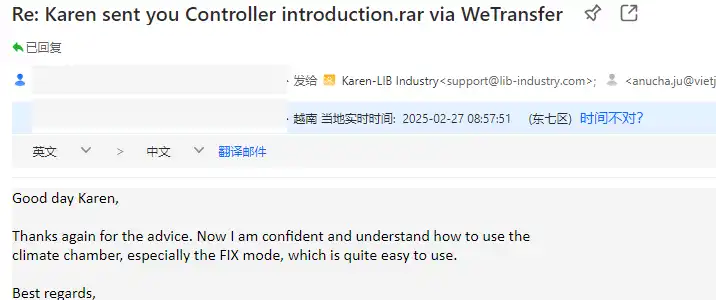
A Vietnam-based aerospace research team selected the TH-50 small climatic chamber to conduct environmental simulation testing for flight system components. During operation, the chamber provided accurate temperature and humidity control, uniform test conditions, and stable long-term performance. These capabilities enabled the team to efficiently evaluate component reliability under controlled environmental stresses. The project highlights the TH-50’s suitability for precision research applications requiring dependable and repeatable test results.
Key Environmental Factors Affecting Drug Stability
Temperature-Induced Chemical Degradation
Temperature represents the most influential variable affecting pharmaceutical stability, directly governing reaction kinetics that drive chemical degradation pathways. The Arrhenius equation demonstrates that each 10°C temperature increase approximately doubles degradation rates, making precise thermal control essential. APIs undergo various temperature-dependent reactions including hydrolysis, oxidation, decarboxylation, and isomerization that compromise therapeutic efficacy. Benchtop environmental chambers maintain setpoint accuracy within ±0.5°C, preventing temperature excursions that could invalidate stability data or accelerate degradation beyond predictable parameters.
Moisture-Related Degradation Mechanisms
Humidity profoundly impacts pharmaceutical stability through multiple mechanisms beyond simple moisture absorption. Water acts as both reactant and catalyst in hydrolytic degradation, affecting solid dosage forms through deliquescence, crystalline structure changes, and coating failures. Hygroscopic excipients can absorb atmospheric moisture, creating localized high-humidity microenvironments within tablets or capsules that accelerate API degradation. Humidity deviation control of ±2.5% RH in benchtop chambers ensures reproducible moisture exposure, enabling accurate shelf-life predictions based on water activity relationships.
Light Exposure and Photostability Concerns
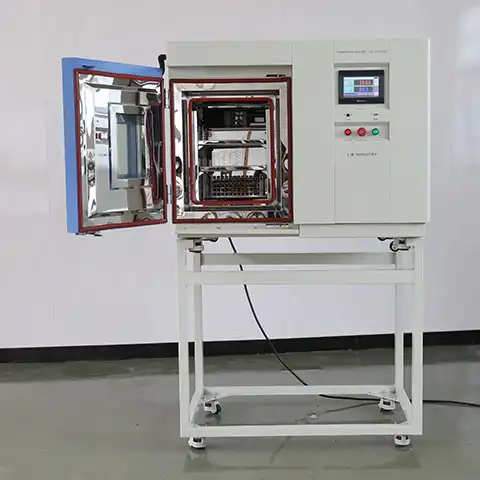
Photolytic degradation affects photosensitive compounds through direct photochemical reactions or light-catalyzed oxidation processes. While comprehensive photostability testing follows ICH Q1B protocols using specialized light chambers, benchtop environmental chambers contribute by maintaining light-protected conditions during routine stability studies. The double-layer tempered glass observation windows with interior LED lighting allow visual inspection without exposing samples to uncontrolled ambient light that could confound temperature-humidity stability data with photodegradation artifacts.
Temperature and Humidity Control in Stability Testing
Precision Control Systems and PID Technology
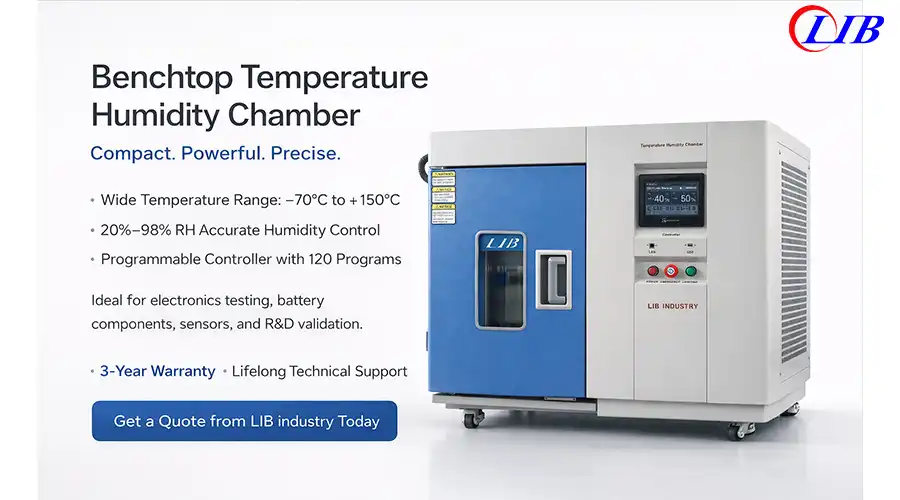
Modern benchtop chambers employ proportional-integral-derivative (PID) control algorithms that continuously adjust heating, cooling, and humidification to maintain setpoint conditions. These sophisticated systems anticipate temperature drift through derivative calculations, preventing the overshoot and oscillation common in simpler on-off controllers. The programmable color touchscreen interface enables users to create complex testing profiles with up to 120 programs containing 100 segments each, automating transitions between different stability conditions without manual intervention.
Mechanical Refrigeration for Low-Temperature Stability
Pharmaceutical products requiring refrigerated storage (2-8°C) or frozen conditions demand chambers capable of sub-ambient temperature control. Benchtop environmental chambers with mechanical compression refrigeration systems achieve temperatures from -20°C to -70°C depending on configuration, supporting cold-chain product development. The 1°C/min cooling rate enables gradual temperature transitions that prevent thermal shock to sensitive biologics or temperature-sensitive formulations during freeze-thaw stability evaluation.
Humidity Generation and Control Technologies
Achieving stable humidity conditions, particularly at elevated temperatures, requires sophisticated humidification systems. Advanced benchtop chambers utilize stainless steel surface evaporation humidifiers operating independently from the main chamber, preventing contamination risks and enabling precise moisture delivery. The humidifier dry-combustion protection system prevents element damage during low-water conditions, ensuring continuous operation during extended stability studies lasting months or years.
Table 1: Standard ICH Stability Storage Conditions
|
Study Type |
Temperature |
Relative Humidity |
Typical Duration |
Purpose |
|
Long-term |
25°C ± 2°C |
60% ± 5% RH |
12-60 months |
Real-time shelf life |
|
Intermediate |
30°C ± 2°C |
65% ± 5% RH |
6-12 months |
Supporting data |
|
Accelerated |
40°C ± 2°C |
75% ± 5% RH |
6 months |
Predictive modeling |
|
Refrigerated |
5°C ± 3°C |
Ambient |
12-36 months |
Cold-chain products |
ICH Guidelines for Pharmaceutical Stability Studies
ICH Q1A Stability Testing Requirements
The International Council for Harmonisation (ICH) Q1A guideline establishes globally harmonized stability testing protocols for drug registration in ICH member regions. This guidance defines storage conditions, testing frequencies, and study durations based on climatic zones and intended product markets. Benchtop environmental chambers supporting ICH Q1A compliance must demonstrate calibrated accuracy meeting the specified temperature and humidity tolerances (±2°C and ±5% RH), with documentation systems providing audit trails for regulatory inspections.
Climatic Zone Classifications
ICH divides global regions into four climatic zones based on prevalent temperature and humidity conditions: Zone I (temperate), Zone II (subtropical/Mediterranean), Zone III (hot/dry), and Zone IV (hot/humid). Products marketed in Zone IVb regions (hot and very humid) require additional accelerated testing at 30°C/75% RH beyond standard 25°C/60% RH protocols. The wide temperature range capability of benchtop chambers (-40°C to +150°C) accommodates all climatic zone testing requirements within a single versatile platform.
Photostability Testing Integration
While ICH Q1B photostability testing typically employs dedicated light chambers, comprehensive stability programs integrate photostability and thermal-humidity data. Benchtop environmental chambers support this integration by maintaining controlled dark storage conditions for light-protected controls while photostability chambers provide UV/visible exposure. The cable port feature (Φ50mm) enables temperature probe insertion for monitoring samples undergoing parallel testing protocols without compromising chamber integrity.
Packaging Evaluation Under Accelerated Aging Conditions
Primary Packaging Moisture Barrier Testing
Pharmaceutical packaging systems provide critical protection against environmental moisture ingress that could destabilize hygroscopic formulations. Accelerated stability studies at 40°C/75% RH stress-test moisture barrier performance, revealing packaging inadequacies within months rather than years required for real-time evaluation. Benchtop chambers accommodate intact packaged units, enabling moisture vapor transmission rate (MVTR) validation through periodic sample weighing or moisture content analysis throughout exposure periods.
Container Closure Integrity Evaluation
Parenteral products, ophthalmics, and other sterile formulations depend on hermetic container closure systems preventing microbial contamination and maintaining sterility throughout shelf life. Environmental chamber testing subjects vials, ampoules, and prefilled syringes to temperature cycling and humidity exposure while monitoring for seal failures. The SUS304 stainless steel interior with adjustable shelving accommodates various container formats, from small vials to larger bottles, enabling comprehensive packaging validation programs.
Blister Pack and Strip Packaging Assessment
Solid oral dosage forms commonly utilize blister packaging combining thermoformed plastic cavities with aluminum foil lidding. Stability testing evaluates whether these systems adequately protect tablets or capsules from moisture and oxidative degradation. The 50L and 80L chamber capacities provide sufficient volume for statistically significant sample quantities while maintaining uniform environmental conditions across all shelf positions through forced-air circulation systems that eliminate thermal gradients.
Table 2: Typical Packaging Failure Modes Detected in Stability Studies
|
Packaging Type |
Common Failure Mechanism |
Detection Method |
Stability Condition |
|
Blister packs |
Aluminum delamination |
Visual inspection, moisture content |
40°C/75% RH |
|
HDPE bottles |
Cap seal leakage |
Weight gain monitoring |
25°C/60% RH |
|
Glass vials |
Stopper moisture permeation |
Karl Fischer titration |
30°C/65% RH |
|
Foil pouches |
Pinhole defects |
Dye ingress testing |
Cyclic temperature/humidity |
Data Monitoring and Validation in Stability Chambers
Continuous Monitoring and Ethernet Connectivity
Modern pharmaceutical quality systems demand real-time visibility into stability chamber performance throughout extended study periods. Benchtop environmental chambers equipped with Ethernet connectivity enable remote monitoring via smartphone applications or web browsers, alerting quality personnel immediately to temperature or humidity excursions. This connectivity supports 21 CFR Part 11 compliance efforts by maintaining continuous electronic records that supplement traditional chart recorders or manual log sheets.
Mapping Studies and Spatial Uniformity
Chamber qualification requires mapping studies demonstrating temperature and humidity uniformity throughout the usable testing volume. Multiple calibrated sensors positioned across chamber height, width, and depth record simultaneous readings under loaded and unloaded conditions. The forced-air circulation design in benchtop chambers minimizes spatial variation, typically achieving temperature uniformity within ±1.0°C across all measurement points, ensuring samples experience equivalent stress regardless of shelf position.
Calibration Protocols and Metrological Traceability
Regulatory compliance depends on documented evidence that chamber instrumentation maintains accuracy throughout operational life. Annual calibration against NIST-traceable standards verifies temperature and humidity sensor performance, with calibration certificates providing metrological traceability chains. The over-temperature protection, water shortage protection, and refrigerant high-pressure protection systems safeguard against equipment malfunctions that could compromise stability samples representing months of product development investment.
Improving Regulatory Compliance with Benchtop Chambers
Documentation and Audit Trail Requirements
Pharmaceutical stability programs generate extensive documentation supporting regulatory submissions and responding to health authority inspections. Benchtop chambers with programmable controllers automatically record temperature, humidity, elapsed time, and alarm events, creating comprehensive electronic records. These audit trails demonstrate protocol adherence and document any deviations requiring investigation, supporting Good Manufacturing Practice (GMP) requirements for stability data integrity.
Deviation Management and Out-of-Specification Handling
Even well-maintained chambers occasionally experience excursions outside specification limits due to power interruptions, refrigeration system issues, or door openings. The multiple safety protection systems including over-temperature shutdown and earth leakage protection minimize deviation frequency. When excursions occur, automated alarm systems enable rapid intervention while time-stamped records document exact deviation magnitude and duration, supporting scientific assessment of whether affected samples remain valid.
Qualification Protocols: IQ, OQ, and PQ
Regulatory agencies expect documented evidence that stability chambers perform as intended before generating GMP-relevant data. Installation Qualification (IQ) verifies correct installation and component specifications, Operational Qualification (OQ) demonstrates performance across the operating range, and Performance Qualification (PQ) confirms sustained performance under actual-use conditions. The comprehensive 3-year warranty and lifetime service commitment from LIB Industry supports ongoing qualification maintenance and requalification after repairs or modifications.
Table 3: Chamber Qualification Timeline and Activities
|
Qualification Phase |
Key Activities |
Timeline |
Documentation |
|
Installation Qualification (IQ) |
Verify specifications, utilities, safety features |
1-2 days |
IQ protocol and report |
|
Operational Qualification (OQ) |
Temperature/humidity accuracy, uniformity, recovery |
3-5 days |
OQ protocol and report |
|
Performance Qualification (PQ) |
Loaded chamber testing, alarm verification |
7-14 days |
PQ protocol and report |
|
Ongoing Monitoring |
Routine calibration, preventive maintenance |
Annual |
Calibration certificates, maintenance logs |
LIB Industry Benchtop Chambers for Precise Pharmaceutical Stability Control
|
|
|
|||


Compact Design Maximizing Laboratory Efficiency
Laboratory space represents premium real estate in pharmaceutical facilities, making benchtop chambers' minimal footprint particularly valuable. The TH-50 (320×350×450mm internal) and TH-80 (400×400×500mm internal) models provide generous testing volumes of 50L and 80L respectively while occupying standard laboratory bench space. This space efficiency enables distributed stability testing across multiple development laboratories rather than centralized testing requiring sample transport that introduces contamination risks and logistical complexity.
Whisper-Quiet Operation for Laboratory Environments
Traditional environmental chambers generate disruptive noise levels incompatible with laboratory settings housing precision analytical equipment and researchers requiring concentration. LIB Industry benchtop chambers operate below 65dB through advanced vibration damping and acoustic insulation - equivalent to normal conversation levels. This quiet operation permits chamber placement directly adjacent to analytical instruments like HPLC systems, enabling efficient workflow from stability storage to chemical analysis without sample transportation delays.
Plug-and-Play Installation Without Infrastructure Upgrades
Unlike large walk-in stability rooms requiring dedicated HVAC systems, electrical substations, and structural modifications, benchtop chambers connect to standard single-phase electrical supplies (110V/220V). This plug-and-play capability eliminates capital costs for electrical upgrades and accelerates deployment timelines from months to days. Pharmaceutical startups and academic research laboratories particularly benefit from this accessibility, obtaining ICH-compliant stability testing capability without major facility investments.
Advanced Safety Features for Pharmaceutical Applications
Pharmaceutical stability studies often involve valuable clinical trial materials or investigational drugs representing years of development effort. Multiple redundant safety systems protect these irreplaceable samples: over-temperature protection prevents thermal runaway, water shortage protection preserves humidification systems, and refrigerant high-pressure protection prevents compressor damage. The earth leakage protection system ensures operator safety, particularly important when chambers operate unattended during overnight or weekend periods spanning long-term stability protocols.
Quality Assurance and Regulatory Support
Every LIB Industry benchtop chamber undergoes rigorous factory acceptance testing following ISO 9001 Quality Management System protocols, with CE certification demonstrating conformity to European safety and performance standards. Third-party verification by SGS and TUV provides independent validation of specifications, supporting pharmaceutical quality systems requiring vendor qualification. The comprehensive documentation package including installation, operation, and maintenance manuals facilitates chamber qualification protocols required before GMP use.
Global Service Network and Application Support
Pharmaceutical stability programs cannot tolerate extended chamber downtime that could invalidate ongoing studies. LIB Industry's 24/7 global support network provides rapid response to technical issues, with replacement unit commitment if repairs cannot restore functionality within warranty periods. Beyond reactive support, the applications engineering team assists with protocol development, chamber mapping study design, and troubleshooting unexpected stability results, serving as an extension of pharmaceutical development teams.
Conclusion
Benchtop environmental chambers deliver pharmaceutical laboratories the precise environmental control essential for ICH-compliant stability studies without the space requirements and infrastructure investments of traditional walk-in rooms. Their compact footprint, advanced control systems, and comprehensive safety features make them ideal for drug development programs requiring accelerated aging data, packaging validation, and regulatory submission support. As pharmaceutical development timelines compress and laboratory space becomes increasingly valuable, these versatile testing platforms provide the accessibility and performance necessary for robust stability programs ensuring medication safety and efficacy throughout product shelf life.
FAQ
What chamber capacity is needed for typical pharmaceutical stability studies?
Chamber capacity depends on sample quantity, packaging size, and study scope. The 50L benchtop chamber accommodates approximately 200-300 blister cards or 40-60 bottled samples, sufficient for early-stage development. The 80L model suits larger programs with multiple formulations or strengths. Both sizes maintain ICH-required uniformity while fitting standard laboratory benches without facility modifications.
How do benchtop chambers compare to walk-in stability rooms?
Benchtop chambers offer superior temperature and humidity control precision (±0.5°C vs. ±2°C typical for rooms), faster condition changes, and lower capital costs. Walk-in rooms provide greater total capacity for commercial-scale testing. Many laboratories use benchtop units for development studies requiring frequent condition changes, reserving walk-in rooms for long-term commercial product monitoring at fixed conditions.
Can benchtop environmental chambers support photostability testing requirements?
Standard benchtop environmental chambers maintain dark, temperature-humidity controlled conditions serving as dark controls for photostability studies. Dedicated light chambers provide required UV and visible light exposure per ICH Q1B. Some manufacturers offer benchtop chambers with integrated light sources, though separate light and environmental chambers provide greater experimental flexibility for comprehensive stability programs addressing multiple degradation mechanisms.
Partner with LIB Industry for Pharmaceutical Testing Solutions
LIB Industry specializes as a benchtop environmental chamber manufacturer and supplier, delivering precision testing equipment to pharmaceutical laboratories worldwide. Our comprehensive turn-key solutions encompass design, production, installation, and validation support tailored to your stability testing requirements. Contact our pharmaceutical applications team at ellen@lib-industry.com to discuss how our chambers can strengthen your development programs and accelerate regulatory pathways.