Comparing JIS Z 2371 and ASTM Salt Spray Test Standards
JIS Z 2371 and ASTM B117 are two of the most referenced salt spray testing standards worldwide, yet they differ in scope, test method coverage, and regional application. JIS Z 2371 consolidates neutral salt spray (NSS), acetic acid salt spray (AASS), and copper-accelerated acetic acid salt spray (CASS) within a single document - closely harmonized with ISO 9227. ASTM B117, by contrast, addresses only neutral salt spray, while modified and cyclic methods fall under ASTM G85. Understanding these distinctions helps engineers select the correct protocol, ensure regulatory compliance across markets, and choose a JIS Z 2371 salt spray test chamber capable of satisfying both Japanese and American testing requirements with equal precision.
A customer in Mexico using the LIB industry S-150 Salt Spray Chamber reported excellent performance in daily testing, describing the system as operating “wonderfully” with consistent stability and reliability.During operation, a minor saline solution leakage occurred, but it was quickly addressed with prompt technical guidance. With the support of the maintenance manual, the user also developed a better understanding of routine upkeep and preventive maintenance.This hands-on experience not only demonstrates the dependable performance of the S-150, but also reflects LIB industry’s fast, effective after-sales support—ensuring smooth, uninterrupted testing for every customer.

What Are the Key Differences Between JIS Z 2371 and ASTM Standards?
Scope and Document Structure
JIS Z 2371 functions as a comprehensive, multi-method standard encompassing NSS, AASS, and CASS protocols under one unified framework. ASTM takes a segmented approach: B117 governs neutral salt spray exclusively, while ASTM G85 addresses modified fog testing through multiple annexes. This structural divergence means a laboratory following JIS Z 2371 references a single document for all three corrosion atmospheres, whereas an ASTM-aligned facility must cross-reference multiple standards.
Regional Adoption and Market Influence
Japanese automotive OEMs - including Toyota, Honda, and Nissan - routinely specify JIS Z 2371 within their supplier qualification protocols. North American and European manufacturers more commonly cite ASTM B117 or ISO 9227. Suppliers exporting to both regions benefit from a salt spray chamber that accommodates the parameter sets of each standard without hardware modification.
Relationship to ISO 9227
JIS Z 2371 underwent significant revision to align with ISO 9227, sharing nearly identical solution compositions, chamber temperatures, and fog deposition rates. ASTM B117 predates the current ISO edition and, while technically compatible in its NSS parameters, lacks the AASS and CASS protocols that ISO 9227 and JIS Z 2371 include. This alignment makes JIS Z 2371 a convenient bridge between Japanese and international testing frameworks.
Overview of ASTM Salt Spray Testing Methods
ASTM B117 - Neutral Salt Spray Practice
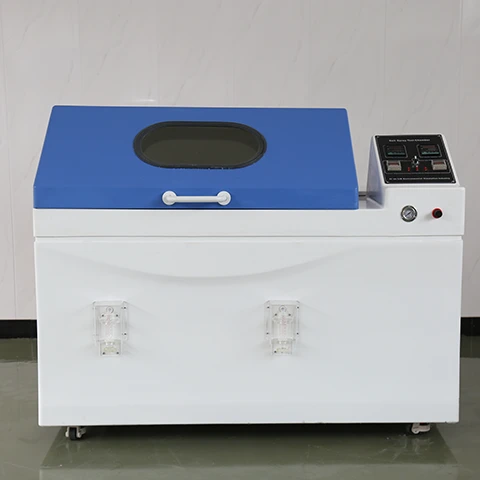
ASTM B117 prescribes continuous exposure to atomized 5% sodium chloride solution at 35 °C. The chamber must maintain a fog deposition rate of 1-2 ml per 80 cm² per hour over the specimen zone. This protocol serves as a baseline comparative tool - ranking coatings and platings against one another rather than predicting absolute field life. It remains the most widely cited salt spray standard in North America.
ASTM G85 - Modified Salt Spray Protocols
ASTM G85 extends corrosion testing beyond simple neutral fog. Its annexes define acidified salt spray, cyclic salt fog/dry-off, and dilute electrolyte fog/dry methods. Annex A1 covers acetic acid salt spray at pH 3.1-3.3, while Annex A5 introduces cyclic wet-dry transitions. Automotive and aerospace sectors frequently invoke G85 annexes when continuous neutral spray alone cannot replicate real-world degradation patterns.
ASTM B368 - Copper-Accelerated Acetic Acid Test
ASTM B368 specifically governs the CASS test for decorative electrodeposited coatings - particularly chromium/nickel/copper stacks on steel or zinc die-cast substrates. The solution contains 5% NaCl with 0.26 g/L cupric chloride and acetic acid, maintained at 49 °C ± 1 °C. This aggressive protocol rapidly differentiates plating quality tiers, typically within 8 to 44 hours of exposure.
Comparison of Test Conditions and Solution Composition
Table 1: Core Parameter Comparison - JIS Z 2371 vs. ASTM Standards
|
Parameter |
JIS Z 2371 (NSS) |
JIS Z 2371 (AASS) |
JIS Z 2371 (CASS) |
ASTM B117 |
ASTM B368 (CASS) |
|
NaCl Concentration |
5 ± 1% |
5 ± 1% |
5 ± 1% |
5 ± 1% |
5 ± 1% |
|
pH Range |
6.5-7.2 |
3.1-3.3 |
3.1-3.3 |
6.5-7.2 |
3.1-3.3 |
|
Chamber Temperature |
35 °C ± 2 °C |
35 °C ± 2 °C |
50 °C ± 2 °C |
35 °C ± 2 °C |
49 °C ± 1 °C |
|
CuCl₂ Addition |
None |
None |
0.26 g/L |
None |
0.26 g/L |
|
Fog Deposition Rate |
1-2 ml/80 cm²·h |
1-2 ml/80 cm²·h |
1-2 ml/80 cm²·h |
1-2 ml/80 cm²·h |
1-2 ml/80 cm²·h |
|
Spray Mode |
Continuous |
Continuous |
Continuous |
Continuous |
Continuous |
Solution Preparation and pH Adjustment
Both JIS Z 2371 and ASTM B117 require dissolving sodium chloride in purified water to achieve a 5% concentration. The NSS solution pH must fall between 6.5 and 7.2 at 35 °C. For AASS and CASS variants, glacial acetic acid lowers pH to 3.1-3.3. JIS Z 2371 emphasizes verification at the point of collection within the chamber, ensuring the atomization process has not altered solution chemistry.
Temperature Tolerances and Control Precision
NSS protocols under both standards mandate 35 °C ± 2 °C. The CASS method introduces a notable discrepancy: JIS Z 2371 specifies 50 °C ± 2 °C, while ASTM B368 tightens this to 49 °C ± 1 °C. A well-engineered JIS Z 2371 salt spray test machine with PID control and ±0.5 °C fluctuation capability can satisfy both tolerances without recalibration.
Fog Collection and Deposition Verification
Both standards require at least two fog collectors positioned within the exposure zone, each capturing 1.0-2.0 ml per 80 cm² per hour over a minimum 16-hour measurement period. JIS Z 2371 permits movable funnel collectors to be placed anywhere inside the chamber, offering flexibility when large or irregularly shaped specimens occupy significant floor space.
Differences in Sample Preparation and Evaluation Methods
Table 2: Sample Positioning and Evaluation Criteria
|
Aspect |
JIS Z 2371 |
ASTM B117 / B368 |
|
Sample Angle |
15°-30° from vertical |
15°-30° from vertical |
|
Specimen Support Material |
Non-metallic, inert |
Non-metallic, inert |
|
Scribe Requirements |
Defined per product spec |
Defined per product spec |
|
Evaluation Method |
Visual rating, mass loss, photographic record |
ASTM D1654 (scribe creep), ASTM D714 (blistering) |
|
Reporting |
Hours to corrosion onset, area percentage |
Hours to failure, rating number |
Specimen Positioning and Angle Requirements
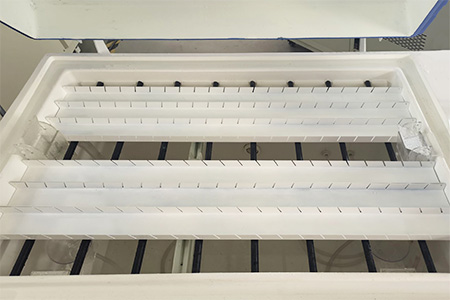
Both JIS Z 2371 and ASTM B117 specify that flat specimens should rest at 15° to 30° from vertical, with coated surfaces facing upward to receive fog deposition. Pre-calibrated V-type and O-type holders - standard in LIB Industry chambers - maintain these angles without manual adjustment, reducing operator variability and ensuring consistent exposure geometry across replicate samples.
Surface Cleaning and Edge Protection
JIS Z 2371 requires specimens to be free of oil, dust, and handling residues prior to exposure. Edges and cut surfaces not under evaluation must be masked with chemically resistant tape or wax. ASTM B117 imposes similar requirements but references ASTM D609 for detailed cleaning procedures. Both standards agree that inadequate preparation introduces artifacts that compromise data integrity.
Post-Test Evaluation and Rating Systems
After removal from the chamber, specimens are rinsed gently under running water and dried. JIS Z 2371 encourages visual rating by percentage of corroded area alongside photographic documentation. ASTM-aligned evaluations commonly reference ASTM D1654 for scribe creep measurement and ASTM D714 for blister size and density classification. Laboratories serving both markets often report results using both rating systems in parallel.
Application Scenarios for JIS and ASTM Corrosion Testing Standards
Automotive Supply Chain Compliance
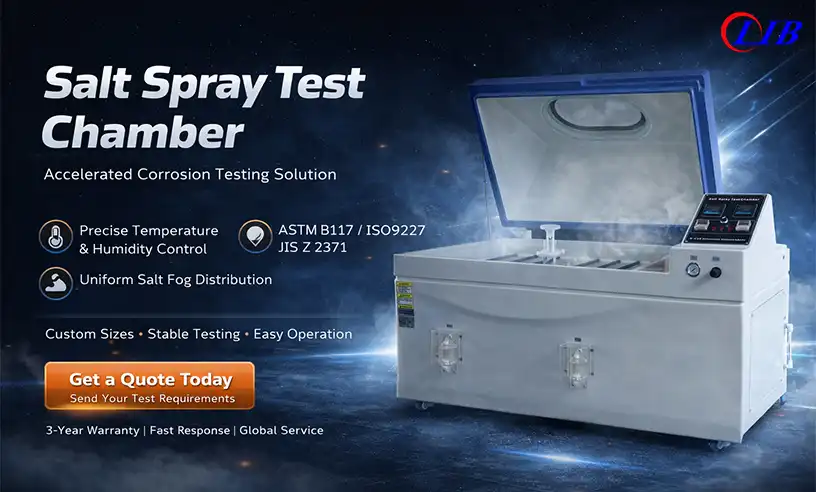
Japanese automakers embed JIS Z 2371 within their material approval matrices. A tier-one supplier shipping brake calipers to a Honda assembly plant in Japan must demonstrate NSS or CASS endurance per JIS protocols. The same supplier shipping identical parts to a General Motors facility in North America would reference ASTM B117 or GM-specific cyclic corrosion standards derived from ASTM G85.
Electronics and Connector Reliability
Connectors, PCB conformal coatings, and enclosure finishes undergo salt spray evaluation to validate performance in coastal or high-humidity environments. JIS Z 2371 NSS testing at 35 °C for 48-96 hours is common within Japanese electronics specifications, while IEC and ASTM-based requirements govern comparable tests for products destined for Western markets.
Aerospace and Defense Specifications
Military and aerospace corrosion standards - such as MIL-DTL-5541 for chromate conversion coatings - reference ASTM B117 directly. Japanese defense procurement documents may invoke JIS Z 2371 instead. A single salt fog chamber that accommodates both standards eliminates the need for duplicate equipment and reduces laboratory footprint.
Selecting the Right Salt Spray Standard for Industrial Testing
Identifying Customer and Regulatory Requirements
The choice between JIS Z 2371 and ASTM B117 hinges on the end market. Export-oriented manufacturers should map each customer's specified standard against their testing capabilities. When a product spec cites ISO 9227, JIS Z 2371 compliance inherently satisfies ISO requirements due to their close harmonization - a significant practical advantage.
Evaluating Test Severity and Duration
NSS under both standards provides identical severity levels. Differentiation emerges when accelerated methods are needed: AASS and CASS under JIS Z 2371 (or ISO 9227) intensify attack on anodized aluminum and decorative chromium plating, respectively. Selecting the appropriate variant depends on coating type, substrate metallurgy, and the degradation mechanism most relevant to service conditions.
Matching Chamber Capability to Standard Demands
A versatile salt spray corrosion chamber should support temperature ranges spanning ambient to at least 50 °C (for CASS testing), maintain humidity at 95-98% RH, and provide programmable continuous or periodic spray modes. PID-controlled heating, PT100 sensors, and integrated fog collection systems ensure that a single chamber meets JIS Z 2371, ASTM B117, ASTM B368, and ISO 9227 without compromise.
Versatile Chambers Adaptable to Multiple International Standards - LIB Industry
Table 3: LIB Industry JIS Z 2371 Salt Spray Test Chamber Models
 |
 |
||||
|
Model |
Internal Dimensions (mm) |
Volume (L) |
Temp. Range |
Humidity |
Fog Deposition |
|
S-150 |
590 × 470 × 400 |
110 |
Ambient-60 °C |
95-98% RH |
1-2 ml/80 cm²·h |
|
S-250 |
1000 × 640 × 500 |
320 |
Ambient-60 °C |
95-98% RH |
1-2 ml/80 cm²·h |
|
S-750 |
1100 × 750 × 500 |
410 |
Ambient-60 °C |
95-98% RH |
1-2 ml/80 cm²·h |
|
S-010 |
1000 × 1300 × 600 |
780 |
Ambient-60 °C |
95-98% RH |
1-2 ml/80 cm²·h |
|
S-016 |
900 × 1600 × 720 |
1030 |
Ambient-60 °C |
95-98% RH |
1-2 ml/80 cm²·h |
|
S-020 |
1000 × 2000 × 800 |
1600 |
Ambient-60 °C |
95-98% RH |
1-2 ml/80 cm²·h |
Multi-Standard Protocol Support
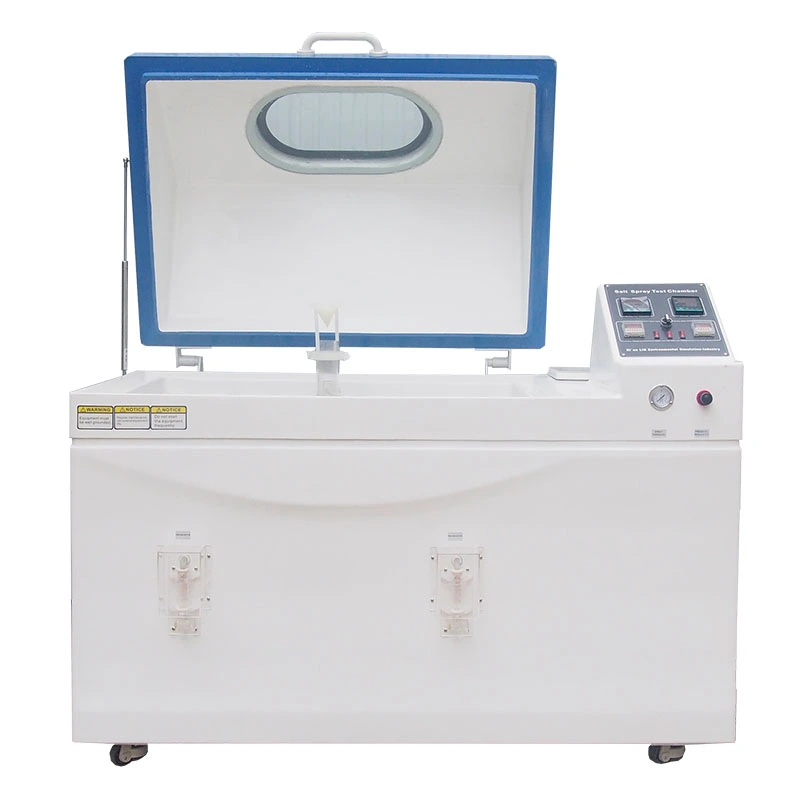
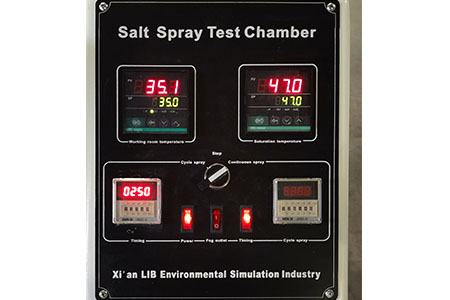
LIB Industry chambers accommodate NSS, AASS, and CASS methods within a single unit. The programmable controller supports 120 programs with up to 100 steps each, enabling operators to configure continuous or cyclic spray patterns while automatically recording temperature, spray duration, and settlement data. This multi-standard versatility eliminates the need for separate equipment dedicated to individual protocols.
Durable Construction for Extended Test Campaigns
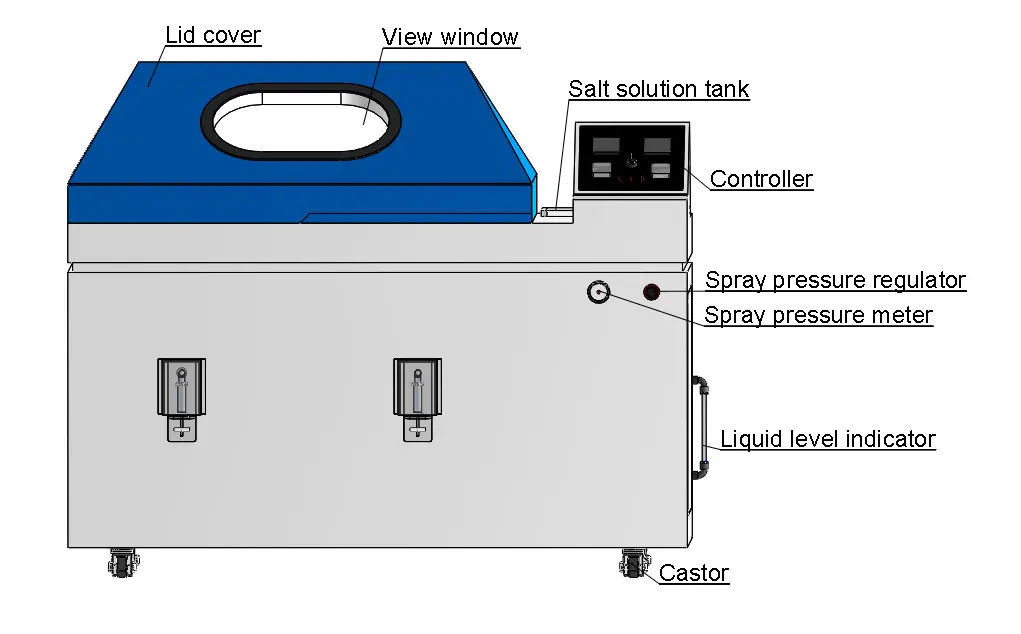
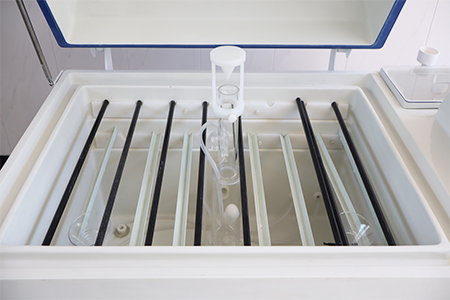
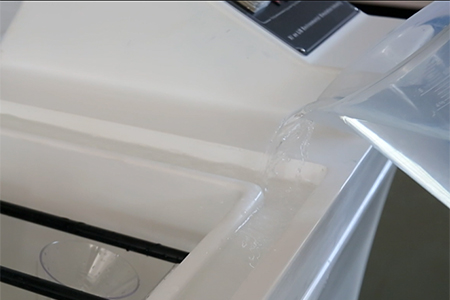
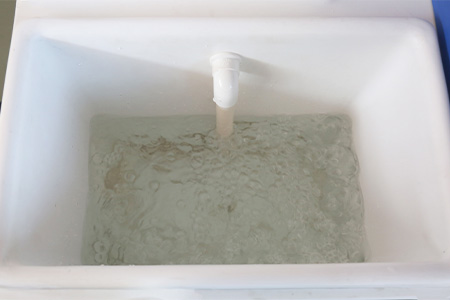
Glass fiber reinforced plastics (FRP) construction withstands prolonged exposure to 5% NaCl under elevated temperature and humidity. The modified V-shaped transparent lid prevents condensation from dripping onto specimens - preserving test validity during campaigns spanning hundreds or thousands of hours. Built-in safety features include dry-combustion protection, over-temperature alarms, and automatic water replenishment.
Turnkey Delivery with Global Certification
Every LIB Industry salt fog test chamber carries CE certification and undergoes third-party verification by SGS and TÜV. A 3-year warranty with lifetime service support accompanies each unit. The engineering team delivers non-standard configurations tailored to unique specimen geometries, facility constraints, or multi-standard compliance obligations across Japanese, American, and international frameworks.
|
Durable, Leak-Resistant Workspace |
Flexible Sample Rack System |
|
Water-Sealed Lid Design |
Intelligent Controller |
|
Uniform Salt Solution Agitation |
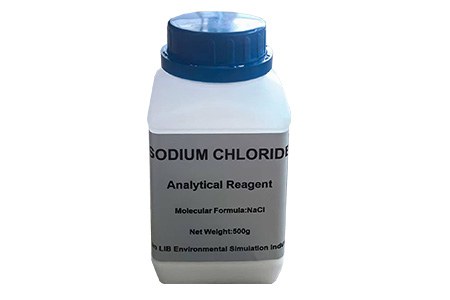
Included Industrial-Grade Salt |
Conclusion
JIS Z 2371 and ASTM B117 share fundamental operating parameters - 5% NaCl at 35 °C with identical fog deposition rates - yet diverge in scope, test method coverage, and regional prevalence. JIS Z 2371 bundles NSS, AASS, and CASS into one harmonized document aligned with ISO 9227, while ASTM distributes equivalent methods across B117, G85, and B368. Manufacturers serving global markets benefit from a single, versatile JIS Z 2371 salt spray test chamber capable of running all major protocols. Accurate standard selection, paired with precision-engineered equipment, ensures coating and plating evaluations remain valid, repeatable, and audit-ready.
FAQ
Can a single chamber run both JIS Z 2371 and ASTM B117 tests?
Yes. Both standards share the same NSS parameters - 5% NaCl at 35 °C with 1-2 ml/80 cm²·h deposition. A well-designed chamber with programmable controls satisfies both without hardware changes.
Which standard should I follow for CASS testing?
JIS Z 2371 and ASTM B368 both define CASS protocols with minor temperature tolerance differences. Select the standard your customer or product specification explicitly requires to maintain compliance.
Does JIS Z 2371 align with ISO 9227?
JIS Z 2371 was revised to harmonize closely with ISO 9227, sharing virtually identical solution compositions, chamber temperatures, and fog deposition requirements across NSS, AASS, and CASS methods.
Need a reliable JIS Z 2371 salt spray test chamber manufacturer? LIB Industry is your dedicated supplier and factory partner for turnkey corrosion testing solutions. Contact us at ellen@lib-industry.com to discuss your multi-standard testing needs and receive a tailored equipment proposal.