How Humidity Cabinets Help Prevent Electronic Corrosion?
Electronic corrosion represents one of the most insidious failure mechanisms affecting modern devices, causing billions in annual losses across manufacturing sectors worldwide. Temperature and humidity cabinets provide controlled environmental testing environments where engineers systematically evaluate component vulnerability to moisture-induced degradation before market deployment. These specialized chambers simulate accelerated corrosion conditions by precisely regulating temperature and relative humidity levels, exposing circuit boards, connectors, and enclosures to condensation cycles that replicate years of field exposure within weeks. Through methodical testing protocols, manufacturers identify design weaknesses, validate protective coatings, and optimize material selections, ultimately preventing catastrophic field failures. Temperature and humidity cabinet technology transforms corrosion prevention from reactive troubleshooting into proactive quality assurance, ensuring electronic reliability across demanding operational environments.
Why Is Humidity Control Critical for Electronic Corrosion Prevention?
Electrochemical Reactions at Component Interfaces
Corrosion fundamentally operates through electrochemical processes requiring three essential elements: moisture, ionic contamination, and dissimilar metal contacts. When relative humidity exceeds 60%, thin moisture films form on circuit board surfaces, creating electrolytic pathways between copper traces, solder joints, and component leads. These microscopic water layers dissolve residual flux residues, handling oils, and atmospheric pollutants, generating conductive electrolytes that drive galvanic corrosion. Controlled humidity testing enables engineers to determine the critical moisture threshold where specific material combinations initiate corrosion, informing protective coating requirements.
Condensation Cycles and Hygroscopic Absorption
Temperature fluctuations cause moisture condensation when warm, humid air contacts cooler surfaces - a phenomenon particularly destructive within sealed electronic enclosures. Circuit boards containing hygroscopic materials like FR-4 epoxy resin absorb atmospheric moisture, with absorption rates increasing exponentially above 70% relative humidity. This absorbed moisture migrates through laminate structures, reaching buried copper layers and causing delamination. Temperature and humidity cabinets replicate these condensation cycles through programmed temperature transitions at elevated humidity levels, revealing vulnerabilities invisible during constant-condition testing.
Conductive Anodic Filament Growth
Conductive anodic filaments (CAF) represent a catastrophic failure mode where copper dendrites grow between adjacent circuit traces under combined moisture and voltage stress. This phenomenon requires sustained humidity above 85% RH combined with electric field gradients, conditions easily replicated within environmental chambers. CAF growth occurs along glass fiber interfaces within PCB laminates, eventually bridging conductors and causing short circuits. Accelerated testing protocols utilizing 85°C/85% RH conditions - the industry-standard stress test - provoke CAF formation within 1000 hours compared to years in field conditions.
Accelerated Corrosion Testing for Electronic Components
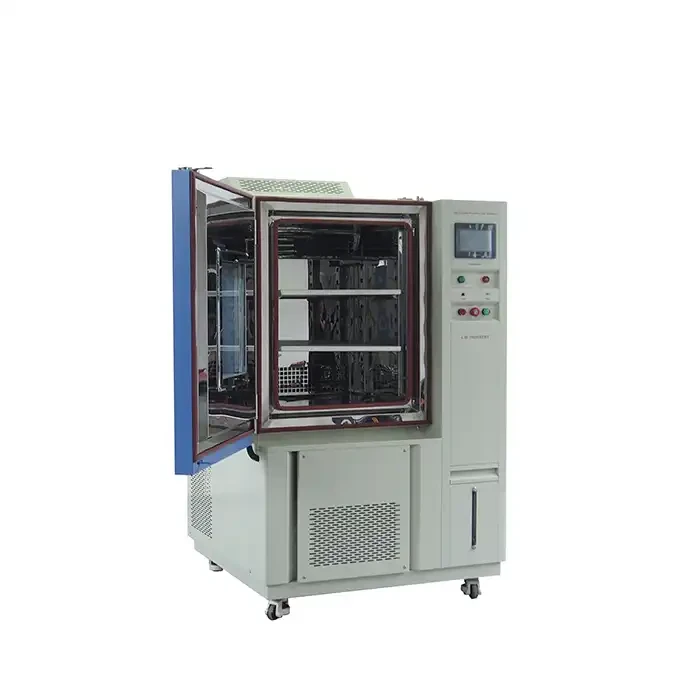
HAST and Pressure-Accelerated Testing Methods
Highly Accelerated Stress Testing (HAST) employs elevated pressure within humidity chambers to force moisture penetration into semiconductor packages and encapsulated assemblies. By increasing chamber pressure to 2-3 atmospheres while maintaining 130°C and near-saturation humidity, HAST conditions compress months of field exposure into days. This acceleration reveals package sealing defects, die attach vulnerabilities, and bond wire corrosion susceptibility. Advanced temperature and humidity cabinets equipped with pressure vessels enable HAST protocols, providing rapid feedback during component qualification and supplier evaluation.
Thermal Shock with Humidity Conditioning
Combining thermal shock transitions with controlled humidity exposure amplifies corrosion mechanisms through repeated material expansion and contraction. Test protocols cycle components between -40°C dry conditions and +85°C at 85% RH within minutes, creating mechanical stresses that crack protective coatings and propagate moisture pathways into vulnerable interfaces. Solder joints experience differential thermal expansion relative to component bodies and circuit boards, generating microcracks that become moisture ingress routes. Temperature and humidity chambers capable of rapid temperature transitions reveal coating adhesion failures and package sealing weaknesses.
Salt Spray Alternative Testing
Traditional salt spray testing provides limited correlation to actual field corrosion patterns, whereas controlled humidity testing with programmed contamination introduction offers superior predictive accuracy. Modern testing protocols introduce measured quantities of ionic contaminants - chlorides, sulfates, nitrates - onto circuit boards before humidity exposure, simulating manufacturing process residues or coastal atmosphere exposure. Temperature and humidity cabinets maintain precise environmental conditions while contaminated assemblies undergo voltage bias, revealing electrochemical migration and dendrite growth rates under realistic stress combinations.
|
Test Method |
Temperature |
Humidity |
Duration |
Failure Mechanism Detected |
|
85/85 Standard |
85°C |
85% RH |
1000 hours |
CAF, surface corrosion, migration |
|
HAST |
130°C |
100% RH (pressurized) |
96-264 hours |
Package seal failures, die corrosion |
|
Thermal Cycling |
-40°C to +85°C |
85% RH at high temp |
500 cycles |
Coating cracks, solder joint fatigue |
|
Biased Humidity |
85°C |
85% RH |
1000 hours with voltage |
Electrochemical migration, dendrites |
Moisture Resistance Evaluation in Controlled Environmental Conditions
Conformal Coating Effectiveness Validation
Conformal coatings - acrylic, silicone, urethane, parylene - provide moisture barriers protecting circuit assemblies from corrosion. Evaluating coating effectiveness requires systematic humidity exposure measuring insulation resistance degradation, weight gain from moisture absorption, and visual evidence of corrosion initiation. Temperature and humidity cabinets enable comparative testing where identical assemblies with different coating types undergo parallel exposure, generating quantitative performance data. Testing reveals coating thickness requirements, application quality issues, and coverage gaps at component interfaces where corrosion preferentially initiates.
Enclosure Ingress Protection Rating Verification
Electronic enclosures carry IP (Ingress Protection) ratings defining moisture exclusion capabilities, ranging from IP54 (splash resistant) to IP68 (continuous submersion). Verifying these ratings requires controlled humidity exposure combined with pressure differential testing. Environmental chambers maintain 95% RH while pressure differentials force moisture-laden air toward potential ingress pathways - gasket interfaces, cable glands, display windows. Internal humidity sensors and desiccant indicators reveal whether enclosure sealing systems maintain protective internal environments despite external humidity stress.
Material Compatibility and Galvanic Couple Assessment
Modern electronics incorporate diverse materials - copper, aluminum, tin, nickel, gold plating - creating galvanic couples prone to accelerated corrosion when moisture bridges dissimilar metals. Controlled humidity testing evaluates specific material combinations under representative environmental stress, measuring corrosion rates through weight loss, dimensional changes, or electrical resistance monitoring. Test fixtures position dissimilar metal coupons in electrical contact within humidity chambers, replicating connector interfaces, mounting hardware, or shield assemblies. Results inform material selection guidelines preventing problematic combinations.
How Do Temperature and Humidity Cycles Affect Circuit Boards?
Solder Joint Integrity Under Hygrothermal Stress
Solder joints connecting components to circuit boards experience complex stress states during combined temperature and humidity exposure. Thermal expansion mismatches generate shear stresses within solder volumes, while absorbed moisture causes internal pressure buildup and intermetallic compound degradation. Temperature and humidity cabinets cycling between temperature extremes while maintaining elevated humidity levels replicate years of seasonal variation within weeks. Electrical resistance monitoring throughout testing detects incipient solder joint failures before visual evidence appears, enabling failure analysis and design optimization.
Copper Trace Corrosion and Intermetallic Growth
Exposed copper traces on circuit boards oxidize rapidly under humid conditions, forming copper oxide and eventually copper hydroxide corrosion products. When humidity chambers maintain conditions above 70% RH at elevated temperatures, this surface corrosion propagates beneath solder mask layers through defects and pinholes. Simultaneously, intermetallic compounds at solder-copper interfaces undergo moisture-accelerated growth, becoming brittle and crack-prone. Cross-sectional analysis of boards after chamber exposure reveals corrosion progression rates and protective coating effectiveness.
Laminate Delamination and Blister Formation
PCB laminates comprise resin-impregnated glass fabric layers bonded through heat and pressure. Moisture absorbed into these structures causes dimensional swelling and reduces glass transition temperatures. During temperature cycling at elevated humidity, absorbed moisture vaporizes internally, generating pressure that debonds copper layers from laminate substrates - visible as blisters or measles. Environmental chamber testing determines laminate moisture absorption rates, critical humidity thresholds for delamination, and thermal cycling limits. Results guide PCB material selection and manufacturing process optimization.
|
Circuit Board Component |
Corrosion Mechanism |
Critical RH Threshold |
Typical Test Condition |
|
Exposed Copper Traces |
Oxidation and hydroxide formation |
>60% RH |
85°C/85% RH |
|
Solder Joints |
Intermetallic degradation |
>70% RH |
-40°C to 85°C cycling |
|
PCB Laminate |
Moisture absorption, delamination |
>80% RH |
85°C/85% RH |
|
Component Leads |
Galvanic corrosion at interfaces |
>65% RH |
85°C/85% RH with bias |
Environmental Reliability Testing for Industrial Electronics
Automotive Electronics Qualification Standards
Automotive environments subject electronics to extreme temperature ranges, vibration, chemical exposure, and humidity variations between engine compartments and passenger cabins. Qualification standards like AEC-Q100 for integrated circuits and AEC-Q200 for passive components mandate specific humidity testing protocols. These include 1000-hour exposure at 85°C/85% RH for moisture sensitivity level determination and temperature cycling with humidity conditioning. Temperature and humidity cabinets configured for automotive testing accommodate complete electronic control units, enabling system-level validation beyond component qualification.
Industrial Automation and Control System Testing
Industrial electronics deployed in chemical plants, food processing facilities, and wastewater treatment installations encounter corrosive atmospheres with sustained high humidity levels. Reliability testing for these applications extends beyond standard protocols, incorporating chemical vapors, salt fog, and contaminated humidity exposure. Specialized environmental chambers introduce ammonia, hydrogen sulfide, or chlorine gases at controlled concentrations while maintaining temperature and humidity profiles. Testing reveals whether industrial-grade enclosures, coatings, and material selections withstand process environment exposure throughout equipment service life.
Telecommunications Infrastructure Validation
Outdoor telecommunications equipment - base stations, fiber optic terminals, power supplies - must operate reliably despite continuous exposure to weather extremes. Validation protocols subject equipment to simulated diurnal temperature cycling with morning condensation, afternoon heating, and nighttime cooling while maintaining outdoor humidity profiles. Temperature and humidity cabinets programmed with location-specific climate data replicate deployment environments, revealing thermal management adequacy, moisture ingress pathways, and corrosion progression rates. Extended testing spanning thousands of hours provides confidence in 20+ year service life projections.
Corrosion Prevention Standards for Electronic Product Validation

IPC-TM-650 Test Methods for PCB Assemblies
The IPC-TM-650 standard compilation provides comprehensive test methods for evaluating printed circuit board materials and assemblies, including multiple humidity-related protocols. Test Method 2.6.3 specifies moisture and insulation resistance procedures measuring surface insulation resistance degradation during 96-hour exposure at 40°C/90-95% RH. Method 2.6.25 describes conductive anodic filament resistance testing at 85°C/85% RH under voltage bias. Temperature humidity chambers meeting these specifications enable standardized testing, generating comparable results across different laboratories and manufacturers.
MIL-STD-810 Environmental Engineering Considerations
Military Standard 810 establishes environmental test methods for defense electronics, including Method 507.6 for humidity testing. This protocol specifies exposure cycles replicating tropical environments, storage conditions, and rapid temperature transitions causing condensation. Testing validates that military electronics withstand sustained humidity exposure without performance degradation, corrosion, or moisture-induced failures. Chambers configured for MIL-STD-810 compliance accommodate large assemblies, provide precise humidity control across wide temperature ranges, and support extended test durations measuring reliability under extreme conditions.
JEDEC Standards for Semiconductor Moisture Sensitivity
JEDEC (Joint Electron Device Engineering Council) standards address moisture sensitivity of plastic-encapsulated semiconductors during storage, handling, and assembly processes. Standard JESD22-A113 defines moisture sensitivity levels (MSL) from MSL1 (unlimited floor life) to MSL6 (mandatory dry pack). Classification requires humidity chamber exposure at 85°C/85% RH followed by reflow simulation, assessing whether absorbed moisture causes package cracking. Temperature and humidity cabinets equipped with precise humidity control and programmable temperature profiles enable MSL classification testing critical for component procurement and manufacturing process development.
|
Standard |
Test Condition |
Duration |
Application |
Pass/Fail Criteria |
|
IPC-TM-650 Method 2.6.3 |
40°C/90-95% RH |
96 hours |
PCB surface insulation |
>10^6 Ω resistance maintained |
|
MIL-STD-810 Method 507.6 |
Various cycles |
240 hours |
Military electronics |
No corrosion or functional degradation |
|
JEDEC JESD22-A113 |
85°C/85% RH |
Hours based on MSL |
Semiconductor packages |
No package cracking after reflow |
|
AEC-Q100 |
85°C/85% RH |
1000 hours |
Automotive ICs |
Zero failures in sample size |
LIB Industry: Precision Humidity for Corrosion Control
|
|
Name | Temperature Humidity Chamber | ||||
|
Temperature range |
-20℃ ~+150 ℃ |
|||||
|
Low type |
A: -40℃ B:-70℃ C -86℃ |
|||||
|
Humidity Range |
20%-98%RH |
|||||
|
Temperature deviation |
± 2.0 ℃ |
|||||
|
Heating rate |
3 ℃ / min |
|||||
|
Cooling rate |
1 ℃ / min |
|||||
|
Controller |
Programmable color LCD touch screen controller, Multi-language interface, Ethernet , USB |
|||||
|
Refrigerant |
R404A, R23 |
|||||
|
Exterior material |
Steel Plate with protective coating |
|||||
|
Interior material |
SUS304 stainless steel |
|||||
|
Standard configuration |
1 Cable hole (Φ 50) with plug; 2 shelves |
|||||
|
Timing Function |
0.1~999.9 (S,M,H) settable |
|||||

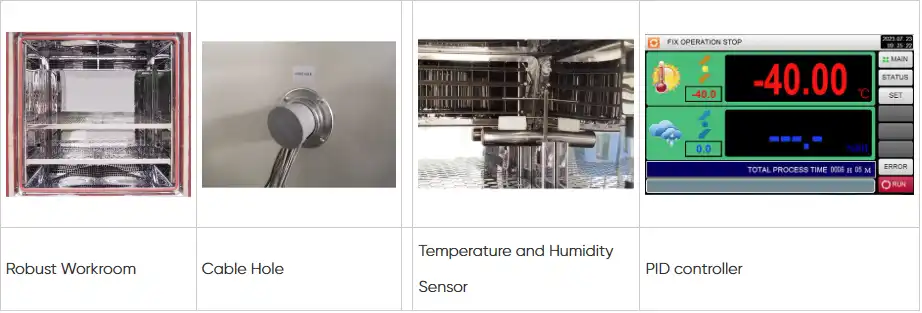
Advanced External Humidification Technology
LIB Industry temperature and humidity cabinets incorporate external isolation humidification systems eliminating common reliability issues plaguing traditional internal humidifiers. The stainless steel surface evaporation humidifier operates outside the test workspace, preventing contamination from scaling, mineral deposits, and biological growth that compromise testing accuracy. This design enables humidifier maintenance without interrupting ongoing tests, reducing downtime and maintaining testing continuity. Automatic water supply systems with integrated filtration ensure consistent humidification performance throughout extended corrosion testing protocols spanning thousands of hours.
High-Precision Environmental Control Systems
Corrosion testing validity depends critically on maintaining stable, accurate environmental conditions throughout exposure periods. LIB chambers achieve temperature fluctuation within ±0.5°C and deviation below ±2.0°C across the entire test volume, ensuring uniform exposure for all test specimens regardless of chamber position. Humidity control maintains 20%-98% RH range with ±2.5% RH deviation, meeting stringent requirements for standardized corrosion testing protocols. PT100 Class A platinum resistance sensors provide ±0.001°C resolution, enabling precise documentation of exposure conditions for regulatory submissions and quality records.
Energy-Efficient Operation with Electronic Expansion Valves
Extended corrosion testing protocols running continuously for 1000+ hours generate significant energy costs with traditional chamber designs. LIB Industry temperature and humidity cabinets incorporate electronic expansion valve (EEV) technology that precisely meters refrigerant flow based on real-time cooling demand, reducing energy consumption by 20-30% compared to conventional hot gas bypass systems. This efficiency improvement becomes particularly significant during elevated temperature/humidity testing where refrigeration systems counteract both internal heat loads and humidification energy. French TECUMSEH compressors deliver reliable performance throughout extended operation, minimizing maintenance interventions during critical testing campaigns.
|
LIB Chamber Model |
Internal Volume |
Temperature Range |
Humidity Range |
Ideal Corrosion Testing Application |
|
TH-100 |
100L |
-70°C to +150°C |
20% to 98% RH |
Component-level qualification |
|
TH-225 |
225L |
-70°C to +150°C |
20% to 98% RH |
PCB assemblies and modules |
|
TH-500 |
500L |
-70°C to +150°C |
20% to 98% RH |
Small electronic assemblies |
|
TH-1000 |
1000L |
-70°C to +150°C |
20% to 98% RH |
Complete system validation |
Conclusion
Humidity cabinet testing represents essential infrastructure for modern electronics manufacturing, transforming corrosion prevention from reactive failure analysis into proactive quality engineering. Controlled environmental exposure reveals moisture vulnerabilities before field deployment, enabling protective coating optimization, material selection refinement, and design improvements. Standardized testing protocols provide quantitative reliability data supporting warranty projections, regulatory compliance, and customer confidence. As electronic systems penetrate increasingly demanding environments - automotive, industrial, outdoor infrastructure - rigorous humidity testing becomes mandatory for ensuring long-term reliability. Advanced environmental chambers from manufacturers like LIB Industry deliver the precision, repeatability, and flexibility required for comprehensive corrosion validation programs.
FAQ
What humidity level causes electronic corrosion?
Electronic corrosion typically initiates when relative humidity exceeds 60%, with rates accelerating dramatically above 70% RH. The critical threshold varies based on contamination levels, temperature, and voltage bias. Industry-standard accelerated testing employs 85% RH combined with 85°C to replicate field corrosion within compressed timeframes.
How long should humidity corrosion testing last?
Standard humidity testing protocols typically require 1000 hours at 85°C/85% RH for comprehensive reliability validation. Automotive applications may extend testing to 2000+ hours, while highly accelerated stress testing (HAST) compresses equivalent exposure into 96-264 hours using elevated pressure and temperature conditions.
Can humidity chambers test powered electronic assemblies?
Advanced temperature and humidity cabinets accommodate powered testing through cable access ports and internal power feedthrough systems. Biased humidity testing applies operating voltages during environmental exposure, revealing electrochemical migration and voltage-accelerated corrosion mechanisms invisible during unpowered testing.
Partner with LIB Industry for Corrosion Testing Solutions
As a leading temperature and humidity cabinet manufacturer and supplier, LIB Industry provides turn-key environmental testing systems for electronics qualification worldwide. Contact our technical team at ellen@lib-industry.com to discuss your corrosion testing requirements.