Temperature Cycling Testing for Automotive ECU Reliability
Modern vehicles depend on Electronic Control Units (ECUs) to manage everything from engine performance to advanced driver assistance systems. These critical components must withstand extreme temperature variations throughout their operational lifetime - from freezing winter mornings to scorching summer heat under the hood. Temperature cycling testing in a temperature cycling test chamber validates ECU resilience by subjecting these electronic modules to accelerated thermal stress conditions that replicate years of real-world exposure. This rigorous validation process identifies potential failure mechanisms before products reach consumers, ensuring automotive electronics maintain functionality across their entire service life while meeting stringent reliability standards demanded by the automotive industry.
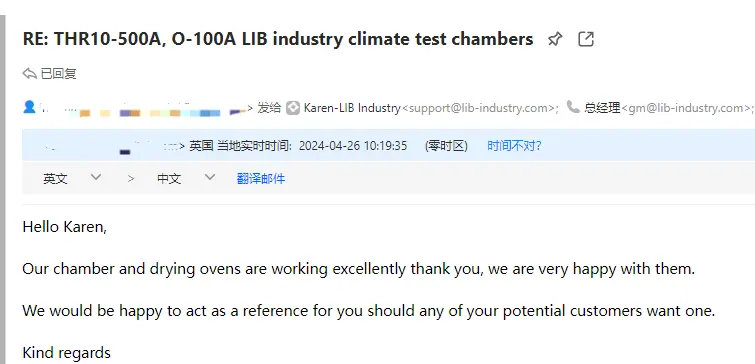
A leading electronics testing lab shared feedback on the LIB industry THR10-500A thermal cycling chamber, saying it “runs smoothly and performs reliably, and we are satisfied with the equipment.”
The system maintained stable operation during continuous thermal cycling, supporting long burn-in tests and rapid temperature transitions without interruption. This helped the lab accurately evaluate the thermal durability of automotive electronics such as sensors and control modules.It is also widely used for material aging, plastic component testing, and battery performance evaluation, effectively simulating real-world temperature changes to improve product reliability.
Why Is Temperature Cycling Critical for Automotive ECU Reliability?
Thermal Stress in Automotive Environments
Automotive ECUs operate in one of the most challenging thermal environments imaginable. Engine compartment temperatures can soar beyond 125°C during extended highway driving, while overnight parking in arctic conditions exposes the same electronics to temperatures plummeting below -40°C. This extreme temperature differential creates continuous expansion and contraction cycles within electronic assemblies, generating mechanical stress at solder joints, component leads, and substrate interfaces that accumulates over time and eventually leads to failure.
Coefficient of Thermal Expansion Mismatch
Different materials within ECU assemblies expand and contract at different rates when exposed to temperature changes. Silicon chips, copper traces, solder alloys, FR4 substrates, and plastic enclosures each possess unique thermal expansion coefficients. During temperature transitions, these mismatched expansion rates create shear forces at material boundaries. Temperature cycling test chambers simulate these repetitive stress cycles, revealing vulnerable design elements where coefficient mismatches concentrate mechanical strain that could propagate into cracks or delamination.
Accelerated Life Testing Benefits
Conducting temperature cycling tests compresses months or years of field exposure into weeks of laboratory evaluation. By exposing ECUs to temperature extremes beyond normal operational ranges with rapid transition rates, engineers accelerate failure mechanisms that would otherwise require extended real-world testing. This approach enables design validation within development timelines, identifies weak points requiring redesign, and provides quantitative reliability data supporting warranty predictions and quality assurance programs.
Common Failure Modes in ECU Thermal Cycling Validation
Solder Joint Fatigue and Cracking
Solder joints represent the most vulnerable elements in automotive electronics subjected to thermal cycling. The repeated expansion and contraction cycles induce low-cycle fatigue in the solder matrix, particularly at larger components like power transistors and capacitors where mechanical stress concentrates. Cracks initiate at grain boundaries within the solder microstructure, propagating through the joint cross-section until electrical continuity fails. Ball Grid Array (BGA) and Quad Flat No-lead (QFN) package styles prove especially susceptible to this mechanism.
Wire Bond Degradation
Internal wire bonds connecting semiconductor die to lead frames experience significant stress during thermal excursions. Gold and aluminum wire bonds undergo plastic deformation as the chip and substrate expand at different rates. Heel cracking at the bond attachment point represents a common failure mode, as does intermetallic compound growth at the bond interface. Temperature cycling test chambers with precise ramp control help characterize wire bond reliability under automotive-grade thermal stress conditions.
Delamination and Package Cracking
Moisture ingress combined with thermal cycling creates a particularly destructive failure mechanism. Water vapor trapped within plastic encapsulation expands during heating phases, generating internal pressure that can delaminate molding compound from die surfaces or crack package bodies. This "popcorn effect" compromises both mechanical integrity and electrical performance. Proper preconditioning and controlled humidity exposure during temperature cycling reveals susceptibility to this failure mode before production release.
Temperature Cycling Profiles for Automotive Electronics Testing
Standard Automotive Temperature Cycling Specifications
|
Test Parameter |
AEC-Q100 Grade 0 |
AEC-Q100 Grade 1 |
AEC-Q100 Grade 2 |
AEC-Q100 Grade 3 |
|
Temperature Range |
-40°C to +150°C |
-40°C to +125°C |
-40°C to +105°C |
-40°C to +85°C |
|
Minimum Cycles |
1000 cycles |
1000 cycles |
1000 cycles |
1000 cycles |
|
Dwell Time |
15 minutes |
15 minutes |
15 minutes |
15 minutes |
|
Transition Time |
≤10 minutes |
≤10 minutes |
≤10 minutes |
≤10 minutes |
|
Application |
Engine electronics |
Under-hood |
Cabin electronics |
Infotainment |
Two-Chamber vs Three-Chamber Testing
Traditional two-chamber systems physically transfer test specimens between hot and cold zones, achieving rapid temperature transitions through air movement. Three-chamber configurations add an ambient zone for specimen equilibration between temperature extremes. Single-chamber thermal cycling test equipment offers advantages for ECU validation - specimens remain stationary while the chamber atmosphere transitions through programmed temperature profiles, eliminating mechanical handling stress and enabling continuous monitoring of electrical parameters during thermal transitions.
Custom Profile Development
Beyond standardized test specifications, automotive manufacturers often develop custom temperature cycling profiles reflecting specific vehicle applications. High-performance vehicles might require extended high-temperature dwells simulating track conditions, while electric vehicle power electronics need validation across wider temperature ranges. Advanced temperature cycling test chambers support programming up to 120 distinct test protocols with 100 individual steps per program, enabling precise replication of complex thermal exposure scenarios specific to particular ECU deployment environments.
How Do Rapid Temperature Transitions Affect ECU Performance?
Thermal Shock Impact on Component Integrity
Rapid temperature transitions - achievable at rates up to 15-20°C per minute in advanced temperature cycling test chambers - impose mechanical shock on electronic assemblies. Faster ramp rates generate steeper thermal gradients across component bodies, intensifying stress concentrations at material interfaces. While gentler transitions better replicate typical automotive thermal environments, accelerated ramp rates compress test durations and reveal marginal designs that might pass slower cycling protocols yet fail under occasional rapid temperature changes encountered during vehicle operation.
Real-Time Electrical Characterization During Cycling
Modern temperature cycling validation extends beyond simple pass/fail criteria after completion. Engineers increasingly monitor ECU electrical parameters continuously throughout thermal transitions, capturing performance drift as temperature changes. This approach reveals intermittent failures occurring only at specific temperature points, identifies thermal hysteresis in sensor circuits, and characterizes power consumption variations across temperature ranges. Chambers equipped with Ethernet connectivity enable integration with automated test equipment for comprehensive electrical characterization during thermal cycling.
Thermal Resistance Changes Under Cycling Stress
Repeated thermal cycling can degrade thermal interface materials, alter heat sink contact pressure, and modify thermal conduction paths within ECU assemblies. These changes affect junction-to-case thermal resistance in power semiconductors, potentially creating thermal runaway conditions not present in initial designs. Temperature cycling test chambers with programmable heat load simulation up to 1000W enable validation of thermal management effectiveness throughout the product lifecycle, ensuring adequate cooling performance persists after extended thermal stress exposure.
Environmental Stress Screening for Vehicle Control Modules

Combined Environmental Testing Approaches
Automotive ECUs rarely experience temperature cycling in isolation. Real-world conditions combine thermal stress with vibration, humidity, and electrical load variations. Effective validation protocols integrate multiple stressors either sequentially or simultaneously. Temperature cycling test chambers with optional humidity control systems enable combined temperature-humidity cycling protocols, while cable ports facilitate electrical operation under thermal stress. This multi-axis stress screening approach provides higher confidence in field reliability predictions.
Production ESS Implementation
Environmental Stress Screening (ESS) applied during production precipitates latent defects before customer delivery. Temperature cycling represents a core ESS element for automotive electronics manufacturing. Production-oriented chambers with volumes ranging from 500L to 3000L accommodate multiple ECU assemblies simultaneously, enabling cost-effective screening while maintaining controlled thermal conditions across the entire chamber volume. The TR5-series chambers deliver temperature uniformity with fluctuations within ±0.5°C and spatial deviation under ±2.0°C throughout the working volume.
Screening Profile Optimization
|
ESS Parameter |
Conservative Profile |
Standard Profile |
Aggressive Profile |
|
Temperature Range |
-20°C to +100°C |
-40°C to +125°C |
-60°C to +150°C |
|
Number of Cycles |
3-5 cycles |
5-10 cycles |
10-20 cycles |
|
Ramp Rate |
3°C/min |
5°C/min |
10°C/min |
|
Dwell Time |
30 minutes |
15 minutes |
10 minutes |
|
Target Defect Precipitation |
Gross defects |
Manufacturing defects |
Marginal designs |
Selecting appropriate ESS profiles balances defect precipitation effectiveness against potential overstress damage to conforming units. Conservative profiles provide gentle screening suitable for mature, proven designs, while aggressive approaches maximize defect detection for new product introductions or high-reliability applications where field failures carry severe consequences.
Key Standards for Automotive ECU Temperature Cycling Tests
AEC-Q100 Qualification Requirements
The Automotive Electronics Council's AEC-Q100 standard establishes the industry benchmark for integrated circuit qualification. Temperature cycling constitutes Test C, requiring 1000 cycles across temperature ranges corresponding to component grade classifications. The standard specifies air-to-air testing with maximum transition times, minimum dwell periods, and detailed failure criteria. Compliance with AEC-Q100 temperature cycling requirements provides automotive OEMs confidence that semiconductor components meet baseline reliability expectations for vehicle electronics applications.
ISO 16750-4 Environmental Conditions
ISO 16750-4 addresses electrical and electronic equipment environmental conditions specifically for road vehicles. Section 4.1 covers climatic loads, prescribing temperature cycling test methods for complete ECU assemblies rather than individual components. The standard defines operational temperature cycling (equipment operating during test) and storage temperature cycling (equipment unpowered), each with specific temperature ranges, transition rates, and cycle counts based on installation location within the vehicle. Temperature cycling test chambers supporting both powered and unpowered testing enable comprehensive ISO 16750-4 validation.
JEDEC Standards Application
Several JEDEC standards inform automotive temperature cycling test development. JESD22-A104 describes temperature cycling test methods for semiconductor devices, while JESD22-A113 covers preconditioning procedures preparing moisture-sensitive components before reliability testing. These standards specify chamber performance requirements including temperature accuracy, uniformity, ramp rate capability, and recovery time - specifications directly reflected in professional temperature cycling test chamber designs like the TR5 series with their precise temperature control and programmable ramp rates.
LIB Industry Temperature Cycling Test Chambers for Precise Automotive ECU Reliability Validation
Advanced Temperature Control for Automotive Testing
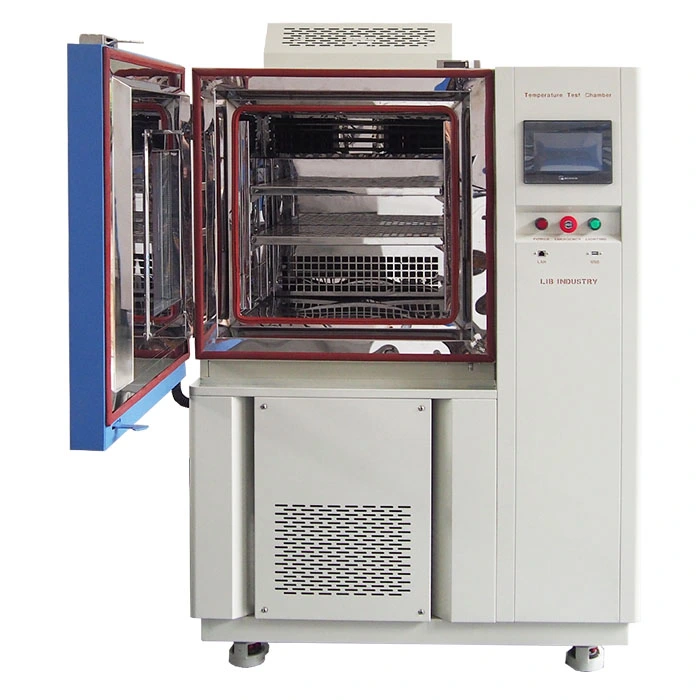
LIB Industry temperature cycling test chambers deliver the precise thermal control automotive ECU validation demands. The chambers achieve temperature ranges from -70°C to +150°C, fully encompassing AEC-Q100 requirements across all component grades. Programmable ramp rates adjustable from 5°C to 15°C per minute (with options up to 20°C/min) enable replication of both gradual environmental transitions and rapid thermal shock scenarios. The PID touchscreen controller maintains exceptional temperature stability with fluctuations limited to ±0.5°C and spatial deviation within ±2.0°C throughout the working volume.
Chamber Configuration Options
|
Model |
Internal Dimensions (mm) |
Volume |
Application |
|
TR5-100 |
400×500×500 |
100L |
Component-level validation |
|
TR5-225 |
500×600×750 |
225L |
Small ECU assemblies |
|
TR5-500 |
700×800×900 |
500L |
Production ECU testing |
|
TR5-800 |
800×1000×1000 |
800L |
Multiple assembly screening |
|
TR5-1000 |
1000×1000×1000 |
1000L |
High-volume production ESS |
 |
 |
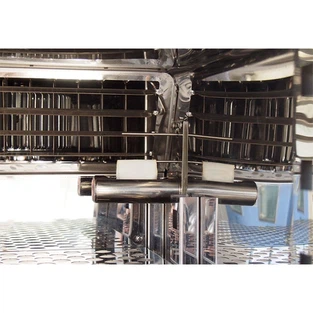 |
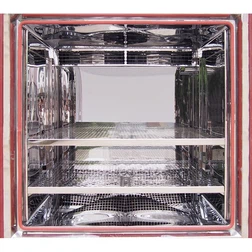
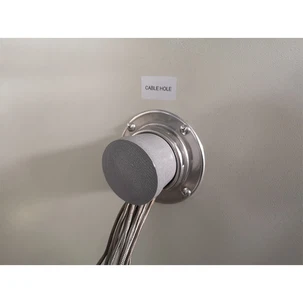
| Robust Workroom | Cable Hole | Temperature and Humidity Sensor |
This comprehensive size range accommodates validation requirements from individual component characterization through production environmental stress screening, enabling consistent test methodology across development phases.
Premium Components for Continuous Operation
Understanding that automotive qualification programs require extended test durations, LIB Industry constructs temperature cycling test chambers for reliable continuous operation. The refrigeration system employs French TECUMSEH compressors (with premium Bitzer compressor options) paired with Danfoss expansion valves, delivering consistent cooling performance throughout extended test campaigns. Nichrome heating elements provide rapid, uniform temperature elevation, while the centrifugal circulation system ensures homogeneous thermal distribution across the working volume. SUS304 stainless steel fully-welded interior construction withstands years of thermal expansion and contraction without degradation.
Integrated Safety and Monitoring Systems
Automotive testing laboratories require comprehensive safety protection for valuable prototype hardware and personnel security. LIB temperature cycling test chambers incorporate multiple protection layers including over-temperature shutdown, over-current protection, refrigerant high-pressure monitoring, and earth leakage protection. Optional explosion-proof configurations add reinforced viewing windows, smoke detection, and fire suppression capabilities for battery testing applications. Ethernet connectivity enables remote monitoring of test progress, while USB data logging maintains complete audit trails supporting qualification documentation and regulatory compliance requirements.
Customization for Automotive Applications
Beyond standard configurations, LIB Industry provides customization addressing specific automotive validation needs. Cable port options from 50mm to 200mm diameter with soft silicone sealing accommodate wiring harnesses while maintaining thermal integrity. Adjustable shelving supports various ECU form factors, while optional humidity control systems enable combined temperature-humidity cycling protocols. The programmable controller supports 120 distinct test programs with 100 steps each, sufficient for complex automotive qualification sequences. PC connectivity facilitates integration with laboratory information management systems and automated data collection workflows.
Conclusion
Temperature cycling testing represents the foundation of automotive ECU reliability validation, revealing thermal stress vulnerabilities before products enter demanding vehicle environments. By subjecting electronic control modules to accelerated thermal cycling protocols aligned with industry standards, automotive engineers gain confidence that critical vehicle systems will withstand temperature extremes throughout their operational lifetime. Implementing comprehensive temperature cycling validation using precision test equipment ensures automotive electronics meet the exceptional reliability standards consumers expect.
FAQ
What temperature cycling profile should I use for automotive ECU qualification testing?
The appropriate profile depends on ECU installation location and component grades. Engine compartment electronics typically require AEC-Q100 Grade 0 testing (-40°C to +150°C for 1000 cycles), while cabin electronics may qualify under Grade 2 (-40°C to +105°C). Consult relevant automotive standards and customer specifications to determine suitable temperature ranges, cycle counts, and transition rates for your specific application.
How does chamber size affect temperature cycling test results?
Larger chambers require longer stabilization times and may exhibit greater spatial temperature variation. Selecting appropriate chamber volume - sufficiently large to accommodate test specimens with adequate clearance yet not excessively oversized - optimizes temperature uniformity and ramp rate performance. The TR5-500 (500L) provides excellent balance for typical automotive ECU validation requirements, while production screening may justify larger configurations.
Can temperature cycling test chambers operate continuously for extended qualification programs?
Quality chambers designed for automotive applications support continuous operation throughout multi-week qualification campaigns. LIB Industry chambers incorporate premium refrigeration components, robust construction, and comprehensive safety systems enabling reliable 24/7 operation. Regular maintenance including refrigerant level verification, air filter cleaning, and door seal inspection ensures consistent performance throughout extended test programs typical in automotive electronics validation.
Partner with LIB Industry for Your Automotive Testing Needs
LIB Industry, a leading temperature cycling test chamber manufacturer and supplier, delivers turn-key environmental testing solutions for automotive electronics validation. Our comprehensive capabilities span research, design, production, commissioning, installation, and training, providing complete support for your ECU reliability testing programs. Contact our technical team at ellen@lib-industry.com to discuss your specific automotive testing requirements and discover how our chambers enable precise, reliable temperature cycling validation.