How Small Environmental Chambers Support R&D Product Testing?
R&D teams use a small environmental test chamber to create stable, repeatable temperature and humidity conditions during product development. This helps engineers see how prototypes behave under cold, heat, moisture, and cycling stress before mass production begins. In a compact lab footprint, these chambers support faster design iteration, cleaner validation data, and better risk control. They are especially useful when testing electronics, sensors, automotive parts, materials, and battery-related samples in early-stage programs. With precise control, programmable profiles, and easier lab integration, small chambers let researchers run meaningful environmental simulations without building a dedicated test room. That makes them a practical tool for shortening development cycles while improving product confidence.
Why Are Small Environmental Chambers Essential for R&D Testing?

Faster Feedback During Product Development
R&D work depends on quick learning loops. A compact chamber allows teams to expose prototypes to controlled thermal and humidity stress without waiting for outsourced lab slots. That means design flaws can be found earlier, while revisions are still economical. In many laboratories, speed matters as much as precision.
Repeatable Conditions for Valid Comparison
Prototype evaluation loses value when test conditions drift. Small chambers give researchers a controlled space where each sample experiences nearly identical exposure. This repeatability supports side-by-side design comparison, engineering sign-off, and more reliable root-cause analysis when performance differences appear.
Efficient Use of Limited Lab Space
Not every research facility can accommodate a large walk-in system. Desktop and small-footprint chambers fit into crowded labs, pilot lines, and engineering benches. A compact form helps teams add environmental simulation capability without changing facility layout or investing in a dedicated room.
Compact Environmental Simulation for Product Development Labs
Desktop Design Suits Modern Laboratories
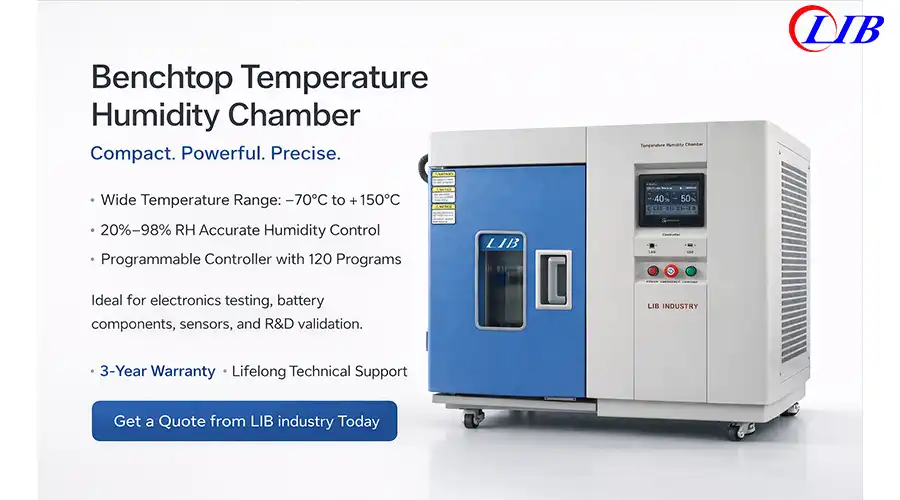
LIB Industry offers 50L and 80L compact units designed for bench-level installation. Their footprint is modest enough for standard laboratory use, which suits engineering teams working near instrumentation, data acquisition devices, and sample preparation stations. This arrangement reduces movement and improves workflow continuity.
Plug-and-Play Deployment Reduces Friction
Many R&D groups need equipment that can be installed quickly. Small environmental test chambers that operate on standard 220V or 110V power simplify deployment and relocation. This practical detail matters when projects move between departments, temporary labs, or trial production areas.
Quiet Performance Supports Daily Work
A test chamber should not dominate the room. Units operating below 65 dB help maintain a usable research environment during long test runs. Engineers can continue data review, programming, and inspection work in the same space without an intrusive acoustic burden.
Temperature and Humidity Control in Prototype Validation
Broad Environmental Range Supports Diverse Samples
A wide operating envelope allows one chamber to cover many R&D tasks. LIB Industry compact chambers offer temperature options down to -20°C, -40°C, -70°C, and even lower configurations in some applications, with upper limits reaching +150°C. Humidity control from 20% to 98% RH supports moisture-sensitive studies.
Stable Control Improves Prototype Assessment
Precise control is vital when validating product response. With temperature fluctuation around ±0.5°C and deviation within ±2.0°C, chambers can maintain dependable conditions during extended tests. Humidity deviation around ±2.5% RH helps produce data that is more credible for material studies and electronic performance review.
PID Systems Help Maintain Test Fidelity
Advanced PID control coordinates heating, cooling, and humidification in a measured way. This reduces overshoot and supports smoother approach to setpoints. For prototype validation, that matters because unstable conditions can mask actual product behavior and complicate interpretation.
How Do Environmental Chambers Improve Testing Accuracy?
Sensor Precision Strengthens Data Confidence
High-accuracy sensors play a central role in test validity. Small environmental test chamber using PT100 Class A temperature sensors support fine measurement control. In research settings, trustworthy sensing reduces uncertainty and helps engineers distinguish true sample response from system error.
Uniform Airflow Protects Result Quality
Temperature non-uniformity can distort outcomes, especially in small electronics or material samples. A micro-circulation airflow design distributes conditioned air more evenly across the workspace. This makes it easier to compare sample positions and improves consistency between repeated runs.
Better Observation Reduces Testing Blind Spots
A chamber with a viewing window and built-in LED lighting allows visual monitoring without opening the door. That preserves test conditions while helping engineers identify condensation, deformation, frosting, leakage, or unexpected sample changes. Observation is often underrated in early-stage troubleshooting.
Table1: Key Performance Parameters for R&D Use
|
Parameter |
Typical LIB Compact Chamber Capability |
Why It Matters in R&D |
|
Temperature Range |
-20°C to +150°C / -40°C to +150°C / -70°C to +150°C |
Supports broad prototype validation |
|
Humidity Range |
20% to 98% RH |
Useful for moisture and condensation studies |
|
Temperature Fluctuation |
±0.5°C |
Improves repeatability |
|
Temperature Deviation |
±2.0°C |
Supports spatial consistency |
|
Humidity Deviation |
±2.5% RH |
Better environmental control |
|
Cooling Rate |
1°C/min |
Controlled thermal descent |
|
Heating Rate |
3°C/min |
Efficient warm-up for daily testing |
Accelerated Reliability Testing for Early-Stage Product Design
Early Stress Exposure Reveals Weak Links
A prototype may work well at room temperature yet fail under cold start, elevated heat, or humid storage. Accelerated environmental testing helps teams uncover marginal solder joints, enclosure issues, unstable materials, drifting sensors, and seal weaknesses before tooling decisions are locked.
Shorter Cycles Support More Design Iterations
Compact chambers help teams run validation cycles inside the development lab rather than waiting for external chambers. That can increase the number of experimental loops completed in a given month. More loops often lead to better design maturity and fewer latent issues.
Thermal and Humidity Cycling Aid Screening
Although small chambers are not a substitute for every large-scale qualification protocol, they are highly useful for screening concepts and subassemblies. Engineers can build practical profiles around cold storage, heat soak, damp exposure, and recovery periods to identify fragile design zones.
Table: Typical R&D Applications by Test Objective
|
Test Objective |
Chamber Condition |
Typical Sample |
|
Cold start behavior |
Low temperature soak |
Sensors, displays, controllers |
|
Heat endurance |
High temperature hold |
Plastics, adhesives, connectors |
|
Moisture resistance |
High RH exposure |
PCBs, coatings, packaged electronics |
|
Thermal transition screening |
Programmed ramping |
Prototypes, modules, assemblies |
|
Condensation observation |
Humidity and temperature shift |
Optical parts, sealed enclosures |
|
Material stability |
Long dwell exposure |
Elastomers, films, resins |
Flexible Testing Solutions for Multi-Industry R&D Applications
Electronics and Component Research
Small environmental test chambers are widely used in electronics development. Teams test printed circuit boards, connectors, sensors, modules, and consumer devices under heat and humidity stress. This helps verify electrical stability, insulation performance, and material behavior before entering broader validation stages.
Automotive and Industrial Product Development
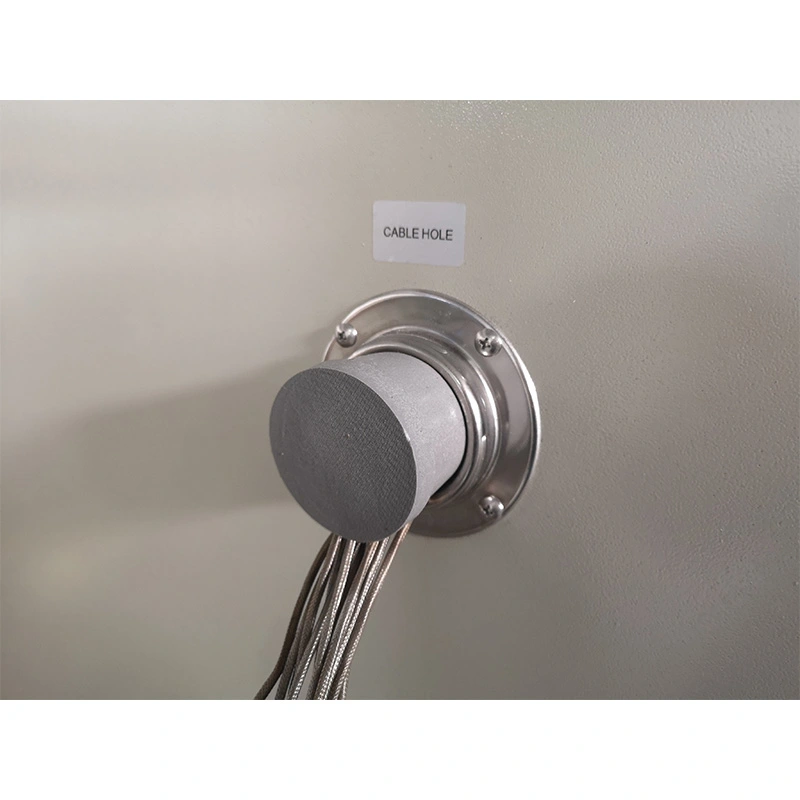
Automotive engineers often need controlled environmental evaluation of small parts, subassemblies, and prototype modules. Industrial R&D teams also use these chambers for housings, switches, seals, and embedded systems. The chamber’s cable port supports powered testing and signal routing during exposure.
Battery and Special Safety Applications
Some labs need added protection when testing lithium-ion samples or adjacent components. Safety options for battery-related testing provide a more suitable setup for sensitive R&D tasks. This matters when thermal abuse risk, outgassing, or abnormal sample behavior must be managed more carefully.
Table: Small Chamber Features That Matter Across Industries
|
Feature |
Practical Benefit |
|
Built-in lighting |
Easier visual inspection during testing |
|
Observation window |
Monitor samples without disturbing conditions |
|
Water purification and recirculation |
Cleaner humidity operation and reduced maintenance burden |
|
Ethernet connection |
Data access and networked control |
|
Programmable controller |
Supports complex R&D profiles |
|
Adjustable SUS304 shelves |
Flexible specimen placement |
|
50 mm cable port |
Pass-through for powered samples and sensors |
Choosing the Right Small Environmental Test Chamber for R&D
Match Chamber Size to Specimen Strategy
The correct volume depends on sample dimensions, fixture arrangement, and airflow clearance. A 50L unit suits small electronics and material coupons. An 80L unit gives more working space for prototype assemblies or multiple samples. Overfilling a chamber can affect circulation and result quality.
Review Control Needs, Not Only Range
A broad temperature range looks attractive, yet R&D success often depends more on stability, deviation, programmability, and monitoring. Teams should examine control architecture, sensor class, humidity capability, data export, and alarm systems rather than relying only on headline temperature limits.
Evaluate Maintenance and Safety Details
Research labs benefit from equipment that is simple to maintain and safe to operate. Protections such as over-temperature, over-current, refrigerant high-pressure, humidifier dry-burn, water shortage, and earth leakage are meaningful. These features help protect both the chamber and valuable developmental samples.
LIB Industry Provides Customizable, High-Accuracy Chambers for Reliable R&D Validation
|
Model |
Internal Dimensions |
Volume |
Temperature Range Options |
Overall Footprint |
|
TH-50 |
320×350×450mm |
50L |
-20°C, -40°C, -70°C to +150°C |
820×1160×950mm |
|
TH-80 |
400×400×500mm |
80L |
-20°C, -40°C, -70°C to +150°C |
900×1210×1000mm |
 |
 |
|||
 |
|
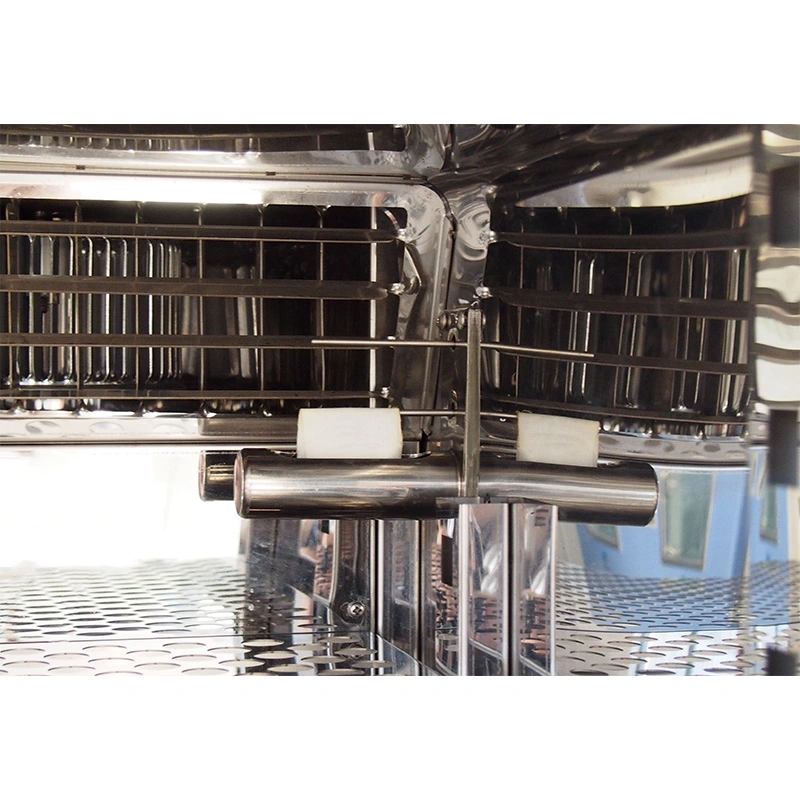 |
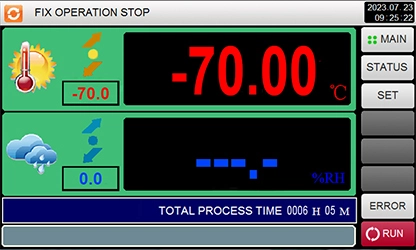
| Cable Hole | Controller | Temperature and Humidity Sensor |
Built for Precision and Practical Lab Use
LIB Industry small environmental test chambers combine laboratory-grade control with a practical bench-friendly structure. The interior uses SUS304 stainless steel, while the exterior uses protected steel plate construction. Double-layer insulated glass with interior lighting supports observation under stable conditions.
Smart Control and Data-Friendly Operation
The programmable color touchscreen controller supports up to 120 programs with 100 segments, which is useful for nuanced R&D protocols. Ethernet connectivity links the chamber to a computer for monitoring and management. This digital convenience aligns well with modern engineering workflows and traceable testing practice.
Customization Expands Application Fit
Some projects require non-standard adaptations. LIB Industry supports custom solutions for unique testing tasks, including safety-oriented options, modified configurations, and application-specific adjustments. With more than 16 years of manufacturing experience, LIB provides turn-key environmental testing support from design through installation and training.
Conclusion
Small environmental chambers give R&D teams a nimble, accurate, and space-efficient way to test prototypes under controlled temperature and humidity conditions. They improve repeatability, speed up design refinement, and help identify risks earlier in development. For laboratories that need practical environmental simulation without the burden of a large installation, compact chambers are a sharp and dependable choice.
FAQ
What products can be tested in a small environmental chamber?
Small chambers are commonly used for electronics, sensors, automotive parts, materials, coatings, connectors, and prototype assemblies. They are especially suitable for R&D samples that require controlled temperature and humidity exposure in a compact laboratory setting.
Is a small environmental test chamber accurate enough for research use?
Yes, when equipped with quality sensors and stable PID control, a compact chamber can provide strong repeatability. Specifications such as ±0.5°C fluctuation and controlled humidity deviation are suitable for many prototype validation and comparative R&D tasks.
How do I choose between a 50L and 80L chamber?
Selection depends on specimen size, quantity, fixture space, and airflow needs. A 50L chamber fits small samples and routine bench testing, while an 80L unit offers more flexibility for assemblies, multiple specimens, and slightly more intricate setups.
Looking for a compact environmental testing partner? LIB Industry is a professional small environmental test chamber manufacturer, supplier, and factory offering turn-key solutions from design to installation and training. For technical details, customization, or quotation support, contact ellen@lib-industry.com.