How JIS Z 2371 Salt Spray Chambers Support Automotive QA?
JIS Z 2371 salt spray test chambers support automotive quality assurance by replicating the corrosive conditions that vehicles face throughout their operational lifespan - road salt exposure, coastal humidity, industrial pollutants, and seasonal temperature swings - within a controlled laboratory setting. These chambers generate a precise saline mist at regulated temperature, humidity, and pH levels, enabling automotive engineers to evaluate the corrosion resistance of body panels, fasteners, brake components, and underbody structures in days rather than years. By adhering to the JIS Z 2371 standard's neutral salt spray (NSS), acetic acid salt spray (AASS), and copper-accelerated (CASS) test protocols, manufacturers gain quantifiable data that drives material selection, coating qualification, and process optimization across the entire vehicle production chain.
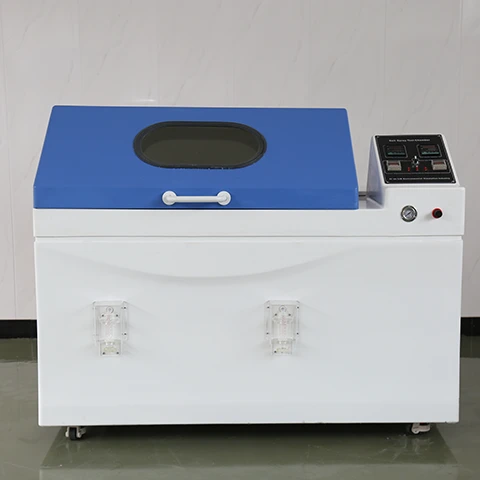
A client from Brazil recently shared their experience with the LIB S-150 (23A) Salt Spray Test Chamber. They are using it to assess the corrosion resistance of automotive metal components under continuous salt fog conditions. During the initial setup, a minor calibration question arose, but LIB’s support team provided swift and clear guidance, allowing testing to proceed without delays. Since then, the chamber has delivered stable and consistent performance, enabling the client to carry out long-term corrosion evaluations with confidence. This feedback highlights both the durability of the S-150 and the responsive technical support that ensures smooth operation for every LIB system.

Why Corrosion Testing Is Critical for Automotive Components?
The Financial Impact of Corrosion Failures
Corrosion-related warranty claims cost the global automotive industry billions of dollars annually. A single recall involving corroded brake lines or fuel system fittings can erode brand equity and consumer trust far beyond the direct repair expense. Proactive salt spray testing identifies vulnerable materials and coatings before they enter mass production, transforming a reactive cost burden into a manageable upstream investment.
Safety Implications of Undetected Corrosion
Structural corrosion on suspension arms, subframes, and chassis rails compromises crashworthiness. Perforation of brake hydraulic tubing or fuel delivery lines introduces catastrophic failure scenarios. Regulatory bodies across North America, Europe, and Asia mandate rigorous corrosion qualification testing precisely because undetected material degradation carries life-threatening consequences for vehicle occupants and road users.
OEM and Tier-1 Supplier Expectations
Automakers embed corrosion test requirements into their engineering specifications at the design stage. Tier-1 and Tier-2 suppliers must furnish salt spray test data - often referencing JIS Z 2371 alongside ASTM B117 and ISO 9227 - as a prerequisite for component approval. Without validated test records from a calibrated salt spray chamber, suppliers cannot enter or remain within the automotive supply chain.
Common Corrosion Risks in Vehicle Body and Structural Parts
Underbody and Wheel Arch Exposure
The vehicle underbody absorbs direct road spray containing dissolved de-icing salts, gravel impact, and standing water. Wheel arches trap moisture-laden debris against painted steel surfaces, creating sustained wet-salt contact that accelerates coating breakdown. These zones demand the highest corrosion protection grades and the most rigorous salt spray validation during vehicle development.
Door Hems, Seams, and Enclosed Cavities
Complex body geometries - door hem flanges, roof rail joints, and rocker panel cavities - trap moisture and restrict airflow, fostering crevice corrosion. Paint and sealant application in these tight spaces is inherently challenging, and any gap or thin spot becomes a corrosion initiation site. Salt spray testing of representative coupons and assembled sub-sections exposes these design and process vulnerabilities early.
Fasteners, Brackets, and Dissimilar Metal Joints
Bolted connections between galvanized steel brackets, aluminum castings, and stainless-steel fasteners introduce galvanic corrosion risk. The electrochemical potential difference between dissimilar metals accelerates attack at the contact interface. Evaluating these assemblies in a salt spray test machine quantifies the severity of galvanic coupling and validates the effectiveness of isolators, coatings, and sealants designed to mitigate it.
|
Vehicle Zone |
Primary Corrosion Risk |
Typical Protective Treatment |
|
Underbody / Subframe |
Road salt + gravel erosion |
E-coat + PVC underbody sealant |
|
Door Hems & Seams |
Crevice corrosion, moisture trap |
Wax injection + hem sealant |
|
Wheel Arches |
Wet-salt contact, stone chipping |
Thick-film PVC + stone guard |
|
Brake Components |
Chloride pitting, galvanic attack |
Zinc-nickel plating + passivation |
|
Fastener Joints |
Galvanic corrosion at interfaces |
Zinc-flake coating + isolator washers |
JIS Z 2371 Salt Spray Testing in Automotive Quality Control
Understanding the JIS Z 2371 Standard
JIS Z 2371, published by the Japanese Standards Association, defines test apparatus requirements, solution preparation, specimen positioning, and result evaluation for salt spray corrosion testing. The standard encompasses three core test methods - NSS, AASS, and CASS - each targeting different coating types and corrosion acceleration levels. Automotive OEMs headquartered in Japan, along with their global supply networks, rely heavily on this standard for incoming material qualification and production process audits.
NSS, AASS, and CASS Test Modes
Neutral salt spray (NSS) uses a 5% NaCl solution at pH 6.5-7.2, suitable for evaluating zinc coatings and bare metal resistance. AASS adds glacial acetic acid to lower the solution pH to 3.1-3.3, intensifying attack on decorative coatings. CASS introduces copper chloride and acetic acid, generating the most aggressive environment for assessing nickel-chromium plating quality. A versatile JIS Z 2371 salt spray test chamber supports all three modes without hardware modification.
Integration into Automotive PPAP and APQP Processes
Salt spray test data feeds directly into the Production Part Approval Process (PPAP) documentation package submitted to OEM customers. During Advanced Product Quality Planning (APQP), corrosion test results guide material selection, coating specification, and design validation milestones. Maintaining a calibrated, standards-compliant chamber in-house accelerates these approval timelines and reduces reliance on external laboratories.
Simulation of Road Salt and Humid Environmental Conditions
Recreating Winter De-Icing Salt Exposure
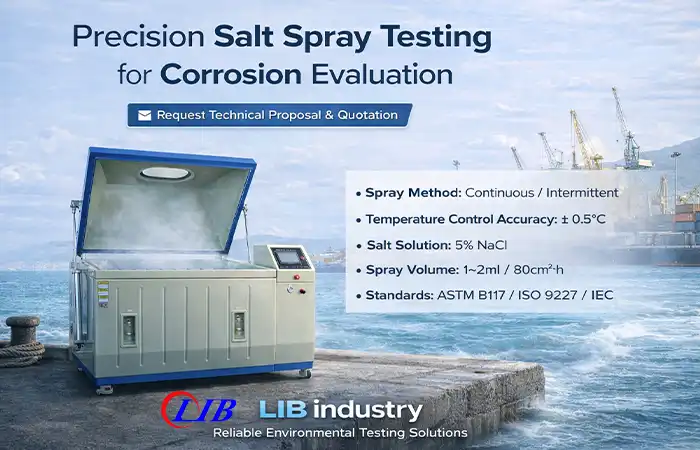
Road de-icing agents - primarily sodium chloride, calcium chloride, and magnesium chloride - create an intensely corrosive electrolyte film on vehicle surfaces. A JIS Z 2371 salt spray test chamber produces a continuous or periodic 5% NaCl mist at 35°C, simulating the concentrated salt exposure that vehicles endure during winter months in northern climates. This accelerated approach compresses seasons of real-world attack into measurable laboratory test cycles.
High-Humidity and Condensation Cycling
Corrosion rates spike when metal surfaces remain wet. Maintaining 95%-98% relative humidity inside the salt fog chamber ensures persistent moisture film formation on test specimens, mirroring the condensation cycles experienced in engine compartments, trunk cavities, and under-hood environments. Temperature deviation held within ±2.0°C prevents spurious drying that would compromise test repeatability.
Acidic and Industrial Atmosphere Replication
Urban and industrial environments expose vehicles to sulfur dioxide, nitrogen oxides, and acidic rain. The AASS and CASS test modes within JIS Z 2371 emulate these harsher chemistries by adjusting solution pH and adding copper salt accelerators. Automotive components destined for industrial or coastal markets require this elevated level of corrosion stress during qualification.
|
Test Mode |
Solution Chemistry |
pH Range |
Automotive Application |
|
NSS |
5% NaCl |
6.5-7.2 |
Zinc plating, e-coat, general metals |
|
AASS |
5% NaCl + acetic acid |
3.1-3.3 |
Anodized aluminum, decorative finishes |
|
CASS |
5% NaCl + CuCl₂ + acetic acid |
3.1-3.3 |
Nickel-chromium plating evaluation |
Testing Automotive Coatings, Plating, and Metal Treatments
Electrodeposition Coating (E-Coat) Validation
E-coat serves as the primary corrosion barrier on automotive body-in-white structures. Salt spray testing of e-coated panels - with and without intentional scribes - verifies film thickness adequacy, edge coverage, and resistance to undercutting. Panels typically undergo 480 to 1000+ hours of NSS exposure, with corrosion creep from scribe lines measured against OEM-specific acceptance limits.
Zinc and Zinc-Nickel Plating Assessment
Brake calipers, fuel rail brackets, and structural fasteners frequently receive zinc or zinc-nickel electroplating followed by passivation or sealant treatment. JIS Z 2371 NSS testing determines hours to white rust (zinc corrosion) and red rust (base metal corrosion), providing clear pass/fail metrics. Zinc-nickel alloys typically surpass 720 hours before red rust, making them the preferred choice for safety-critical automotive hardware.
Powder Coat and Paint System Durability
Multi-layer paint systems on exterior body panels - comprising e-coat, primer, basecoat, and clearcoat - undergo salt spray testing alongside adhesion and chip resistance evaluations. Corrosion performance after 1000+ hours of continuous spray, combined with cyclic humidity exposure, validates the complete paint system's ability to protect sheet steel and aluminum substrates across a vehicle's projected service life.
Improving Long-Term Corrosion Resistance in Automotive Systems
Data-Driven Material Selection
Salt spray test data enables engineers to compare candidate alloys, coating chemistries, and surface treatments under identical environmental stress. Choosing between hot-dip galvanized steel, galvanneal, and electrogalvanized sheet - or between trivalent and hexavalent chromium passivation - becomes an evidence-based decision anchored in quantifiable corrosion performance rather than assumption.
Process Monitoring and Continuous Improvement
Production-line salt spray testing catches process drift before it reaches the customer. A shift in plating bath chemistry, a contaminated rinse tank, or a curing oven temperature excursion manifests as reduced salt spray hours on routine sample pulls. Corrective action taken at this stage prevents non-conforming parts from advancing through assembly, reducing scrap and rework costs substantially.
Extending Vehicle Corrosion Warranties
Automakers now offer 10- to 12-year perforation corrosion warranties as a competitive differentiator. Meeting these commitments demands validated, long-duration salt spray test data across every corrosion-vulnerable component and joint. Robust laboratory evidence - generated in a JIS Z 2371 salt spray test chamber - underpins the statistical confidence needed to extend warranty coverage without inflating reserve costs.
Accelerated Testing Cycles for Automotive-Grade Corrosion Resistance - LIB Industry
Programmable Multi-Stage Test Profiles
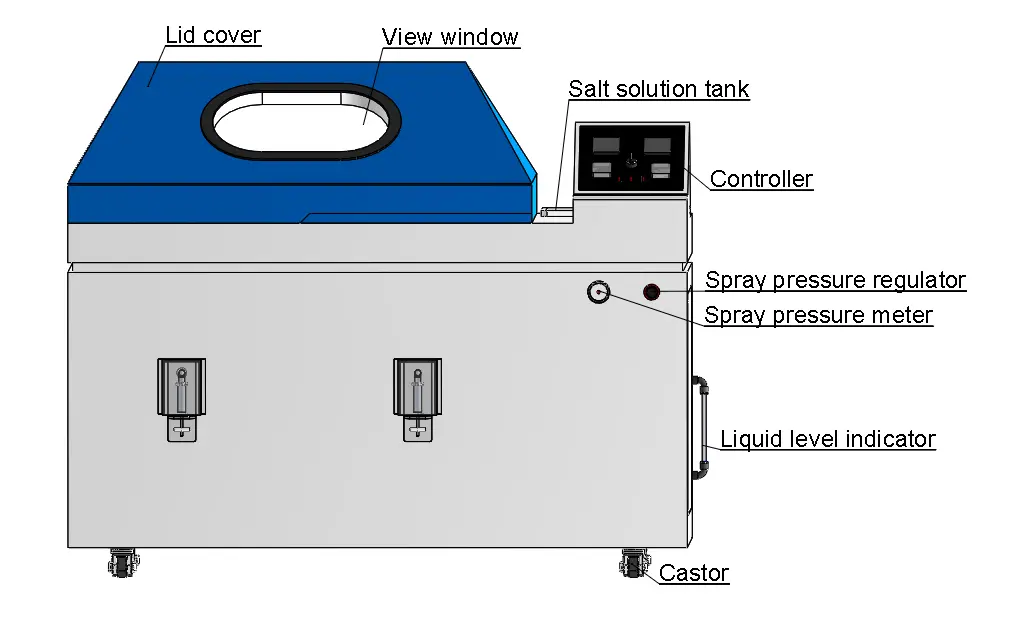
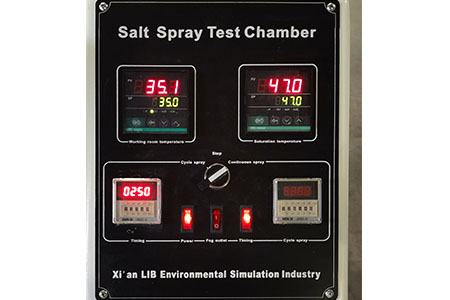
LIB Industry's JIS Z 2371 salt spray test chambers feature a programmable controller supporting 120 programs with 100 steps each. Engineers can design continuous or cyclic spray patterns - alternating salt fog, humidity dwell, and drying phases - matching the complex corrosion profiles specified by Toyota, Honda, Nissan, and other global OEMs. Automatic data recording of temperature, spray duration, and settlement rate generates audit-ready documentation.
Precision Environmental Control
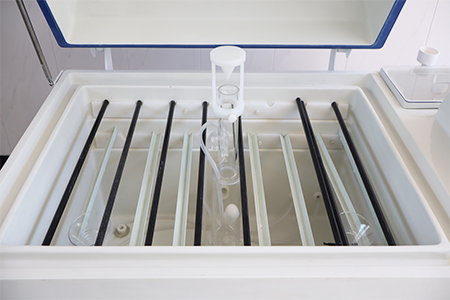
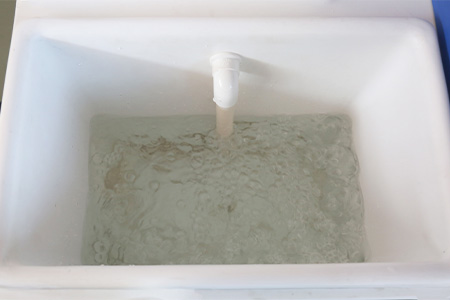
The chamber maintains temperature fluctuation within ±0.5°C and deviation within ±2.0°C using a PID controller. Salt fog deposition stays at 1-2 ml/80 cm²·h, verifiable through adjustable funnel collectors positioned at any location inside the chamber. Saturated air barrel preheating and independent dual-zone temperature regulation isolate internal conditions from ambient fluctuations, safeguarding result integrity across extended test runs.
Durable Construction and Comprehensive Support
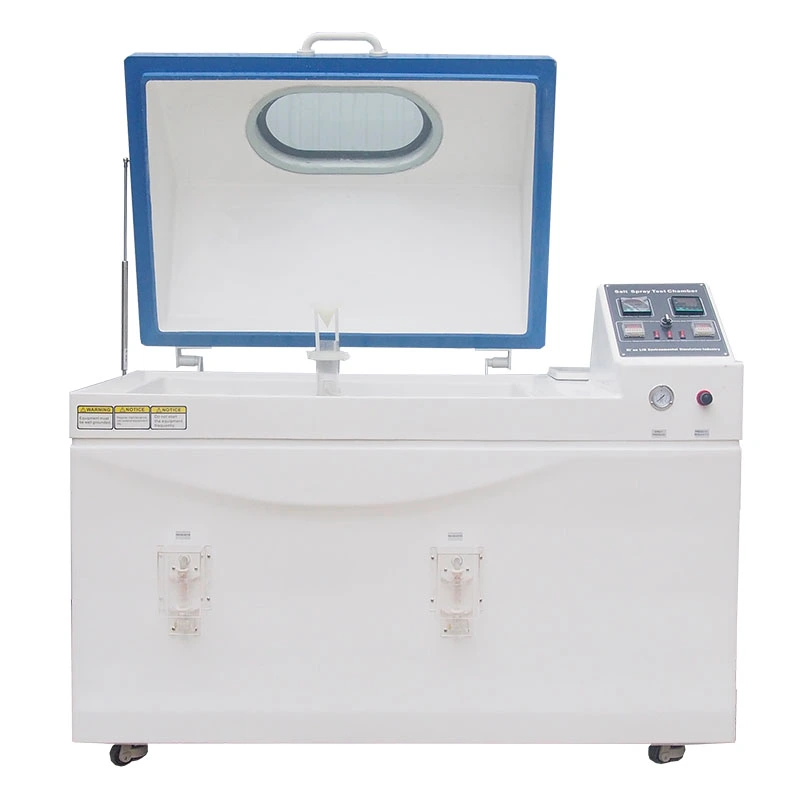
The fiberglass reinforced plastics (FRP) body resists prolonged exposure to 5% NaCl at elevated temperatures. A modified V-shaped transparent lid prevents condensation drip onto specimens, preserving test validity during multi-hundred-hour campaigns. LIB Industry delivers each unit with CE certification, SGS and TUV third-party verification, a 3-year warranty, lifetime service coverage, and 24/7 global technical support - including full unit replacement if in-warranty repairs prove impractical.
 |
 |
||
|
LIB Industry Model |
Interior Volume (L) |
Internal Dimensions (mm) |
Recommended Use |
|
S-150 |
110 |
590 × 470 × 400 |
Small coupon testing, R&D |
|
S-250 |
320 |
1000 × 640 × 500 |
Fastener and bracket QC |
|
S-750 |
410 |
1100 × 750 × 500 |
Mid-size component evaluation |
|
S-010 |
780 |
1000 × 1300 × 600 |
Sub-assembly testing |
|
S-016 |
1030 |
900 × 1600 × 720 |
Large panel validation |
|
S-020 |
1600 |
1000 × 2000 × 800 |
Full-scale production QA |
|
Durable, Leak-Resistant Workspace |
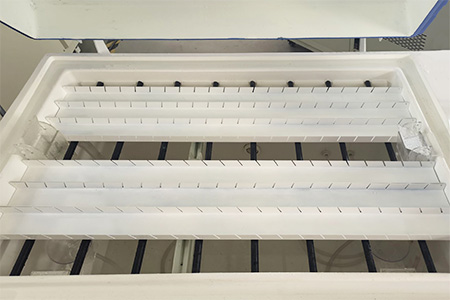
Flexible Sample Rack System |
|
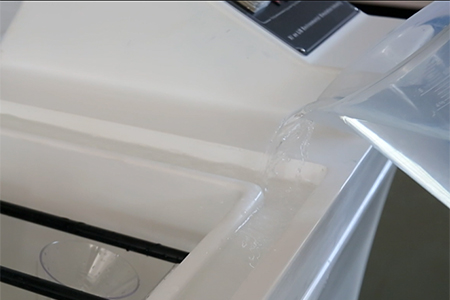
Water-Sealed Lid Design |
Intelligent Controller |
|
Uniform Salt Solution Agitation |
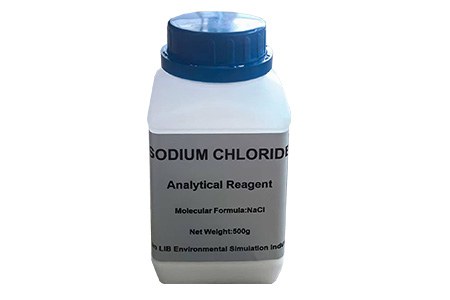
Included Industrial-Grade Salt |
Conclusion
JIS Z 2371 salt spray test chambers deliver the accelerated, standards-compliant corrosion data that automotive quality assurance programs demand. By supporting NSS, AASS, and CASS test modes within a precisely controlled environment, these chambers enable engineers to validate coatings, plating, and material choices against the aggressive road salt, humidity, and acidic exposures that vehicles encounter throughout their service life. Integrating salt spray testing into PPAP and routine production monitoring strengthens corrosion warranties, reduces field failures, and reinforces supplier credibility across the global automotive supply chain.
FAQ
What test duration does JIS Z 2371 specify for automotive components?
JIS Z 2371 does not prescribe a fixed duration; automotive OEMs define required hours - typically 480 to 1000+ hours for e-coat and 96 to 720 hours for plated parts - based on component location and corrosion warranty targets.
Can a JIS Z 2371 chamber run both continuous and cyclic salt spray tests?
Yes. LIB Industry's chambers support continuous and periodic spray modes with programmable cycle profiles, allowing automotive engineers to replicate OEM-specific cyclic corrosion protocols alongside standard JIS Z 2371 NSS, AASS, and CASS procedures.
How does LIB Industry ensure JIS Z 2371 compliance in its chambers?
Each chamber undergoes CE certification and third-party verification by SGS and TUV. PID-controlled temperature accuracy of ±0.5°C, calibrated fog collectors, and pre-set specimen holders at JIS-specified angles guarantee full standard adherence.
Looking for a reliable JIS Z 2371 salt spray test chamber for your automotive QA program? LIB Industry is a specialized manufacturer and supplier of corrosion testing equipment, delivering turn-key solutions worldwide. Reach out to us at ellen@lib-industry.com for customized specifications and expert guidance.