Rain Test Solutions for Vehicle Leak Detection According to JIS D0203
Vehicle manufacturers face mounting pressure to deliver watertight assemblies that withstand harsh environmental conditions throughout their operational lifespan. JIS D 0203 R1 R2 rain test equipment provides automotive engineers with standardized methods to detect water infiltration vulnerabilities before products reach end-users. This Japanese Industrial Standard establishes precise spray patterns and flow rates that replicate real-world precipitation scenarios, enabling systematic evaluation of sealing integrity across doors, windows, sunroofs, and trunk assemblies. By implementing controlled laboratory testing protocols, manufacturers identify design flaws, material deficiencies, and assembly errors that compromise cabin dryness, protecting both product reputation and customer satisfaction.
Primary Entry Points for Water Infiltration in Complex Vehicle Assemblies
Door Sealing Systems and Weatherstrip Vulnerabilities
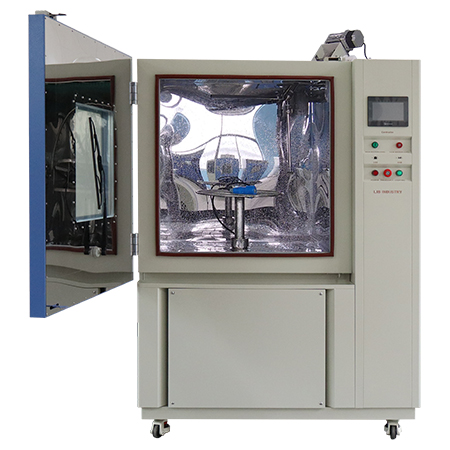
Door perimeters represent the most frequently compromised water barriers in automotive structures. Weatherstrip materials undergo thermal cycling and mechanical compression that gradually degrade elasticity. Testing reveals gaps where adhesive bonds fail or compression profiles lose resilience. The JIS D 0203 R1 R2 rain test equipment directs spray at precise angles matching wind-driven rain conditions, exposing inadequate seal compression or misaligned strike zones that allow moisture penetration.
Window-to-Frame Interface Challenges
Glass-to-metal junctions demand meticulous attention during validation phases. Polyurethane adhesives require proper curing conditions and surface preparation to achieve watertight bonds. Testing equipment reveals inadequate bead application, contaminated bonding surfaces, or insufficient clamping pressure during curing cycles. Water pathways often develop where drainage channels become obstructed or misdirected, accumulating moisture that eventually breaches interior spaces through capillary action.
Sunroof Drain System Integrity
Panoramic roof assemblies introduce complex drainage networks that must evacuate water efficiently. Testing exposes blockages in drain tubes, improper routing causing water accumulation, or insufficient drain capacity during heavy precipitation. The spray system simulates overflow conditions that reveal whether drain pan design adequately captures and redirects water away from headliner penetrations and electrical components housed in overhead consoles.
Why Is Early Leak Detection Crucial in the Automotive Manufacturing Process?
Production Line Cost Avoidance
Identifying sealing deficiencies during development stages prevents expensive tooling modifications after production launch. JIS D 0203 R1 R2 rain test chamber enables engineers to validate design iterations before committing to mass production investments. Detecting flaws during prototype evaluation costs thousands compared to millions required for post-launch remediation campaigns involving supplier negotiations, revised assembly procedures, and field service bulletins.
Customer Satisfaction and Brand Reputation
Water intrusion complaints generate disproportionate negative customer sentiment compared to other quality issues. Moisture damage affects electronic systems, creates mold growth health concerns, and produces persistent odors that diminish perceived vehicle value. Systematic testing eliminates these failure modes before market introduction, preserving brand equity that takes decades to establish but moments to damage through viral social media complaints.
Warranty Claim Reduction Strategies
Leak-related warranty expenditures encompass diagnostic labor, interior component replacement, and potential mold remediation costs. Testing during validation phases identifies systemic issues affecting entire production runs rather than addressing symptoms through individual vehicle repairs. Data captured during controlled testing informs design improvements that benefit entire model lifecycles, reducing long-term warranty reserves and improving profitability margins.
Application of JIS D 0203 Standards in Systematic Leak Identification
Standardized Testing Parameters Overview
|
Test Parameter |
R1 Configuration |
R2 Configuration |
|
Water Flow Rate |
1.9 L/min |
3.3 L/min |
|
Nozzle Arrangement |
2-hole system |
Enhanced coverage |
|
Pressure Range |
0.03-0.30 MPa |
Adjustable intensity |
|
Specimen Distance |
400mm nominal |
Controlled spacing |
|
Rotation Speed |
17 rpm |
Multi-directional exposure |
The standard establishes reproducible conditions that eliminate testing variability between facilities. Calibrated flow meters maintain consistent spray characteristics throughout test duration. Temperature-controlled water supply prevents thermal expansion effects that might temporarily seal gaps, ensuring results reflect actual field performance rather than laboratory artifacts.
Spray Pattern Configuration Methods
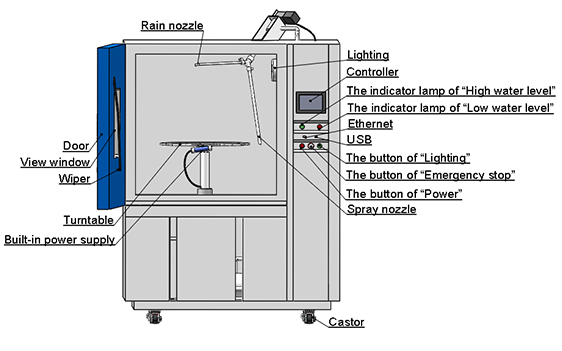
Arc-shaped nozzle arrangements distribute water across targeted surfaces with controlled uniformity. The JIS D 0203 R1 R2 rain test equipment positions spray heads at specified distances to simulate raindrop velocity and impact angles experienced during highway driving conditions. Turntable rotation exposes all surface orientations to spray patterns, revealing vulnerabilities that static testing might overlook when water approaches from oblique angles.
Data Recording and Analysis Protocols
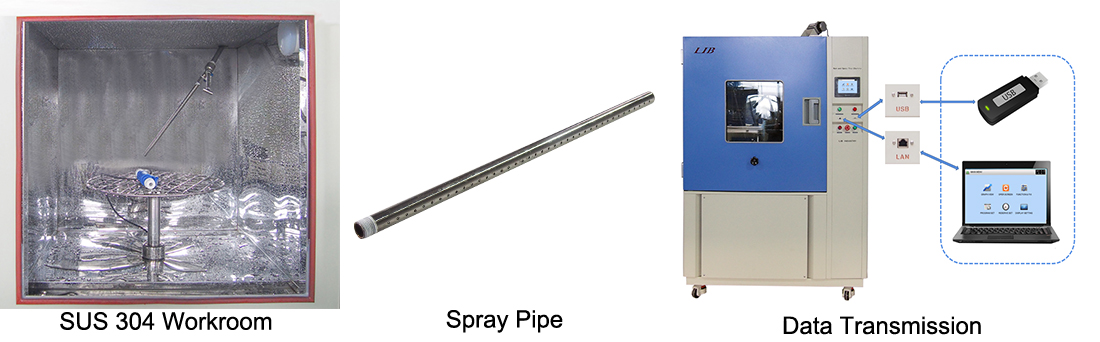
Modern controllers document spray duration, pressure fluctuations, and rotation cycles with timestamp precision. USB connectivity enables direct data transfer to quality management systems for trend analysis. Ethernet integration allows remote monitoring across multiple testing chambers, facilitating simultaneous validation programs for different model variants while maintaining centralized oversight of testing progress and anomaly detection.
How Do R1 R2 Spray Systems Isolate Specific Structural and Sealing Flaws?
Differential Flow Rate Diagnostic Capabilities
|
System Feature |
Diagnostic Purpose |
Detection Advantage |
|
R1 Light Spray |
Capillary leak identification |
Exposes fine seal gaps |
|
R2 Heavy Spray |
Drainage capacity verification |
Tests overflow resistance |
|
S1 Spray Pattern |
Body panel junction testing |
24.5 L/min coverage |
|
S2 High Volume |
Extreme condition simulation |
39.2 L/min stress testing |
|
Adjustable Pressure |
Graduated severity levels |
Progressive failure analysis |
Lower flow rates detect microscopic pathways that manifest as dampness rather than visible streams. Higher volumes overwhelm marginal sealing designs, revealing inadequate safety margins that might survive light precipitation but fail during severe weather events. This graduated approach pinpoints whether failures stem from fundamental design inadequacies or manufacturing process variations.
Nozzle Geometry and Spray Characteristics
Precision-drilled orifices (Φ0.5 mm for rain, Φ1.2 mm for spray) in a rain test machine generate droplet sizes matching natural precipitation patterns. The 40-hole spray configuration distributes water across broad surfaces while maintaining controlled flow density. Engineers correlate specific nozzle positions with leak locations, determining whether water enters through direct impingement or follows surface tension pathways along trim components before finding entry points distant from spray origin.
Rotational Testing for Comprehensive Coverage
The 17 rpm turntable speed balances thorough exposure with practical test duration requirements. Rotation ensures water approaches seals from continuously varying angles, simulating vehicle motion through precipitation events. Fixed-position testing might miss vulnerabilities only exposed when water flows across surfaces in directions opposite normal gravitational drainage paths, particularly relevant for vehicles parked on inclines.
Tracing and Analyzing Water Ingress Paths Inside Automotive Components
Visual Inspection Techniques During Active Testing
Double-layer insulating glass observation windows with integrated wipers allow continuous monitoring during spray application. Engineers observe water behavior across exterior surfaces, identifying accumulation zones where drainage design proves inadequate. Interior cameras document penetration points as moisture appears, correlating spray angles with intrusion locations to reconstruct infiltration pathways through complex assemblies involving multiple sealing layers.
Dye Tracer Application Methods
Fluorescent additives in test water enable ultraviolet illumination of moisture pathways invisible to naked eye observation. Water traveling through labyrinthine channels leaves traceable deposits highlighting exact intrusion routes. This technique proves invaluable when leaks manifest at locations distant from actual seal failures, following wiring harnesses or structural channels before emerging at carpet-level penetrations far removed from exterior breach points.
Post-Test Disassembly Verification
Component removal after controlled spray exposure reveals moisture accumulation within concealed cavities. Hygroscopic paper placement at suspected vulnerability zones provides quantitative moisture detection, documenting subtle intrusion missed during visual observation. Correlation between exterior spray patterns and interior moisture distribution informs design modifications addressing root causes rather than symptoms visible only after extensive water accumulation.
Can Comprehensive Rain Testing Eliminate Post-Production Leak-Related Recalls?
Validation Protocol Completeness Requirements
Thorough testing programs evaluate vehicles in multiple configurations: doors closed, windows partially open, sunroof in tilt position. The JIS D 0203 R1 R2 rain test equipment accommodates various specimen orientations, simulating parked positions on inclines where gravity alters drainage patterns. Testing aged weatherstrip samples after thermal cycling and compression set evaluation reveals long-term sealing performance beyond initial production quality assessments.
Production Process Monitoring Integration
|
Quality Checkpoint |
Testing Frequency |
Acceptance Criteria |
|
First Article Inspection |
Per production shift |
Zero intrusion threshold |
|
Random Sampling |
2% of daily output |
Statistical compliance |
|
Design Change Validation |
Each revision cycle |
Comparative performance |
|
Supplier Material Changes |
Per batch variation |
Material specification adherence |
Continuous validation throughout production lifecycles detects process drift affecting seal installation quality. Adhesive cure monitoring, weatherstrip compression measurements, and drainage channel cleanliness verification complement laboratory testing, ensuring manufacturing execution matches validated design intent.
Field Performance Correlation Studies
Long-term customer feedback analysis validates whether laboratory testing accurately predicts real-world performance. Warranty claim databases reveal whether specific environmental conditions escaped test protocol coverage. Regional climate variations might expose vulnerabilities requiring supplemental validation beyond standard test procedures, informing ongoing protocol refinement that keeps testing methodologies aligned with evolving product applications and market conditions.
Reproducible Testing to Pinpoint Seal Weaknesses Accurately - LIB Industry
 |
|
Precision Calibration Systems
LIB Industry's JIS D 0203 R1 R2 rain test equipment maintains flow rate accuracy through digital flow meters with ±2% precision across the operational range. Regular calibration against traceable standards ensures spray characteristics remain consistent across test sessions separated by months or years. Automated calibration verification routines alert operators to drift requiring corrective maintenance, preventing test invalidation due to undetected equipment degradation.
Environmental Control Features
The SUS304 stainless steel construction resists corrosion from continuous water exposure and chemical contaminants in municipal water supplies. Built-in purification systems remove particulates that might clog spray nozzles or introduce variables affecting water surface tension characteristics. Temperature control prevents seasonal variations in water viscosity from altering spray droplet formation, maintaining year-round testing consistency regardless of facility ambient conditions.
Custom Engineering for Specialized Applications
Non-standard rain test chamber dimensions accommodate oversized specimens including complete vehicle assemblies or large component subassemblies. Specialized nozzle configurations address unique validation requirements for convertible top systems, cargo bed sealing, or marine equipment requiring extreme water exposure simulation. LIB Industry's engineering team collaborates with automotive testing laboratories to develop tailored solutions meeting specific validation protocol requirements while maintaining core JIS D 0203 compliance.
Programmable Test Sequence Automation
Touchscreen controllers store multiple test programs replicating different precipitation scenarios. Gradual intensity ramp profiles assess progressive seal failure thresholds. Intermittent spray patterns with dwell periods evaluate drainage system recovery and water retention in structural cavities. Ethernet connectivity enables centralized test management across multiple chambers, facilitating high-throughput validation programs supporting compressed development timelines.
Comprehensive Safety Integration
Multi-layer protection systems including earth leakage detection, phase sequence monitoring, and water shortage interlocks prevent equipment damage and operator hazards. Emergency stop circuits immediately halt spray and rotation systems, enabling rapid intervention when leaks appear threatening to damage electronic test specimens. Transparent safety protocols support regulatory compliance across international jurisdictions with varying equipment certification requirements.
Long-Term Support Infrastructure
LIB Industry's 24/7 global technical support network provides remote diagnostics and troubleshooting assistance minimizing downtime during critical validation programs. Comprehensive spare parts inventory ensures rapid component replacement without lengthy procurement delays. Three-year warranty coverage with replacement guarantee for irreparable failures demonstrates manufacturer confidence in construction quality and long-term reliability under demanding continuous-operation environments.
Data Management and Traceability
USB data export functionality integrates with laboratory information management systems, creating permanent records linking test parameters with specimen identification and inspection results. Automated report generation compiles flow rates, pressure readings, test duration, and operator notes into standardized formats meeting automotive quality system documentation requirements. Historical data repositories enable trend analysis across model generations, revealing whether design improvements deliver measurable sealing performance enhancements.
Conclusion
Implementing rigorous rain testing protocols using JIS D 0203 R1 R2 rain test equipment transforms automotive leak prevention from reactive problem-solving to proactive design validation. Systematic evaluation of sealing systems, drainage networks, and assembly quality eliminates costly field failures while protecting brand reputation through demonstrable quality commitment. Standardized testing methodologies provide reproducible results supporting data-driven design decisions that balance sealing performance against manufacturing feasibility and cost constraints, ultimately delivering vehicles that maintain watertight integrity throughout ownership lifecycles.
FAQ
How does JIS D 0203 testing differ from standard IPX rating evaluations?
JIS D 0203 specifically addresses automotive applications with controlled spray angles, rotation speeds, and flow rates matching vehicle-specific exposure conditions. IPX ratings provide broader enclosure protection classifications without automotive-focused parameters like wind-driven rain simulation or drainage system capacity verification.
What specimen preparation is required before rain testing?
Specimens should represent production-intent assemblies with actual weatherstripping, adhesives, and drainage components fully cured and assembled per manufacturing specifications. Positioning fixtures must allow unrestricted water drainage and rotation without interference, replicating installed vehicle orientations accurately.
Can existing test chambers be retrofitted to meet JIS D 0203 requirements?
Retrofitting depends on chamber construction, available water pressure, and control system capabilities. LIB Industry evaluates existing equipment to determine feasibility of nozzle upgrades, flow control modifications, and turntable integration required for standard compliance versus complete replacement cost-effectiveness.
Partner with LIB Industry for comprehensive rain test solutions tailored to your validation requirements. As a leading environmental test chamber manufacturer and supplier, we deliver turn-key installations including equipment commissioning, operator training, and ongoing technical support. Contact our engineering team at ellen@lib-industry.com to discuss custom chamber configurations optimized for your specific automotive testing applications.