Selecting a Vibration Test Chamber for R&D and QA Labs
Choosing the right vibration test chamber represents a critical investment decision that directly impacts your laboratory's testing capabilities and product development timeline. R&D and QA professionals must evaluate multiple technical parameters, environmental integration features, and long-term reliability factors before committing to a testing system. The ideal chamber should accommodate your current testing protocols while offering scalability for emerging standards, combining precise mechanical simulation with controlled climate conditions to replicate real-world operational environments accurately.

What Testing Capabilities Should R&D and QA Labs Prioritize?
Understanding Core Testing Requirements
Modern laboratories face increasingly complex validation challenges as products integrate more sophisticated electronics and materials. Your testing strategy should account for industry-specific regulatory standards, expected product lifecycles, and failure mode analysis objectives. Automotive components require different validation protocols compared to aerospace assemblies or consumer electronics, demanding careful assessment of your primary testing scenarios.
Balancing Versatility with Specialization
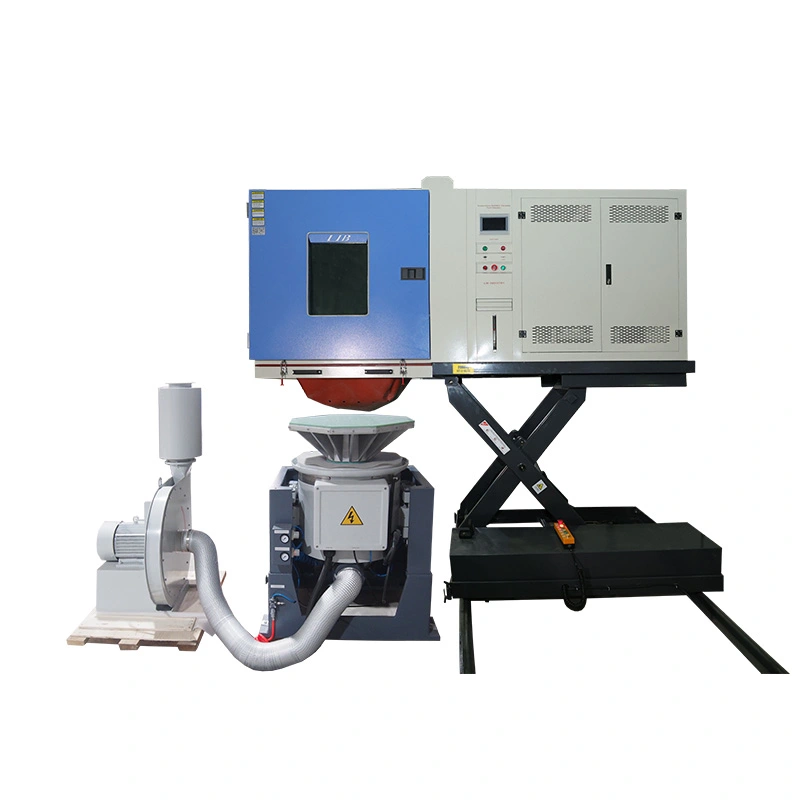
Equipment selection involves trade-offs between multi-purpose chambers and dedicated testing systems. Combined environmental chambers offer exceptional value by conducting temperature, humidity, and vibration protocols within a single enclosure, reducing laboratory footprint requirements and minimizing sample handling between test stages. Specialized systems deliver superior performance for specific applications but may limit operational flexibility.
Sample Size and Throughput Considerations
Laboratory productivity depends heavily on chamber capacity and test duration optimization. Evaluate your typical specimen dimensions, weight distributions, and concurrent testing needs when determining appropriate chamber volume. Benchtop units suit smaller components and limited space environments, while walk-in chambers accommodate large assemblies and batch testing requirements. Throughput analysis should consider transition times between test conditions and the efficiency of specimen mounting procedures.
Key Performance Parameters of a Vibration Test Chamber
Frequency Range and Force Capacity
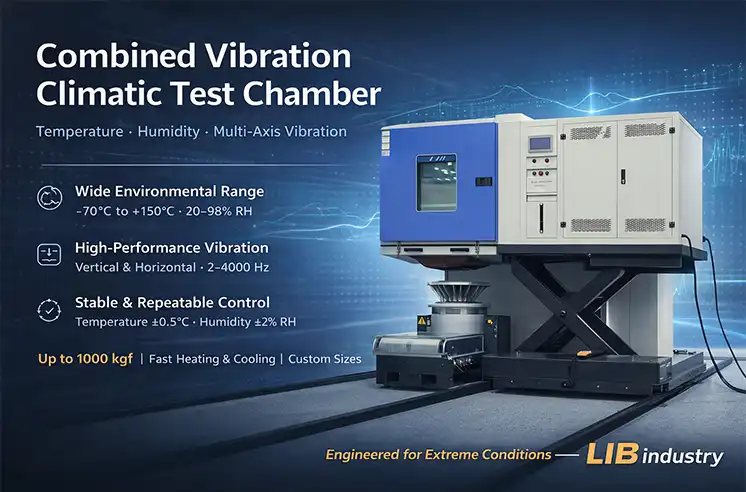
The mechanical performance characteristics of your vibration system fundamentally determine testing authenticity. Professional vibration chambers typically operate across 2 to 4000 Hz, covering most transportation and operational vibration spectra. Force capacity, measured in kilogram-force (kgf), dictates maximum specimen weight and test severity levels. A 1000kgf system handles substantial components while maintaining control precision, though your specific requirements may necessitate higher or lower ratings.
|
Performance Parameter |
Standard Range |
Application Suitability |
|
Frequency Response |
2-4000 Hz |
Broad spectrum testing for electronics, automotive, aerospace |
|
Rated Vibration Force |
500-2000 kgf |
Component to assembly-level validation |
|
Displacement Range |
25-100 mm |
Transportation simulation and durability testing |
|
Acceleration Capability |
Up to 100 g |
High-shock and stress screening applications |
Temperature and Humidity Control Precision
Climate control accuracy directly influences test repeatability and data quality. Temperature uniformity within ±2.0°C ensures consistent thermal exposure across specimen surfaces, while humidity deviation under ±2.5% RH prevents condensation issues during temperature transitions. Chambers operating from -70°C to +150°C cover extreme environmental conditions encountered in automotive, aerospace, and military applications.
Transition Rate Performance
Thermal ramping capabilities affect test efficiency and thermal shock simulation accuracy. Systems achieving 5°C/min heating and cooling rates enable rapid protocol execution without compromising specimen integrity. Mechanical compression refrigeration systems provide reliable temperature control while maintaining vibration system isolation, preventing thermal cycling interference with mechanical measurements.
Matching Vibration Test Systems to Application Requirements
Industry-Specific Testing Protocols
Different sectors impose unique validation standards that shape equipment specifications. Electronics manufacturers prioritize high-frequency testing to assess solder joint integrity and component mounting reliability. Automotive suppliers emphasize temperature-vibration coupling to replicate underhood environments and road-induced stresses. Aerospace applications demand altitude simulation capabilities alongside vibration and thermal cycling.
Test Standard Compatibility
Vibration test chamber selection must align with applicable testing standards governing your product categories. Military specifications like MIL-STD-810 define rigorous environmental exposure sequences combining multiple stressors. Automotive standards such as ISO 16750 specify temperature-vibration profiles simulating vehicle operational conditions. Electronics qualification follows IEC 60068 protocols establishing reliability validation procedures.
Specimen Mounting and Fixturing Flexibility
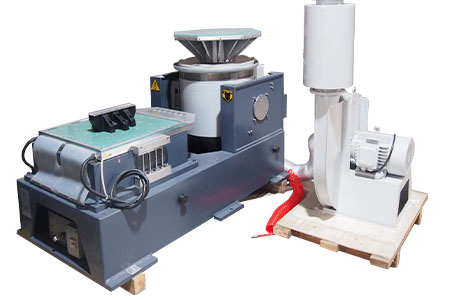
Effective vibration transfer requires robust specimen attachment methods accommodating diverse product geometries. Horizontal sliding tables measuring 600×600 mm provide stable platforms for various fixture configurations. Head expanders enlarge the effective test surface beyond the shaker armature diameter, typically φ240mm, enabling testing of assemblies larger than the moving coil dimensions.
Environmental Integration: Vibration with Temperature and Humidity
Combined Environmental Stress Screening Benefits
Simultaneous exposure to multiple environmental stressors reveals failure mechanisms invisible during sequential single-parameter testing. Combined environmental stress screening (CESS) accelerates defect precipitation by inducing thermal expansion mismatches while mechanical vibration exploits material fatigue properties. This synergistic approach reduces qualification time and improves failure prediction accuracy.
Chamber Design for Multi-Parameter Testing
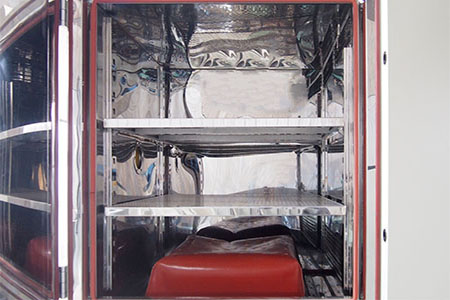
Integrated systems require sophisticated engineering to maintain performance across all environmental parameters simultaneously. Insulated enclosures constructed from steel plate with protective coatings and polyurethane foam insulation preserve temperature stability during vibration testing. SUS304 stainless steel interiors resist corrosion from humidity exposure while providing cleanable surfaces for contamination control.
|
Integration Feature |
Technical Specification |
Testing Advantage |
|
Temperature-Vibration Coupling |
-70°C to +150°C during full vibration |
Realistic operational environment simulation |
|
Humidity Control During Vibration |
30-98% RH with ±2.5% deviation |
Moisture-induced failure detection |
|
Altitude Simulation Option |
Reduced pressure environments |
Aerospace and high-elevation validation |
|
Corrosion Integration |
Salt spray compatibility |
Accelerated environmental degradation testing |
Climate Transition During Dynamic Testing
The ability to execute climate transitions without interrupting vibration protocols distinguishes advanced chambers from basic systems. Continuous operation through temperature changes maintains specimen stress states, preventing recovery periods that mask cumulative damage accumulation. Digital power amplifiers utilizing sine pulse width modulation technology maintain vibration precision across the full temperature range.
Data Acquisition and Control Systems for Laboratory Testing
Real-Time Monitoring Capabilities
Modern vibration chambers incorporate comprehensive sensor arrays providing continuous feedback on test conditions. Temperature sensors positioned throughout the workspace verify spatial uniformity, while accelerometers monitor vibration table response. Liquid crystal displays present intuitive interfaces for protocol programming and real-time status visualization, enhancing operator efficiency.
Safety and Protection Systems
Laboratory equipment must incorporate multiple safeguards preventing damage to specimens and chamber components. Essential protection features include humidifier dry-combustion protection preventing element burnout, over-temperature protection halting heating before critical thresholds, and refrigerant high-pressure protection avoiding compressor damage. Water shortage protection and earth leakage protection ensure personnel safety during unattended operation.
Data Logging and Compliance Documentation
Regulatory compliance and quality system requirements necessitate detailed test documentation. Chambers equipped with data acquisition systems automatically record temperature, humidity, and vibration parameters throughout test sequences. Exportable data formats facilitate integration with laboratory information management systems (LIMS) and support audit trail requirements for ISO/IEC 17025 accreditation.
Long-Term Reliability and Maintenance Considerations for Test Chambers
Component Durability and Service Life
Chamber longevity depends on component quality and operational duty cycles. Mechanical refrigeration systems require periodic refrigerant servicing and compressor maintenance. Vibration shakers experience wear on moving coil suspensions and armature bearings, necessitating eventual refurbishment. Blower systems, typically rated at 4kW, require motor bearing replacement and impeller cleaning to maintain airflow performance.
Preventive Maintenance Requirements
Establishing routine maintenance schedules maximizes uptime and test accuracy. Monthly inspection protocols should verify temperature sensor calibration, humidity sensor response, and vibration system frequency response. Annual comprehensive servicing addresses mechanical system alignment, refrigeration efficiency testing, and safety interlock verification. Muffler inspection prevents noise transmission degradation.
Vendor Support and Spare Parts Availability
Long-term operational success requires responsive technical support and accessible replacement components. Evaluate manufacturers' service networks, response time commitments, and spare parts inventory systems. Standard configurations including cable holes with plugs and adjustable shelving should be readily replaceable. Digital power amplifier modules and control system components benefit from stock availability guaranteeing rapid repairs.
Choose LIB Industry's Vibration Test Chambers for Reliable R&D & QA
Comprehensive Testing Solutions
LIB Industry manufactures specialized vibration test chambers combining advanced mechanical systems with precise climate control. Our systems accommodate temperature ranges from -70°C to +150°C, humidity control spanning 20-98% RH, and vibration specifications including 1000kgf rated force across 2-4000 Hz frequency ranges. Both standard and custom chamber configurations address diverse application requirements.
Turnkey Implementation Approach
LIB Industry concentrates on providing complete environmental testing solutions encompassing research, design, production, commissioning, delivery, installation, and operator training. This turnkey methodology ensures proper system integration within your laboratory infrastructure while optimizing workflow efficiency. Our engineering team collaborates with clients to specify chamber configurations matching exact testing protocols.
|
Chamber Type |
Workspace Dimensions |
Load Capacity |
Ideal Application |
|
Benchtop Units |
Compact footprint |
Up to 50 kg |
Small components, limited space labs |
|
Floor Stand Systems |
Medium workspace |
50-200 kg |
Standard component validation |
|
Walk-In Chambers |
Large accessible volume |
200-500 kg |
Assembly-level testing, batch processing |
Quality Manufacturing Standards
Our chambers utilize premium materials including SUS304 stainless steel interiors resistant to corrosion and thermal cycling damage. Steel plate exteriors with protective coatings ensure structural integrity throughout extended operational periods. Polyurethane foam and insulation cotton thermal barriers maintain temperature stability while minimizing energy consumption. Digital power amplifiers deliver consistent vibration control with superior efficiency compared to analog systems.
|
|
|
 |
|
SUS 304 Climatic Workroom |
Versatile Vibration Testing |
Smart Control & Monitoring System |
Conclusion
Selecting an appropriate vibration test chamber demands comprehensive evaluation of technical specifications, application requirements, and long-term operational considerations. Successful procurement balances immediate testing needs with future scalability, ensuring your investment supports evolving product development challenges. Combined environmental capabilities, precise control systems, and robust construction distinguish professional-grade chambers from basic equipment. Partner with experienced manufacturers offering turnkey solutions, responsive technical support, and proven reliability records.
FAQ
What vibration frequency range is necessary for electronics testing?
Electronics qualification typically requires 10-2000 Hz coverage, addressing component resonances and printed circuit board flexural modes. Higher frequencies up to 4000 Hz benefit MEMS device validation and connector integrity assessment under operational vibration conditions.
Can temperature and vibration testing occur simultaneously in combined chambers?
Advanced combined environmental chambers execute full vibration profiles while maintaining controlled temperature conditions from -70°C to +150°C. This simultaneous capability replicates realistic operational environments more accurately than sequential single-parameter testing approaches.
How often should vibration test chambers undergo calibration?
Industry best practices recommend annual comprehensive calibration covering temperature uniformity mapping, humidity sensor verification, and vibration system frequency response characterization. Monthly functional checks verify continued performance between formal calibration cycles, maintaining data quality.
Ready to Enhance Your Laboratory Testing Capabilities?
LIB Industry, a leading vibration test chamber manufacturer and supplier, delivers customized environmental testing solutions globally. Contact our technical team at ellen@lib-industry.com to discuss your specific requirements and receive detailed quotations tailored to your R&D and QA laboratory needs.