Semiconductor Stress Testing: Temperature Cycling Guide
Semiconductor stress testing through temperature cycling represents a critical validation methodology that ensures chip reliability under real-world thermal conditions. This comprehensive guide explores how temperature cycling test chambers accelerate failure detection by subjecting semiconductor devices to repeated thermal transitions, revealing latent defects in die attach, wire bonds, and packaging materials. By understanding thermal cycling parameters, failure mechanisms, and industry standards, semiconductor manufacturers can optimize their reliability validation protocols, reduce field failures, and deliver products that withstand demanding operational environments throughout their intended lifespan.
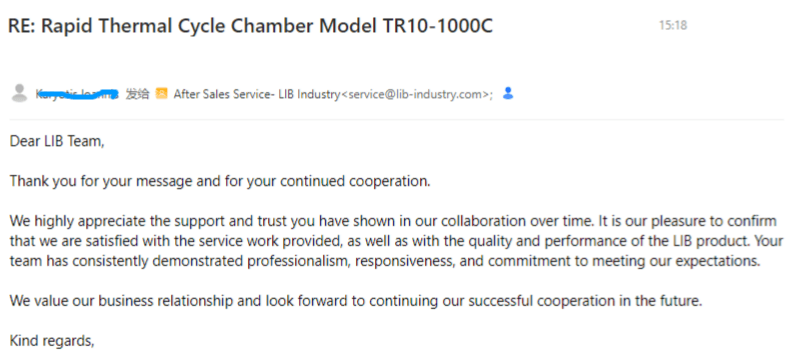
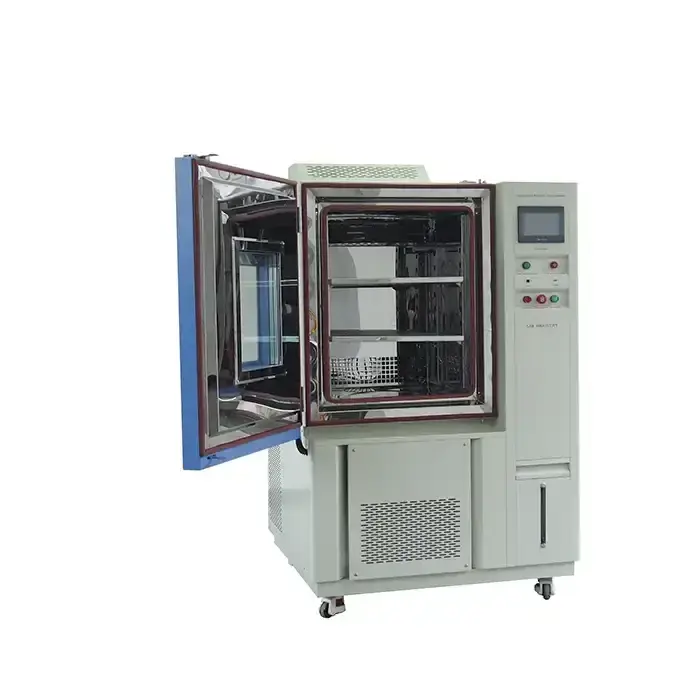
LIB industry has recently received favorable feedback from a customer in Greece regarding the performance of the TR10-1000C Rapid Thermal Cycle Chamber, along with the high-quality support delivered by the LIB industry service team.The customer reported a high level of satisfaction with both the equipment’s operational performance and the overall after-sales service experience, and particularly appreciated LIB industry’s professional approach, quick response, and strong commitment to long-term partnership.
Why Is Temperature Cycling Essential in Semiconductor Stress Testing?
Accelerated Aging Through Thermal Stress
Temperature cycling compresses years of operational stress into weeks or months of testing. Semiconductor devices experience thermal expansion and contraction rates that differ across materials - silicon dies, copper interconnects, and polymer packaging compounds each respond differently to temperature changes. This differential expansion creates mechanical stress at material interfaces, progressively weakening bonds and connections. A temperature cycling test chamber replicates these conditions at accelerated rates, typically cycling between -40°C and 150°C to induce failures that would otherwise remain dormant until field deployment.
Revealing Manufacturing Defects Before Deployment
Manufacturing imperfections that appear insignificant during initial inspection become critical failure points under thermal cycling. Microscopic voids in die attach materials, incomplete wire bond formation, or contamination in encapsulation compounds all compromise long-term reliability. Temperature cycling transforms these latent defects into observable failures through crack propagation, delamination, or electrical parameter shifts. Detecting these issues during qualification testing prevents costly field returns and protects brand reputation across automotive, aerospace, and medical electronics sectors.
Meeting Industry Qualification Requirements
Regulatory bodies and industry consortia mandate temperature cycling as a fundamental reliability qualification test. JEDEC standards specify precise cycling profiles for different semiconductor categories, while automotive AEC-Q100 requirements demand stringent thermal cycling protocols. Manufacturers cannot claim compliance or enter regulated markets without documented temperature cycling validation. The ability to customize cycling profiles within a temperature cycling test chamber enables manufacturers to meet diverse qualification standards while maintaining testing efficiency.
Thermal Cycling Failure Mechanisms in Semiconductor Devices
Die Attach Degradation and Delamination
Die attach materials - whether eutectic solder, sintered silver, or conductive epoxies - must maintain thermal and electrical conductivity throughout the device lifetime. Temperature cycling induces shear stress at the die-to-substrate interface due to coefficient of thermal expansion (CTE) mismatches. Repeated cycling progressively degrades these interfaces through creep, fatigue crack formation, and void coalescence. Complete delamination eventually occurs, causing catastrophic thermal resistance increases that lead to device overheating and failure.
|
Die Attach Material |
CTE (ppm/°C) |
Typical Failure Mode |
Cycles to Failure (-40°C to 150°C) |
|
Eutectic Solder |
24-29 |
Fatigue cracking |
500-1500 |
|
Sintered Silver |
19-22 |
Void coalescence |
2000-5000 |
|
Conductive Epoxy |
40-65 |
Interface delamination |
300-800 |
Wire Bond Fatigue and Heel Cracking
Wire bonds represent vulnerable interconnection points where aluminum or gold wires connect die pads to leadframe or substrate pads. The bonding interface experiences concentrated stress during thermal cycling in a temperature cycling test chamber as the wire material attempts to accommodate differential movement between connection points. Heel cracks initiate at the wire-pad interface where geometric stress concentration is highest. Propagation continues with each thermal cycle until electrical continuity is lost, manifesting as intermittent failures that complicate diagnosis.
Package Cracking and Moisture-Induced Failures
Polymer molding compounds encapsulating semiconductor devices undergo volumetric changes during temperature transitions. When combined with absorbed moisture, rapid heating causes vapor pressure buildup that can exceed package mechanical strength. Popcorn cracking - so named for its acoustic signature - creates pathways for contaminant ingress and electrical leakage. Temperature cycling test protocols often incorporate moisture preconditioning followed by thermal shock transitions to replicate worst-case field conditions.
Temperature Cycling Parameters for Chip Reliability Validation

Establishing Appropriate Temperature Extremes
Selecting temperature range boundaries requires balancing acceleration factor against failure mechanism relevance. Excessively high temperatures may activate failure modes absent in normal operation, while insufficient temperature span fails to adequately stress material interfaces. Automotive semiconductor applications typically demand -40°C to 150°C cycling to represent underhood environments, whereas consumer electronics may validate across -20°C to 85°C ranges. The LIB Industry temperature cycling test chamber offers configurable ranges from -70°C to +150°C, accommodating diverse application requirements.
Optimizing Ramp Rates and Dwell Times
Thermal transition velocity directly influences stress magnitude at material interfaces. Rapid temperature changes - achievable through chambers with 10-15°C/min ramp rates - generate higher stress levels but may not allow thermal equilibrium across large devices. Conversely, slower transitions better represent gradual environmental changes but extend test duration. Dwell time at temperature extremes ensures complete thermal saturation before reversing direction. Standard protocols typically specify 10-30 minute dwell periods, though thermal mass considerations may necessitate longer durations for power modules.
|
Device Type |
Recommended Ramp Rate |
Cold Dwell Time |
Hot Dwell Time |
Typical Cycle Duration |
|
Small-outline ICs |
10-15°C/min |
10 min |
10 min |
35-45 min |
|
Power Modules |
5-8°C/min |
30 min |
30 min |
90-120 min |
|
Hybrid Assemblies |
5-10°C/min |
15 min |
15 min |
50-70 min |
Determining Cycle Count Requirements
Qualification cycle counts derive from reliability prediction models that correlate accelerated test cycles with field operational years. The Coffin-Manson relationship provides foundational guidance, though semiconductor-specific modifications account for unique failure mechanisms. Consumer products may qualify with 500-1000 cycles, while automotive and aerospace applications routinely demand 2000+ cycles. Extended cycling beyond standard requirements provides margin against process variations and unexpected use conditions. Advanced chambers featuring programmable controllers supporting 120 programs with 100 steps each enable complex multi-phase testing protocols.
How Do Thermal Shocks Impact Semiconductor Packaging?
Distinguishing Thermal Cycling from Thermal Shock Testing
Thermal shock testing represents an extreme subset of temperature cycling where transition rates exceed normal cycling capabilities. Rather than controlled ramp rates, thermal shock protocols transfer devices between separate hot and cold zones within seconds, creating maximum thermal gradient severity. This abrupt exposure reveals packaging brittleness and identifies materials prone to crack propagation under extreme stress. While less representative of typical field conditions, thermal shock effectively screens out marginal designs and manufacturing defects.
Package-Level Stress Distribution During Rapid Transitions
Rapid temperature changes create non-uniform thermal distributions within semiconductor packages. External surfaces respond immediately to ambient temperature changes while internal structures lag due to thermal mass and material conductivity limitations. This transient gradient generates internal stress vectors that differ from equilibrium cycling conditions. Ball grid array (BGA) solder joints experience shear stress as the substrate responds faster than the attached printed circuit board. Quantifying these stress distributions through finite element analysis guides package design optimization.
Material Selection for Thermal Shock Resistance
Packaging materials must exhibit not only appropriate CTE values but also sufficient ductility to accommodate rapid strain without fracture. Brittle materials like certain ceramics may perform adequately under gradual thermal cycling but fail catastrophically under shock conditions. Polymer systems require glass transition temperatures well outside the operational range to maintain mechanical properties throughout testing. The selection process balances thermal performance, mechanical resilience, and cost constraints while meeting reliability targets established through accelerated testing.
Burn-In and Temperature Cycling in Semiconductor Quality Control
Complementary Roles in Reliability Screening
Burn-in and temperature cycling serve distinct but complementary quality assurance functions. Burn-in applies elevated temperature and voltage stress under static conditions to precipitate infant mortality failures caused by manufacturing defects. Temperature cycling performed in a temperature cycling test chamber adds mechanical stress through thermal expansion mismatches, targeting different failure populations. Combined screening protocols capture broader defect spectrums than either method alone. High-reliability applications frequently mandate both screening approaches, with burn-in preceding temperature cycling to eliminate electrically marginal devices before mechanical stress exposure.
Cost-Effectiveness Analysis for Production Screening
Implementing production-level temperature cycling requires significant capital investment in temperature cycling test chambers and extended test durations that impact throughput. Manufacturers must evaluate screening economics by comparing costs against field failure reduction benefits. Statistical sampling approaches balance coverage against testing expense, with lot acceptance testing based on statistically significant sample sizes. Risk-based screening prioritizes critical applications - medical implantables, automotive safety systems - for 100% screening while consumer applications rely on qualification testing with periodic production monitoring.
Correlation Between Accelerated Testing and Field Performance
Establishing predictive relationships between accelerated test results and actual field reliability enables confidence in qualification protocols. Weibull analysis of cycling failure distributions provides parameters for reliability modeling and warranty prediction. Field return analysis validates acceleration factors and identifies whether laboratory testing adequately represents use environments. Discrepancies between predicted and observed field performance trigger testing protocol refinement, ensuring continuous improvement in reliability validation accuracy.
Reliability Standards for Semiconductor Temperature Cycling Tests
JEDEC JESD22-A104: Temperature Cycling Standard
JEDEC JESD22-A104 establishes the foundational temperature cycling methodology for semiconductor devices. The standard specifies test conditions ranging from Condition A (-55°C to 125°C) through Condition G (-65°C to 150°C), accommodating diverse device categories and application environments. Transition time requirements, dwell duration specifications, and cycle count recommendations provide consistent testing frameworks across the industry. Compliance with JESD22-A104 ensures that temperature cycling results remain comparable across manufacturers and testing facilities, facilitating qualification data exchange.
AEC-Q100: Automotive Electronics Qualification
Automotive applications impose exceptional reliability demands due to safety criticality and extended operational lifetimes. AEC-Q100 Grade specifications define temperature cycling requirements aligned with mounting location thermal environments. Grade 0 devices (-40°C to 150°C) withstand underhood conditions, while Grade 3 components (-40°C to 85°C) suit cabin installations. The standard mandates 1000 temperature cycles minimum, with many manufacturers implementing extended protocols exceeding 2000 cycles to demonstrate robustness margins.
|
AEC-Q100 Grade |
Temperature Range |
Application Zone |
Minimum Cycles |
|
Grade 0 |
-40°C to 150°C |
Engine compartment |
1000 |
|
Grade 1 |
-40°C to 125°C |
Underhood ambient |
1000 |
|
Grade 2 |
-40°C to 105°C |
Passenger cabin |
1000 |
|
Grade 3 |
-40°C to 85°C |
Protected interior |
1000 |
Military and Aerospace MIL-STD Requirements
Military Standard 883 Test Method 1010 and 1011 define temperature cycling protocols for defense and aerospace electronics. These specifications demand extreme temperature ranges, extended cycle counts, and stringent failure criteria reflecting mission-critical application requirements. Method 1011 (Thermal Shock) specifies liquid-to-liquid transfers creating severe thermal gradients, while Method 1010 allows air-to-air cycling. Qualification under these standards requires robust packaging architectures and premium material systems capable of withstanding exceptional environmental severity.
LIB Industry Temperature Cycling Chambers for Advanced Semiconductor Stress Testing
|
|
 |
||||

 |
 |
 |
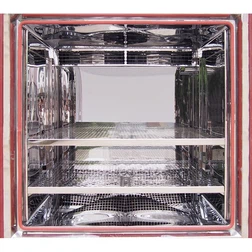
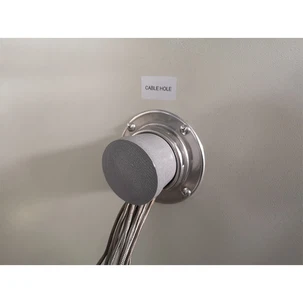
| Robust Workroom | Cable Hole | Temperature and Humidity Sens |
Precision Temperature Control for Reproducible Results
Temperature control accuracy directly impacts test result validity and reproducibility. The LIB Industry temperature cycling test chamber delivers ±0.5°C temperature fluctuation and ±2.0°C maximum deviation across the workspace, ensuring uniform thermal exposure for all test specimens. PID touchscreen controllers maintain precise setpoint tracking without overshoot, eliminating temperature excursions that could compromise test integrity. This control precision proves essential when validating against stringent qualification standards where temperature profile compliance determines pass/fail outcomes.
Configurable Testing Capabilities Across Applications
Semiconductor manufacturers require testing flexibility to address diverse product portfolios and qualification standards. LIB chambers offer volume options from 100L to 3000L, accommodating everything from individual component qualification to full production lot screening. Programmable controllers supporting 120 test programs with 100 steps each enable complex multi-phase protocols including moisture preconditioning, thermal cycling, and thermal shock sequences within single test runs. Ethernet connectivity and PC integration facilitate remote monitoring and automated data collection for compliance documentation.
Reliability-Engineered Chamber Construction
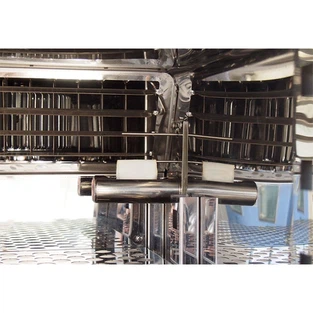
Temperature cycling chambers themselves must demonstrate exceptional reliability since tests often span weeks or months of continuous operation. LIB Industry chambers feature fully-welded SUS304 stainless steel interiors resistant to corrosion and thermal stress cracking. Premium components including French TECUMSEH compressors, Schneider electrical systems, and Danfoss expansion valves ensure consistent performance throughout extended campaigns. Multiple safety protection systems - over-temperature shutdown, refrigerant high-pressure protection, earth leakage protection - safeguard both test samples and laboratory personnel during unattended operation.
Advanced Safety Features for Semiconductor Testing
Semiconductor devices under test may contain hazardous materials or present fire risks under fault conditions. Optional explosion-proof configurations incorporate reinforced viewing windows, smoke detection systems, and automatic fire suppression capabilities. These safety enhancements prove critical when testing lithium-battery powered devices or components containing flammable encapsulants. Standard cable ports with soft silicone seals maintain chamber integrity while accommodating electrical connections for powered testing, enabling burn-in and temperature cycling combination protocols.
Conclusion
Temperature cycling remains indispensable for semiconductor reliability validation, revealing latent defects and quantifying long-term performance across demanding applications. Understanding thermal cycling parameters, failure mechanisms, and industry standards enables manufacturers to optimize testing protocols that balance acceleration factors against real-world relevance. Advanced temperature cycling test chambers from LIB Industry provide the precision control, testing flexibility, and operational reliability necessary for rigorous semiconductor qualification programs that meet JEDEC, AEC-Q100, and military standards.
FAQ
What temperature range should I use for automotive semiconductor qualification?
Automotive semiconductor testing typically follows AEC-Q100 standards requiring -40°C to 150°C cycling for underhood applications and -40°C to 125°C for ambient underhood environments. The specific grade depends on mounting location thermal exposure during vehicle operation.
How many temperature cycles are required for consumer electronics qualification?
Consumer electronics typically require 500-1000 temperature cycles per JEDEC standards, though specific requirements vary by device complexity and application criticality. Extended cycling provides additional reliability margin against process variations and unexpected use conditions.
What's the difference between temperature cycling and thermal shock testing?
Temperature cycling uses controlled ramp rates (typically 5-15°C/min) between temperature extremes with dwell periods, while thermal shock transfers devices between zones within seconds. Thermal shock creates more severe stress but may activate failure mechanisms absent in normal operation.
Contact LIB Industry for Temperature Cycling Solutions
As a leading temperature cycling test chamber manufacturer and supplier, LIB Industry delivers turn-key environmental testing solutions tailored to semiconductor qualification requirements. Contact our team at ellen@lib-industry.com to discuss your specific testing needs and discover how our precision chambers enhance your reliability validation programs.