Space-Saving Environmental Test Chambers for QC Laboratories
Quality control laboratories face a persistent challenge: delivering rigorous testing standards while operating within increasingly constrained physical spaces. Space-saving environmental test chambers solve this dilemma by providing full-featured temperature and humidity testing capabilities in compact desktop formats. These specialized instruments enable QC teams to validate product reliability, perform accelerated aging studies, and conduct compliance testing without requiring dedicated environmental rooms. Modern small environmental test chambers integrate advanced refrigeration systems, precision sensors, and programmable controllers into footprints as small as 50 liters, transforming how laboratories approach environmental simulation while maximizing valuable floor space for other critical quality assurance operations.
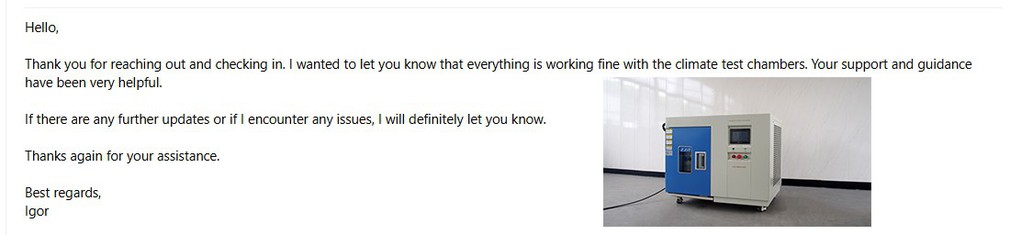
LIB compact environmental test chambers deliver a reliable, space-efficient solution for laboratories that demand accurate and stable environmental simulation without occupying large floor space.A customer from Israel, Igor, who ordered four units, provided positive feedback: “The chambers are working perfectly. Your technical support and guidance have been extremely helpful throughout. If anything comes up or we require further assistance, I will reach out. Thanks again for the support.”
Why Are Space-Saving Environmental Chambers Ideal for QC Labs?
Addressing the Laboratory Real Estate Crisis
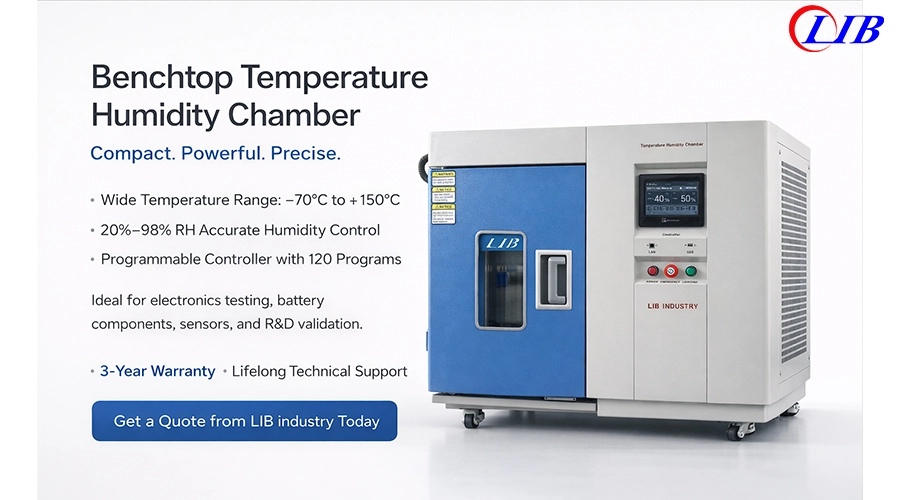
Quality control facilities consistently struggle with spatial limitations as testing requirements expand. Traditional walk-in environmental rooms consume 15-30 square meters per installation, creating bottlenecks in laboratory design. Benchtop environmental chambers occupy less than one square meter while delivering comparable temperature ranges from -70°C to +150°C and humidity control between 20% to 98% RH, making them strategically valuable for space-constrained operations.
Cost-Effective Infrastructure Integration
Installing conventional environmental rooms requires substantial electrical infrastructure upgrades, dedicated HVAC systems, and structural modifications costing $50,000-$150,000. Compact test chambers operate on standard 220V/110V power circuits without special installations. This plug-and-play functionality eliminates construction delays and reduces capital expenditure, allowing budget reallocation toward additional testing equipment or personnel development.
Flexibility for Evolving Testing Protocols
Quality assurance departments frequently adapt testing methodologies to accommodate new product lines, regulatory updates, or customer specifications. Desktop environmental chambers provide positioning flexibility - relocate units between workstations, testing bays, or production floor locations as protocols evolve. This mobility supports agile quality management systems that respond quickly to changing validation requirements without facility renovations.
Compact Chamber Design for Limited Laboratory Space
Optimized Dimensional Engineering
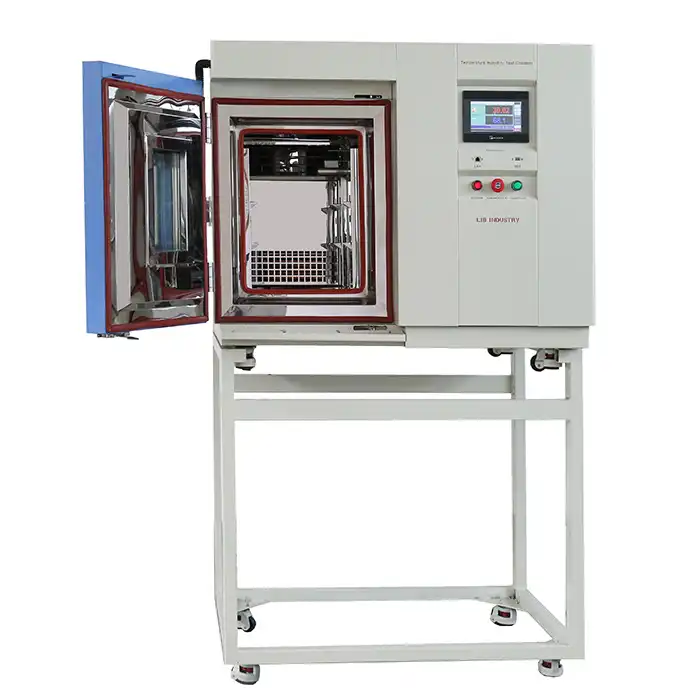
The TH-50 and TH-80 models demonstrate intelligent space utilization through vertical design philosophy. With internal dimensions of 320×350×450mm and 400×400×500mm respectively, these chambers maximize testing volume while minimizing bench footprint. The overall dimensions (820×1160×950mm for TH-50; 900×1210×1000mm for TH-80) incorporate all mechanical systems within compact housings comparable to standard laboratory equipment.
|
Model |
Internal Volume |
Footprint Area |
Height |
Effective Space Ratio |
|
TH-50 |
50L |
0.29 m² |
950mm |
172 L/m² |
|
TH-80 |
80L |
0.36 m² |
1000mm |
222 L/m² |
Multi-Chamber Configurations for Parallel Testing
Rather than investing in single large-capacity units, laboratories can deploy multiple small environmental test chambers for simultaneous testing protocols. Three 50L units occupy the same floor space as one traditional chamber yet enable independent temperature-humidity profiles for different product categories. This parallel testing capability accelerates qualification timelines while maintaining spatial efficiency.
Integration with Existing Laboratory Furniture
Modern benchtop chambers integrate seamlessly with standard laboratory workbenches, carts, and shelving systems. The flat-top design allows stacking storage bins or documentation above the unit when clearance permits. Side-access ports accommodate cable routing without protruding beyond the chamber footprint, ensuring clean integration with surrounding equipment and maintaining unobstructed aisle access.
Efficient Environmental Testing for Quality Control Processes
Accelerated Reliability Validation
Environmental stress screening (ESS) identifies latent product defects through controlled temperature cycling and humidity exposure. Small chambers with heating rates of 3°C/min and cooling rates of 1°C/min complete standard automotive qualification cycles 40% faster than passive environmental rooms. This acceleration enables higher sample throughput, reducing time-to-market for new product releases while maintaining statistical confidence in reliability predictions.
Pharmaceutical Stability Testing Compliance
ICH Q1A guidelines mandate stability testing at 25°C/60% RH and 40°C/75% RH for pharmaceutical products. Compact humidity chambers provide the precise control required for these protocols while accommodating multiple product batches simultaneously. The ±0.5°C temperature fluctuation and ±2.5% RH humidity deviation specifications exceed regulatory requirements, ensuring audit-ready documentation and FDA compliance.
Electronics Component Qualification
Semiconductor manufacturers and electronics assemblers utilize temperature-humidity testing to validate JEDEC standards for moisture sensitivity levels (MSL). The 50mm cable port allows real-time electrical monitoring during environmental exposure, enabling powered testing of circuit boards, sensors, and integrated components. This capability supports design validation testing (DVT) and production verification testing (PVT) without removing specimens from controlled conditions.
|
Testing Application |
Temperature Range |
Humidity Range |
Typical Duration |
|
HALT/HASS |
-40°C to +150°C |
Non-condensing |
24-72 hours |
|
Thermal Cycling |
-20°C to +85°C |
Controlled/ambient |
500-1000 cycles |
|
Moisture Resistance |
+40°C to +85°C |
85-95% RH |
168-1000 hours |
How Can Small Chambers Improve QC Workflow Efficiency?
Reducing Sample Transport and Handling Time
Positioning environmental chambers directly at QC workstations eliminates specimen transportation to remote testing facilities. Technicians load samples, initiate programmed test sequences, and continue other quality tasks without waiting for environmental room availability. This workflow integration reduces handling steps that introduce contamination risks or sample damage, particularly valuable for delicate assemblies or precision-manufactured components.
Programmable Testing for Unattended Operation
Advanced controllers store up to 120 programs with 100 segments each, enabling complex temperature-humidity profiles that run overnight or through weekends. Technicians program multi-day thermal shock sequences, gradual temperature ramps, or cyclic humidity exposure patterns that execute autonomously. Email alerts and Ethernet connectivity provide remote monitoring capabilities, allowing QC supervisors to verify test progress without physically visiting the laboratory.
Visual Monitoring Without Environmental Disruption
The double-layer tempered glass observation window with built-in LED lighting enables continuous visual inspection without opening the chamber door. This feature proves essential when monitoring condensation patterns, material deformation, or failure progression during testing. The 8cm-thick insulated window maintains thermal stability while anti-fog heating prevents condensation buildup that would obscure visibility during high-humidity protocols.
Streamlined Documentation and Traceability
Integrated data logging captures temperature, humidity, and time-stamped events throughout test execution. USB export and network connectivity facilitate direct transfer to quality management systems (QMS) and laboratory information management systems (LIMS). This digital integration eliminates manual transcription errors and provides complete audit trails required for ISO 17025 accreditation and customer quality audits.
Temperature and Humidity Validation for Manufacturing Quality Assurance
Process Capability Studies for Environmental Limits
Manufacturers establish product specifications based on expected operating environments. Small environmental test chambers enable design of experiments (DOE) studies that map performance across temperature-humidity matrices. Engineers systematically vary environmental parameters while measuring critical product characteristics, establishing process capability indices (Cpk) that quantify margin against specification limits and environmental robustness.
Incoming Material Inspection and Supplier Qualification
Quality assurance teams validate that purchased components meet environmental specifications before line integration. Compact chambers accommodate supplier qualification testing without disrupting production flow. Batch sampling protocols expose representative specimens to accelerated environmental stress, detecting substandard materials before they compromise finished product reliability or trigger costly field failures.
Shelf Life and Packaging Validation
Consumer product manufacturers must validate expiration dating and packaging integrity under various storage conditions. Environmental chambers simulate warehouse environments, transportation exposures, and retail display conditions. Accelerated aging protocols at elevated temperature-humidity combinations predict long-term degradation, supporting claims validation and regulatory submissions for shelf-life extensions or new packaging materials.
Failure Analysis and Root Cause Investigation
When field failures occur, quality engineers reproduce environmental conditions to identify failure mechanisms. The precise control and wide temperature range of small test chambers enable systematic recreation of customer-reported issues. Observing failure progression under controlled conditions reveals whether thermal expansion, moisture ingress, or material incompatibility caused the defect, guiding corrective action and preventing recurrence.
Laboratory Optimization with Compact Environmental Test Equipment
Multi-Functional Testing Infrastructure
Rather than dedicating separate rooms for different environmental protocols, laboratories deploy modular chamber arrays serving diverse testing needs. The same unit performs thermal shock testing Monday, humidity resistance testing Wednesday, and cold storage validation Friday. This functional versatility maximizes equipment utilization rates while minimizing capital investment in single-purpose infrastructure.
Noise Considerations for Shared Laboratory Spaces
Operating at less than 65 dB, whisper-quiet compressor technology ensures these chambers integrate into active laboratory environments without acoustic disruption. Technicians conduct precision measurements, quality inspections, or documentation tasks in the same room during extended test cycles. This acoustic performance proves particularly valuable in open-laboratory layouts or facilities with adjacent office areas.
Energy Efficiency and Operating Cost Reduction
Polyurethane foam insulation combined with insulation cotton layering minimizes thermal loss, reducing compressor duty cycles and electrical consumption. The targeted cooling volume of 50-80 liters requires substantially less energy than maintaining entire rooms at controlled conditions. Monthly operating costs typically range $30-$60 depending on test intensity, compared to $200-$500 for walk-in rooms performing equivalent testing.
|
Performance Metric |
Small Chamber (50L) |
Traditional Room (20m³) |
Efficiency Gain |
|
Average Power Draw |
1.2 kW |
8.5 kW |
85% reduction |
|
Monthly Energy Cost |
$35 |
$250 |
86% savings |
|
Stabilization Time |
25 minutes |
90 minutes |
72% faster |
|
Floor Space Required |
0.29 m² |
12 m² |
97.6% reduction |
Safety Integration for Lithium Battery Testing
Specialized configurations include safety options addressing lithium-ion battery testing hazards. Reinforced construction withstands thermal runaway events, while pressure relief mechanisms prevent chamber rupture. Dedicated ventilation connections exhaust potentially hazardous gases to building exhaust systems. These features enable safe evaluation of battery packs, energy storage systems, and electric vehicle components within general laboratory spaces.
LIB Industry Combines Compact Footprint with Full-Featured Performance for Efficient QC Testing
|
|
|
|||||


Precision Control Systems Rivaling Large-Scale Equipment
LIB Industry small environmental test chambers employ high-precision PT100 Class A temperature sensors with 0.001°C resolution. Advanced PID algorithms continuously adjust refrigeration, heating, and humidification systems to maintain setpoints within ±0.5°C fluctuation and ±2.5% RH deviation specifications. This precision matches or exceeds traditional walk-in rooms, ensuring statistical validity for critical quality control applications requiring tight environmental tolerances.
Comprehensive Safety Architecture
Multi-layered protection systems safeguard both specimens and operators. Humidifier dry-combustion protection prevents element damage during water depletion. Over-temperature cutoffs halt testing if control system failures occur. Refrigerant high-pressure protection and earth leakage circuits prevent equipment damage and electrical hazards. Water shortage sensors suspend humidity generation when reservoirs require refilling, maintaining system integrity during extended unattended operation.
Proven Reliability Through International Certification
Each chamber undergoes rigorous quality validation following ISO 9001 protocols during manufacturing. CE certification confirms European safety and electromagnetic compatibility standards. Third-party testing by SGS and TUV experts validates performance specifications and safety systems before shipment. This comprehensive certification demonstrates commitment to international quality standards and facilitates regulatory compliance across global markets.
Customization Capabilities for Specialized Applications
Beyond standard configurations, LIB Industry engineering teams develop custom solutions addressing unique testing requirements. Modified temperature ranges extending to -86°C serve cryogenic applications. Enhanced humidity systems achieving 10% RH lower limits support dry storage validation. Custom interior dimensions, specialized material compatibility, or integrated data acquisition systems address industry-specific protocols without compromising the compact footprint advantage.
Long-Term Value Through Service and Support
The industry-leading 3-year warranty plus lifetime service support demonstrates confidence in manufacturing quality and component selection. Global 24/7 technical support provides troubleshooting assistance, programming guidance, and calibration verification. Replacement commitments ensure that unrepairable warranty failures result in complete unit replacement rather than extended downtime, protecting laboratory productivity and testing schedules.
Application Breadth Across Industries
Automotive suppliers validate electronic control units and sensor assemblies under temperature cycling protocols. Medical device manufacturers conduct sterile packaging validation and biocompatibility aging studies. Aerospace contractors perform qualification testing meeting DO-160 environmental specifications. Consumer electronics companies execute moisture sensitivity level classification. This versatility across industries demonstrates the fundamental value proposition: comprehensive environmental testing capability without space penalty.
Conclusion
Space-saving environmental test chambers revolutionize quality control laboratory operations by delivering professional-grade testing capabilities within desktop footprints. The combination of precise temperature-humidity control, rapid cycling performance, and whisper-quiet operation enables seamless integration into active workspaces. LIB Industry chambers exemplify this evolution, providing 50L and 80L testing volumes with temperature ranges from -70°C to +150°C and humidity control from 20% to 98% RH. These compact solutions empower QC teams to validate reliability, ensure compliance, and accelerate product development without the spatial and financial burdens of traditional environmental rooms.
FAQ
What testing volume do I need for typical quality control applications?
A 50L chamber accommodates circuit boards, sensor assemblies, and packaged products up to 320×350×450mm. The 80L model suits larger components like automotive modules or multiple simultaneous specimens. Evaluate your largest typical test article dimensions plus clearance for airflow when selecting capacity.
How quickly can these chambers transition between temperature setpoints?
Heating rates reach 3°C/min while cooling achieves 1°C/min, enabling temperature transitions from ambient to -40°C in approximately 65 minutes. Actual transition times vary based on starting conditions, target setpoint, specimen thermal mass, and chamber loading configuration.
Can small chambers perform the same testing protocols as walk-in rooms?
Absolutely. These chambers meet identical technical specifications for temperature uniformity, humidity accuracy, and control stability. The primary difference involves specimen capacity rather than testing capability, making them ideal for component-level and product-level validation requiring rigorous environmental control.
Ready to optimize your quality control laboratory with space-efficient environmental testing solutions? LIB Industry, a leading environmental test chamber manufacturer with over 16 years of expertise, delivers turn-key solutions including research, design, production, installation, and training tailored to your specific requirements. Contact our technical team at ellen@lib-industry.com to discuss custom configurations, performance specifications, and implementation strategies that maximize your testing capabilities while minimizing laboratory footprint.