Water Ingress Chambers vs Rain Test Chambers Explained
Selecting appropriate environmental testing equipment requires understanding fundamental differences between water ingress test chambers and rain test chambers. While both evaluate moisture protection capabilities, they serve distinct validation purposes through different methodologies. Water ingress test chambers assess products against standardized IP rating protocols using controlled spray patterns, oscillating tubes, and directional jets. Rain test chambers simulate natural precipitation conditions with variable intensity and duration. Understanding these operational distinctions, testing objectives, and application contexts enables informed equipment selection that aligns with specific product validation requirements and regulatory compliance needs.
What Is the Difference Between Water Ingress and Rain Test Chambers?
Core Design Philosophy and Testing Approach
Water ingress chambers fundamentally focus on controlled, standardized testing methodologies defined by international protection rating systems. These chambers employ precise spray mechanisms, calibrated pressure systems, and documented water delivery patterns that ensure repeatable, certification-grade results. The design prioritizes exact compliance with IEC 60529 and ISO 20653 specifications.
Rain test chambers adopt a different philosophy centered on environmental simulation rather than standardized compliance. These systems recreate natural rainfall patterns with variable intensities ranging from light drizzle to tropical downpours. The emphasis lies in replicating actual weather conditions products encounter during real-world usage.
Primary Testing Standards and Compliance Frameworks
International protection rating verification demands strict adherence to documented testing procedures. Water ingress chambers incorporate specific spray hole diameters (φ0.4mm), precise hole spacing (50mm intervals), and controlled oscillation angles that directly correspond to IPX testing requirements. These chambers generate documentation accepted by certification bodies worldwide.
Rain simulation follows environmental testing standards like MIL-STD-810 Method 506 or automotive-specific protocols focusing on weathering validation. These standards specify rainfall rates and droplet sizes but allow greater flexibility in implementation compared to rigid IP rating methodologies.
Equipment Configuration and Structural Differences
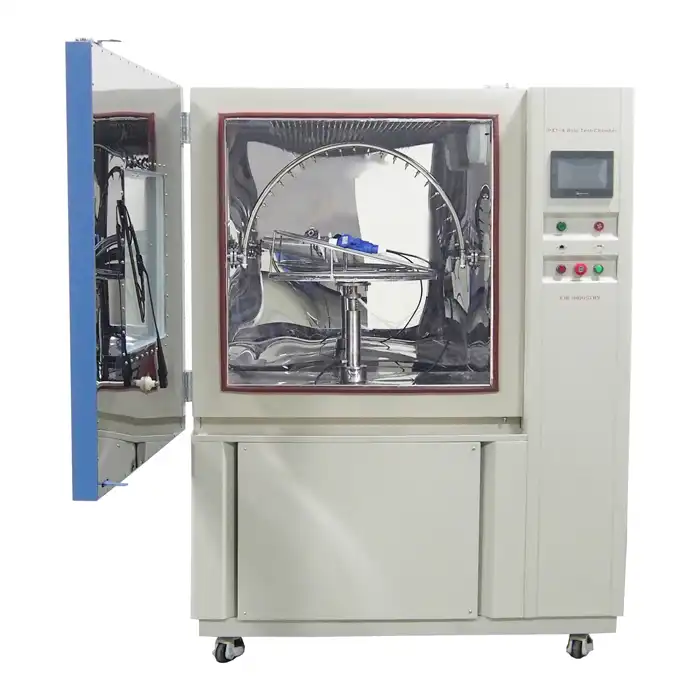
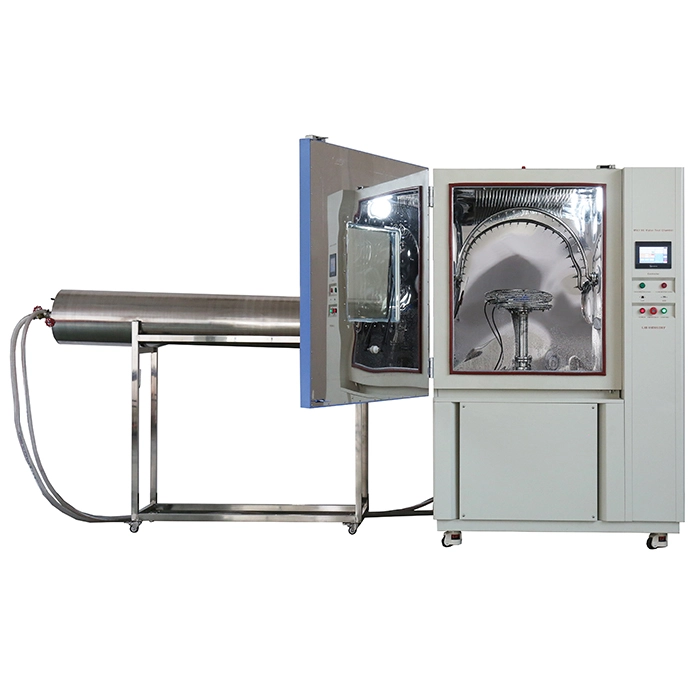
Physical chamber construction reflects these divergent testing philosophies. Water ingress systems feature stainless steel oscillating tubes with precision-drilled spray holes, motorized turntables for sample rotation, and adjustable spray angles supporting multiple IP levels within a single platform. The RD-800C model exemplifies this multi-functional approach.
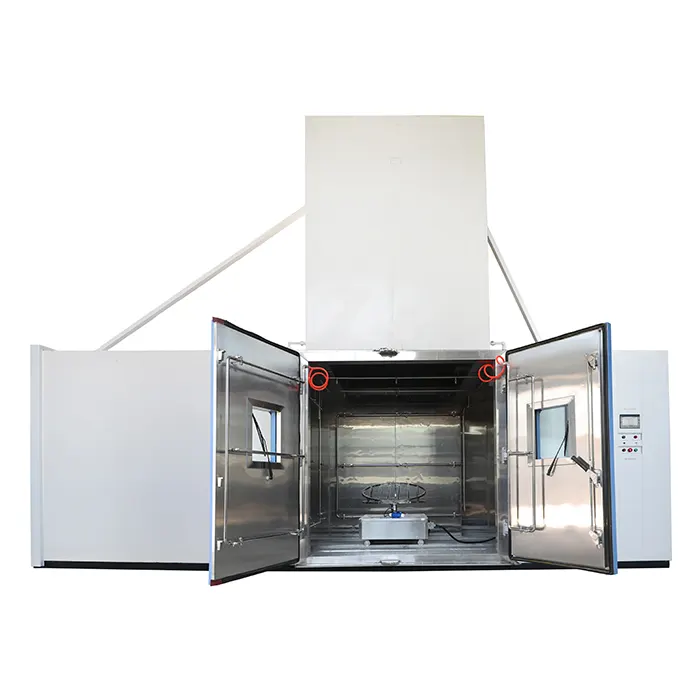
Rain chambers typically employ overhead nozzle arrays creating uniform precipitation zones across larger testing areas. These systems incorporate rainfall intensity controls, wind generation capabilities, and extended testing duration support. Chamber volumes often exceed standard ingress testing configurations.
|
Feature Category |
Water Ingress Chamber |
Rain Test Chamber |
|
Primary Standard |
IEC 60529, ISO 20653 |
MIL-STD-810, SAE J575 |
|
Water Delivery |
Oscillating tubes, directional nozzles |
Overhead nozzle arrays |
|
Typical Volume |
800L - 2400L |
3000L - 10000L+ |
|
Testing Duration |
Minutes per IP level |
Hours to days |
|
 |
|
Spray Methods and Water Delivery System Comparison
Oscillating Tube Systems for IP Rating Verification
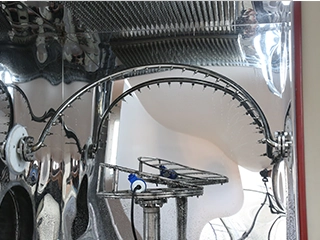
The oscillating tube represents the hallmark component of water ingress test chamber. Constructed from SUS304 stainless steel with precision-machined spray holes, these tubes deliver controlled water patterns at specified angles and pressures. The synchronization between tube oscillation and sample rotation ensures complete surface coverage meeting IP certification requirements.
Oscillating tube radius significantly impacts testing effectiveness. The 400mm radius suits small electronics and consumer devices, while 600mm configurations accommodate larger automotive components. Adjustable swing angles from ±45° to ±180° enable progressive testing from lower IP levels through high-pressure jet validation.
Directional Jet Nozzles for High-Pressure Testing
Higher IP ratings demand powerful directional water jets rather than spray patterns. Specialized nozzle configurations deliver concentrated streams at pressures exceeding 100 kPa for IPX5 and IPX6 verification. Variable frequency pump control maintains consistent pressure throughout extended testing sequences, eliminating pressure fluctuations that could invalidate certification results.
These jet systems differ fundamentally from rain simulation, which avoids concentrated streams in favor of distributed precipitation. The directional nature enables methodical testing of specific product surfaces, seams, and vulnerable points.
Rainfall Intensity Control in Simulation Chambers
Rain test chambers employ sophisticated nozzle arrays capable of producing variable precipitation rates measured in millimeters per hour. Programmable systems transition between light drizzle (2-5mm/h), moderate rain (10-20mm/h), and heavy downpours (50mm/h+) during single testing sequences.
This variable intensity capability exceeds water ingress chamber requirements, which specify fixed flow rates for each IP level. The environmental focus demands realistic weather pattern replication rather than compliance with specific flow rate thresholds.
 |
 |
| Oscillating Tube | Directional Jet Nozzles |
Simulation of Controlled Ingress vs Natural Rain Conditions
Replicating Standardized IP Test Scenarios
Water ingress validation focuses exclusively on repeatable, documented scenarios defined within international standards. IPX3 testing requires specific spray patterns at defined angles, IPX4 demands omnidirectional splash protection verification, and IPX6 necessitates powerful jet stream resistance. Each level follows prescribed methodologies eliminating variables that could compromise certification validity.
The standardization ensures that IPX4-rated products tested in different laboratories worldwide demonstrate equivalent protection capabilities. This consistency enables global product distribution with unified marketing claims backed by internationally recognized certification.
Creating Realistic Weather Pattern Sequences
Rain chambers excel at recreating complex weather sequences products encounter during actual deployment. Testing protocols might simulate morning condensation, afternoon thunderstorms, and evening drizzle within single automated sequences. This temporal variation reveals vulnerabilities that static IP testing might overlook.
Automotive weathering validation often employs multi-day rain exposure with varying intensities, wind directions, and temperature fluctuations. These extended protocols assess seal performance and drainage system effectiveness under realistic environmental stress.
Controlled Variables vs Environmental Complexity
The strength of water ingress testing lies in controlled variable isolation. When validating IPX ratings, engineers need consistent, repeatable water delivery eliminating extraneous factors. Precise spray hole dimensions, calibrated pressures, and documented flow rates create testing environments where results depend solely on product design.
Rain simulation embraces complexity, incorporating multiple simultaneous variables matching natural conditions. Temperature fluctuations, humidity changes, wind patterns, and precipitation intensity variations combine creating comprehensive environmental challenges.
How Do Test Objectives Differ Across Chamber Types?
Achieving IP Rating Certification Compliance
The primary objective driving water ingress test chamber utilization centers on obtaining verified IP ratings enabling specific marketing claims and regulatory compliance. Products targeting consumer electronics markets require documented IPX4 or higher certification before distribution. Automotive components need ISO 20653 validation demonstrating environmental suitability.
This certification focus demands strict protocol adherence, calibrated equipment, and comprehensive documentation. Testing chambers must maintain traceability to international measurement standards, with regular calibration verification ensuring continued certification validity.
Validating Long-Term Environmental Durability
Rain testing objectives extend beyond momentary exposure resistance toward long-term material performance under sustained environmental stress. Automotive manufacturers assess paint adhesion, seal integrity, and drainage system functionality after extended rain exposure. Outdoor equipment producers evaluate coating durability following multi-day weathering cycles.
These durability assessments complement IP rating certification by revealing degradation patterns that brief standardized tests cannot detect. Products might pass IPX6 certification yet fail after prolonged moderate rain exposure.
Supporting Marketing Claims with Verified Performance Data
Consumer product marketing increasingly emphasizes environmental durability as competitive differentiation. Verified IP ratings provide credible, standardized performance metrics consumers recognize and trust. "IPX7-rated waterproof protection" communicates clear performance capabilities backed by international standards.
Rain testing supports broader environmental durability claims like "tested to withstand 500 hours of continuous rainfall" or "validated under tropical storm conditions." These narrative claims resonate with consumers understanding real-world usage scenarios.
|
Validation Aspect |
Water Ingress Testing |
Rain Simulation Testing |
|
Testing Duration |
5-30 minutes per level |
24-240 hours continuous |
|
Result Repeatability |
Extremely high |
Moderate variation |
|
Certification Value |
Direct IP rating |
Environmental durability claim |
Industry Applications for Each Testing Method
Consumer Electronics and Mobile Device Validation
Smartphone manufacturers universally employ water ingress chambers for IP rating certification supporting marketing claims and warranty policies. The controlled testing environment enables precise validation that devices withstand advertised protection levels. Leading manufacturers rely on certified IP testing backing "water-resistant" product positioning.
Rain simulation plays a supplementary role evaluating outdoor-use scenarios for rugged device variants. Products marketed toward hiking, construction, or outdoor recreation undergo extended rain exposure confirming performance during multi-day wilderness expeditions.
Automotive Component and Vehicle Testing Requirements
Automotive applications utilize both testing methodologies extensively. Individual components like headlight assemblies, wiring harnesses, and control modules require IP67 or IP68 certification validated through water ingress chambers. These component-level tests ensure proper sealing before vehicle integration.
Complete vehicle rain testing occurs in drive-through rain chambers where automobiles pass through simulated downpours at various speeds. These full-scale tests validate drainage systems and door seals beyond component-level IP ratings.
Outdoor Equipment and Recreation Product Evaluation
Camping equipment, outdoor electronics, and recreational devices face diverse environmental challenges requiring both testing approaches. GPS devices, trail cameras, and portable speakers need verified IP ratings for consumer confidence and retail channel acceptance.
Extended rain simulation validates performance during multi-day outdoor expeditions where equipment faces sustained precipitation exposure. Tent materials, backpack coatings, and protective cases undergo weathering assessment confirming season-long durability.
Selection Criteria Based on Product Requirements
Analyzing Certification Needs and Market Requirements
Product development teams begin equipment selection by identifying mandatory certifications for target markets. Consumer electronics destined for retail channels require specific IP ratings prominently featured in marketing materials and packaging. This certification mandate necessitates water ingress test chambers capable of generating certification-body-accepted documentation.
Products without specific IP rating requirements but needing environmental durability validation benefit more from rain simulation capabilities. Industrial equipment and outdoor structures often require weathering resistance without standardized IP certification.
Budget Considerations and Capital Investment Planning
Water ingress chambers generally require lower capital investment compared to large-scale rain simulation facilities. Compact models like the RD-800C provide comprehensive IPX1-IPX6 testing capabilities within 810-liter volumes suitable for most consumer electronics and small automotive components.
Rain chambers demand significantly larger footprints and higher initial costs due to extensive nozzle arrays, larger chamber volumes, and additional environmental control systems. Organizations with limited testing budgets prioritize water ingress chambers delivering certification capabilities.
Testing Volume and Product Diversity Assessment
Manufacturers testing diverse product portfolios spanning multiple size categories benefit from multi-functional water ingress chambers accommodating everything from small wearables to large appliance components. The adjustable turntable, variable spray configurations, and programmable testing protocols support varied validation requirements.
Specialized applications testing primarily large assemblies or complete products require rain chambers with appropriate dimensional capacity. Automotive manufacturers testing full vehicles need drive-through rain chambers exceeding standard ingress testing equipment capabilities.
|
Selection Factor |
Favors Water Ingress |
Favors Rain Simulation |
|
Primary Objective |
IP certification |
Durability assessment |
|
Product Size |
Small to medium |
Large assemblies |
|
Budget Range |
$30,000 - $80,000 |
$100,000 - $500,000+ |
|
Market Requirements |
Standardized IP ratings |
Weathering claims |
LIB Industry Expertise in Advanced Water Ingress and Rain Testing Solutions
Comprehensive Testing Platform Development Experience
Since 2009, LIB Industry has delivered environmental testing solutions to global manufacturers across consumer electronics, automotive, aerospace, and industrial sectors. Our engineering team understands nuanced differences between water ingress certification requirements and rain simulation objectives, guiding clients toward optimal equipment selection.
This extensive experience encompasses partnerships with industry leaders including Apple, Intel, Mercedes-Benz, and BYD across 60+ countries. Each project contributes insights informing continuous product development.
Custom Engineering for Unique Validation Requirements
Standardized chamber configurations suit many applications, but specialized products often demand customized testing solutions. LIB Industry's R&D team designs bespoke chambers accommodating unique product geometries, specialized mounting requirements, or hybrid testing protocols combining multiple environmental stressors.
Custom development capabilities include modified chamber dimensions from 500L to 5000L+, specialized spray system configurations, and integrated data acquisition tailored to specific documentation requirements.
Multi-Standard Compliance Certification Support
Global manufacturers serving diverse geographic markets benefit from testing platforms satisfying multiple international standards simultaneously. LIB Industry chambers incorporate adjustable configurations enabling seamless transitions between IEC 60529, ISO 20653, NEMA, and MIL-STD protocols without equipment changes.
This multi-standard capability streamlines validation workflows while reducing capital equipment requirements. Organizations maintain single testing platforms addressing complete regulatory portfolios.
Conclusion
Water ingress test chambers and rain test chambers serve complementary yet distinct roles in comprehensive moisture protection validation. Certification-driven applications demanding standardized IP ratings require precision water ingress chambers delivering repeatable results accepted by international certification bodies. Environmental durability assessment benefits from rain simulation recreating complex weather patterns. Successful validation strategies often incorporate both methodologies, leveraging each approach's unique strengths throughout product development workflows.
FAQ
Can a single chamber perform both water ingress IP testing and rain simulation?
While some advanced chambers incorporate dual capabilities, most equipment optimizes either IP certification testing or rain simulation. Water ingress chambers prioritize standardized spray patterns and pressure control, while rain chambers emphasize variable precipitation and extended duration.
Which testing method provides faster results for product development cycles?
Water ingress testing delivers significantly faster results, typically completing IPX4 validation within 10-15 minutes per test angle. Rain simulation requires hours to days of continuous exposure for meaningful durability assessment.
Do water ingress test chambers require special facility infrastructure or plumbing?
Modern water ingress chambers incorporate closed-loop water management systems with built-in reservoirs, minimizing external plumbing requirements. Basic electrical power and floor drainage suffice for most installations.
Partner with an Experienced Environmental Testing Chamber Manufacturer
LIB Industry delivers customized water ingress and rain testing solutions backed by comprehensive technical support and global service infrastructure. Contact our specialists at ellen@lib-industry.com to discuss your environmental test chamber needs.