What is the principle of thermal cycling?
Thermal cycling operates on the fundamental principle of subjecting materials and products to repeated temperature variations between predetermined hot and cold extremes at controlled rates. This process exploits the natural phenomenon of thermal expansion and contraction, where different materials respond uniquely to temperature changes based on their Coefficient of Thermal Expansion (CTE). During testing, specimens experience mechanical stress at material interfaces, revealing latent defects such as micro-cracks, solder joint failures, and delamination that might remain undetected under static conditions. Modern thermal cycling chambers employ precision refrigeration systems and heating elements to create these controlled environmental stresses, simulating years of real-world exposure within condensed timeframes. LIB Industry's advanced chambers deliver exceptional temperature uniformity and rapid transition rates, ensuring accurate simulation of actual operating conditions.
Understanding Thermal Cycling
The Physics Behind Temperature-Induced Stress
Material expansion and contraction form the cornerstone of thermal cycling principles. When temperature increases, molecular kinetic energy rises, causing atomic structures to expand. Conversely, cooling reduces this energy, resulting in contraction. Different materials exhibit varying expansion rates, measured as CTE values typically expressed in parts per million per degree Celsius (ppm/°C). Aluminum expands approximately 23 ppm/°C, while silicon dioxide expands merely 0.5 ppm/°C, creating substantial interface stress in composite assemblies.
Mechanisms of Thermal Fatigue
Repeated temperature fluctuations generate cumulative damage through cyclic loading and unloading of internal stresses. Each thermal cycle produces microscopic plastic deformation at grain boundaries and material interfaces. Over hundreds or thousands of cycles, these deformations accumulate, initiating crack propagation. The relationship between cycle count and failure follows well-established fatigue models, including the Coffin-Manson equation, which predicts fatigue life based on plastic strain amplitude and temperature range.
Critical Parameters Governing Thermal Cycling
Temperature differential, transition rate, dwell time, and cycle frequency constitute the primary variables affecting test outcomes. Larger temperature spans between hot and cold extremes intensify thermal stress, accelerating potential failures. The LIB Industry thermal cycling test chamber offers controllable ramp rates of 5°C, 10°C, or 15°C per minute, allowing precise simulation of specific application environments. Dwell time - the duration specimens remain at temperature extremes - permits complete thermal equilibration throughout component layers, ensuring uniform stress distribution.
The Role of Thermal Cycling Chambers
Architecture of Professional Testing Equipment
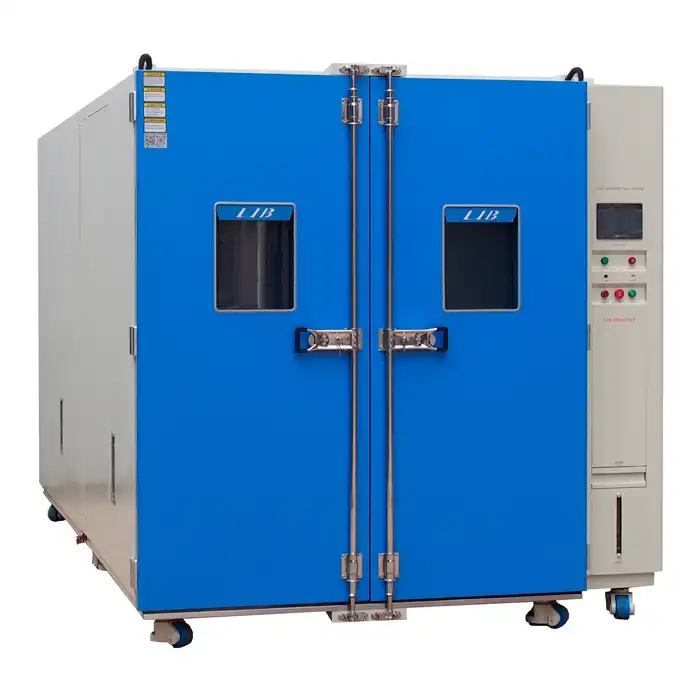
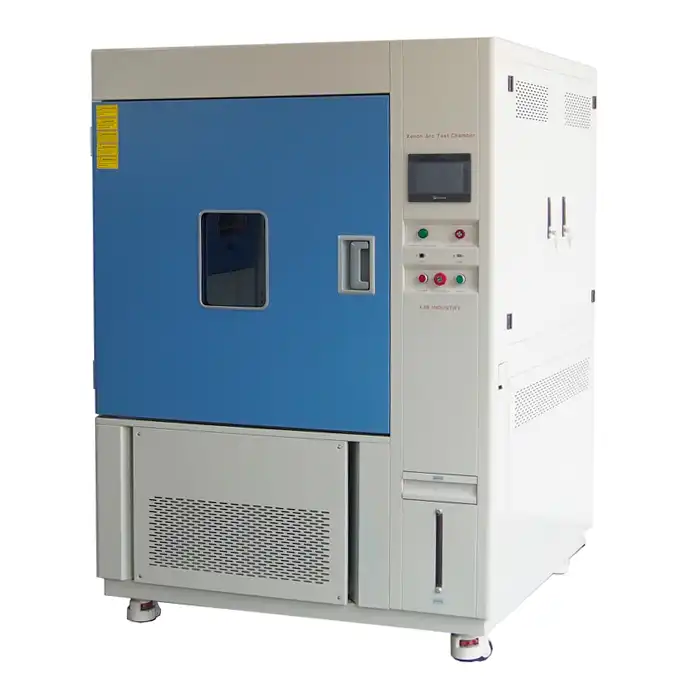
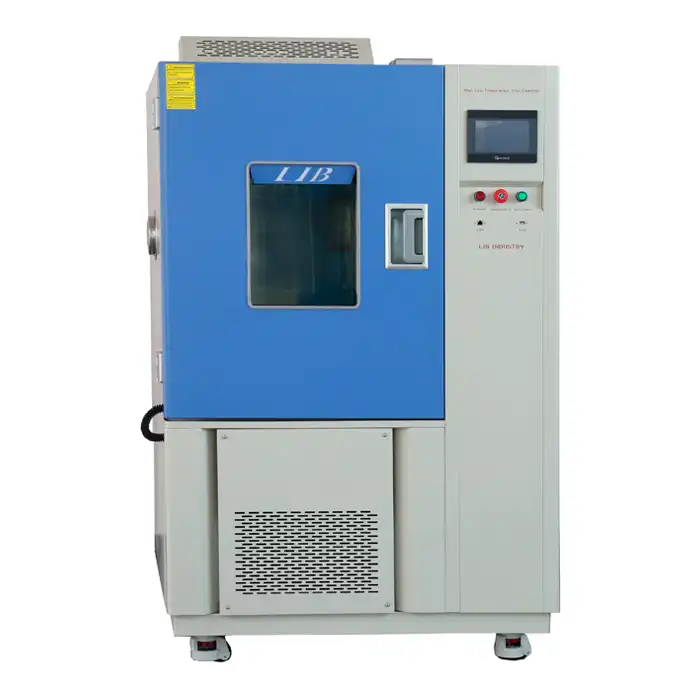
Modern thermal cycling test chambers integrate sophisticated subsystems to achieve precise environmental control. The refrigeration cascade employs dual-stage compression, utilizing different refrigerants optimized for specific temperature ranges. Low-temperature operations below -40°C typically require cascade configurations, while single-stage systems suffice for milder temperature ranges. LIB Industry's thermal cycling test chambers feature ceramic-core nichrome heaters positioned strategically to maintain temperature uniformity, complemented by advanced electronic expansion valve (EEV) technology reducing energy consumption by over 20% compared to conventional thermostatic expansion valves.
Temperature Control and Measurement Systems
Programmable color LCD touchscreen controllers orchestrate complex temperature profiles through PID algorithms that continuously adjust heating and cooling inputs. PT100 platinum resistance temperature detectors (RTDs) provide Class A accuracy, measuring chamber temperatures with ±0.1°C sensor tolerance. Multiple RTD placements throughout the chamber volume enable real-time monitoring of spatial temperature distribution. Ethernet connectivity allows remote monitoring and integration with laboratory data management systems.
Chamber Volume Selection and Capacity Planning
Specimen size, quantity, and thermal mass dictate appropriate chamber selection. LIB Industry offers capacities ranging from 100L to 3000L, accommodating diverse testing requirements across industries.
|
Model |
Internal Dimensions (mm) |
Volume |
Typical Applications |
|
TR5-100 |
400×500×500 |
100L |
Component-level testing, small assemblies |
|
TR5-225 |
500×600×750 |
225L |
PCB assemblies, automotive electronics |
|
TR5-500 |
700×800×900 |
500L |
Battery modules, aerospace components |
|
TR5-1000 |
1000×1000×1000 |
1000L |
Complete product systems, production validation |
Chamber volume should exceed specimen volume by minimum 3:1 ratio to ensure adequate airflow circulation and prevent thermal loading effects that compromise temperature uniformity.
Anti-Condensation Control Technology
Rapid temperature transitions create condensation risks when chamber air reaches dew point during cooling cycles. LIB Industry's integrated anti-condensation control system employs heated air injection and humidity management to maintain specimen surfaces above critical moisture thresholds. This protection proves essential for electronic assemblies where water film formation can cause electrochemical migration, creating conductive pathways between circuit traces. The system automatically adjusts based on ambient humidity conditions and programmed temperature profiles.
Custom Configuration Capabilities
Standardized thermal cycling test chambers address common testing needs, yet specialized applications often require tailored solutions. LIB Industry's engineering team excels in custom R&D, designing chambers with modified dimensions, specialized atmosphere control, or integrated measurement systems. Custom cable port configurations accommodate complex wiring harnesses while maintaining thermal sealing integrity. Multi-zone chambers enable simultaneous testing under different thermal profiles, maximizing laboratory throughput efficiency.
Applications and Standards in Thermal Cycling
Aerospace and Defense Applications
Aircraft components endure extreme temperature variations during flight operations, transitioning from ground-level heat to high-altitude cold within minutes. Avionics assemblies require validation across -55°C to +85°C operational ranges specified in RTCA DO-160G environmental conditions. Military specifications like MIL-STD-810H Method 503 define precise temperature cycling protocols for defense equipment qualification.
Automotive Electronics Qualification
Modern vehicles integrate hundreds of electronic control units exposed to engine compartment temperatures exceeding 125°C and winter ambient conditions below -40°C. The AEC-Q100 qualification standard mandates thermal cycling tests for automotive-grade integrated circuits, specifying 1000 cycles across -40°C to +150°C temperature extremes. LIB Industry thermal cycling test chambers accommodate complete battery modules up to 1000L capacity, supporting comprehensive validation programs for emerging automotive electrification technologies.
Electronics Manufacturing Reliability
Consumer electronics manufacturers employ thermal cycling to screen infant mortality failures before product release. Temperature cycle testing per JESD22-A104 identifies solder joint defects, die attach failures, and package cracking in semiconductor devices. Surface mount technology (SMT) assemblies experience coefficient of thermal expansion mismatches between printed circuit boards and ceramic chip components, creating mechanical stress concentrations at solder interfaces.
International Testing Standards Overview
Global standards organizations establish thermal cycling protocols ensuring consistent, comparable testing across laboratories and industries. Understanding applicable standards prevents costly retesting and regulatory compliance issues.
|
Standard |
Organization |
Application Scope |
Key Requirements |
|
IEC 60068-2-14 |
International Electrotechnical Commission |
Electronic components |
Temperature change rates, dwell times, cycle counts |
|
MIL-STD-810H |
U.S. Department of Defense |
Military equipment |
Extreme temperature ranges, rapid transitions |
|
JESD22-A104 |
JEDEC |
Semiconductor devices |
Standardized cycle profiles, acceptance criteria |
|
AEC-Q100 |
Automotive Electronics Council |
Automotive ICs |
1000 cycles -40°C to +150°C minimum |
Each standard specifies precise parameters including temperature extremes, transition rates, dwell durations, and minimum cycle counts. Compliance verification requires calibrated equipment with documented measurement uncertainty within acceptable tolerances.
Pharmaceutical and Medical Device Validation
Temperature-sensitive medications and biological products require stability testing under controlled thermal stress conditions. ICH Q1A stability testing guidelines specify long-term storage at 25°C±2°C and accelerated testing at 40°C±2°C. Medical devices containing electronic components must withstand sterilization temperature exposures and storage temperature variations. LIB Industry chambers maintain ±0.5°C temperature stability, meeting stringent pharmaceutical validation requirements.
Quality Control and Production Screening
Beyond research and development, thermal cycling serves essential quality assurance functions in manufacturing operations. Highly accelerated life testing (HALT) pushes products beyond specification limits to discover design margins and potential failure modes. Highly accelerated stress screening (HASS) applies milder thermal and vibration stresses to production units, precipitating latent defects before customer delivery. LIB Industry's comprehensive after-sales support includes calibration services and method validation assistance, ensuring testing programs deliver meaningful, actionable results.
FAQ
What temperature range should I select for thermal cycling test chamber applications?
Temperature range selection depends on your product's operational environment and applicable industry standards. Aerospace applications typically require -55°C to +85°C, while automotive electronics need -40°C to +150°C. LIB Industry offers chambers with lowest temperatures ranging from -20°C to -70°C, accommodating diverse testing requirements across multiple industries and compliance standards.
How does thermal cycling differ from standard temperature testing in environmental chambers?
Standard temperature testing maintains constant conditions to evaluate performance at specific temperatures, while thermal cycling repeatedly transitions between temperature extremes. Thermal cycling specifically targets failures caused by thermal expansion mismatch and fatigue, revealing defects that remain hidden during static temperature exposure. The dynamic stress nature makes thermal cycling essential for reliability validation.
What maintenance requirements ensure long-term thermal cycling chamber performance?
Regular calibration verification, typically annually, maintains measurement accuracy. Refrigeration system maintenance includes refrigerant level checks, compressor oil analysis, and condenser cleaning. Chamber seals require periodic inspection to prevent air infiltration affecting temperature uniformity. LIB Industry provides comprehensive maintenance protocols and 24/7 global support through service centers worldwide.
Partner with LIB Industry for Advanced Thermal Testing Solutions
LIB Industry stands as your trusted thermal cycling test chamber manufacturer and supplier, delivering precision-engineered equipment backed by ISO 9001 certification and CE compliance. Our factory combines three-year warranties, lifetime service commitments, and custom design capabilities to meet exacting B2B requirements. Contact our technical specialists at ellen@lib-industry.com to discuss your environmental testing challenges and discover tailored chamber solutions.

_1773978265973.jpg)
.webp)